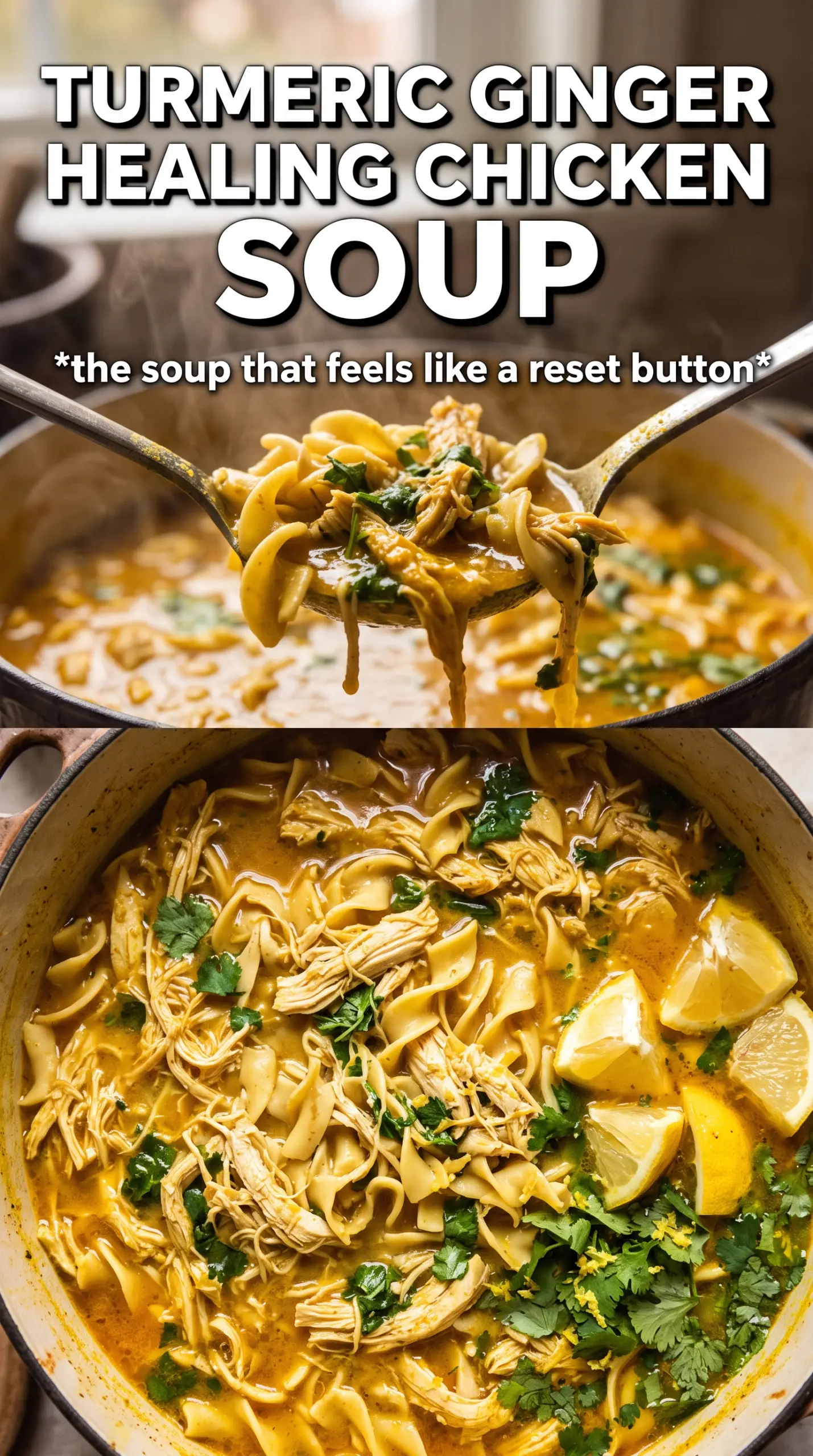
Warm turmeric broth, tender shredded chicken, soft noodles, and a bright finish of lemon make this chicken noodle soup the kind of bowl people come back to when they want something that feels restorative without tasting plain. The broth stays golden and fragrant, the vegetables keep a little bite, and the kale or spinach gives the soup enough body to feel like dinner, not just a light starter.
What makes this version work is the layering. The chicken simmers on the bone, which gives the broth more depth than boneless meat ever will, and the ginger, garlic, turmeric, and thyme go in from the start so the whole pot tastes rounded instead of like plain broth with add-ins. The lemon juice, vinegar, and honey go in at the end, where they wake everything up without making the soup harsh or overly sharp.
Below, I’ve included the little details that matter most: when to pull the chicken so it shreds cleanly, how to keep the noodles from going mushy, and what to tweak if you want a softer or stronger citrus finish.
The broth turned out bright and cozy at the same time, and the noodles stayed tender without falling apart. I loved how the lemon and apple cider vinegar made the flavor pop at the end.
Like this healing chicken noodle soup? Save it to Pinterest for a golden, gingered bowl with lemon, noodles, and tender shredded chicken.
The Broth Needs the Chicken Bones, Not Just the Meat
A lot of chicken noodle soups taste thin because they start with boneless meat and never get the chance to build real body. Bone-in thighs change that. They give the broth more savor, and the meat stays tender through the full simmer instead of drying out before the vegetables are even done.
The other thing that matters here is timing. If you add the noodles too early, they drink up too much broth and turn pasty by the time you serve the soup. Cook them until just tender, then get the greens in and finish with the lemon mixture at the end so the broth stays lively.
What Each Ingredient Is Actually Doing in This Bowl
- Bone-in chicken thighs — These are the backbone of the soup. They make a richer broth than breast meat and shred into juicy pieces that hold up after simmering. Boneless thighs will work in a pinch, but you lose some depth.
- Fresh ginger and garlic — This is where the soup gets its warm, clean finish. Fresh is worth using here because dried ginger never gives the same brightness, and minced garlic mellows as it simmers instead of tasting sharp.
- Turmeric — It brings the golden color and that earthy background note people expect from a healing-style soup. It doesn’t replace broth flavor, but it supports it. Blooming it in the liquid from the start keeps it from tasting dusty.
- Lemon juice, apple cider vinegar, and honey — This trio is what keeps the soup from tasting flat. The acid wakes up the broth, and the honey rounds out the edge. Add them at the end so the flavor stays fresh instead of dulling during the simmer.
- Kale or spinach — Kale gives more chew and holds up better if you plan on leftovers. Spinach softens faster and gives a gentler finish. If using kale, strip out the tough stems so the leaves don’t stay leathery.
How to Build the Soup Without Losing the Noodles
Starting the Pot
Combine the chicken, vegetables, garlic, ginger, broth, turmeric, thyme, black pepper, and cayenne in a large pot and bring it up to a boil before lowering it to a steady simmer. You want gentle bubbles, not a hard rolling boil, because aggressive heat can make the broth cloudy and the chicken tight. As it simmers, skim any foam that rises if you want a cleaner-looking broth, but don’t fuss over it too much.
Shredding at the Right Moment
Pull the chicken when it falls apart easily with a fork and looks opaque all the way through, usually after about 30 minutes. If it still feels stringy or resists shredding, give it a few more minutes in the broth. Shred it while it’s warm, then return the meat to the pot so it picks up flavor from the soup instead of tasting separate from it.
Cooking the Noodles Just Right
Add the egg noodles after the chicken goes back in and cook them until they are just tender, usually 6 to 8 minutes. The broth should still have room to move around the noodles; if the pot is packed too full, the noodles clump and cook unevenly. If you’re planning leftovers, undercook them by a minute so they don’t go soft after sitting in the hot broth.
Finishing With Brightness
Stir in the kale and let it wilt for a couple of minutes, then add the lemon juice, apple cider vinegar, and honey. This is where the soup wakes up. If it tastes flat, it usually needs salt, not more lemon, so season gradually and taste after each addition. Serve it with extra parsley and lemon wedges while the broth is still steaming.
How to Adapt This Soup When You Need a Different Finish
Dairy-Free and Naturally Gluten-Free
This soup already fits both, as long as your broth is gluten-free. The only thing to watch is the noodles if you swap them out; use certified gluten-free egg noodles or rice noodles, and add them near the end so they don’t break down in the broth.
Using Chicken Breast Instead of Thighs
Chicken breast works if that’s what you have, but it needs less time in the pot. Check it early so it doesn’t go dry and stringy. You’ll get a slightly lighter broth, which is fine, but it won’t have the same rich base that bone-in thighs give you.
Swapping the Greens
Spinach gives the softest finish and works if you want a gentler bowl. Kale holds up better for reheating and tastes a little heartier. If using frozen spinach, thaw and squeeze out the water first or the broth can turn muddy and thin.
Keeping Leftovers Tasting Fresh
If you know you’ll have leftovers, cook the noodles separately and add them to each bowl when serving. That keeps the broth from disappearing overnight and stops the noodles from soaking up too much liquid. It’s the easiest way to keep the soup tasting close to day one.
Storage and Reheating
- Refrigerator: Store in an airtight container for up to 4 days. The noodles will keep soaking up broth, so expect the soup to thicken a bit.
- Freezer: Freeze the soup without the noodles for the best texture. Add fresh cooked noodles after reheating, because frozen noodles turn soft and bloated.
- Reheating: Warm gently on the stove over medium-low heat until steaming. High heat can make the chicken dry and the noodles fall apart, especially if the soup has sat overnight.
Answers to the Questions Worth Asking

Healing Chicken Noodle Soup
Ingredients
Equipment
Method
- Combine chicken thighs, carrots, celery, onion, garlic, ginger, chicken broth, turmeric, thyme, black pepper, and cayenne in a large pot. Bring to a boil over high heat, then reduce to a steady simmer.
- Simmer for 30 minutes, until the chicken is very tender and easily pulls apart. Keep the liquid bubbling gently without a hard boil.
- Remove the chicken from the pot and let cool slightly, then shred the meat. Discard bones and skin, then return the shredded chicken to the pot.
- Add egg noodles to the pot and cook for 6-8 minutes, until tender. Stir occasionally so the noodles don’t stick.
- Stir in chopped kale or spinach and cook for 3 minutes, just until wilted. Keep the heat at a gentle simmer.
- Stir in lemon juice, apple cider vinegar, and honey, then season with salt to taste. Taste and adjust salt as needed.
- Ladle into bowls and serve with extra lemon wedges and fresh parsley. Finish with a squeeze of lemon over the top.