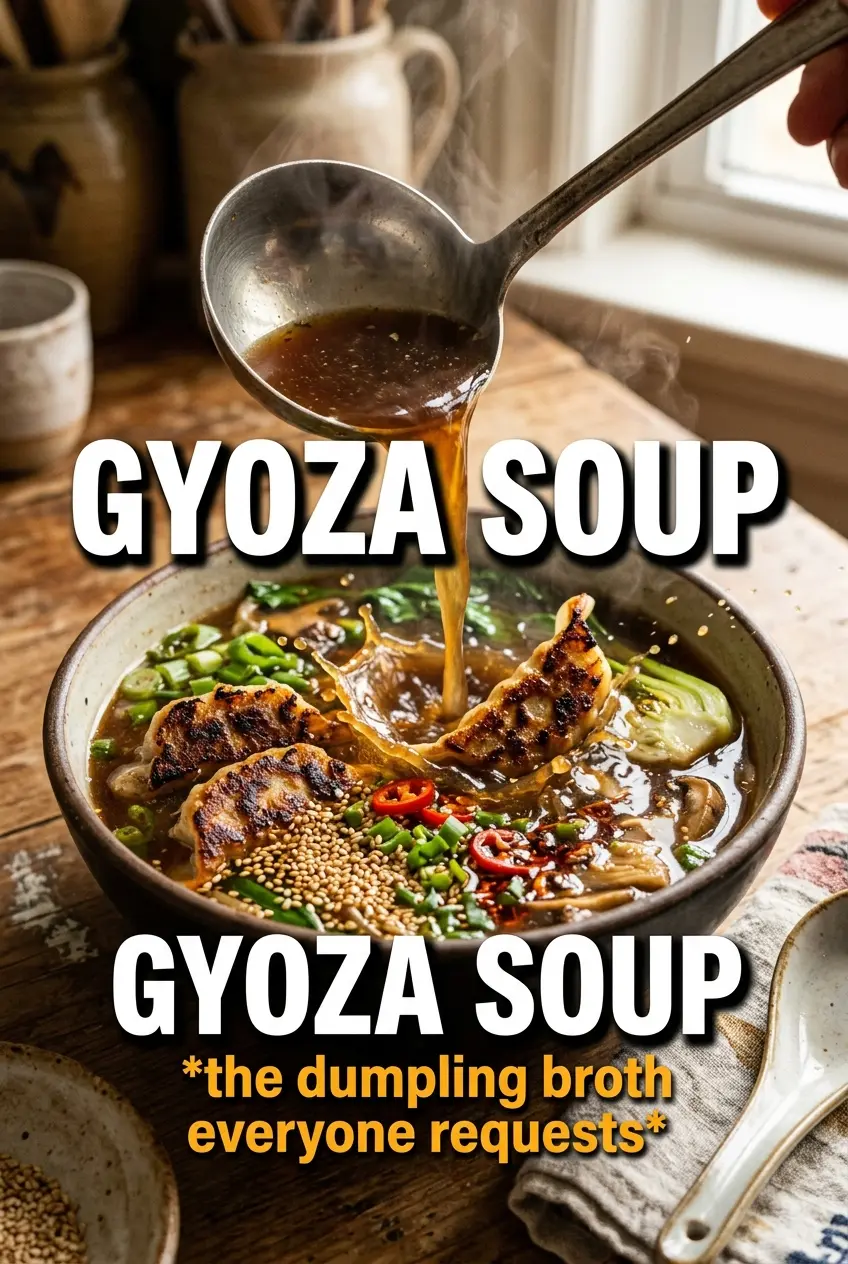
Gyoza soup lands in that sweet spot between comforting and light. The dumplings stay tender, the broth picks up garlic, ginger, and soy, and the bok choy and mushrooms give it enough body to feel like a full meal without turning heavy. When it’s done right, every spoonful tastes clean and layered, with a little richness from sesame oil and a sharp finish from chili oil.
The trick is building the broth first so the aromatics have time to infuse before the dumplings go in. Frozen gyoza work beautifully here, and you don’t need to thaw them; they go straight into the simmering broth and cook through without falling apart. Bok choy goes in at the end so it stays bright and just tender instead of limp. That timing matters more than fancy ingredients.
Below, I’ve included the small details that keep the broth clear, the dumplings intact, and the vegetables tasting fresh. There’s also a few easy swaps if you want to stretch it, make it vegetarian, or use whatever dumplings you already have in the freezer.
The broth stayed clear and the gyoza held together perfectly, even with frozen dumplings. The ginger and sesame oil made it taste like something from my favorite noodle shop.
Save this gyoza soup for the nights when you want a fast, gingery broth with dumplings that stay tender and never mushy.
The Trick to Keeping Gyoza Tender Instead of Torn
The biggest mistake with dumpling soup is boiling the gyoza hard. That turns the wrappers fragile, then they split and cloud the broth with filling. Keep the soup at a steady simmer from the moment the dumplings go in, and let the heat do the work slowly.
Frozen gyoza are usually more forgiving than fresh ones because they’re a little firmer when they hit the liquid. Fresh dumplings still work, but they need a gentler hand and a close eye. If the broth is bubbling aggressively, pull the pot back a little. A quiet simmer gives you intact dumplings and a cleaner-tasting broth.
- Gentle heat — This is what keeps the wrappers from bursting before the filling sets.
- Broth first, dumplings second — The flavor base should already be built before the gyoza go in.
- Bok choy at the end — It wilts fast, so it only needs a couple minutes.
- Sesame oil off the heat — Add it at the end so the aroma stays fresh instead of fading in the simmer.
What Each Ingredient Is Actually Doing in the Bowl
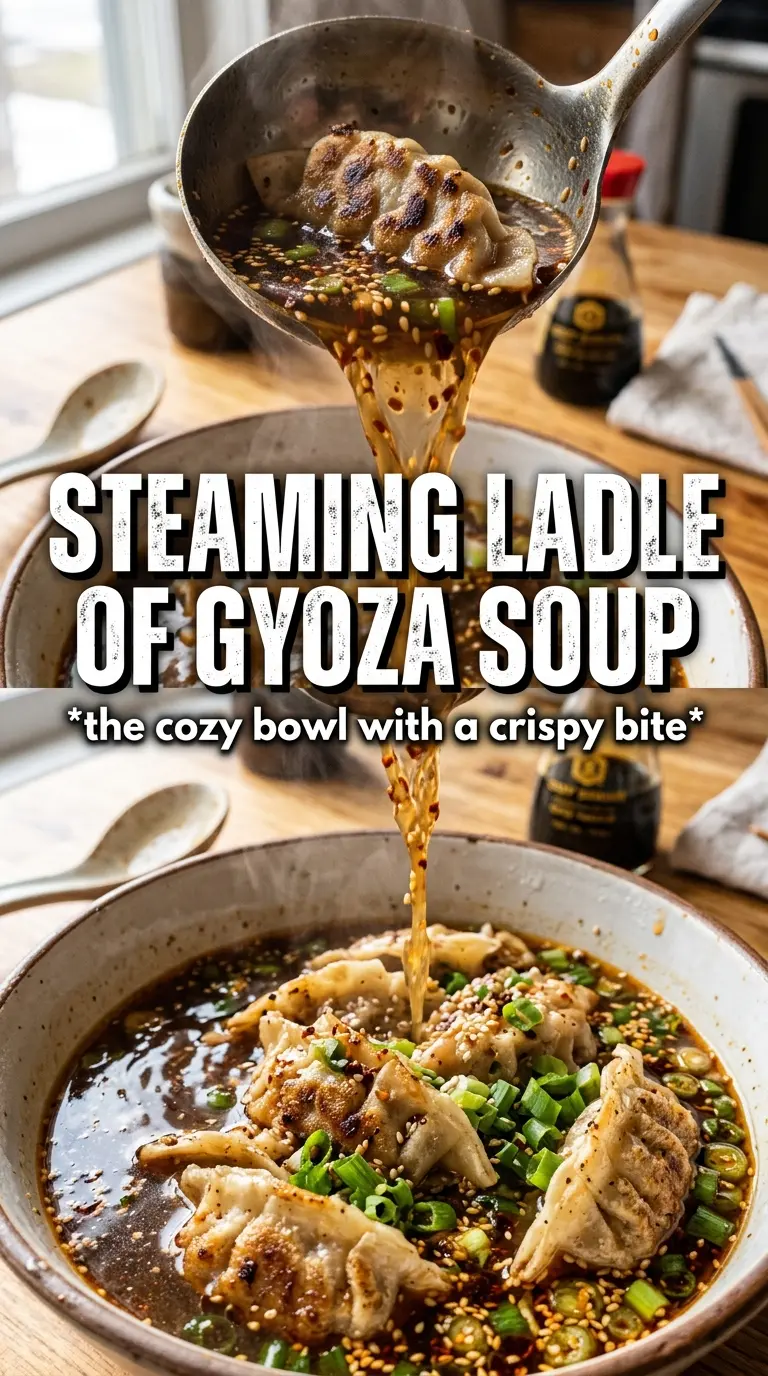
- Gyoza or potstickers — These are the body of the soup. Use frozen dumplings if that’s what you have; they hold up well and make this weeknight-friendly. Pork, chicken, shrimp, or vegetable all work, but avoid delicate homemade wrappers unless you’re comfortable handling them gently.
- Chicken broth — This is the backbone of the dish, so use one you’d actually drink. A bland broth makes the soup taste flat no matter how much ginger or soy you add. If you want a deeper, more Japanese-style flavor, a dashi-based broth is a great swap.
- Ginger, garlic, soy sauce, mirin, and rice vinegar — These are the flavor builders. Ginger gives the broth its warmth, soy adds salt and depth, mirin rounds out the sharp edges, and rice vinegar wakes everything up at the end. Don’t skip the vinegar; it keeps the broth from tasting heavy.
- Bok choy and shiitake mushrooms — Mushrooms add savoriness and bok choy brings freshness and a little crunch. Shiitakes are worth buying if you can find them, but cremini mushrooms will work in a pinch. Slice them thin so they soften before the dumplings finish cooking.
- Sesame oil, green onions, and chili oil — Sesame oil gives the broth its final nutty finish, and the toppings keep each bowl from tasting one-note. Green onions should go on right before serving so they stay crisp. Chili oil is optional, but it makes the whole bowl feel more complete.
Building the Broth Without Clouding It
Wake Up the Aromatics First
Start with the broth, garlic, ginger, soy sauce, mirin, and rice vinegar in a large pot. Bring it just to a simmer and let it go for about 5 minutes so the broth tastes seasoned before anything else gets added. If you rush this part, the soup can taste thin even if the ingredients are good.
Cook the Mushrooms Before the Dumplings
Add the sliced shiitakes and simmer them for 3 to 4 minutes. They need a little head start so they soften and give up their flavor before the dumplings go in. If the mushrooms stay in too long after the gyoza are added, they can go soft and a little dull.
Let the Gyoza Finish in the Broth
Add the gyoza directly to the simmering broth and cook them according to the package, usually 5 to 7 minutes. Keep the broth at a quiet simmer, not a boil, so the wrappers don’t split. The dumplings are done when they’re hot through and feel plump, not doughy, at the edges.
Wilt the Bok Choy at the Very End
Stir in the chopped bok choy and cook it for 2 to 3 minutes, just until the leaves collapse and the stems turn bright green and tender. That timing keeps the vegetable fresh instead of stringy. Finish with sesame oil, then taste and add salt only if the broth still needs it.
How to Adapt This When You Want a Different Bowl
Make it vegetarian
Swap the chicken broth for a good vegetable broth or dashi-style kombu broth, and use vegetable gyoza. You’ll lose a little richness, so lean harder on shiitakes and don’t skip the sesame oil at the end. That final drizzle helps the bowl taste full, not watery.
Use whatever dumplings are in the freezer
Potstickers, wontons, and gyoza all work here as long as they’re sturdy enough to hold in broth. Smaller dumplings cook faster, so start checking them early to avoid overcooking. If the package directions are vague, pull one out and cut it open to check that the filling is hot all the way through.
Make it gluten-free
Use gluten-free dumplings and tamari instead of regular soy sauce. Mirin is usually fine, but check the label if you’re cooking strictly gluten-free. The texture stays close to the original, but the flavor depends on choosing a dumpling with a wrapper that won’t turn gummy in the broth.
Storage and Reheating
- Refrigerator: Store leftovers for up to 3 days. The dumplings will soften a bit as they sit, but the broth still tastes good.
- Freezer: I don’t recommend freezing the finished soup. The dumplings turn soft and the vegetables lose their texture. If you want to prep ahead, freeze the broth base on its own.
- Reheating: Warm it gently on the stove over low heat until the broth is steaming and the dumplings are hot through. A hard boil will split the wrappers and make the vegetables fall apart.