
Golden, lemony chicken with crisp skin and juicy meat is the kind of dinner that disappears fast, and this Greek chicken with lemon and feta earns that reaction every time. The chicken roasts in a bright marinade until the edges turn deeply browned, while the tomatoes collapse into the pan juices and the feta softens just enough to turn creamy without losing its bite. The whole dish tastes layered and complete, like it took far more effort than it actually did.
What makes this version work is the balance of acid, salt, and fat. Lemon juice and zest wake up the marinade, olive oil keeps the chicken from drying out, and the skin-on thighs stay forgiving even if they roast a few minutes longer than planned. The feta goes on at the end, after the pan comes out of the oven, so it stays distinct and salty instead of melting away into the sauce.
Below, I’ll walk through the one marinating choice that matters, the roast time that keeps the skin crisp, and a few ways to adapt this for different diets without losing the Greek-inspired character of the dish.
The chicken came out juicy with crisp skin, and the lemon slices caramelized in the pan instead of turning bitter. I used the full 30 minutes to marinate and the flavor went all the way through.
Save this Greek chicken with lemon and feta for a crisp-skinned skillet-style dinner with caramelized lemons and salty feta on top.
The Marinade Timing That Keeps Chicken Juicy Instead of Watery
With lemon-based marinades, the problem isn’t flavor. It’s texture. Leave chicken in straight lemon juice too long and the surface can turn a little chalky before it even hits the oven. That’s why this recipe keeps the marinade short: just enough time for the garlic, oregano, and zest to season the meat without letting the acid take over.
Bone-in, skin-on thighs are the right cut here because they stay juicy under high heat and give you a built-in buffer if the oven runs hot. The skin also protects the meat from the sharpest part of the marinade. If you’re tempted to skip the resting time, don’t. Thirty minutes is enough for the flavor to settle in without compromising the bite.
What the Chicken, Feta, and Olives Are Each Doing Here
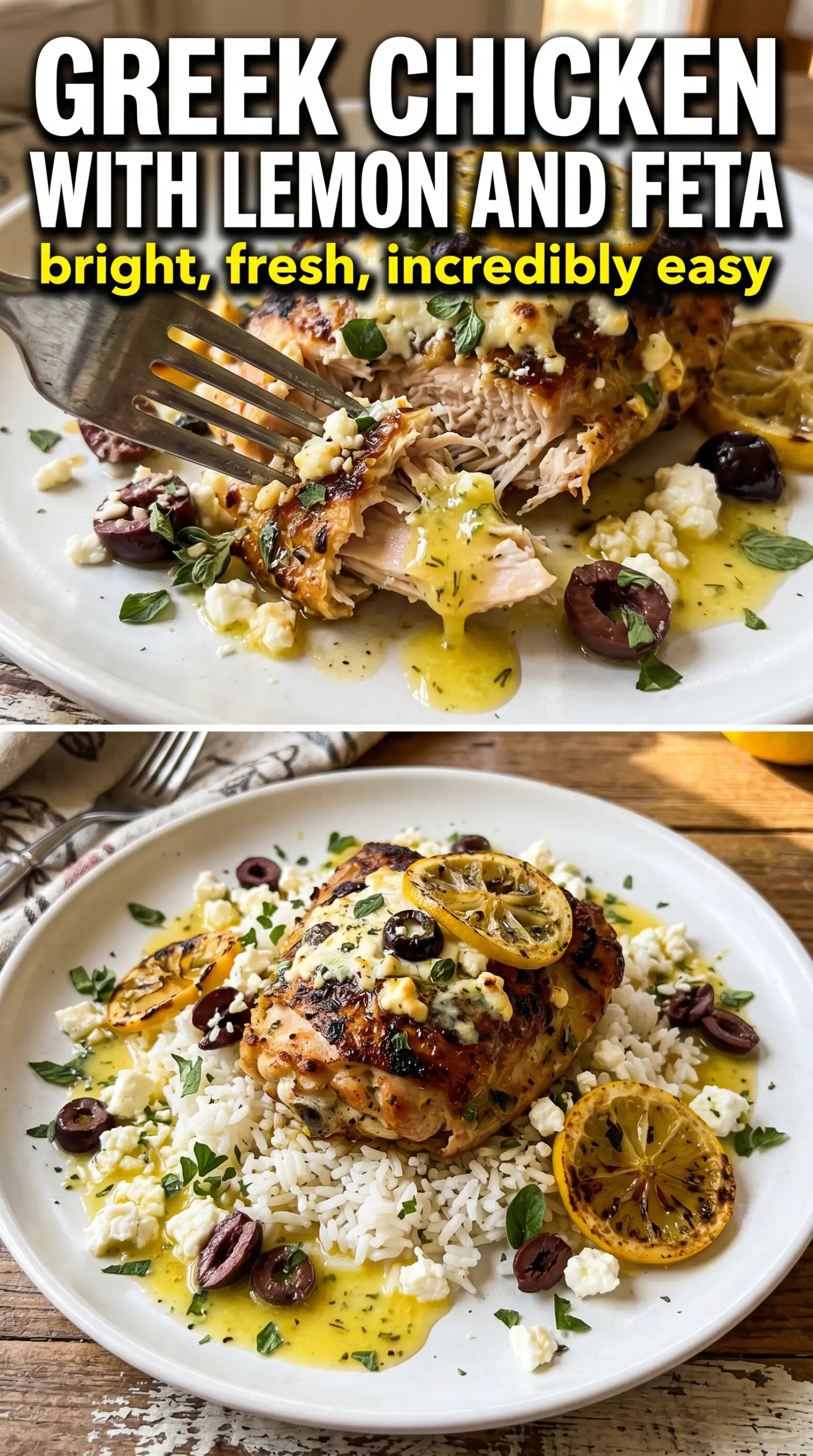
- Chicken thighs — Bone-in, skin-on thighs stay juicy at the high oven temperature this dish needs. Boneless thighs work in a pinch, but they won’t give you the same crisp skin or the same forgiving cook time.
- Fresh lemon juice and zest — Juice brings the brightness, but zest carries the lemon oil that makes the dish smell and taste rounder. Bottled juice won’t give you the same clean finish, and the zest is what keeps the marinade from tasting flat.
- Feta — Add it after roasting, not before. Heat softens feta enough to coat the chicken and tomatoes, but baking it for the full time can dry it out and mute the salty tang.
- Kalamata olives — They add depth and a briny edge that balances the lemon. If you don’t have them, use another cured olive, but avoid anything mild and bland or the dish loses its backbone.
- Cherry tomatoes — They burst into the pan juices and help build a quick sauce around the chicken. Larger tomatoes work only if you cut them down so they release liquid fast enough to roast instead of steam.
Roasting the Chicken So the Skin Stays Crisp
Building the Marinade
Whisk the olive oil, lemon juice, lemon zest, garlic, oregano, smoked paprika, salt, and pepper until the mixture looks emulsified and slightly thickened. That tells you the oil and citrus are holding together instead of separating immediately. Coat the chicken all over and let it sit for at least 30 minutes. Longer marinating won’t make this better once the acid starts working on the meat, so stop there.
Arranging the Pan
Put the chicken skin-side up in a large baking dish and give each piece some breathing room. Crowding traps steam, and steam is the enemy of crisp skin. Scatter the tomatoes, olives, and lemon slices around the chicken rather than burying the meat in them. You want the fruit and olives to roast in the drippings, not smother the skin.
Roasting to the Right Finish
Roast at 425°F until the skin is golden and the internal temperature hits 165°F, usually 25 to 28 minutes. The skin should look blistered in spots and the tomatoes should be collapsed and glossy. If the top is getting dark before the chicken is done, move the dish to a lower rack and keep roasting. Pull it too early and the fat under the skin won’t fully render, which leaves you with rubbery rather than crisp chicken.
Adding the Feta at the End
Crumb the feta over the hot chicken and vegetables the moment the dish comes out of the oven. The heat from the pan softens the cheese just enough to turn it creamy at the edges. If you add it before roasting, it can dry out and turn grainy instead of staying rich and salty. Finish with fresh oregano and serve right away while the skin still has its crunch.
How to Adapt This for Different Tables and Different Diets
Dairy-Free Version
Leave off the feta and finish with a drizzle of good olive oil and a few extra oregano leaves. You lose the salty creaminess, so add a pinch more salt at the table and keep the olives in the dish for balance.
Boneless Chicken Thighs
Boneless thighs cook a little faster and are easier to serve, but they won’t develop the same dramatic skin. Start checking them around 18 to 20 minutes so they don’t dry out, and keep the pan juices around them for moisture.
Making It More Filling
Serve the chicken over orzo, rice, or warm pita to catch the lemony pan juices. The starch turns this from a roast chicken dinner into a fuller meal, and orzo especially picks up the feta and tomato juices nicely.
Storage and Reheating
- Refrigerator: Store leftovers in an airtight container for up to 4 days. The feta softens more as it sits, but the flavor stays bright.
- Freezer: The chicken and pan juices freeze well for up to 2 months, though the tomatoes will soften a lot after thawing. Freeze without the fresh oregano and add that after reheating.
- Reheating: Warm covered in a 325°F oven until heated through, or reheat gently in a skillet with a splash of water. High heat will dry out the chicken and make the feta grainy.