Gluten free lasagna soup brings all the best parts of a bubbling pan of lasagna into one bowl: rich tomato broth, savory sausage, tender pasta, and a cool ricotta-mozzarella topping that melts into the surface as soon as it hits the hot soup. It eats like comfort food, but it comes together much faster than layering noodles and baking a casserole.
The trick is building the flavor in stages instead of dumping everything into the pot at once. Browning the sausage gives you the base, tomato paste adds depth after it’s cooked for a minute, and the broth plus crushed tomatoes turn it into something spoonable without losing that lasagna-style richness. Gluten free pasta needs a gentler hand, too, so it goes in late and cooks just until tender before it starts to break apart.
Below, I’ve included the one timing detail that keeps the noodles from going mushy, plus a few smart swaps if you need to make this dairy-free or use a different gluten free pasta shape.
The broth had that deep lasagna flavor, and the gluten free noodles held up better than I expected. Stirring in the ricotta-mozzarella topping right at the end made it taste like the real thing without turning grainy.
Love the cozy, cheesy finish of this gluten free lasagna soup? Save it to Pinterest for the nights when you want pasta, sausage, and melty ricotta in one pot.
Why the Noodles Go In Last, Not First
The most common mistake with lasagna soup is letting the pasta sit in the pot too long. Gluten free noodles don’t have the same cushion that wheat pasta does, so they soften fast and can go from tender to fragile in a few minutes. If they simmer while the soup keeps cooking, they’ll pull apart and turn the broth cloudy and thick in the wrong way.
That’s why the broth gets built first and the pasta goes in only after the tomatoes, broth, and sausage are already seasoned. The soup should be at a steady simmer, not a hard boil, when the noodles go in. A hard boil can rough up gluten free pasta and make it break before it’s fully cooked.
- Brown the sausage well — those browned bits on the bottom are part of the flavor, and they help the broth taste like it simmered longer than it did.
- Cook the tomato paste briefly — one to two minutes takes away the raw edge and deepens the base.
- Keep the simmer gentle — gluten free noodles are much happier with a soft bubble than an aggressive boil.
- Stop when the pasta is just tender — carryover heat will keep softening it in the bowl.
What Each Ingredient Is Doing in the Pot
- Italian sausage — This is the backbone of the soup. Pork sausage gives you fat, seasoning, and enough richness to stand up to the tomatoes. If you swap in turkey sausage, the soup will still work, but it tastes leaner, so you may want an extra pinch of salt and a little olive oil in the pot.
- Tomato paste — This is where the depth comes from. Don’t skip the short cooking time; raw tomato paste tastes sharp, and a minute or two in the hot pot changes it completely.
- Crushed tomatoes and diced tomatoes — The crushed tomatoes make the broth cohesive, while the diced tomatoes give you little bursts of texture. If you only have one type, use it, but the combination keeps the soup from feeling flat.
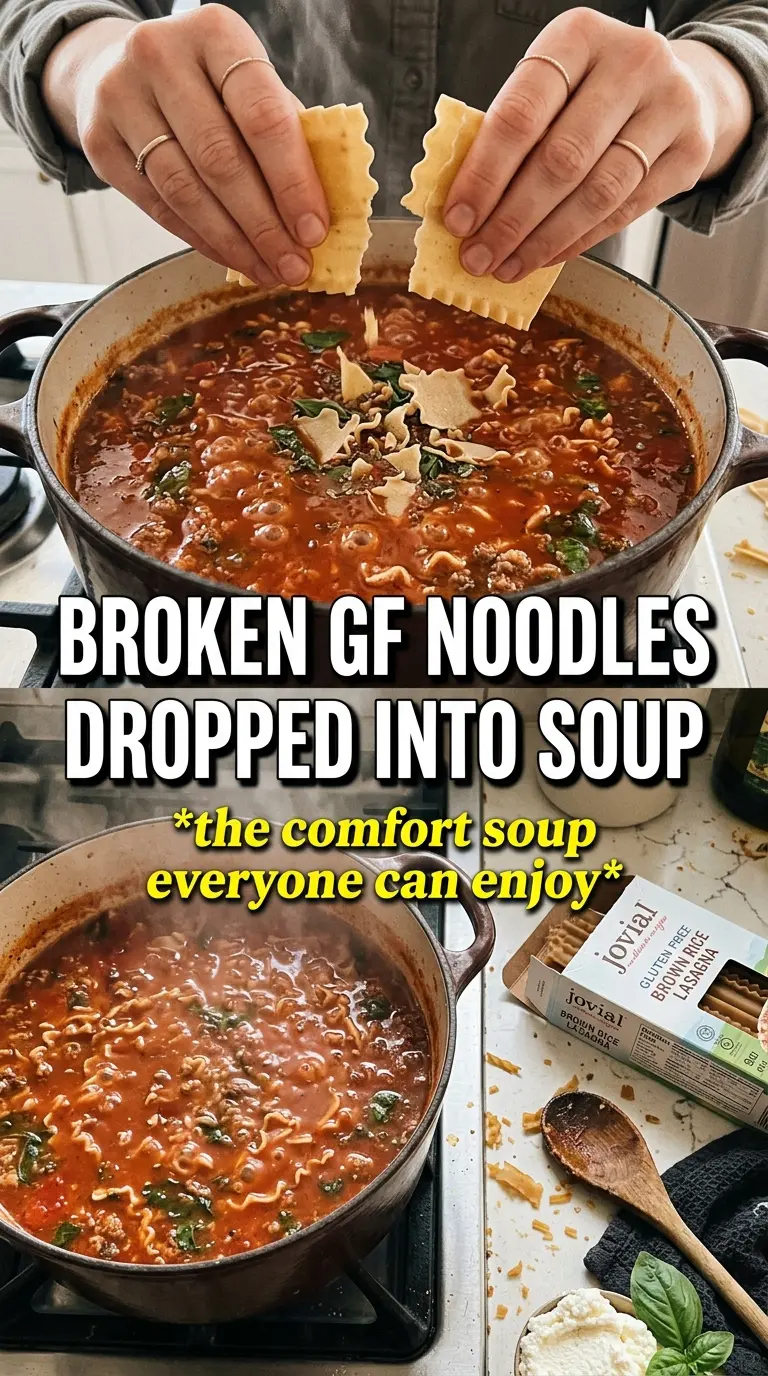
- Gluten free pasta — Brown rice lasagna sheets or GF penne both work well, but the shape matters. Broken lasagna sheets give you the classic feel; penne is sturdier if you expect leftovers. Cook it right in the soup only if you’re serving soon, because gluten free pasta keeps absorbing liquid.
- Ricotta, mozzarella, and parmesan — The cheese topping is what makes this feel like lasagna instead of tomato soup. Stir it together just before serving so it stays fluffy and melts into the bowl instead of disappearing into the pot.
Building the Broth Without Overcooking the Pasta
Brown the sausage first
Cook the sausage in a large pot until it’s no longer pink and you’ve got some browned edges on the meat. Drain off excess fat if there’s a lot, but leave a little behind for flavor. If the sausage is pale and gray, the soup will taste flat no matter how long the tomatoes simmer.
Cook the onion and garlic in the same pot
Sauté the diced onion in the sausage drippings until it turns soft and translucent, about four minutes. Add the garlic for just a minute; once it smells fragrant, move on. Garlic burns fast in an empty pot, and burnt garlic gives the whole soup a bitter edge.
Wake up the tomato base
Stir in the tomato paste and let it cook for one to two minutes before adding the liquids. It should darken slightly and smell sweet, not sharp. This short step is what gives the soup that slow-cooked lasagna taste in half the time.
Simmer the soup, then add the pasta
Add the crushed tomatoes, diced tomatoes, broth, herbs, and red pepper flakes, then bring it to a boil before lowering it to a steady simmer. Return the sausage to the pot and add the gluten free pasta once the broth is fully seasoned. Cook just until the pasta is tender according to the package, because once it goes soft in gluten free soup, it keeps getting softer.
Finish with the cheese dollop
Mix the ricotta, mozzarella, parmesan, and basil in a bowl right before serving. Spoon a generous dollop over each bowl of soup and let the heat from the broth melt the cheese into creamy ribbons. If you stir it into the whole pot, you lose that lasagna-like contrast between hot broth and cool, rich topping.
How to Adjust This Soup for Different Kitchens and Different Needs
Make it dairy-free
Skip the ricotta-mozzarella topping and finish each bowl with a spoonful of dairy-free cashew cream or a grated vegan parmesan. You’ll lose the classic lasagna melt, but the soup itself still has plenty of body from the sausage and tomatoes.
Use gluten free penne instead of lasagna sheets
Penne holds up a little better than broken lasagna noodles, especially if you plan on leftovers. The soup will feel a little more like pasta stew than classic lasagna, but the texture stays cleaner after reheating.
Make it milder
Use mild Italian sausage and cut the red pepper flakes in half or leave them out. You’ll still get a full tomato-herb base, just without the gentle heat that makes the broth feel a little more layered.
Storage and Reheating
- Refrigerator: Store for up to 4 days in an airtight container. The noodles will keep absorbing broth, so expect a thicker soup by day two.
- Freezer: Freeze the soup without the pasta for the best texture. Thaw, reheat, then cook fresh gluten free pasta in the hot broth before serving.
- Reheating: Warm it gently on the stove over medium-low heat with a splash of broth or water. The biggest mistake is boiling leftovers, which turns gluten free pasta soft and can make the tomato base taste dull.
Answers to the Questions Worth Asking
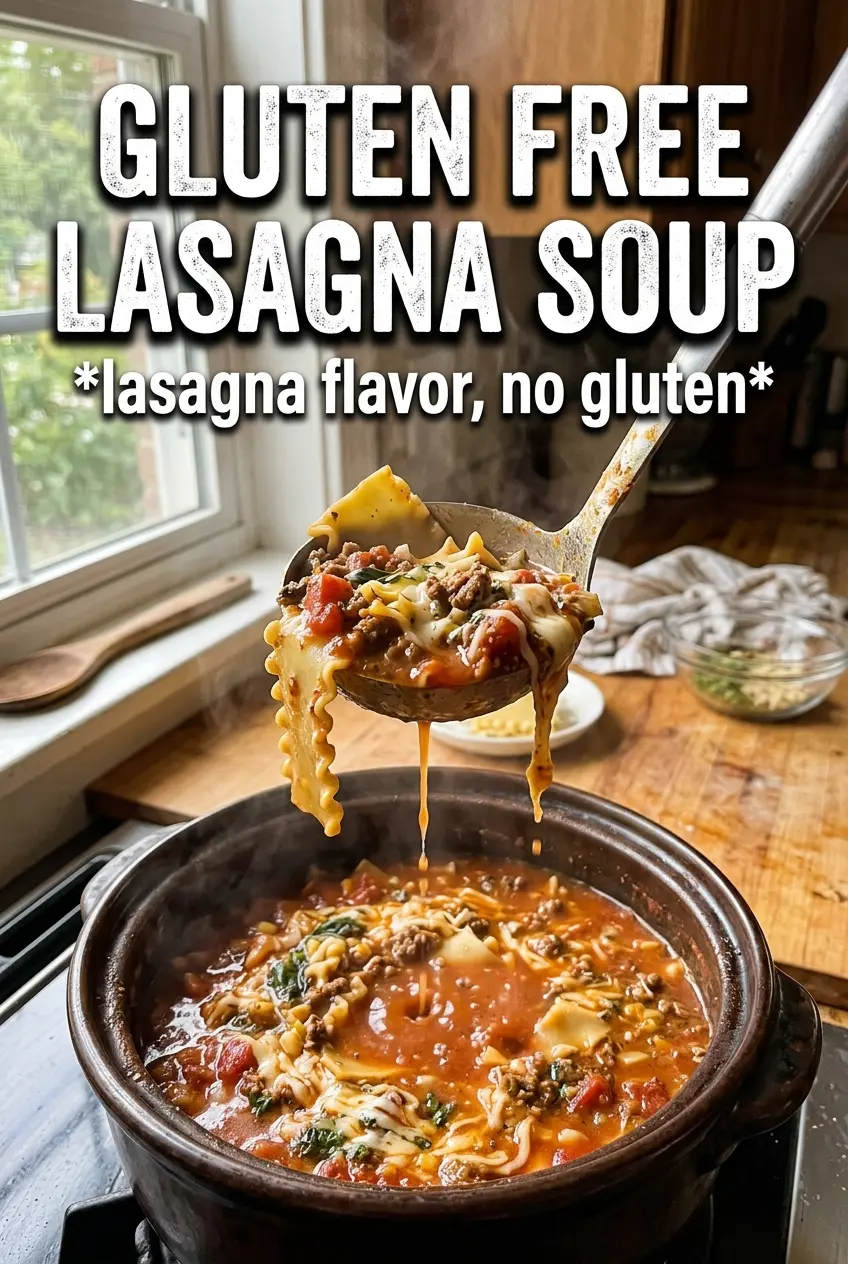
Gluten Free Lasagna Soup
Ingredients
Equipment
Method
- Heat a large Dutch oven over medium-high heat and brown the Italian sausage until cooked through, 5-8 minutes. Drain excess fat and set the sausage aside.
- Sauté the diced onion in the same pot until softened, about 4 minutes. Add minced garlic and cook 1 minute, stirring to prevent browning.
- Stir in tomato paste and cook 1-2 minutes to deepen flavor. Keep the heat at medium so it doesn’t scorch.
- Add crushed tomatoes, diced tomatoes, chicken broth, Italian seasoning, dried basil, and red pepper flakes. Bring the mixture to a boil, then reduce to a steady simmer.
- Add the gluten-free pasta and return the sausage to the pot. Simmer for 8-12 minutes (or per package directions) until the pasta is tender.
- Season with salt and black pepper to taste. Stir well and let it simmer 1 more minute so the seasoning blends.
- Mix ricotta, shredded mozzarella, parmesan, and fresh basil until combined. The texture should be thick enough to spoon.
- Serve the soup hot and top each bowl with a generous spoonful of the ricotta-mozzarella mixture. Let the dollop melt slightly into the broth before eating.