Rich tomato broth, tender gluten-free pasta, and a melty cheese dollop make this gluten free Crockpot lasagna soup feel like a full lasagna dinner without the layering, babysitting, or oven time. The sausage seasons the whole pot from the start, and the slow simmer gives the tomatoes time to turn sweet and deep instead of sharp. By the time the pasta goes in, the soup already tastes built, not assembled.
The trick with this version is timing the gluten-free noodles late enough that they stay intact but early enough that they finish with a little bite. I also like using both crushed and diced tomatoes here because the crushed tomatoes give you body while the diced tomatoes leave some texture in the broth. The ricotta, mozzarella, and parmesan dollop melts into the bowl and gives you the lasagna part in the easiest possible way.
Below you’ll find the detail that matters most: when to add the pasta, how to keep it from going mushy, and the small cheese-sauce habits that make each bowl taste like you worked harder than you did.
The broth got thick and tomato-rich after the full cook time, and the gluten-free noodles stayed tender because I added them at the end like you said. The cheese dollop melted into the bowl and made it taste like lasagna without turning into a heavy pasta stew.
Pin this gluten free Crockpot lasagna soup for a hands-off dinner with tender GF pasta and a creamy ricotta-mozzarella finish.
The Part That Keeps Gluten-Free Noodles from Turning Mushy
The biggest mistake in Crockpot pasta soup is treating gluten-free noodles like they can ride along for hours. They can’t. Gluten-free pasta softens faster than wheat pasta, and in a slow cooker it can go from tender to bloated if you add it too early. That’s why the broth and sausage build first, and the noodles go in only near the end, when the soup has already picked up enough body to coat them.
The other thing that helps is giving the soup a chance to simmer without the pasta in it long enough for the tomato base to deepen. If you rush that part, the broth tastes thin and the pasta has to carry the whole dish, which is backward. You want the soup to taste like lasagna filling in broth form before the noodles ever hit the pot.
- Late pasta addition — keeps the texture intact and prevents the noodles from dissolving into the broth.
- Browned sausage first — gives the soup a savory base and keeps the meat from tasting boiled.
- Tomato paste — adds body and concentration so the broth tastes fuller after hours in the Crockpot.
What Each Ingredient Is Actually Doing in the Pot
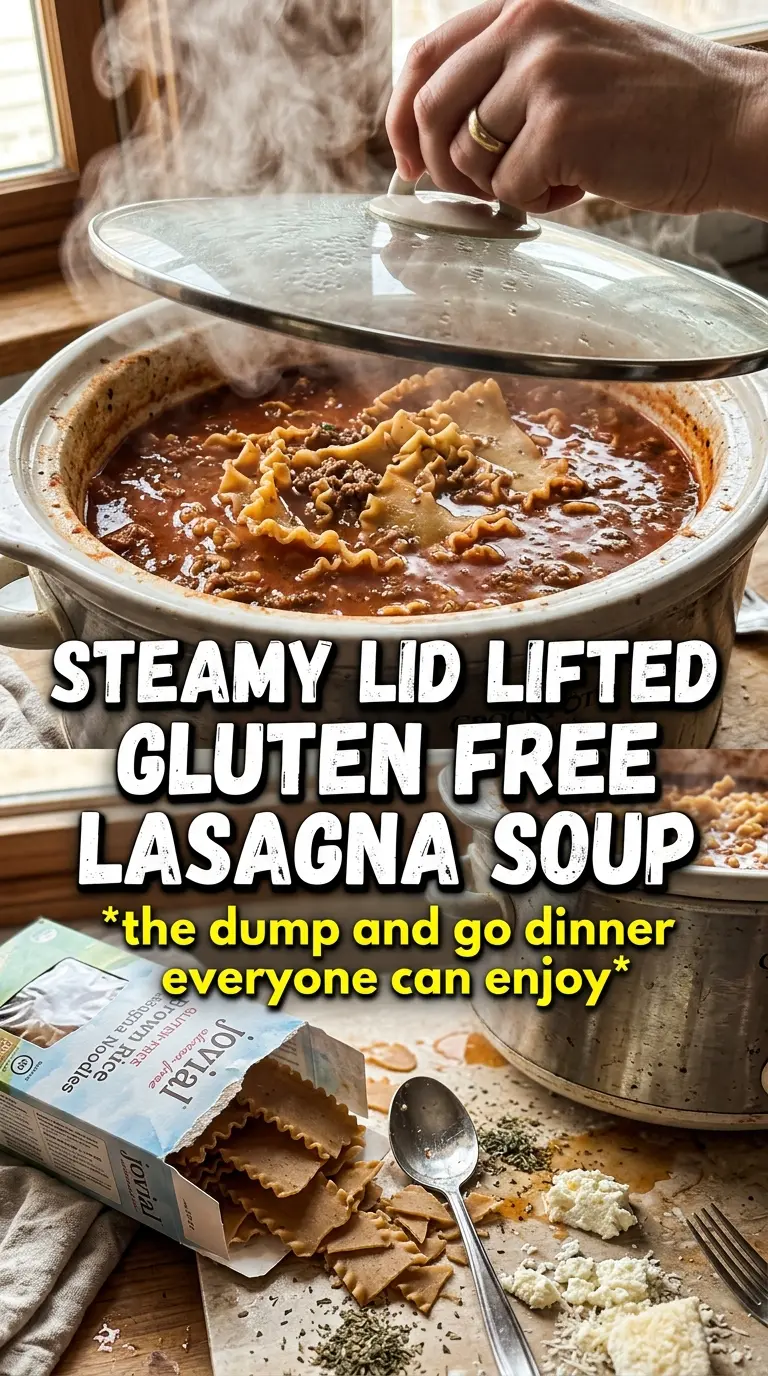
- Italian sausage — this is the main seasoning source. Pork sausage gives the broth enough fat and salt to taste like a real supper, not just tomato soup, and turkey sausage works if you want something lighter, though it will taste leaner.
- Crushed tomatoes plus diced tomatoes — crushed tomatoes thicken the broth, while diced tomatoes leave little pops of texture. If you only have one kind, use all crushed for a smoother soup or all diced for a looser one.
- Certified gluten-free chicken broth — this matters if you need the recipe to stay truly gluten-free. Some broths are fine, but some hidden wheat ingredients show up where you least expect them, so read the label.
- Gluten-free lasagna noodles or GF penne — broken lasagna noodles give you that classic look and bite, but penne is easier if that’s what you have. Cook them just until tender; overcooked GF pasta turns soft fast.
- Ricotta, mozzarella, and parmesan — the cheese dollop is what makes the bowl feel like lasagna. Whole-milk ricotta melts creamier, and parmesan adds the salty edge that keeps the topping from tasting flat.
Building the Broth Before the Pasta Goes In
Brown the sausage and start the base
Cook the sausage until it has real color on it, then drain the excess fat before it goes into the Crockpot. That browning step gives you the savory depth the slow cooker can’t create on its own. Add the onion, garlic, tomatoes, broth, tomato paste, Italian seasoning, basil, and red pepper flakes, then stir it all together so the tomato paste disappears into the liquid instead of sitting in clumps.
Let the slow cooker do the heavy lifting
Cook on Low for 5 to 7 hours or on High for 2 1/2 to 3 hours. You’re looking for the onion to turn soft and the broth to smell rounded, not raw or sharply tomato-heavy. If your slow cooker runs hot, check the soup a little early; too much heat won’t ruin the base, but it can make the final pasta step more fragile.
Add the pasta at the end, not the beginning
Stir in the broken gluten-free noodles during the last 30 to 35 minutes, then watch them closely. If the soup is barely bubbling, turn it up to High so the pasta actually cooks; if it’s already hot and active, keep an eye on the texture and start checking a few minutes early. Gluten-free pasta changes fast, and the window between tender and too soft is narrow.
Finish with the cheese dollop
Mix the ricotta, mozzarella, parmesan, and basil in a bowl while the pasta finishes. Spoon it over each bowl of soup right before serving so it melts into the hot broth instead of disappearing into the whole pot. That keeps the texture creamy in the center of each serving instead of loosening the entire soup.
How to Change This Soup Without Losing What Makes It Work
Make it dairy-free
Skip the ricotta-mozzarella-parmesan topping and serve the soup with a spoonful of dairy-free cashew cream or a sprinkle of dairy-free mozzarella instead. You’ll lose some of the classic lasagna richness, but the tomato-sausage broth still carries the dish. If you want the top to taste brighter, add extra basil right before serving.
Use ground turkey instead of sausage
Ground turkey works, but it needs help. Add an extra 1/2 teaspoon salt and a little more Italian seasoning so the broth doesn’t taste thin, and don’t skip browning it well before it goes in. Sausage brings fat and spice; turkey brings a lighter texture and a cleaner finish.
Make it extra thick and stew-like
Reduce the broth by 1 cup and use the full amount of tomato paste if you want a spoonable, heartier bowl. The soup will still taste like lasagna, but the texture lands closer to a thick stew. This is the version I’d make when I want it to feel especially filling.
Storage and Reheating
- Refrigerator: Store for up to 4 days. The pasta will keep absorbing broth, so expect it to thicken overnight.
- Freezer: Freeze the soup without the pasta for best texture. Gluten-free noodles can get soft after thawing, so add fresh pasta when you reheat if you can.
- Reheating: Warm gently on the stove or in the microwave with a splash of broth to loosen it. If the pasta is already in the soup, reheat just until hot so it doesn’t turn mushy.
Questions I Get Asked About This Recipe
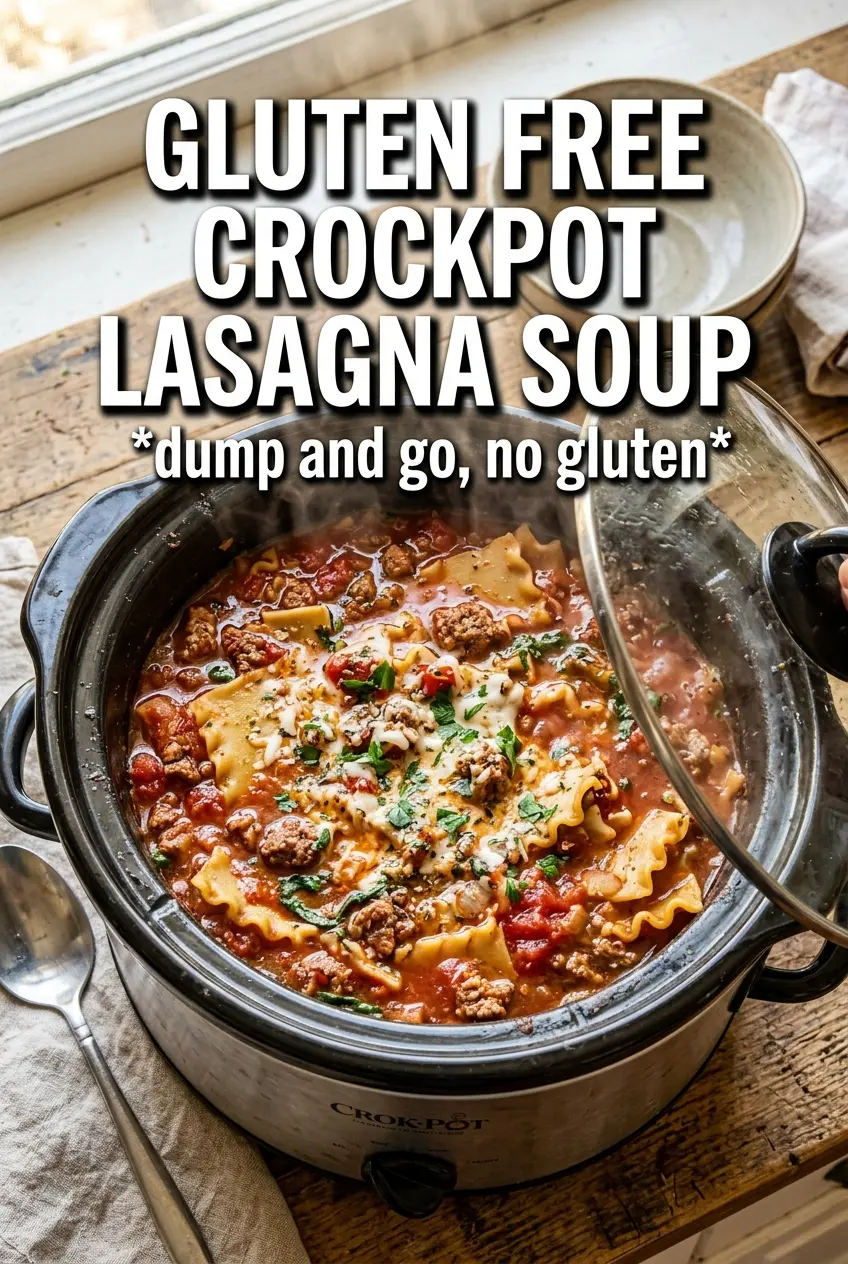
Gluten Free Crockpot Lasagna Soup
Ingredients
Equipment
Method
- Brown the Italian sausage in a skillet over medium-high heat until no longer pink, then drain any excess grease. Add the browned sausage to the crockpot.
- Add the diced onion and minced garlic to the crockpot. Stir to coat with the sausage drippings and aromatics for even seasoning.
- Pour in the crushed tomatoes and diced tomatoes. Scrape the bottom of the crockpot so everything is incorporated.
- Add the chicken broth, tomato paste, Italian seasoning, dried basil, and red pepper flakes. Mix thoroughly so the tomato broth is evenly colored.
- Cover and cook on Low for 5-7 hours or High for 2.5-3 hours. Keep the lid on to maintain steady heat.
- In the last 30-35 minutes, add the broken gluten-free lasagna noodles or GF penne to the crockpot. Increase to High if needed to keep the soup at a steady simmer.
- Cook until the GF pasta is tender, checking frequently because GF pasta can overcook. Look for softened noodles with a slight bite rather than mushy texture.
- Season with salt and pepper to taste. Stir well and taste again to balance the tomato broth.
- Mix the ricotta, shredded mozzarella, and parmesan together until combined. Fold in fresh basil and keep the mixture thick enough to scoop.
- Serve the soup in bowls and add a generous dollop of the cheese mixture. Let it melt on top, then finish with fresh basil.