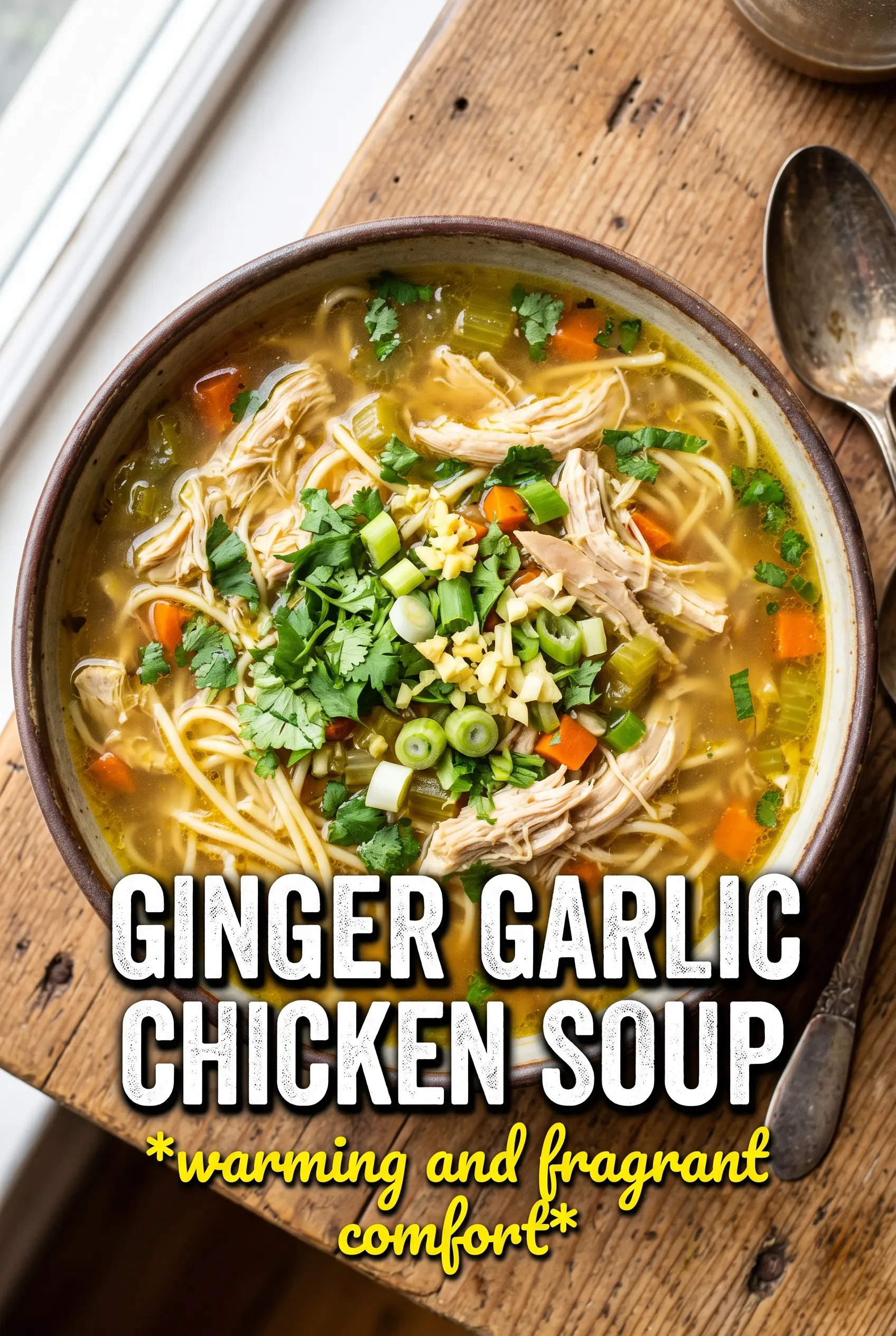
Clear, fragrant ginger garlic chicken noodle soup is the kind of bowl that settles in fast: savory broth, tender shredded chicken, soft noodles, and just enough brightness at the end to keep every spoonful lively. The ginger and garlic don’t disappear into the background here. They shape the whole pot, giving the broth a warm, clean depth that tastes like someone paid attention.
What makes this version work is timing. The aromatics cook long enough to lose their raw edge, but not so long that the garlic turns bitter. The chicken simmers gently in the broth until it shreds easily, and the noodles go in near the end so they stay springy instead of bloated. A small splash of rice vinegar and sesame oil at the finish gives the soup a rounder, more complete taste without making it heavy.
Below, I’ll walk through the one part that matters most for good texture, plus a few smart swaps if you want to use what’s already in your kitchen.
The broth had such a clean ginger-garlic flavor, and the noodles stayed tender without turning mushy even after sitting a bit. My husband went back for a second bowl before I had even sat down.
Save this Ginger Garlic Chicken Noodle Soup for the nights when you want a clear, savory broth with tender chicken and noodles that stay just right.
The Broth Stays Clear When the Chicken Simmer, Not Boils
A lot of chicken noodle soups lose their polish because the pot is rolling too hard. That rough boil clouds the broth, tightens the chicken, and can make the vegetables taste flat instead of sweet. A steady simmer keeps the broth clean and lets the chicken cook through without shredding into dry, stringy pieces.
This soup also gets its backbone from building flavor in layers. The onion, carrot, and celery soften first, then the garlic and ginger bloom just long enough to perfume the pot. Once the broth goes in, there’s no need to chase it with extra seasonings right away. Let the chicken cook in that base, then finish with sesame oil and rice vinegar after the noodles are tender so the aromatics stay bright.
What Each Ingredient Is Actually Doing in This Soup

- Chicken breast or thighs — Breasts give you a leaner soup and shred neatly if you don’t overcook them. Thighs stay a little juicier and are more forgiving, especially if the pot simmers a few minutes longer than planned. Either works, but thighs have a slight edge if you want richer broth.
- Fresh ginger and garlic — These are the point of the soup, not background notes. Fresh really matters here because dried ginger or jarred garlic won’t give the same clean heat or aroma. Grate the ginger finely so it dissolves into the broth instead of floating in stringy bits.
- Chicken broth — Use the best broth you have because it carries the whole dish. A salty, thin broth will stay salty and thin, so choose one with decent body or add a little extra water and season carefully at the end. Homemade broth makes the soup taste fuller, but a good carton works fine.
- Ramen noodles or egg noodles — Ramen gives you a springier bite and cooks fast. Egg noodles are a little softer and more old-school. Either one should go in right before serving so they don’t soak up half the pot while the soup sits.
- Sesame oil and rice vinegar — Don’t cook these in the pot for long. Sesame oil brings a nutty finish, and rice vinegar sharpens the broth just enough to wake everything up. Add both at the end so they taste fresh instead of muted.
Building the Soup So the Noodles Stay Tender and the Broth Stays Bright
Softening the Vegetables First
Start with the onion, carrots, and celery in a little oil and cook them until the onion looks translucent and the edges of the carrots just start to soften. You’re not looking for color here. You’re building a sweet, savory base that melts into the broth later. If the heat is too high, the garlic will burn later and the whole pot will taste harsh, so keep the vegetables moving and let them sweat instead of sear.
Waking Up the Ginger and Garlic
Add the garlic and ginger after the vegetables have taken on some color and give them about two minutes. They should smell strong and fragrant, not sharp or raw. If the garlic starts browning fast, lower the heat immediately; browned garlic turns bitter and that bitterness carries through the whole soup. This is the point where the kitchen should smell unmistakably warm and savory.
Simmering the Chicken Gently
Pour in the broth, soy sauce, and chicken, then bring the pot up to a boil only once before lowering it to a steady simmer. The surface should move lazily, with small bubbles around the edge, not a hard rolling boil. That gentler heat keeps the chicken tender and gives the broth time to pick up flavor. Pull the chicken out when it’s cooked through and shreds easily with a fork.
Finishing With Noodles and Brightness
Add the noodles after the chicken is shredded and returned to the pot, then cook only until they’re tender. Overcooked noodles turn pasty fast in hot broth, especially if the soup sits for a few minutes before serving. Stir in the sesame oil and rice vinegar at the very end, taste, and season with salt and pepper after that. The vinegar should lift the broth, not make it taste sour.
Three Practical Ways to Adjust This Soup Without Losing What Makes It Good
Use chicken thighs for a richer bowl
Thighs give the soup a little more depth and stay juicy if you leave them in the pot a bit longer than planned. They’re my pick when I want the broth to taste fuller without adding anything extra. If you use thighs, shred them while they’re still warm so they fall apart easily.
Make it gluten-free with rice noodles
Swap the ramen or egg noodles for rice noodles and check that your soy sauce is gluten-free. Rice noodles soften fast, so add them right at the end and serve as soon as they’re tender. They’ll give you a lighter, cleaner bowl with less chew than egg noodles.
Skip the soy sauce for a lower-sodium version
Use low-sodium broth and cut the soy sauce in half if you want more control over the salt level. You’ll lose a little depth, so taste at the end and add a pinch more salt only if the broth still feels flat. The ginger and garlic will still carry the soup.
Add mushrooms or bok choy for more vegetables
Sliced mushrooms can go in with the carrots and celery, while bok choy belongs near the end so it stays crisp-tender. Mushrooms deepen the broth; bok choy keeps the bowl lighter and adds a fresh crunch. Both fit the soup without crowding out the ginger and garlic.
Storage and Reheating
- Refrigerator: 3 to 4 days. The noodles will keep soaking up broth, so expect the soup to thicken a little.
- Freezer: Freeze the soup without the noodles for the best texture. Noodles go soft after freezing, so cook a fresh batch when you reheat.
- Reheating: Warm it gently on the stove over medium-low heat until steaming. If the soup seems too thick, add a splash of broth or water before serving. Don’t boil it hard or the chicken will dry out and the noodles will break apart.