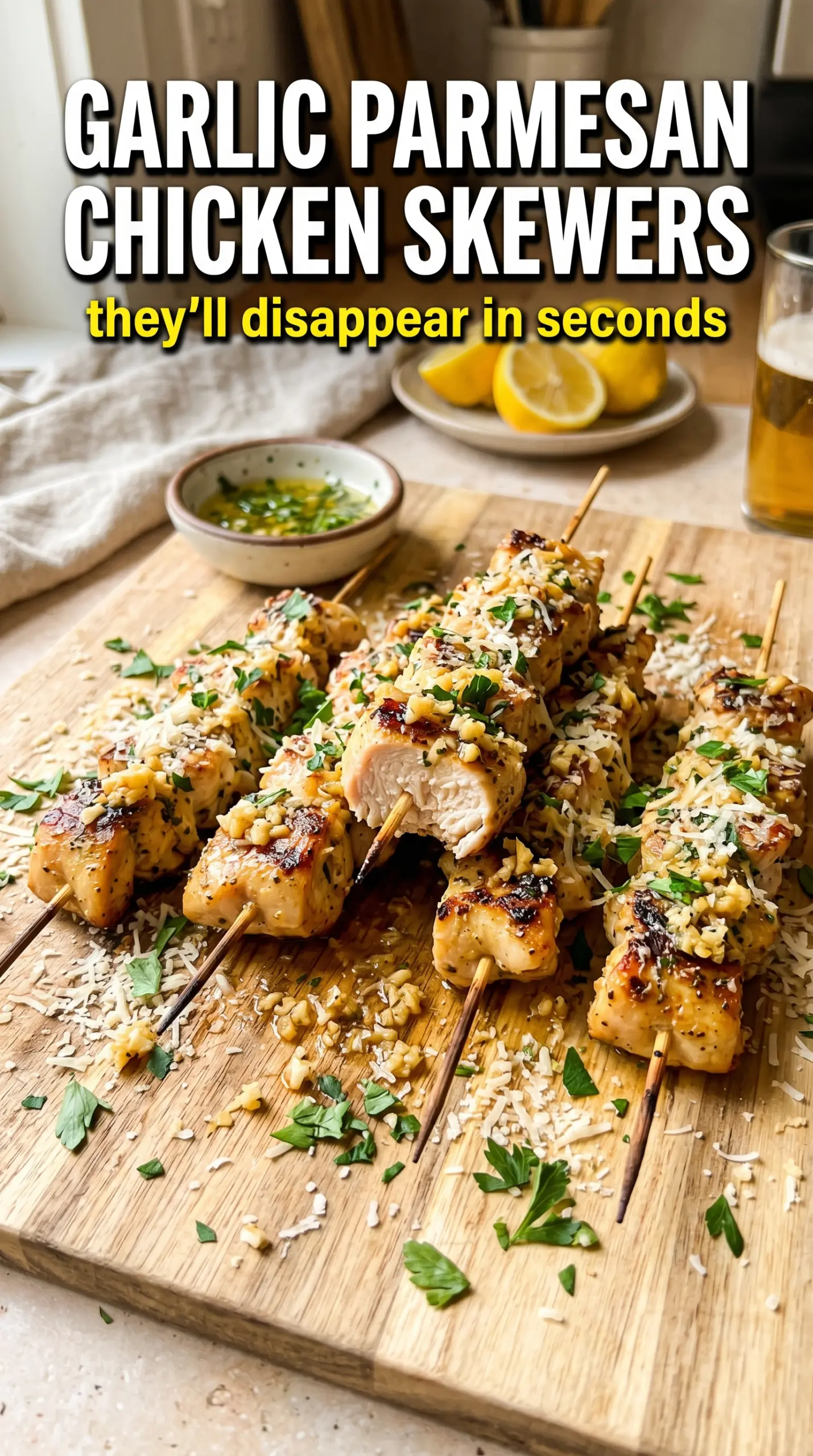
Garlic Parmesan chicken skewers come off the grill with crisp, browned edges, juicy centers, and enough garlicky, cheesy coating to cling to every bite. The best part is the contrast: the chicken gets real color from the grill while the Parmesan and herbs form a savory crust that tastes richer than the short ingredient list suggests.
This version works because the chicken gets a brief marinade that pulls flavor into the surface without turning the meat mushy. Freshly grated Parmesan matters here. It melts and clings better than the pre-shredded stuff, which tends to stay dry and dusty on the grill. A little lemon juice keeps the chicken bright, and melted butter at the end gives the skewers that glossy finish you want right before serving.
Below, I’ve included the small details that keep the garlic from burning, help the chicken cook evenly, and make the skewers taste like something you’d happily put on repeat all summer long.
The chicken stayed juicy and the Parmesan formed those little crispy bits on the edges exactly like I hoped. I marinated it for 30 minutes and the flavor went all the way through.
Garlic Parmesan chicken skewers with that golden crust and herb butter finish are worth saving for your next grill night.
The Marinade That Cares More About Browning Than Soaking
The trick with these skewers is not loading the marinade with too much acid or letting the chicken sit for hours. Lemon juice gives you brightness, but the olive oil and Parmesan do the heavy lifting for browning and cling. Too much acid, too much time, or too much liquid in the bowl and the chicken starts to look wet instead of coated, which is how you lose that grilled crust.
Parmesan in the marinade does more than season the chicken. It helps the surface dry out just enough to take on color fast on the grill. That matters because chicken breast cooks quickly, and if you’re chasing a deep char on a cool grill, the meat will overcook before the outside gets where it needs to be.
- Chicken breasts — Cut them into even 1.5-inch pieces so they cook at the same pace. Bigger chunks take too long and smaller pieces dry out before you get any grill marks.
- Freshly grated Parmesan — This melts into the marinade and finishes better on the hot skewers. The pre-shredded kind often has anti-caking agents that keep it from melting cleanly.
- Garlic — Mince it finely so it disperses through the oil instead of sitting in big pieces that burn on the grill. If you’re sensitive to burnt garlic, grate it instead of chopping.
- Lemon juice — Use the full amount for brightness, but don’t push the marinating time much past 30 minutes. That’s enough to season the surface without changing the texture of the chicken.
What Each Ingredient Is Actually Doing in This Recipe
- Primary ingredient (the star) — Quality matters most. Choose the best you can find.
- Cooking medium (oil, butter, or broth) — This carries flavors and prevents dryness.
- Seasonings (salt, pepper, spices, herbs) — Layer flavors so nothing overpowers. Build depth gradually.
- Aromatics (garlic, onion, herbs) — Cook with fat to bloom flavors. Become the foundation.
- Supporting ingredients — Complement the main ingredient without overpowering it.
- Sauce or liquid (if applicable) — Brings flavors together. Balance richness with acid.
- Acid (lemon, vinegar, wine, or other) — Brightens and prevents flat-tasting results.
- Final finish (garnish, glaze, or sauce) — Prevents one-dimensional taste and adds visual appeal.
How to Get the Crust Before the Cheese Burns
Coating the Chicken Evenly
Whisk the marinade until the Parmesan looks suspended in the oil, then toss the chicken until every piece is lightly coated. You want a glossy film, not a bowl of loose liquid pooling at the bottom. If the chicken sits in a puddle, the cheese settles and the flavor gets uneven. Thirty minutes in the fridge is enough to let the seasonings settle in without softening the meat.
Threading for Even Heat
Soak wooden skewers so they don’t scorch, then thread the chicken with a little space between pieces. Crowding the pieces together traps steam, and steam is the enemy of grill marks. Leave a small gap at each end of the skewer too, which makes them easier to turn and helps the middle pieces cook before the outsides dry out.
Grilling to Deep Gold
Oil the grates and preheat the grill until it’s properly hot, then lay the skewers down and leave them alone long enough to sear. If you move them too early, the coating sticks and tears. Turn only when the first side releases with visible char marks, then grill the second side until the thickest piece reaches 165°F. The garlic should be fragrant and browned, not blackened.
Finishing With Butter and Parmesan
Pull the skewers off the heat before the surface looks dry. Drizzle with melted butter while they’re still hot, then shower on the remaining Parmesan so it softens against the chicken instead of falling off. Fresh parsley and lemon wedges finish the whole dish with brightness that keeps the garlic and cheese from feeling heavy.
How to Adapt These Skewers for Your Grill, Your Pantry, or Your Diet
Use chicken thighs for a richer skewer
Boneless skinless thighs stay juicier and forgive a slightly hotter grill better than breasts. They take a minute or two longer, but the tradeoff is a softer, more succulent bite with more fat to carry the Parmesan and garlic.
Make it dairy-free without losing the garlic-herb coating
Skip the Parmesan and finish with a dairy-free butter or olive oil drizzle plus extra herbs and a pinch of nutritional yeast if you want a cheesy note. You won’t get the same salty crust, but you’ll still get browned, garlicky chicken with a clean finish.
Bake them when the grill isn’t an option
Set the skewers on a foil-lined sheet pan and bake at 425°F, turning once halfway through. You won’t get the same smoky char, but a hot oven still gives you browned edges and fully cooked chicken without babysitting a grill.
Storage and Reheating
- Refrigerator: Store leftovers in an airtight container for up to 3 days. The coating softens a bit, but the flavor holds up well.
- Freezer: Freeze the cooked chicken off the skewers for up to 2 months. Wrap tightly and thaw overnight in the fridge before reheating.
- Reheating: Warm gently in a 325°F oven or in a covered skillet over low heat. High heat dries out chicken breast fast, so skip the microwave if you want to keep the texture close to the original.
Answers to the Questions Worth Asking

Garlic Parmesan Chicken Skewers
Ingredients
Equipment
Method
- Whisk together olive oil, garlic, 1/4 cup Parmesan, lemon juice, Italian seasoning, basil, salt, and pepper. Add chicken and toss to coat until evenly glossy.
- Marinate the chicken at room temperature for 30 minutes, until the edges look lightly opaque and the seasoning clings. Cover if needed to prevent drying.
- Soak wooden skewers in water for 30 minutes to reduce burning. When ready, thread the marinated chicken onto the skewers with tight spacing.
- Preheat the grill to medium-high heat and oil the grates. Grill skewers for 4-6 minutes per side until deeply golden with visible char marks and internal temperature reaches 165°F.
- Remove the skewers from the grill and drizzle with melted butter. Scatter the remaining Parmesan over the hot skewers so it melts into a lightly crusted layer.
- Garnish with fresh parsley and serve immediately with lemon wedges. The herb butter should pool around the skewer base for maximum flavor.