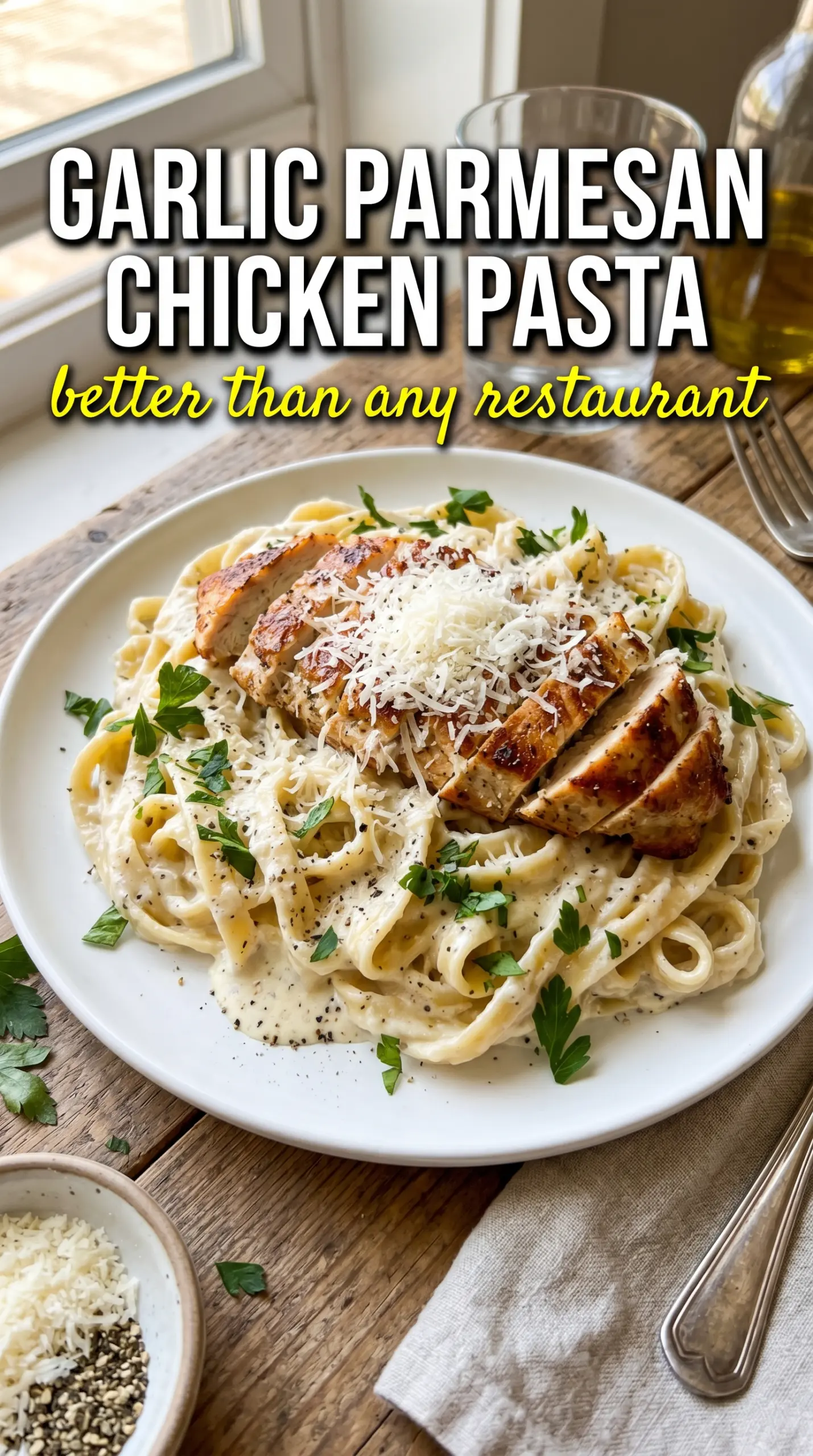
Silky garlic Parmesan sauce, tender sliced chicken, and twirls of pasta that catch every bit of cream in the pan make this the kind of dinner people ask for again before the plates are even cleared. It lands in that sweet spot between comforting and polished: rich enough to feel special, but still fast enough to pull off on a weeknight without a lot of fuss.
The chicken gets seasoned hard and cooked first, which gives the skillet the browned bits that season the sauce later. Then the garlic blooms briefly in butter before the cream and broth go in, so the sauce tastes rounded instead of flat. Parmesan is added off the hottest part of the burner, because that’s the difference between a smooth finish and a grainy one.
Below, I’ll walk through the one step people rush most often, how to keep the sauce silky, and the swaps that still keep the dish in balance if you need to work with what’s in the fridge.
The sauce turned out glossy instead of gluey, and the pasta water made it cling to the noodles perfectly. My husband said the chicken tasted like it came from a restaurant.
Save this garlic Parmesan chicken pasta for the night you want creamy noodles, golden chicken, and one pan’s worth of flavor.
The Reason the Sauce Stays Silky Instead of Turning Grainy
The sauce in this dish lives or dies by temperature. Parmesan hates a hard boil, and if it goes into a furious simmer, the proteins tighten and the sauce can turn sandy or separate. A low simmer is enough to thicken the cream and broth; the cheese just needs residual heat and steady stirring to melt in smoothly.
The other piece that matters is the pasta water. It’s not there to water the sauce down. It adds starch, which helps the cream cling to the noodles instead of sliding off the pan, and it gives you a little control at the end if the sauce tightens more than you wanted while it sits.
- Freshly grated Parmesan — Pre-shredded cheese is coated to keep it from clumping in the bag, and that coating can make the sauce feel dull or slightly gritty. Grating it yourself gives you a cleaner melt and a better finish.
- Heavy cream — This gives the sauce its body and keeps it from breaking as easily as milk would. Half-and-half works in a pinch, but the sauce will be lighter and a little less stable.
- Chicken broth — This keeps the cream from tasting heavy or one-note. Use a low-sodium broth if possible, since the Parmesan brings plenty of salt on its own.
- Spaghetti or fettuccine — Long pasta works best here because the sauce wraps around the strands instead of pooling in the bowl. If you use a shorter shape, choose one with ridges so it can hold the sauce.
What Each Ingredient Is Actually Doing in This Recipe
- Primary ingredient (the star) — Quality matters most. Choose the best you can find.
- Cooking medium (oil, butter, or broth) — This carries flavors and prevents dryness.
- Seasonings (salt, pepper, spices, herbs) — Layer flavors so nothing overpowers. Build depth gradually.
- Aromatics (garlic, onion, herbs) — Cook with fat to bloom flavors. Become the foundation.
- Supporting ingredients — Complement the main ingredient without overpowering it.
- Sauce or liquid (if applicable) — Brings flavors together. Balance richness with acid.
- Acid (lemon, vinegar, wine, or other) — Brightens and prevents flat-tasting results.
- Final finish (garnish, glaze, or sauce) — Prevents one-dimensional taste and adds visual appeal.
Building the Chicken, Sauce, and Pasta in the Right Order
Season and Sear the Chicken First
Season the chicken well before it hits the pan, then cook it in olive oil over medium-high heat until the outside is deeply golden and the center reaches 165°F. Don’t move it too early or you’ll lose the crust that gives the dish its best flavor. When it’s done, let it rest before slicing so the juices stay in the meat instead of running onto the cutting board.
Use the Same Skillet for the Sauce
Leave the browned bits in the pan. They’re the foundation of the sauce. Add the butter and garlic, and cook just until fragrant, about a minute, because garlic burns fast and bitter garlic will carry through the whole dish. Pour in the cream and broth after that and let the sauce come to a gentle simmer, not a boil.
Finish with Cheese and Pasta Water
Stir in the Parmesan once the heat is lowered and the sauce has started to thicken. If it looks too tight, add pasta water a splash at a time until it turns glossy and coats the back of a spoon. Toss in the pasta while the sauce is still warm and loose enough to spread, because it will cling better in the pan than it ever will on the plate.
Top, Slice, and Serve Right Away
Arrange the sliced chicken over the pasta instead of stirring it all together at the end. That keeps the chicken from overcooking in the sauce and lets the golden edges stay visible. Finish with basil and extra Parmesan while the pasta is hot so the cheese melts slightly on top and the basil releases its aroma.
How to Adjust This Without Losing the Balance
Make it gluten-free with a sturdy pasta
Use your favorite gluten-free spaghetti or fettuccine, but cook it just to the firm side of al dente. Gluten-free pasta softens fast once it hits the sauce, so pulling it a minute early keeps it from turning mushy.
Swap in thighs for a juicier chicken
Boneless skinless thighs work well if you want richer flavor and a little more forgiveness in the pan. They’ll take a minute or two longer than breasts, but they stay tender even if they go slightly past perfect.
Make it dairy-free with a different sauce style
This dish doesn’t translate cleanly to dairy-free with the same creamy result, but you can swap in unsweetened oat or cashew cream and use a dairy-free Parmesan-style topping. The flavor shifts a little, and the sauce will be less savory and less sharp, but it still works as a creamy garlic pasta.
Stretch it for a bigger crowd
Add sautéed spinach, peas, or roasted broccoli after the sauce comes together to bulk it up without watering it down. The extra vegetables also help the dish feel less heavy while keeping the same garlic-Parmesan backbone.
Storage and Reheating
- Refrigerator: Store leftovers in an airtight container for up to 3 days. The sauce will thicken as it chills.
- Freezer: This dish doesn’t freeze well. Cream sauces can separate after thawing, and the pasta tends to go soft.
- Reheating: Warm gently on the stove over low heat with a splash of broth or cream to loosen the sauce. High heat is what breaks the emulsion and makes the sauce look oily.
Answers to the Questions Worth Asking
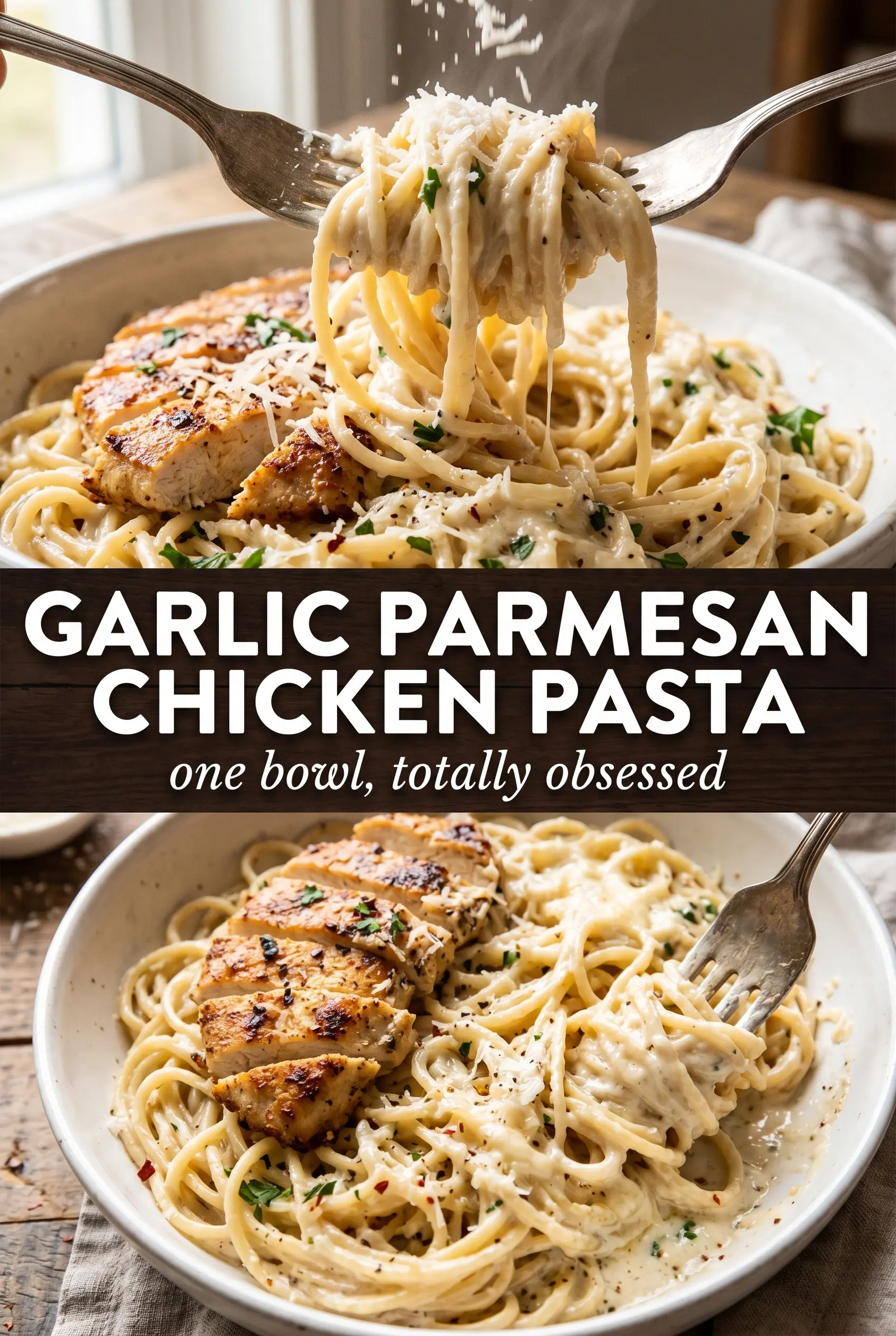
Garlic Parmesan Chicken Pasta
Ingredients
Equipment
Method
- Season the chicken breasts with salt, pepper, garlic powder, and Italian seasoning. Heat olive oil in a large skillet over medium-high heat and cook the chicken for 5-6 minutes per side until golden and cooked through to 165°F.
- Remove the chicken, rest briefly, and slice thin so it’s ready to pile on top of the pasta.
- In the same skillet, cook the minced garlic in butter over medium heat for 1 minute until fragrant.
- Pour in the heavy cream and chicken broth, then simmer for 4-5 minutes until slightly thickened.
- Stir in Parmesan cheese, Italian seasoning, and red pepper flakes until smooth, then add pasta water as needed for the sauce to coat the noodles.
- Toss the cooked spaghetti or fettuccine in the garlic Parmesan sauce until glossy and evenly coated.
- Divide the pasta among plates, then top each portion with the sliced chicken.
- Garnish with fresh basil and extra Parmesan so the finish looks and tastes bright.