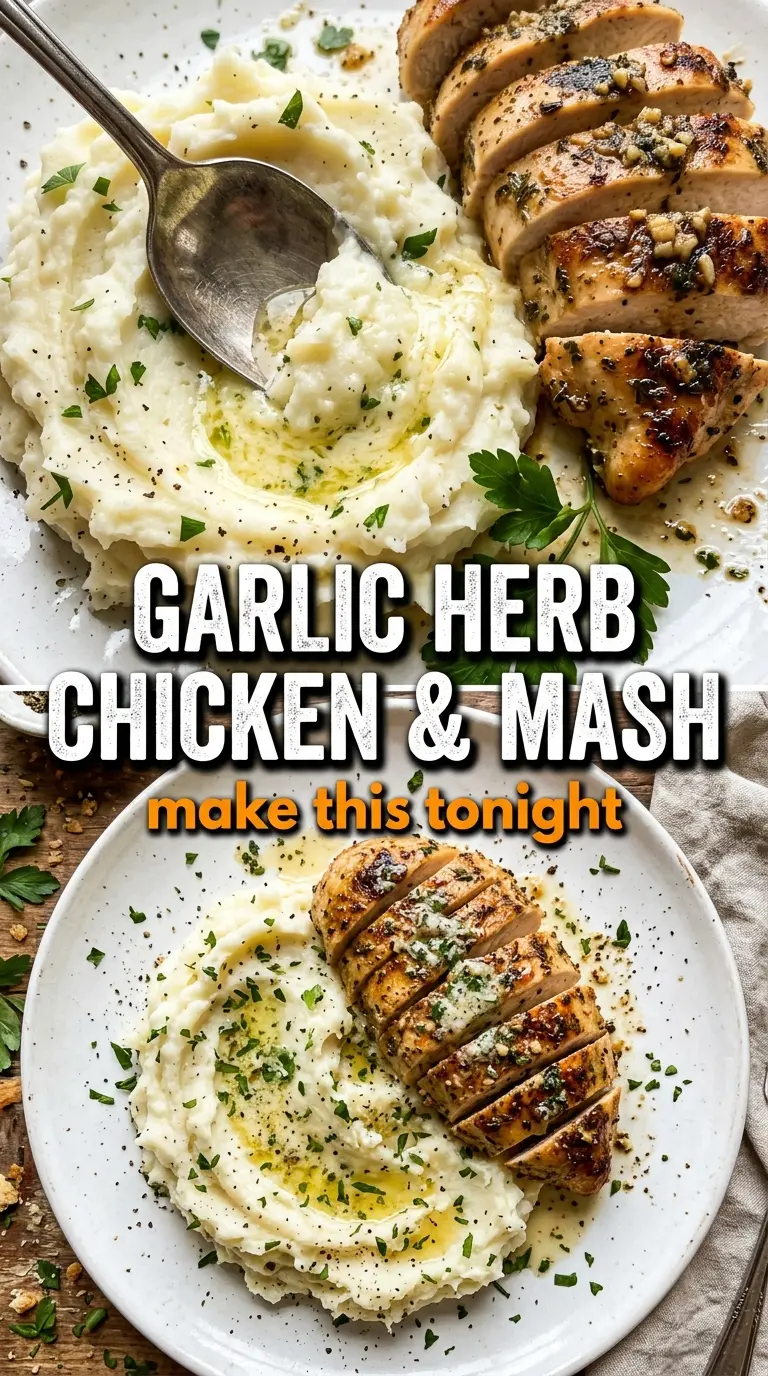
Golden seared chicken over buttery mashed potatoes is the kind of dinner that gets scraped clean without much conversation. The chicken stays juicy under a well-seasoned herb crust, and the pan sauce pulls everything together with garlic, butter, and the browned bits left in the skillet. It tastes like the kind of meal you’d expect from a bistro plate, but it still lands squarely in weeknight territory.
What makes this version work is that each part gets just enough attention without turning fussy. The potatoes are mashed while they’re still hot so they turn fluffy instead of gluey, and the chicken is seasoned before it hits the pan so the crust has a chance to build. The sauce comes together in the same skillet, which means every bit of flavor from the sear ends up on the plate where it belongs.
Below, I’ve added the small details that keep the chicken tender and the potatoes smooth, plus a few ways to adapt the dish if you want to swap the dairy or stretch it into a bigger meal.
The chicken got a beautiful crust, and the pan sauce was just enough to coat the potatoes without making them soggy. My husband kept saying the mashed potatoes tasted restaurant-style.
Save this garlic herb chicken with mashed potatoes for the nights when you want a crisp sear, creamy potatoes, and a skillet pan sauce on one plate.
The Reason the Chicken Stays Juicy Instead of Drying Out
Chicken breast goes wrong when it sits in the pan long enough to lose its moisture before the outside has a chance to brown. The fix here is a hot skillet, properly seasoned chicken, and a quick sear that builds color fast enough to protect the meat underneath. Once the crust is set, the chicken finishes cooking without hanging around in the pan longer than it needs to.
The other thing that matters is thickness. If one end of the breast is much thicker than the other, pound it lightly so the whole piece cooks at the same rate. That keeps you from overcooking the thin end while waiting for the center to hit 165°F.
What the Potatoes and Pantry Spices Are Doing in This Dish
- Yukon Gold potatoes — These break down into a naturally creamy mash with less effort than russets. They hold their body without turning watery, which matters when you’re piling chicken and sauce on top.
- Heavy cream or whole milk — Warm dairy blends into the potatoes smoothly. Cold milk can cool the mash down and make the texture feel stiff, especially if the potatoes were already drained and sitting.
- Garlic powder, smoked paprika, thyme, and rosemary — This blend gives the chicken a seasoned crust before it ever hits the sauce. Garlic powder coats evenly, while the dried herbs hold up better in a hot pan than fresh herbs would at this stage.
- Butter, divided — Some butter goes into the potatoes for richness, and the rest finishes the sauce. That split is what gives the plate its balance: creamy underneath, glossy and savory on top.
- Chicken broth — Broth loosens the browned bits in the skillet and turns them into sauce. Water won’t give you the same depth, and cream would make this heavier than it needs to be.
Building the Plate So the Sauce Lands in the Right Place
Start with the Potatoes While They’re Hot
Boil the potatoes until a fork slides in without resistance, then drain them well before mashing. If they hang onto too much water, the mash turns loose and dull instead of fluffy. Warm butter and dairy melt in more cleanly, so the texture stays smooth instead of grainy. Keep them covered while you cook the chicken so they stay hot enough to serve without reheating.
Season the Chicken Before It Meets the Pan
Pat the chicken dry first, then coat it evenly with the spice mix, salt, and pepper. Moisture on the surface is what stops browning, and uneven seasoning leaves the crust patchy. Press the seasoning on with your hands so it clings during the sear. When the oil shimmers in the skillet, the chicken is ready to go in.
Let the Skillet Do the Work
Cook the chicken over medium-high heat without moving it too early. If it sticks at first, it usually just needs another minute to release cleanly once the crust forms. Flip when the underside is deep golden, not pale with a few brown freckles. Pull it when it reaches 165°F at the thickest point, then let it rest while you build the sauce.
Use the Browned Bits for the Sauce
Lower the heat before adding the butter and garlic so the garlic softens instead of scorching. The broth should hit the pan and sizzle gently while you scrape up every browned bit from the bottom. That’s where the flavor lives. Simmer just until the sauce reduces slightly and looks glossy, then spoon it over the chicken and potatoes while it’s still warm.
How to Adapt This for Different Tables and Different Fridges
Dairy-Free Version
Use olive oil or a plant-based butter for both the potatoes and the sauce, then swap the cream for unsweetened oat milk or almond milk. The mash will be a little lighter and less rich, but the broth and pan drippings still carry plenty of flavor.
Make It With Chicken Thighs
Boneless thighs work well here if you want a juicier cut. They usually need a few extra minutes in the pan, and they bring a deeper, richer flavor that stands up nicely to the herb seasoning and garlic sauce.
For a Lighter Plate
Cut the butter in the potatoes to 2 tablespoons and use whole milk instead of cream. The result is still creamy, but the texture lands a little softer and less decadent, which works well if you’re serving it with a side salad or vegetables.
Storage and Reheating
- Refrigerator: Store leftovers in an airtight container for up to 3 days. The potatoes will firm up and the chicken may lose a little juiciness, but the flavor holds up well.
- Freezer: The chicken freezes better than the mashed potatoes. If you freeze the full meal, expect the potatoes to become a bit grainy after thawing.
- Reheating: Reheat the chicken gently in a covered skillet with a splash of broth, and warm the potatoes over low heat with a little milk or butter stirred in. High heat dries out the chicken and makes the potatoes turn pasty.
Answers to the Questions Worth Asking
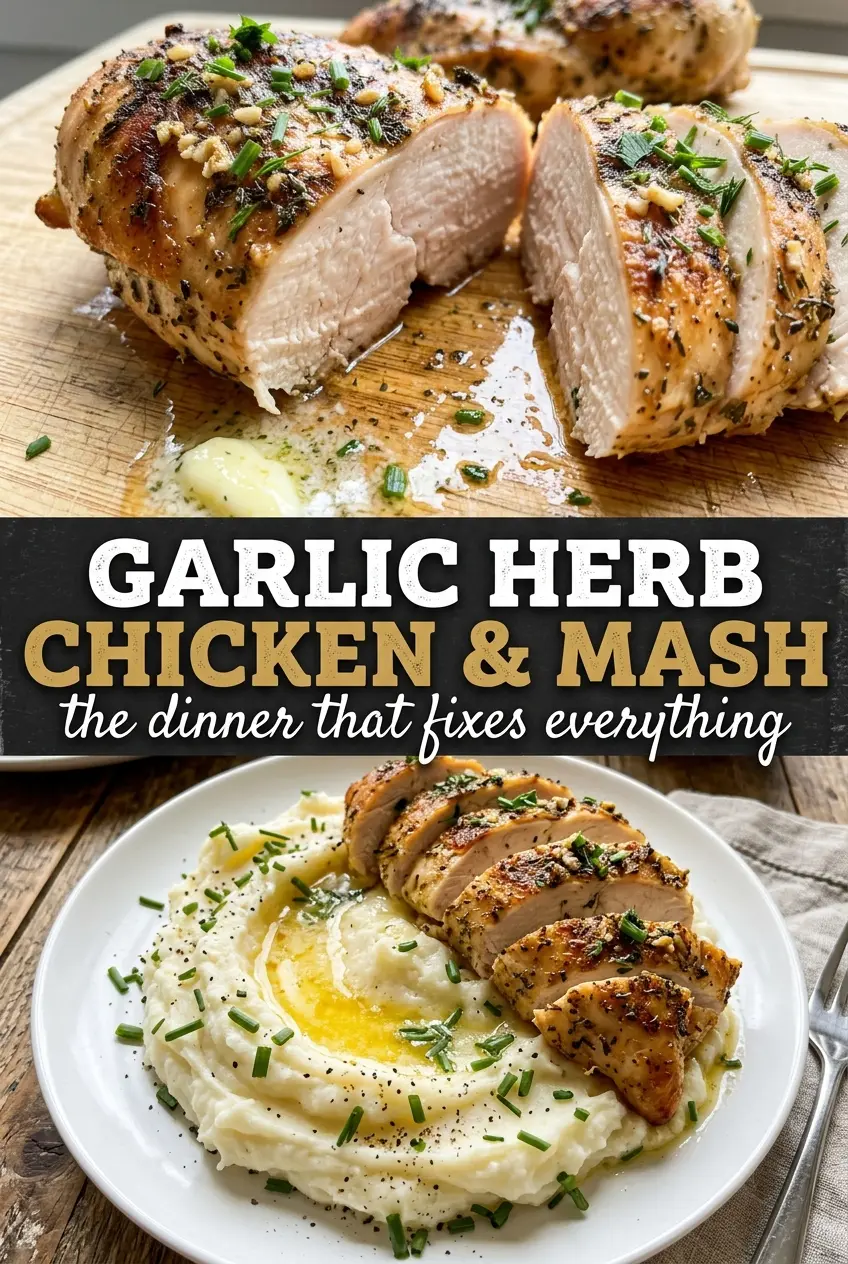
Garlic Herb Chicken Breast with Mashed Potatoes
Ingredients
Equipment
Method
- Boil the peeled and cubed Yukon Gold potatoes in salted water for 15-18 minutes until fork-tender, then drain well. Mash with butter and warmed heavy cream or whole milk, then season with salt, pepper, and garlic powder until smooth and fluffy; keep warm.
- Season the boneless skinless chicken breasts with garlic powder, smoked paprika, dried thyme, dried rosemary, salt, and pepper. Heat olive oil in a cast iron skillet over medium-high heat, then sear the chicken for 5-6 minutes per side until golden and cooked through to 165°F, and remove to a plate.
- Melt 2 tablespoons butter in the same pan, then cook the minced garlic for 1 minute until fragrant. Add chicken broth and scrape up the browned bits, then simmer for 2-3 minutes until a simple pan sauce forms.
- Plate the mashed potatoes and place the seared chicken on top. Drizzle the garlic herb pan sauce over the chicken and garnish with fresh parsley.