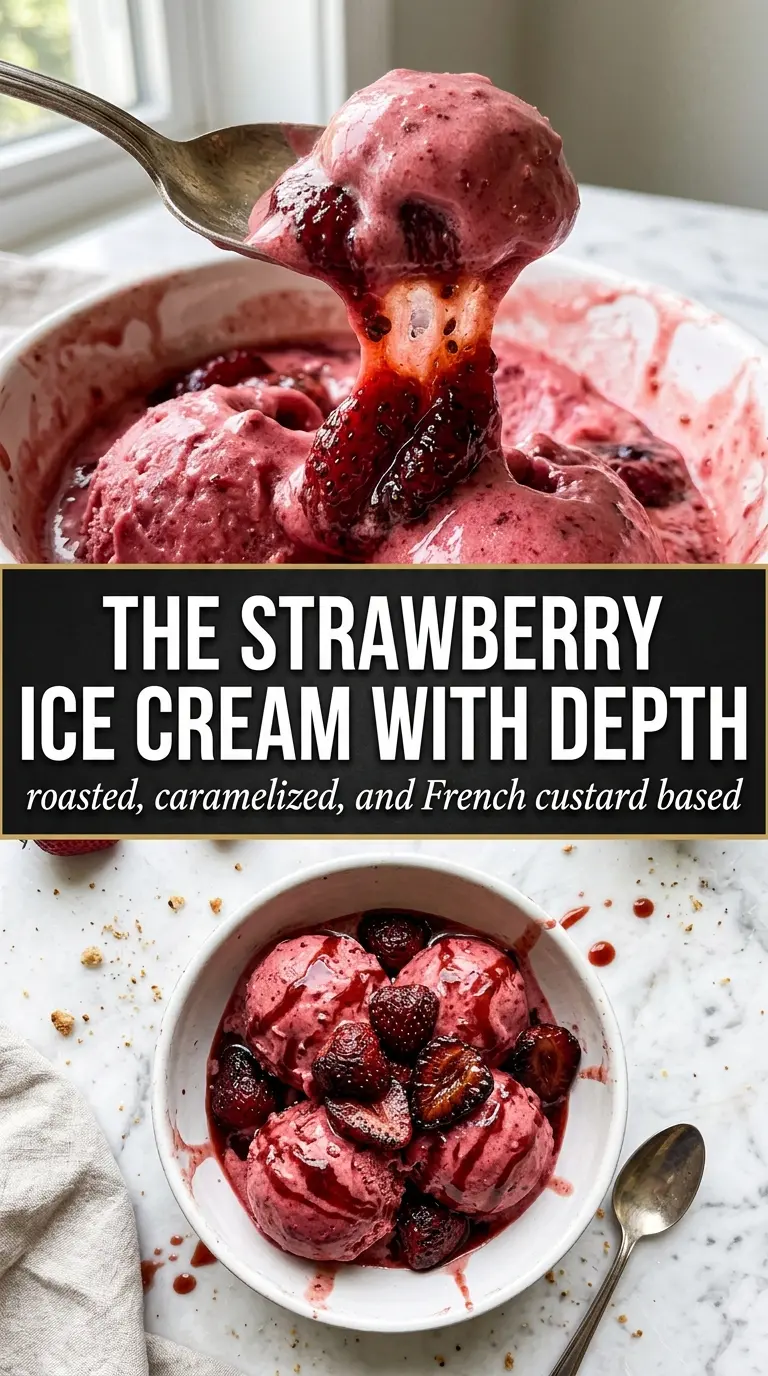
Roasted strawberry ice cream has a deeper, rounder strawberry flavor than anything made with raw berries. The fruit turns jammy in the oven, the edges caramelize, and the whole base picks up that faint balsamic note that makes each spoonful taste fuller and more grown-up without losing the bright berry punch you want from strawberry ice cream.
The trick is roasting the strawberries before they ever touch the custard. That step concentrates their juices and keeps the finished ice cream from tasting thin or icy. The custard base gives it a dense, scoopable body, and cooking it gently to the right temperature keeps the yolks smooth instead of grainy.
Below, I’ll walk you through the part that matters most: how to roast the berries until they collapse into syrupy jam, how to keep the custard silky, and what to do if you want a slightly different finish without losing that French-style richness.
The roasted strawberries made all the difference. The ice cream churned up thick and creamy, and the balsamic gave it this subtle depth that kept everyone going back for another scoop.
Save this roasted strawberry custard ice cream for the days when you want a deep berry flavor and a scoopable, French-style finish.
The Roasted Berry Step That Keeps This Ice Cream From Tasting Flat
Fresh strawberry ice cream often tastes bright for the first bite and then fades. Roasting fixes that. Heat pulls moisture out of the berries, concentrates the sugars, and adds a little caramel edge that makes the finished ice cream taste like strawberries with their volume turned up.
The balsamic isn’t there to make this taste savory. It sharpens the fruit and helps the roasted berries taste darker and more complete. If you skip it, the ice cream still works, but the flavor leans lighter and more one-note. The custard base matters just as much; it gives you that plush texture that balances the intensity of the roasted puree.
- Strawberries — Use ripe berries, but don’t worry about perfect peak-season fruit here. Roasting smooths out minor blandness and bruised spots as long as the berries still smell fragrant.
- Aged balsamic vinegar — A small amount is enough. It deepens the strawberry flavor without making the base taste acidic. Regular balsamic works in a pinch, but the older, thicker kind gives a rounder finish.
- Heavy cream and whole milk — This ratio creates a rich custard that freezes with a dense, scoopable body. Swapping in lower-fat milk makes the ice cream icier and less silky.
- Egg yolks — These thicken the base and keep the final texture smooth. They also help the ice cream hold the roasted strawberry flavor instead of letting it taste thin after freezing.
- Vanilla — Use it as a support note, not the main event. It softens the tart edges of the berries and helps the custard taste finished.
What Each Ingredient Is Actually Doing in This Ice Cream
- Base ingredient (cream, milk, or custard) — This provides the foundation and richness. Quality matters.
- Sweetener (sugar, honey, or condensed milk) — This sweetens and prevents ice crystals. The ratio is critical.
- Flavor element (vanilla, fruit, chocolate, or other) — This defines the ice cream personality. Use quality ingredients.
- Egg yolks (if making custard base) — These create richness and silky texture. Optional but elevates ice cream.
- Churning (if using ice cream maker) — This incorporates air and prevents ice crystals. Critical for smooth texture.
- Freezing temperature and time — Proper freezing prevents rock-hard texture. Store at 0°F or below.
- Mix-ins (chocolate, cookies, fruit, or swirls) — These add texture and prevent one-dimensional flavor. Add near end of churning.
- Serving temperature (slightly soft, not rock hard) — This provides creamy mouthfeel. Remove from freezer 5 minutes before serving.
How to Roast the Berries and Cook the Custard Without Losing the Silkiness
Roasting the Strawberries Into Jam
Toss the halved strawberries with part of the sugar and the balsamic, then spread them out on a baking sheet in a single layer. You want the berries to collapse, darken at the edges, and pool into a thick syrup; if they’re still holding their shape like fresh fruit, they haven’t gone far enough. Let them cool before pureeing so you don’t trap steam in the puree and dilute the custard later.
Warming the Dairy the Right Way
Heat the cream and milk until they’re steaming and just starting to move around the edges, not boiling. The goal is to warm them enough to temper the yolks without scrambling them. If the dairy is too hot when it goes into the eggs, you’ll get flecks of cooked yolk and a rough custard instead of a smooth one.
Cooking to the Right Thickness
Whisk the warm dairy slowly into the yolks and sugar, then return everything to the pan and cook over medium-low heat until it reaches about 175°F. The custard should coat the back of a spoon and look slightly thicker than heavy cream, but it shouldn’t ever simmer. If you see little bubbles or the mixture starts to smell eggy, pull it off the heat immediately and strain it.
Chilling Before Churning
Stir the roasted strawberry puree, vanilla, and salt into the strained custard, then cool it over an ice bath before refrigerating it until completely cold. That long chill is what helps the ice cream churn up dense instead of slushy. A warm base churns poorly and makes softer ice cream with a looser texture, even if everything else is perfect.
Churning and Freezing for a Clean Scoop
Churn the base in your ice cream maker until it looks like soft-serve with a thick, ribboned body. Scrape it into a container and freeze until firm. If you pack it down too hard while it’s still too warm, it can ice over unevenly; a shallow container helps it set faster and more evenly.
How to Adapt the Custard Without Losing That Roasted Strawberry Character
Bourbon-Warm Finish
Stir in 1 to 2 tablespoons bourbon with the vanilla after the custard comes off the heat. It adds warmth and a little complexity without overpowering the berries, but too much will soften the freeze and make the texture looser.
Dairy-Free Version
Use full-fat canned coconut milk in place of the cream and whole milk, then keep the yolks in place for body. The coconut flavor will show up a little, and the ice cream won’t taste exactly like the original, but it still churns into a rich frozen custard with good scoopability.
Strawberry-Basil Variation
Steep a small handful of basil leaves in the warm dairy for 10 minutes, then strain them out before tempering the yolks. This gives the ice cream a fresh, herbal lift that plays well with the balsamic, but keep the steep short or the basil can take over.
Storage and Reheating
- Refrigerator: The churned base itself should be used after chilling, not stored as a finished dessert in the fridge. Once frozen, keep the ice cream in an airtight container in the freezer, where it stays at its best for about 2 weeks before the texture starts to dull.
- Freezer: This freezes well. Press parchment or plastic wrap directly against the surface to limit ice crystals, and keep the lid tight so it doesn’t pick up freezer odors.
- Reheating: Not applicable. For the cleanest scoop, let the container sit at room temperature for 5 to 10 minutes before serving. If it’s rock hard, people usually try to force it immediately and end up with shattered scoops instead of neat curls.
Answers to the Questions Worth Asking
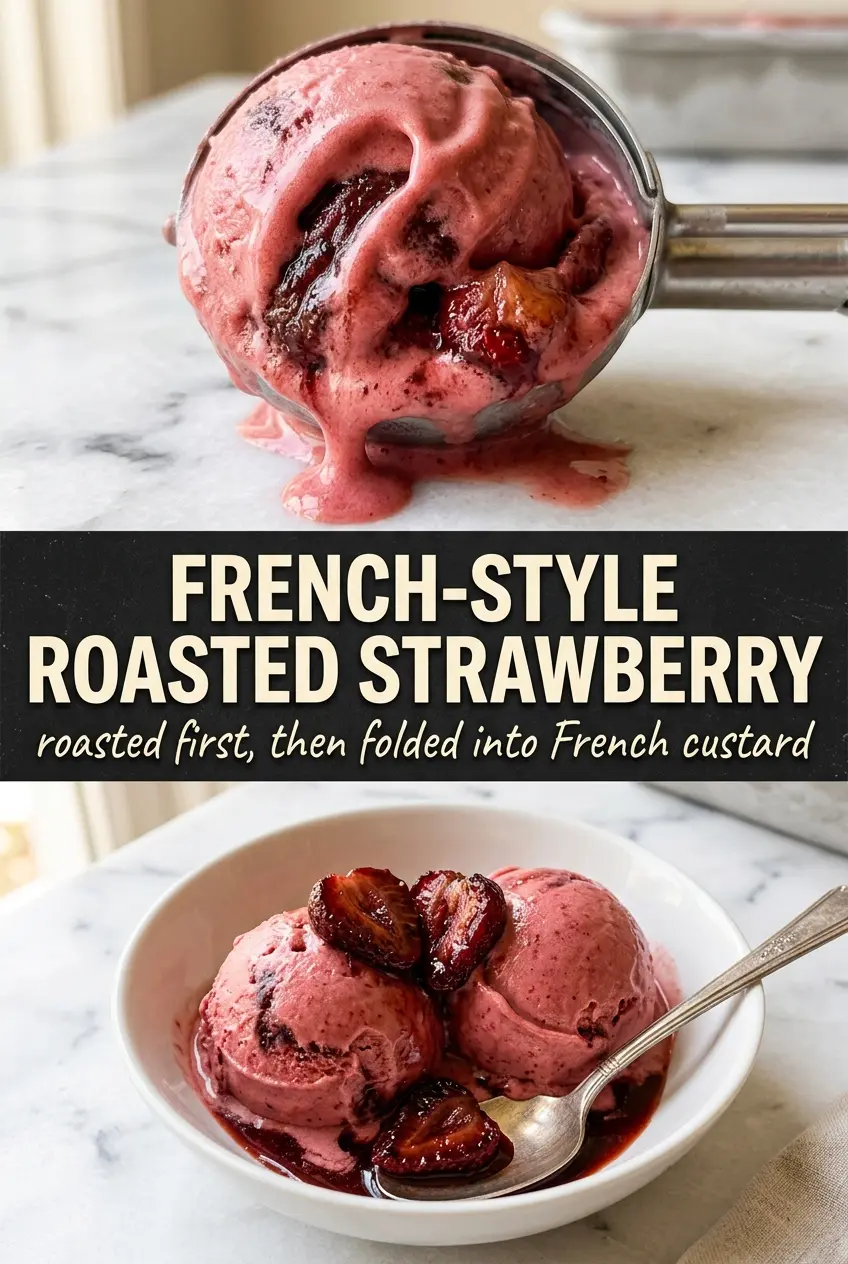
French-Style Roasted Strawberry Ice Cream
Ingredients
Equipment
Method
- Preheat oven to 375F. Toss the strawberries with 1/4 cup sugar and the balsamic vinegar on a sheet pan, making sure the fruit is spread in a single layer.
- Roast for 30-35 minutes at 375F until deeply caramelized and jammy, with ruby juices bubbling around the edges. Cool slightly, then puree until smooth.
- Heat the heavy cream and whole milk until steaming, then whisk into the egg yolks beaten with the remaining 1/4 cup sugar. Keep whisking so the mixture turns glossy and smooth.
- Cook the custard to 175F, stirring constantly until it thickens enough to coat a spoon. Strain the mixture, then stir in the roasted strawberry puree, vanilla extract, and salt.
- Cool the custard completely over an ice bath, stirring occasionally until no longer warm to the touch. Refrigerate for 4 hours to fully chill.
- Churn in an ice cream maker until thickened with a soft-serve texture. Freeze until firm, then scoop and serve.