French-style double chocolate ice cream lands with a dense, glossy spoonful that tastes halfway between frozen custard and ganache. The dark chocolate gives it depth, the cocoa rounds out the edges, and the egg yolks keep the texture plush instead of icy. It’s the kind of ice cream that doesn’t need toppings to feel finished, though a few chocolate shavings and a tiny pinch of salt make it even better.
What makes this version stand out is the way the chocolate is layered. Melted dark chocolate brings the intensity, while Dutch-process cocoa gets whisked into the dairy before the custard starts, which helps the whole base taste fuller and more chocolate-forward. Cooking the custard to 175°F gives it enough body to churn into a smooth, scoopable finish without turning eggy or thickening into pudding. That balance matters here.
Below, I’m breaking down the part that keeps the base silky, which ingredients are doing the heavy lifting, and how to handle the freezer step so the ice cream stays rich instead of hard and brittle.
The custard turned out unbelievably smooth, and the chocolate flavor stayed deep even after freezing. I pulled it at the 4-hour mark and it scooped like a dream without that icy edge some homemade ice creams get.
Love a dense, glossy chocolate scoop? Save this French-Style Double Chocolate Ice Cream for the nights when only deep cocoa and a silky custard base will do.
The Custard Has to Stay Below Scrambled, Not Just Hot
The biggest mistake with French-style ice cream is treating the custard like a pudding and cooking it until it feels thick. By the time it looks thick in the pan, the eggs are already pushing too far, and you’ll taste that in the finished scoop. Stop at 175°F. At that point the base coats a spoon, but it still pours cleanly, which is exactly what you want before chilling and churning.
The other thing that matters here is the order. The hot dairy should go slowly into the yolks so they warm up gradually. If you dump it in all at once, you’ll get streaks of cooked egg and a grainy base that won’t strain back into shape. This recipe stays smooth because the chocolate goes in after the custard comes off the heat, when the emulsion can form without being shocked by direct heat.
What the Chocolate, Cocoa, and Yolks Each Contribute
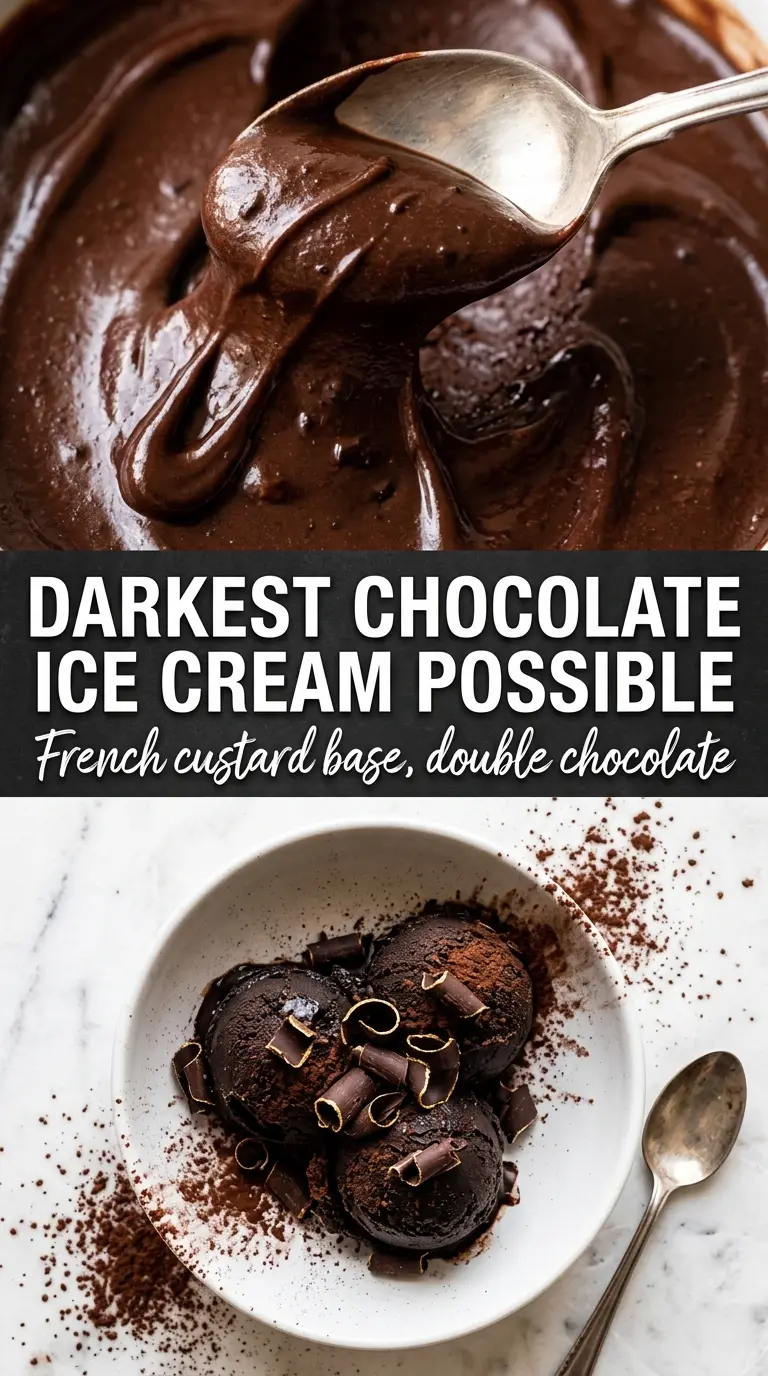
- Dark chocolate — This is the main source of that near-black, almost ganache-like richness. Use a 70 to 72 percent bar if you want the deep, grown-up chocolate flavor this ice cream is known for. If you go much sweeter, the final scoop tastes flatter and less intense.
- Dutch-process cocoa powder — Cocoa adds the background chocolate note that makes the base taste layered instead of one-dimensional. Dutch-process matters because it tastes smoother and darker than natural cocoa here. If you only have natural cocoa, the ice cream will still work, but it’ll read sharper and less plush.
- Egg yolks — The yolks give the custard body and that soft, luxurious texture that keeps the ice cream from freezing like a block of flavored ice. Whole eggs won’t give you the same velvet finish. This is one place where the classic French-style approach earns its keep.
- Butter — It helps the melted chocolate stay glossy and blend back into the custard without looking greasy or separated. Don’t skip it unless you have to; the amount is small, but it rounds out the finish.
Building the Base Without Breaking the Chocolate
Melting the Chocolate First
Set the chopped chocolate and butter over a double boiler and let them melt until the mixture looks shiny and fluid. Pull it off as soon as the last bits disappear. If you overheat chocolate, it gets dull and thick, and it won’t blend as smoothly into the custard later.
Steaming the Dairy
Whisk the cocoa into the cream and milk before heating, then warm the mixture until you see steam rising and small bubbles around the edge. You’re not boiling it. If the dairy boils, the cocoa can clump and the base can taste flat instead of rounded and deep.
Tempering and Cooking the Custard
Whisk the sugar into the egg yolks until the mixture lightens slightly, then add the hot dairy in a slow stream while whisking constantly. Return everything to the saucepan and cook over medium-low heat, stirring all the way across the bottom, until it reaches 175°F. If you see any thick little streaks or the custard starts to foam heavily, it’s going too fast; lower the heat and keep stirring until it smooths back out.
Finishing, Straining, and Churning
Take the pan off the heat before whisking in the melted chocolate. That off-heat moment keeps the base glossy instead of grainy. Stir in the vanilla and salt, then strain through a fine mesh sieve to catch any cooked egg bits or cocoa lumps. Chill the custard completely over ice, refrigerate it for 4 hours, and churn only when it’s fully cold; if you churn a warm base, the texture will never get as dense and fine.
Dairy-Free With Coconut Cream
You can swap the cream and milk for full-fat coconut milk and coconut cream, but the flavor shifts toward chocolate-coconut instead of pure French custard. Keep the egg yolks if you want the same body, and expect a slightly softer freeze because coconut fat behaves differently from dairy fat.
Extra Dark and Less Sweet
Use an 80 percent chocolate bar and reduce the sugar by a tablespoon or two if you want a more bitter, truffle-like finish. The texture stays the same, but the flavor gets firmer and less dessert-sweet. This is the version I reach for when I want the chocolate to taste bold instead of mellow.
No Ice Cream Maker
Freeze the churned base in a shallow container and stir it every 30 minutes for the first 2 to 3 hours. That breaks up the ice crystals before they get too large. It won’t be quite as smooth as the machine-made version, but it still beats a hard, icy block.
Storage and Reheating
- Refrigerator: The custard base keeps for up to 2 days before churning. Stir it once before chilling if a skin forms on top.
- Freezer: The finished ice cream keeps well for about 2 weeks. Press parchment directly against the surface to slow ice crystals and keep the top from drying out.
- Reheating: Not applicable, but for the best scoopable texture, let it sit at room temperature for 5 to 10 minutes before serving. If it’s too hard, it was probably frozen in a container that was too deep or churned before the base was fully cold.
Answers to the Questions Worth Asking
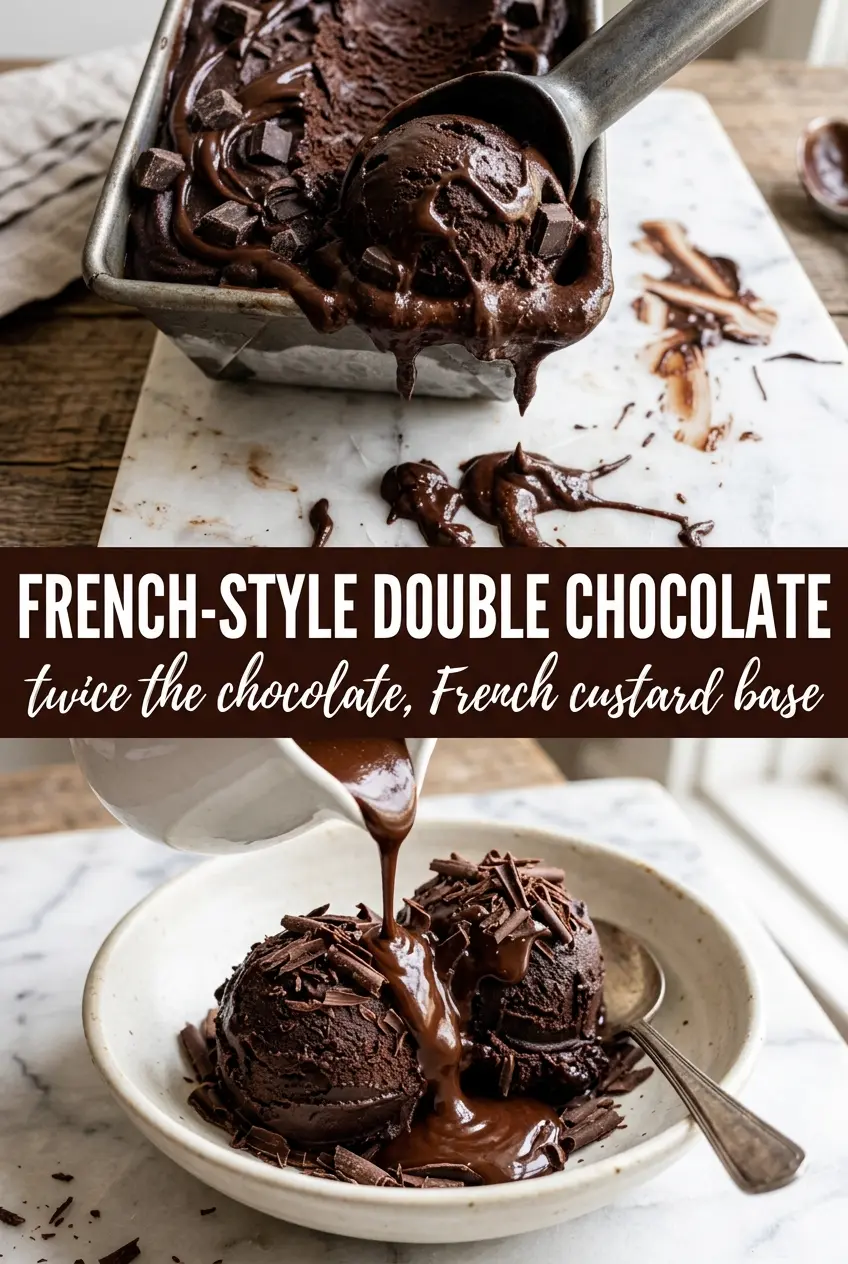
French-Style Double Chocolate Ice Cream
Ingredients
Equipment
Method
- Melt dark chocolate with butter over a double boiler, then set aside until needed. Stop when smooth and glossy with no visible lumps.
- Whisk Dutch process cocoa powder into the cream and milk, then heat until steaming. Look for small bubbles around the edges and a cocoa-rich aroma.
- Whisk egg yolks with granulated sugar until thick and smooth, then slowly whisk in the hot cream mixture. Keep the stream steady so the yolks don’t scramble.
- Return the mixture to the saucepan and cook until it reaches 175F. Stir constantly until it coats the back of a spoon and holds a clear line.
- Remove from heat and immediately whisk in the melted chocolate until glossy and smooth. The texture should look like a pourable ganache with no streaks.
- Stir in vanilla extract and salt, then strain through a fine mesh sieve. Chill-ready custard should be silky with any cocoa solids removed.
- Cool the custard completely over ice, then refrigerate for 4 hours. It should be fully cold before churning for best set.
- Churn in an ice cream maker according to the manufacturer’s directions. Stop when it looks like soft-serve and holds shape.
- Freeze until firm. The ice cream should scoop cleanly with a dense, fudgy texture.