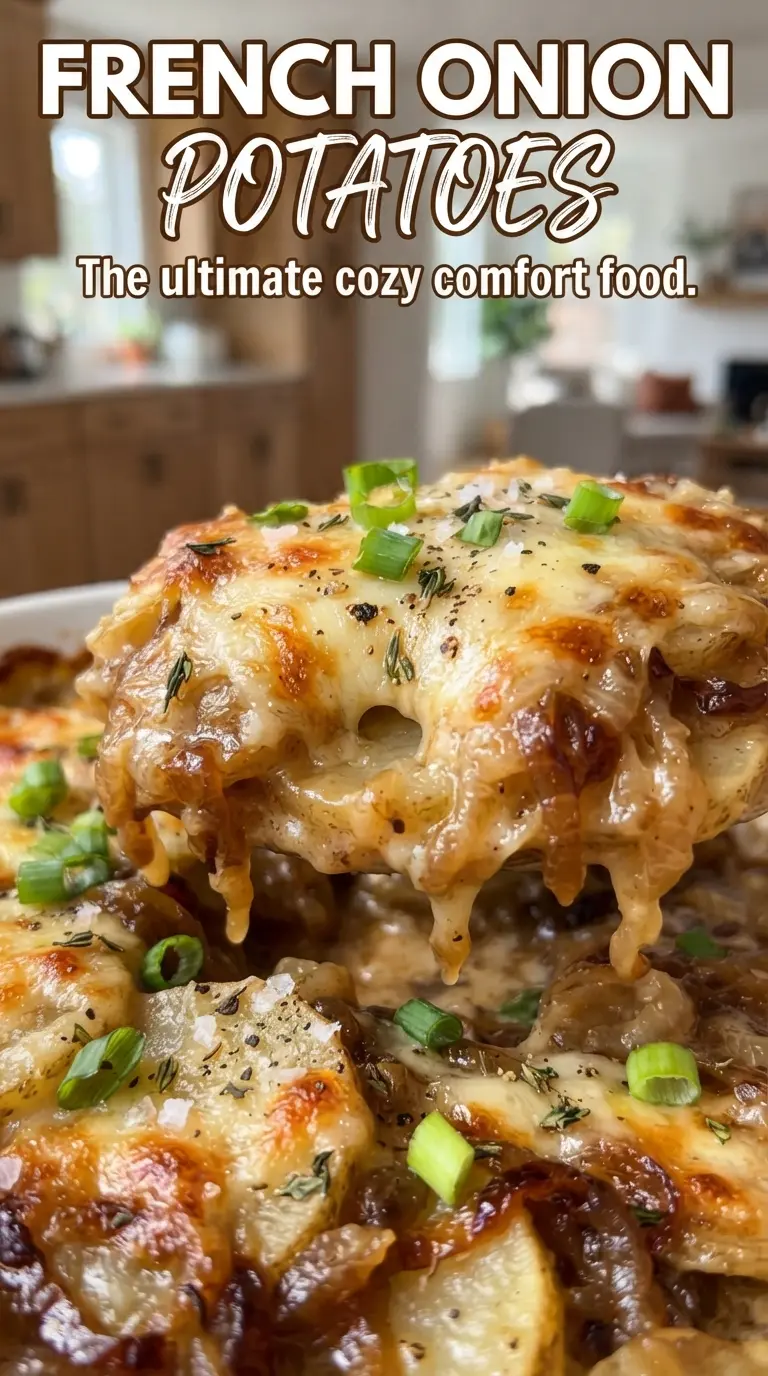
French Onion Potatoes hit the table with the kind of contrast that keeps people reaching back in for another spoonful: crisp-edged potatoes underneath, sweet jammy onions on top, and a layer of bubbling Gruyere that pulls everything together. The first bite gives you salt, butter, and caramelized onion richness, then the thyme and Worcestershire sneak in underneath with a savory depth that makes the whole skillet taste more complete than the ingredient list suggests.
The key is giving each part its own job. The potatoes roast first so they can brown instead of steaming, and the onions cook slowly enough to turn soft and deeply sweet before they ever meet the pan. A little broth loosens the onions just enough to glaze them, while Worcestershire adds the background savoriness that keeps this from tasting flat. Once the cheese goes on, the last bake only needs to melt and bind everything together.
Below, I’ve included the timing cues that keep the potatoes crisp and the onions truly jammy, plus a few ways to adjust the dish if you need to work with what’s in the kitchen.
The potatoes stayed crisp under the onions, and the Gruyere melted into the filling without turning greasy. I served it with roast chicken and there wasn’t a spoonful left.
Save these French Onion Potatoes for the nights when you want crisp potatoes, jammy onions, and bubbling Gruyere in one skillet.
The Part That Keeps These Potatoes Crispy Instead of Soggy
The biggest risk in a dish like this is letting the onions and cheese undo the work you did on the potatoes. If the potatoes are underbrowned before the topping goes on, they’ll soften fast and lose that roasted edge. The fix is simple: give them enough time in the oven to turn deeply golden before anything else touches them.
The onions matter just as much. Medium-low heat and patience are what turn sliced yellow onions into a jammy topping instead of a pan of pale, watery strips. Once they’re soft and browned, the broth and Worcestershire should cook down until the onions look glossy, not soupy. That concentrated mixture stays on top of the potatoes instead of running off the skillet.
What Each Ingredient Is Actually Doing Here
- Baby potatoes — Their small size gives you crisp edges and tender centers in the same roast time. Halving them creates more cut surface, which means more browning. If you swap in larger potatoes, cut them into even chunks so they finish at the same rate.
- Yellow onions — These are the backbone of the dish. They turn sweet and mellow as they cook, and that sweetness is what makes the topping taste French onion-inspired instead of just buttery. White onions will work in a pinch, but they won’t get quite as deep or round in flavor.
- Gruyere — This cheese melts smoothly and gives you that nutty, savory finish you want here. Pre-shredded cheese can work, but freshly shredded Gruyere melts cleaner and doesn’t have the anti-caking starch that can make the top a little grainy.
- Beef broth and Worcestershire sauce — These add the savory depth that makes the onions taste fuller. The broth loosens the onions just enough to glaze them, and Worcestershire adds a hit of umami without making the dish taste like sauce. If you need to skip the beef broth, use vegetable broth, but the final flavor will be a little lighter.
- Fresh thyme — A small amount is enough. It cuts through the richness and keeps the dish from tasting heavy.
Roasting the Potatoes, Then Building the Onion Layer
Getting the Potatoes Brown Before Anything Else
Spread the halved potatoes in an oven-safe skillet and roast them with oil, salt, and pepper until the cut sides are golden and the edges look crisp. If they still look pale and matte, give them more time; that browning is what helps them stand up to the onion topping later. Don’t crowd them too tightly, or they’ll steam instead of roast.
Turning the Onions Soft, Sweet, and Jammy
Cook the sliced onions in butter over medium-low heat until they collapse and turn a deep golden brown. This is where the flavor happens, and it can’t be rushed. If the pan starts to look dry before the onions are fully caramelized, lower the heat and keep going; adding more heat only gives you scorched edges before the centers are ready.
Reducing the Savory Finish
Stir in the thyme, broth, and Worcestershire, then simmer just until the liquid is absorbed and the onions look glossy. You’re looking for a thick, spoonable mixture, not a wet one. If there’s extra liquid left in the pan, it will leak into the potatoes and soften the crisp surface you worked for.
Melting the Cheese Without Overbaking
Spoon the onion mixture over the potatoes, scatter the Gruyere on top, and return the skillet to the oven just until the cheese is melted and bubbling. That final bake is short on purpose; you’re warming everything together, not cooking it all over again. Pull it once the cheese is melted and the edges are just starting to brown.
How to Adapt These Skillet Potatoes Without Losing the Point
Make It Meat-Free
Use vegetable broth instead of beef broth. The dish stays rich from the butter, onions, and Gruyere, but the background savoriness comes across a little lighter and cleaner. A splash of soy sauce can stand in for some of the depth if you want a more robust finish.
Use a Different Cheese
Swiss, Emmental, or a sharp white cheddar will all melt on top, but each changes the final feel a little. Gruyere stays the most classic because it melts smoothly and brings that nutty edge that plays well with caramelized onions. If you use cheddar, expect a sharper, less French onion-style result.
Stretch It for a Bigger Crowd
Double everything and use a larger baking dish if you’re serving more people. Keep the potatoes in a single layer as much as possible so they still brown instead of steaming. If the pan looks crowded, roast the potatoes on one tray and finish the onions in another skillet.
Storage and Reheating
- Refrigerator: Store leftovers covered for up to 4 days. The potatoes will soften a bit, but the flavor holds well.
- Freezer: I don’t recommend freezing this dish. The potatoes change texture after thawing, and the onions can turn watery.
- Reheating: Warm in a 375F oven until hot through and the cheese is melted again. The oven keeps the potatoes from turning gummy, which can happen in the microwave.
Answers to the Questions Worth Asking
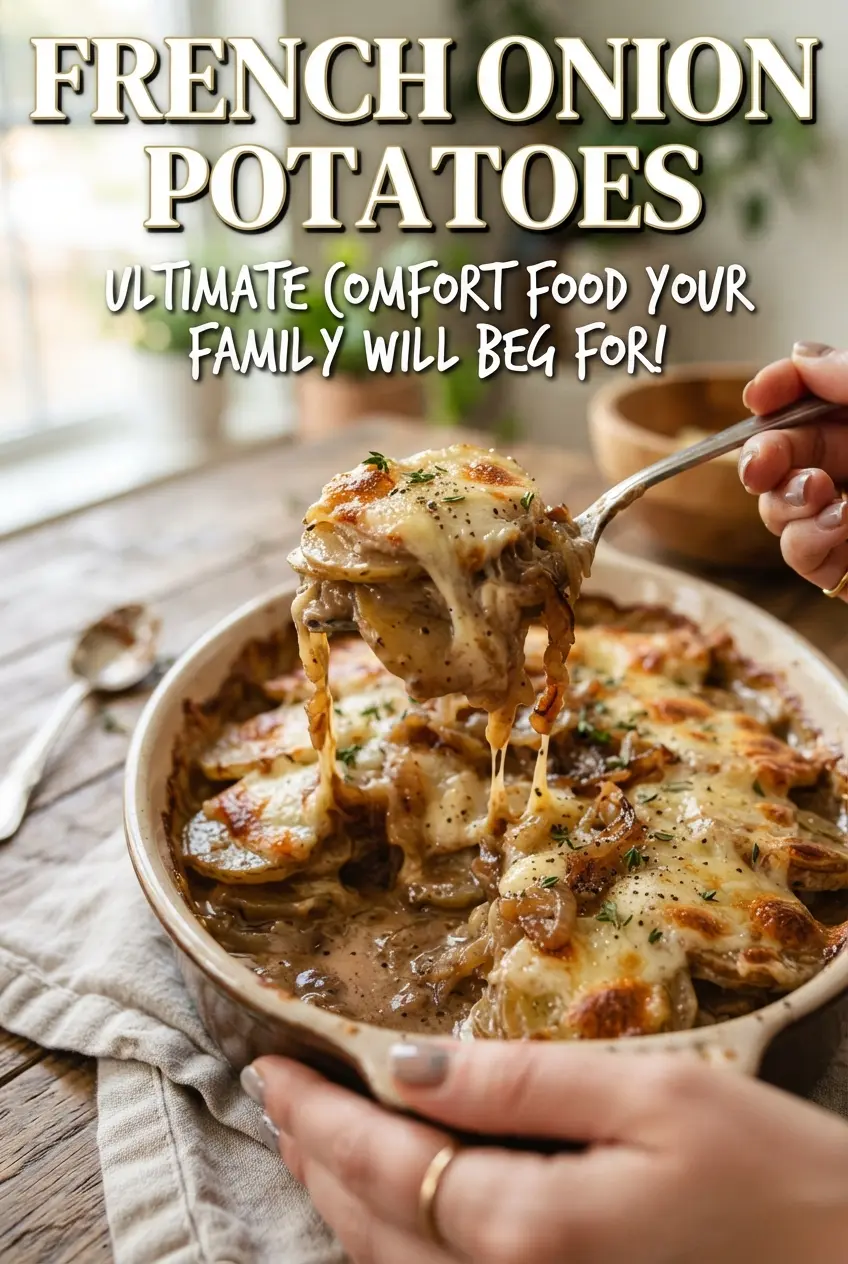
French Onion Potatoes
Ingredients
Equipment
Method
- Preheat oven to 425F, then toss baby potatoes with olive oil, salt, and black pepper in an oven-safe cast iron skillet.
- Roast for 30-35 minutes until golden and crispy, keeping the skillet in the oven for even browning.
- Melt butter in the skillet over medium-low heat and cook yellow onions for 25 minutes until deep golden and jammy.
- Stir in fresh thyme leaves, beef broth, and Worcestershire sauce, then simmer until the liquid is absorbed and the onions look glossy.
- Spoon the jammy onions over the roasted potatoes, spreading them into an even layer.
- Top with shredded Gruyere, then bake for 8-10 minutes until the cheese is melted and bubbly, with golden spots along the edges.