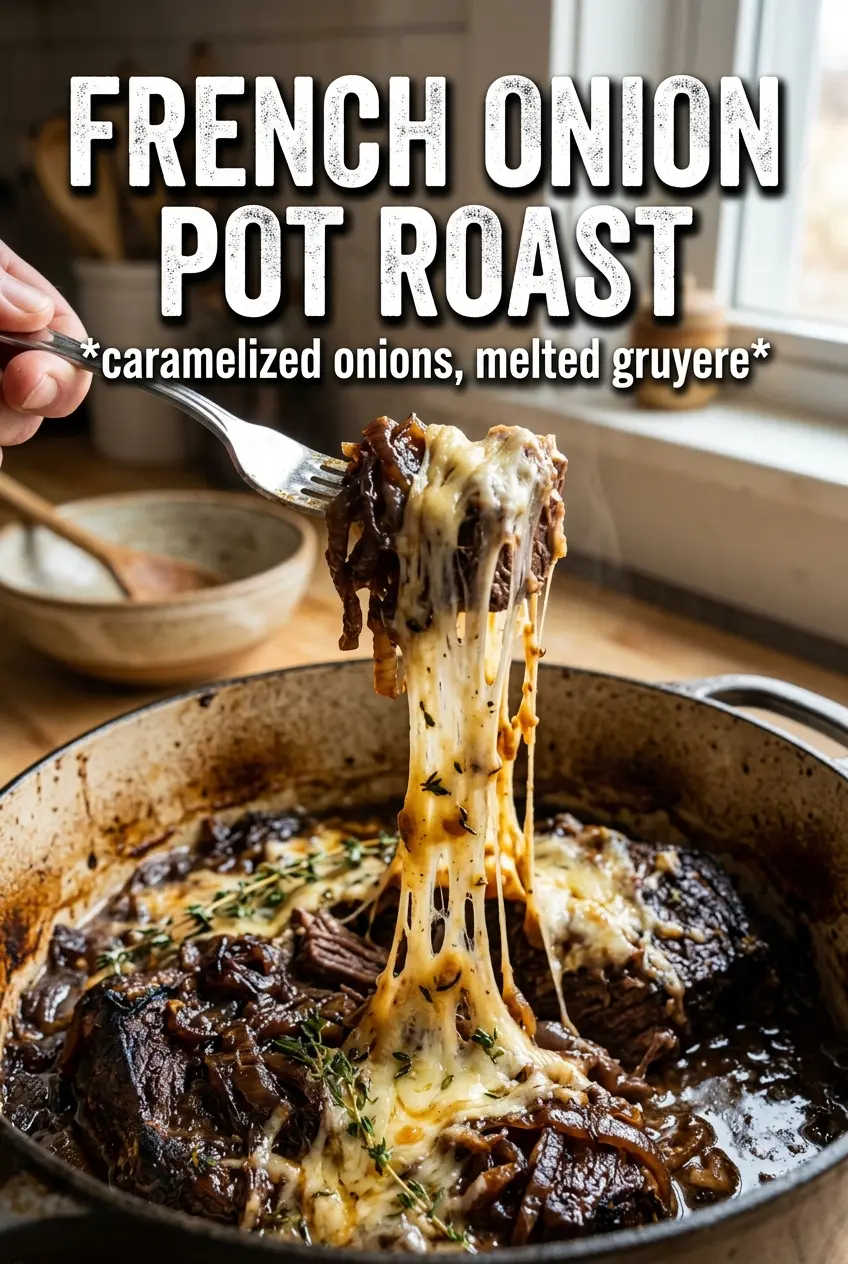
French Onion Pot Roast gives you everything you want from a slow braise: beef that falls apart under a spoon, onions cooked down to a dark jammy sweetness, and a savory broth that tastes like it has been working on itself all afternoon. The toasted baguette and melted Gruyere on top turn it into something that feels a little special without asking for any extra fuss at the stove.
What makes this version work is patience in the two places that matter most. The roast needs a hard sear first so the braise starts with real depth, not pale meat simmering in broth. The onions need time too, and not a shortcut sauté. You want them soft, bronze, and almost spreadable before the wine goes in, because that caramelization is what gives the finished pot roast its French onion character.
Below you’ll find the timing that keeps the onions from rushing and the beef from drying out, plus the one broiling step that gives you those bubbling cheese-covered baguette rounds on top.
The onions took their time but they turned out silky and sweet, and the broth was deep enough that we didn’t even add extra salt at the table. The Gruyere on the baguette rounds made it feel like French onion soup met pot roast in the best way.
Save this French Onion Pot Roast for the night you want deeply caramelized onions, fall-apart beef, and bubbling Gruyere on toasted baguette.
The Sear and the Slow Onions Are Doing Different Jobs Here
The biggest mistake with a dish like this is treating the onions like an afterthought. If they never get properly browned, the finished pot roast tastes flat, even if the beef is tender. Caramelizing onions is not about speeding through the softening stage; it’s about cooking off the water until their sugars concentrate and the pan bottom starts to pick up those darker, sweeter bits.
The roast needs the opposite treatment first: high heat, full contact, and enough time on each side to build a deep crust. That crust won’t make the meat tender on its own, but it gives the braising liquid a stronger base. Once the onions, wine, and broth go in, all those browned bits dissolve into the sauce instead of staying stuck to the pan.
What Each Ingredient Is Actually Doing in This Pot Roast

- Beef chuck roast — Chuck is the right cut because it has enough connective tissue to turn silky during a long braise. A lean roast won’t give you the same shreddable texture, and it can dry out before the onions finish their work.
- Onions — Use the full amount and slice them thinly so they collapse evenly. Yellow onions are the best choice here because they get sweet without turning muddy.
- Dry white wine or beef broth — The wine adds brightness and scrapes up the fond in a way broth alone can’t. If you skip the wine, use broth and a small splash of vinegar at the end for balance, but the flavor will be a little rounder and less sharp.
- Gruyere — This is what gives the top its French onion soup finish. It melts cleanly and turns nutty under the broiler; a mild mozzarella won’t bring the same flavor, and a very sharp cheese can get greasy.
- Baguette — Toast it first so it can float on the broth without going soggy in seconds. Day-old bread works especially well because it holds its shape under the cheese.
How to Build the Broth Without Rushing the Braise
Getting a Deep Sear on the Roast
Pat the chuck roast dry and season it well before it hits the oil. The surface should sizzle immediately, and you want a dark brown crust on more than just the edges before you turn it. If the pan looks crowded or the meat starts steaming, the heat is too low and you won’t get the fond that gives the broth its depth. Pull the roast out once it’s browned all over; it finishes later in the oven.
Caramelizing the Onions Slowly
This is the part that takes patience, and it’s the part that makes the recipe taste like French onion soup instead of plain pot roast. Cook the onions in butter over medium-low heat until they collapse, then keep going until they turn deep gold and smell sweet, almost nutty. If they start sticking too aggressively before they color, the heat is too high; lower it and add a splash of broth only if the pan is truly dry. They should look glossy and jammy before the garlic goes in.
Letting the Braise Turn the Beef Tender
Once the wine goes in, scrape the bottom of the pan until every browned bit dissolves into the liquid. Add the broth, Worcestershire, thyme, and bay leaves, then return the roast and cover it tightly. The oven should stay at 325°F, and the roast is ready when it pulls apart easily with a fork, not when the clock says it should be. If it still feels tight, give it another 20 to 30 minutes; cutting the braise short is how you end up with chewy slices instead of spoon-tender beef.
Finishing Under the Broiler
Shred the beef right in the broth so it can soak up the juices before serving. Ladle it into bowls, top with the toasted baguette rounds, and cover each one with Gruyere. Broil just until the cheese is melted and blistered with a few browned spots. Walk away for even a minute too long and the cheese goes from bubbly to bitter, so stay close to the oven.
Three Ways to Adjust It Without Losing the French Onion Feel
Dairy-Free Finish
Skip the butter and use olive oil for the onions, then leave off the Gruyere topping. The broth still tastes rich from the beef and caramelized onions, but you lose the classic gratin-style finish. If you want a little more depth without dairy, add a small spoonful of miso to the broth at the end.
Gluten-Free Serving
Use a sturdy gluten-free baguette or serve the roast over mashed potatoes instead of bread. The braise itself is naturally gluten-free as long as your Worcestershire sauce is labeled that way. The texture changes more than the flavor, but you still get the same onion-and-beef payoff.
Make It a Little Richer
If you want a thicker, spoon-coating broth, remove the lid for the last 20 to 30 minutes of braising so some liquid reduces. That gives you a more concentrated sauce without adding flour. Don’t do this too early or the beef can dry out before it turns tender.
Storage and Reheating
- Refrigerator: Store the beef and broth for up to 4 days. The flavor deepens overnight, and the onions keep softening into the sauce.
- Freezer: Freeze the beef and broth without the bread and cheese for up to 3 months. Thaw in the refrigerator so the meat stays tender instead of turning stringy.
- Reheating: Warm it gently on the stove over low heat until steamy. Don’t boil it hard or the beef fibers tighten up; add the baguette and Gruyere fresh when you’re ready to serve.
Questions I Get Asked About This Recipe
French Onion Pot Roast
Ingredients
Equipment
Method
- Preheat oven to 325F. Season the chuck roast with salt and pepper, then sear it in olive oil in a Dutch oven until deeply browned and the surface looks crusty.
- Remove the roast to a plate. Keep any browned bits in the pot for flavor.
- Add butter and the sliced onions to the Dutch oven. Cook over medium-low heat for 30-35 minutes until deeply caramelized, stirring occasionally and letting the onions turn dark golden-brown.
- Stir in the minced garlic for about 1 minute until fragrant. Pour in the wine (or broth) and deglaze, scraping up the browned fond with a spoon.
- Add the beef broth, Worcestershire sauce, thyme, and bay leaves to the pot. Bring the liquid to a gentle simmer.
- Return the roast to the Dutch oven and spoon some of the onion broth over it. Cover and braise for 3 to 3-1/2 hours at 325F until fall-apart tender.
- Remove the bay leaves from the braising liquid. Shred the beef in the broth until evenly mixed.
- Ladle the pot roast and onion broth into bowls. Float toasted baguette slices on top and sprinkle Gruyere over the baguette.
- Broil for 3-4 minutes until the cheese is golden and bubbly with browned edges. Serve immediately while the topping is hot and set.