Firecracker chicken earns its place in the weeknight rotation because it gives you that takeout-style crunch with a sauce that clings instead of sliding off. The chicken stays crisp under a sticky, bright red glaze, and every bite lands with sweet heat, a little tang, and enough garlic to keep it from tasting one-note.
The trick is building the coating and the sauce as two separate jobs. Cornstarch teams up with flour for a crust that fries up lighter and shatter-crisp, while the sauce balances hot sauce, brown sugar, butter, and vinegar so it turns glossy without going thin or greasy. A short return to the pan after saucing is what helps the glaze caramelize onto the chicken instead of pooling underneath it.
Below, you’ll find the detail that matters most: how to keep the chicken crisp, when the sauce is ready, and what to change if you want the heat a little lower or the meal a little lighter.
The coating stayed crisp even after tossing in the sauce, and the sweet heat was perfect over rice. I used the full amount of red pepper flakes and it had just the right kick without blowing out the flavor.
Save this firecracker chicken for the nights when you want crispy chicken bites in a sticky sweet-heat sauce over rice.
The Coating Has to Fry Before the Sauce Touches It
The biggest mistake with firecracker chicken is rushing the sauce step before the crust has set. If the oil isn’t hot enough, the flour and cornstarch coating turns pasty instead of crisp. If you toss that undercooked coating in sauce too soon, it softens fast and you lose the contrast that makes the dish worth making.
- The oil should sit at 375°F. At that temperature, the chicken browns fast enough to stay juicy while the coating firms up.
- Do the first fry in batches. Crowding the pan drops the oil temperature and gives you pale, greasy chicken.
- That short second toss in the pan after saucing matters. It helps the glaze tighten and caramelize onto the chicken instead of staying loose in the skillet.
What Each Ingredient Is Actually Doing in This Dish
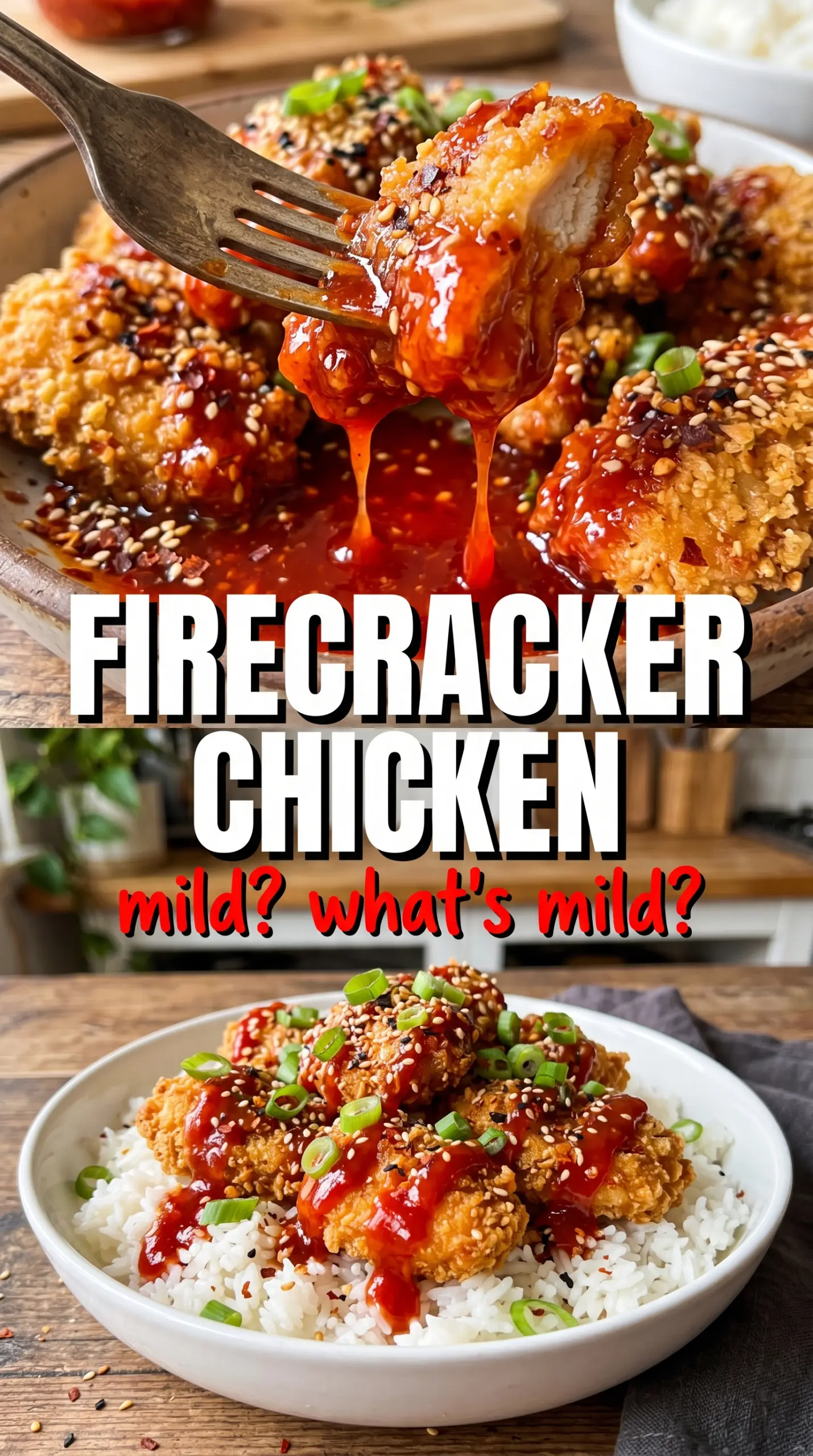
- Chicken breasts — Bite-sized pieces cook quickly and give you maximum surface area for the crust and sauce. Chicken thighs work too, but they stay a little juicier and taste richer.
- Cornstarch and flour — This combination gives a crisper, lighter shell than flour alone. Cornstarch is the reason the coating feels shattery instead of bready.
- Hot sauce, brown sugar, butter, and vinegar — These four build the signature firecracker sauce: heat, sweetness, richness, and brightness. Don’t swap the vinegar for more hot sauce; the tang is what keeps the glaze from tasting flat.
- Red pepper flakes — These add visible heat and a little texture in the sauce. Start at 1/2 teaspoon if you want a milder finish, then taste before adding more.
- Soy sauce — Just a small amount deepens the sauce and keeps it from tasting like melted candy. Use regular soy sauce, not low-sodium if you want the salt level to match the rest of the sauce as written.
Frying, Saucing, and Glazing Without Losing the Crunch
Coating the Chicken Evenly
Toss the chicken pieces until every surface looks dusty and pale, with no wet spots showing through. Press the coating on lightly with your hands so it clings, but don’t pack it on so heavily that it forms thick clumps. Any bare patches will show up as soggy spots after frying, while an even coating gives you the crisp edge in every bite.
Frying Until the Crust Sets
Slide the chicken into the oil in a single layer and let it fry until it turns deep golden and feels firm when nudged with tongs. The color tells you more than the clock here. If the pieces look blond after four minutes, your oil was too cool; if they darken too fast, the heat is too high and the inside may still be catching up.
Building the Firecracker Sauce
Stir the sauce ingredients over medium heat just until the butter melts and the mixture looks smooth and glossy. Once the sugar dissolves, the sauce should thicken slightly and coat the back of a spoon. If it starts to separate or looks oily, pull the pan off the heat for a moment and stir; high heat is what usually breaks it.
Coating and Caramelizing
Add the fried chicken to the sauce and toss quickly until every piece is covered. The sauce should cling in a shiny layer, not gather in the bottom of the pan. Return the coated chicken to the pan for a minute or two, just long enough for the glaze to tighten and stick. That last step is what gives you the sticky finish instead of a thin sauce wash.
How to Adjust the Heat, Make It Gluten-Free, or Stretch It a Little Further
Milder Firecracker Chicken
Cut the red pepper flakes in half and use the lower amount of hot sauce if you want more sweet heat than fire. The sauce will still taste bold because the vinegar and butter keep it balanced, but the finish lands gentler on the palate.
Gluten-Free Version
Swap the all-purpose flour for a cup-for-cup gluten-free flour blend and use a gluten-free soy sauce or tamari. The crust will still crisp up well, though it may look a little more rustic than the standard version.
Baked Instead of Fried
Bake the coated chicken on a well-oiled sheet pan at 425°F until golden and cooked through, then toss with the sauce as directed. You won’t get the same shattering crust, but you will get a lighter version that still holds up to the glaze.
Storage and Reheating
- Refrigerator: Store leftovers in an airtight container for up to 3 days. The coating softens once sauced, but the flavor holds up well.
- Freezer: Freeze the fried chicken before saucing for the best results. Sauced chicken can be frozen, but the texture turns softer after thawing.
- Reheating: Warm the chicken in a 375°F oven or air fryer until hot and crisp at the edges, then toss with freshly warmed sauce if possible. Microwaving makes the coating soggy fast, so use it only when texture doesn’t matter.
Questions I Get Asked About This Recipe
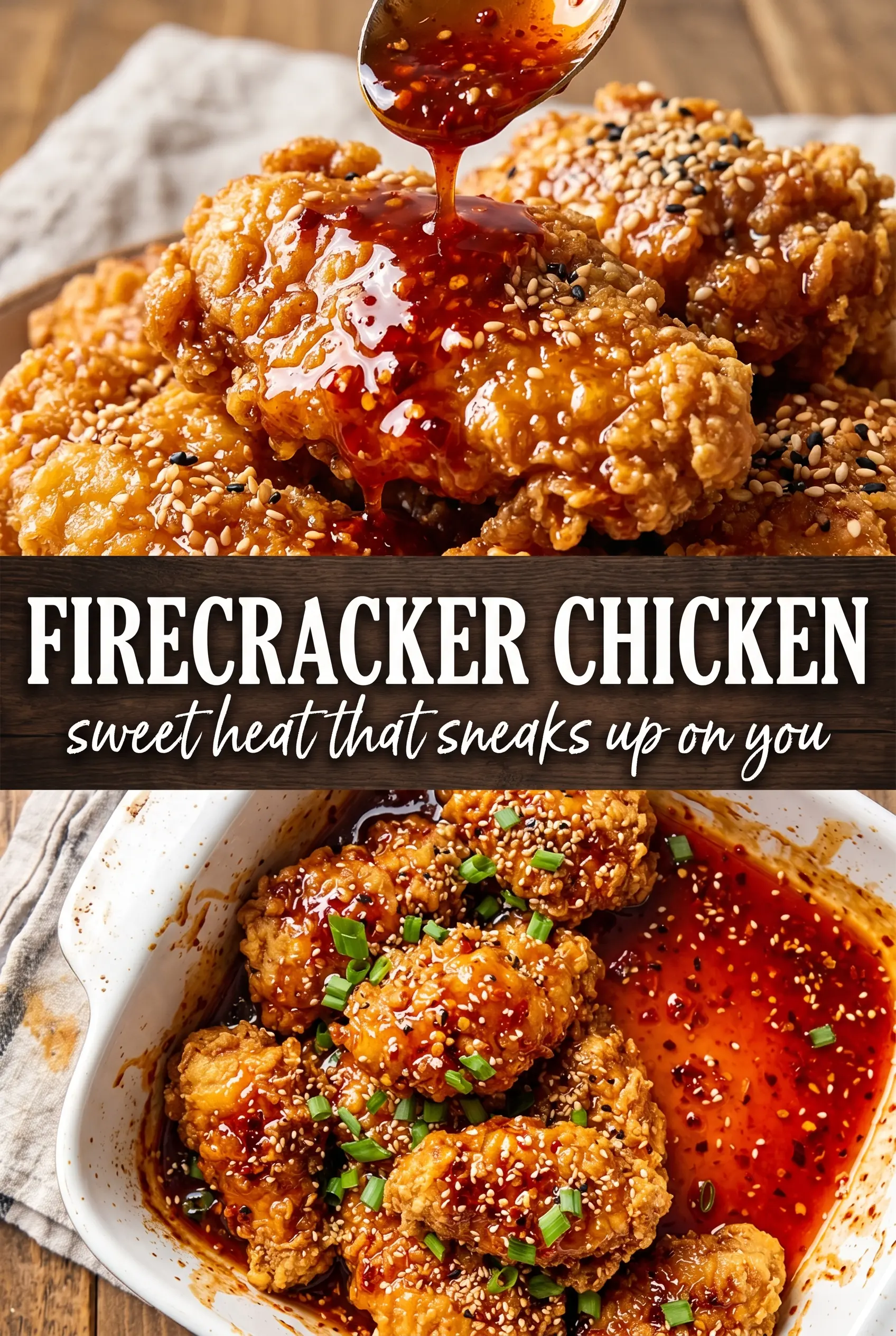
Firecracker Chicken
Ingredients
Equipment
Method
- Toss boneless skinless chicken breasts with cornstarch, all-purpose flour, salt, pepper, and garlic powder until every piece is coated and looks lightly dusty.
- Spread the coated chicken on a sheet pan and refrigerate for 20 minutes to marinate and set the coating.
- Heat vegetable oil in a pan to 375°F and fry chicken in batches in about 1/2 inch of oil for 3-4 minutes per side until deep golden.
- Drain the fried chicken on the sheet pan until excess oil is removed, keeping the bites crisp.
- Combine hot sauce (Frank's RedHot), brown sugar, butter, apple cider vinegar, soy sauce, garlic powder, and red pepper flakes in a saucepan over medium heat, stirring until the butter melts.
- Continue stirring until the sauce turns smooth and glossy, about 2-3 minutes, with a vivid red-orange color.
- Toss the crispy chicken in the saucepan sauce until every piece is fully coated and visibly glistening.
- Return the coated chicken to the pan for 1-2 minutes to caramelize, watching for a thicker, sticky shine.
- Serve immediately with sesame seeds and green onions on top.