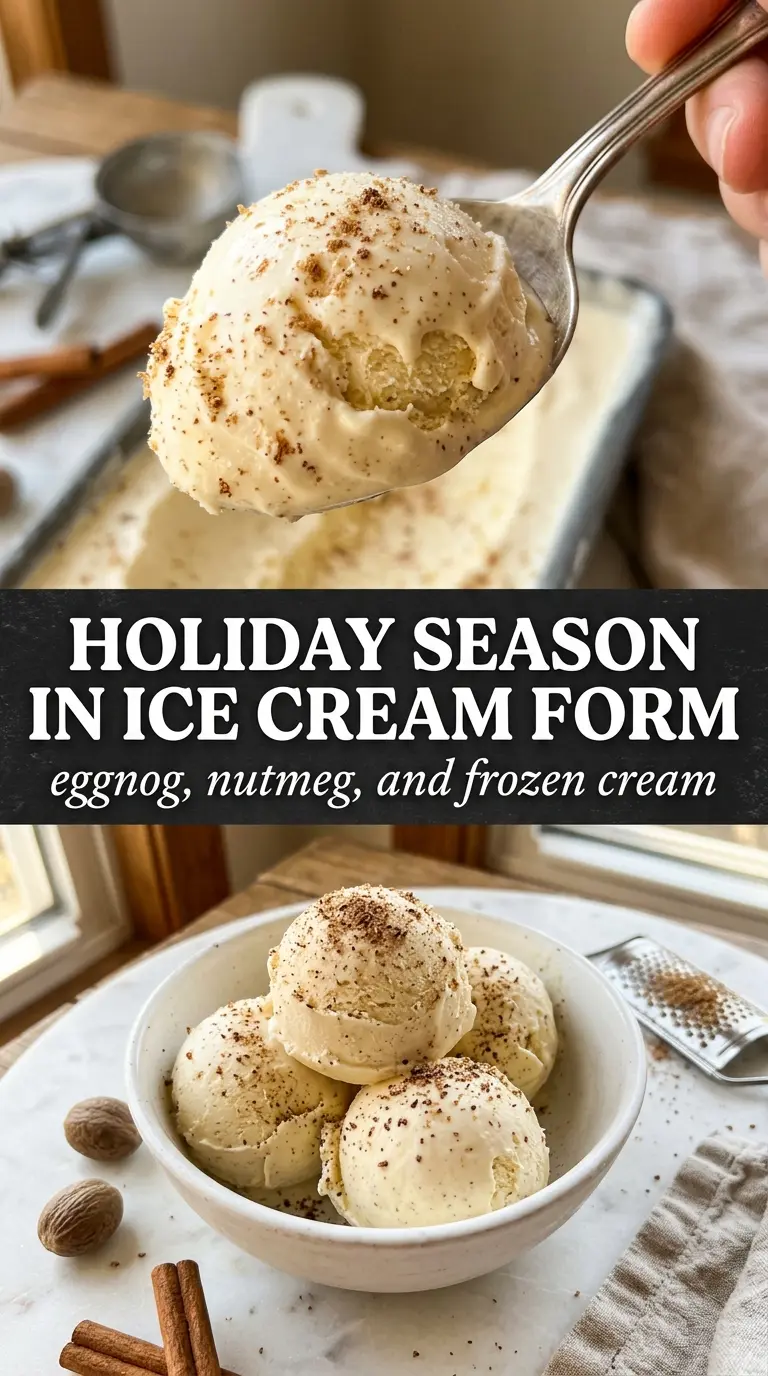
Eggnog ice cream turns a holiday drink into something even better: a custard-rich frozen dessert with a smooth scoop and all the warm spice you expect from a good glass of eggnog. The flavor stays familiar, but the texture lands somewhere between classic French ice cream and a festive custard pie filling, which is exactly why it keeps disappearing from the freezer faster than anything else I make in December.
This version leans on egg yolks for body, not extra thickeners, so the texture stays silky instead of icy. Heating the eggnog and cream together before tempering the yolks gives the custard a gentler start, and cooking it only until it reaches 175°F keeps it thick without scrambling. The rum is optional, but even a small splash helps keep the ice cream scoopable once it’s frozen solid.
Below, I’ve included the small details that matter most: how to keep the custard smooth, why the spice goes in after straining, and what to do if you want a richer bourbon note instead of rum.
The custard turned out silky and the nutmeg came through beautifully. I used bourbon, and after the overnight chill it churned into the creamiest ice cream I’ve made at home.
Eggnog ice cream with nutmeg and bourbon is the kind of holiday dessert you’ll want tucked in the freezer for company and late-night scoops alike.
The Step That Keeps Eggnog Custard Smooth Instead of Scrambled
Eggnog custard can go grainy fast if the heat climbs too high or if the yolks get hit with hot dairy all at once. The fix is the same every time: whisk in the warm eggnog gradually, then return the mixture to the pan and keep it moving over medium-low heat until it thickens just enough to coat a spoon. You’re looking for a custard that reaches 175°F and leaves a clean trail when you run a finger through the back of the spoon.
The other place this recipe can go sideways is the spice. Nutmeg and cinnamon taste sharper when they’re cooked hard, so they go in after straining, along with the vanilla and rum. That keeps the texture smooth and the spice warm instead of dusty.
What Each Ingredient Is Doing in This Frozen Custard
- Store-bought eggnog — This is the base flavor, and it brings sweetness, spice, and that unmistakable holiday richness in one ingredient. Use a good-quality carton if you can; a thin, low-fat version will make the final ice cream less plush.
- Heavy cream — Eggnog alone can freeze a little too firmly, so the cream smooths out the texture and gives the churned ice cream a richer mouthfeel. There isn’t a perfect substitute here if you want the same result, though half-and-half can work in a pinch with a softer set.
- Egg yolks — These build the custard and give the ice cream body without any starch or gum. If your yolks overcook, the custard turns grainy, so keep the heat low and stir constantly once it goes back on the stove.
- Rum or bourbon — Optional, but useful. A small amount deepens the flavor and helps the ice cream stay a little softer straight from the freezer because alcohol lowers the freezing point.
- Nutmeg and cinnamon — These should taste warm, not loud. Freshly grated nutmeg gives the best finish, especially if you want that classic eggnog aroma right at serving time.
How to Cook the Custard, Chill It, and Churn It Without Losing the Texture
Warming the Eggnog Base
Start by heating the eggnog and cream until the mixture is steaming but not boiling. You want enough heat to temper the yolks later, not enough to scorch the dairy or start cooking the eggs too early. If you see tiny bubbles around the edge, pull it off the heat and move on.
Tempering the Yolks
Whisk the yolks and sugar until they look pale and slightly thick, then stream in the hot dairy a little at a time. That slow pour is what protects the eggs from scrambling. If you dump it in all at once, the yolks can seize into tiny bits before they ever get a chance to thicken properly.
Cooking to the Right Thickness
Return the mixture to the saucepan and stir constantly over medium-low heat. It should thicken enough to coat the back of a spoon and hit 175°F on an instant-read thermometer. If it starts to steam heavily or bubble, the heat is too high and the custard is in the danger zone.
Straining and Chilling
Pour the custard through a fine-mesh strainer to catch any cooked egg bits, then stir in the vanilla, spices, salt, and rum if you’re using it. Chill it completely before churning; a warm base makes soft, slushy ice cream that never quite turns dense and creamy. Four hours is the minimum, but overnight gives you the cleanest churn.
Churning and Freezing Firm
Churn the chilled custard in your ice cream maker until it looks like soft-serve and holds gentle ridges. Transfer it to a freezer-safe container and freeze until firm. If it freezes too hard, let it sit on the counter for five to ten minutes before scooping so the texture opens back up.
How to Adapt This for a Bigger Crowd, a Boozier Batch, or No-Dairy Needs
Extra Bourbon for a Softer Scoop
Bumping the bourbon slightly gives the ice cream a looser, more scoopable finish straight from the freezer, but too much will keep it from setting properly. Stay modest if you want the custard texture to hold. The flavor shifts from gentle holiday warmth to something more pronounced and grown-up.
Dairy-Free Version
Use a rich coconut-based eggnog and a thick non-dairy cream, then expect a slightly different finish with a light coconut note underneath the spice. The custard will still churn well, but it won’t have the exact same roundness as the dairy version. Keep the same chilling time so the base is fully cold before it goes into the machine.
Making It Ahead for a Holiday Dinner
This ice cream is best made a day ahead so it has time to firm up after churning. If you’re serving a crowd, let it sit at room temperature for a few minutes before scooping and keep the container covered with parchment pressed onto the surface to limit ice crystals.
Storage and Reheating
- Refrigerator: Not applicable once churned; the base should be chilled before freezing, not held long in the fridge after churning.
- Freezer: Store in an airtight container for up to 2 weeks for the best texture. After that, it can still be eaten, but ice crystals start to creep in.
- Reheating: Let it sit at room temperature for 5 to 10 minutes before scooping. Don’t microwave it unless you want melted edges and a freezer-hard center.
Answers to the Questions Worth Asking
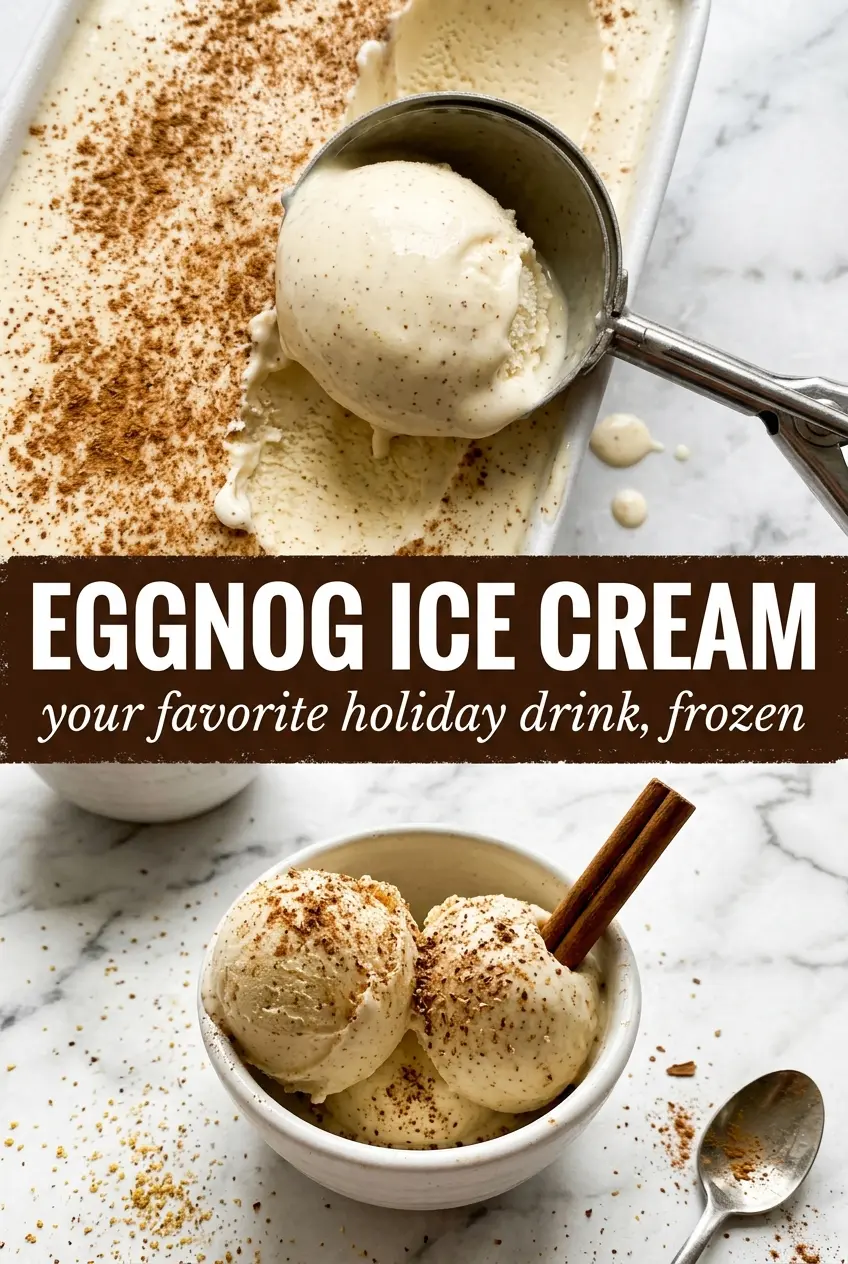
Eggnog Ice Cream
Ingredients
Equipment
Method
- In a saucepan, heat the store-bought eggnog and heavy cream together until steaming, using gentle heat to avoid boiling. Visual cue: small steam wisps rise from the surface.
- In a bowl, slowly whisk the steaming eggnog mixture into the egg yolks and granulated sugar until smooth. Visual cue: the mixture looks glossy and lighter as it thickens slightly.
- Return everything to the saucepan and cook over medium-low heat, stirring constantly, until the custard reaches 175°F. Visual cue: the custard coats the back of a spoon and you can draw a line with a finger on the coating.
- Strain the custard, then stir in vanilla extract, nutmeg, cinnamon, rum or bourbon if using, and salt until fully combined. Visual cue: spices are evenly dispersed with no specks clumping.
- Cool the custard completely, then refrigerate at least 4 hours (chilling + freezing). Visual cue: the mixture is cold and thickened before churning.
- Churn in an ice cream maker until thick like soft-serve, then freeze until firm. Visual cue: the churned base holds shape and the freezer batch turns scoopable and dense.
- Grate fresh nutmeg over each serving just before eating. Visual cue: a fresh dusting sits on top with visible nutmeg flecks.