Dumpling ramen bowl is the kind of dinner that feels like a shortcut and a project at the same time, which is exactly why it works. You get tender dumplings, springy noodles, a broth that tastes like it simmered all afternoon, and enough toppings to make every bowl look intentional. The soft-boiled egg and chili oil finish it with the kind of richness that keeps people going back for another spoonful of broth after the noodles are gone.
What makes this version stand out is the way the broth is seasoned. White miso, soy sauce, mirin, and sesame oil go in while the broth is still at a gentle simmer, so the miso stays smooth and the sesame oil keeps its aroma. The dumplings cook right in the broth, which saves time and adds more body to the bowl, while the noodles are cooked separately so they stay bouncy instead of turning mushy.
Below, I’ll walk through the small details that matter most, including how to keep the broth balanced, when to add the greens, and what to swap if you want a vegetarian bowl that still feels complete.
The broth had that deep savory taste without being salty, and the dumplings stayed plump instead of falling apart. I loved that the noodles were cooked separately — mine were still springy at the table.
Like this dumpling ramen bowl? Save it to Pinterest for the nights when you want a fast soy-miso broth with dumplings, noodles, and a soft egg.
The Broth Goes Wrong When You Boil the Miso
The fastest way to flatten this bowl is to treat the broth like a rolling soup pot. Miso has delicate fermented flavor, and if it boils hard, it loses some of that depth and can turn slightly gritty instead of silky. Keep the broth at a gentle simmer, whisk the miso in until it disappears, and then move on. That soft heat is what keeps the broth clean-tasting and smooth.
The second thing that matters is separating the noodles from the broth until the end. Fresh ramen keeps cooking fast, and if it sits in the pot, it soaks up liquid and turns heavy. Cook it on its own, drain it, and portion it into the bowls right before ladling the broth over top.
What Each Ingredient Is Actually Doing in the Bowl
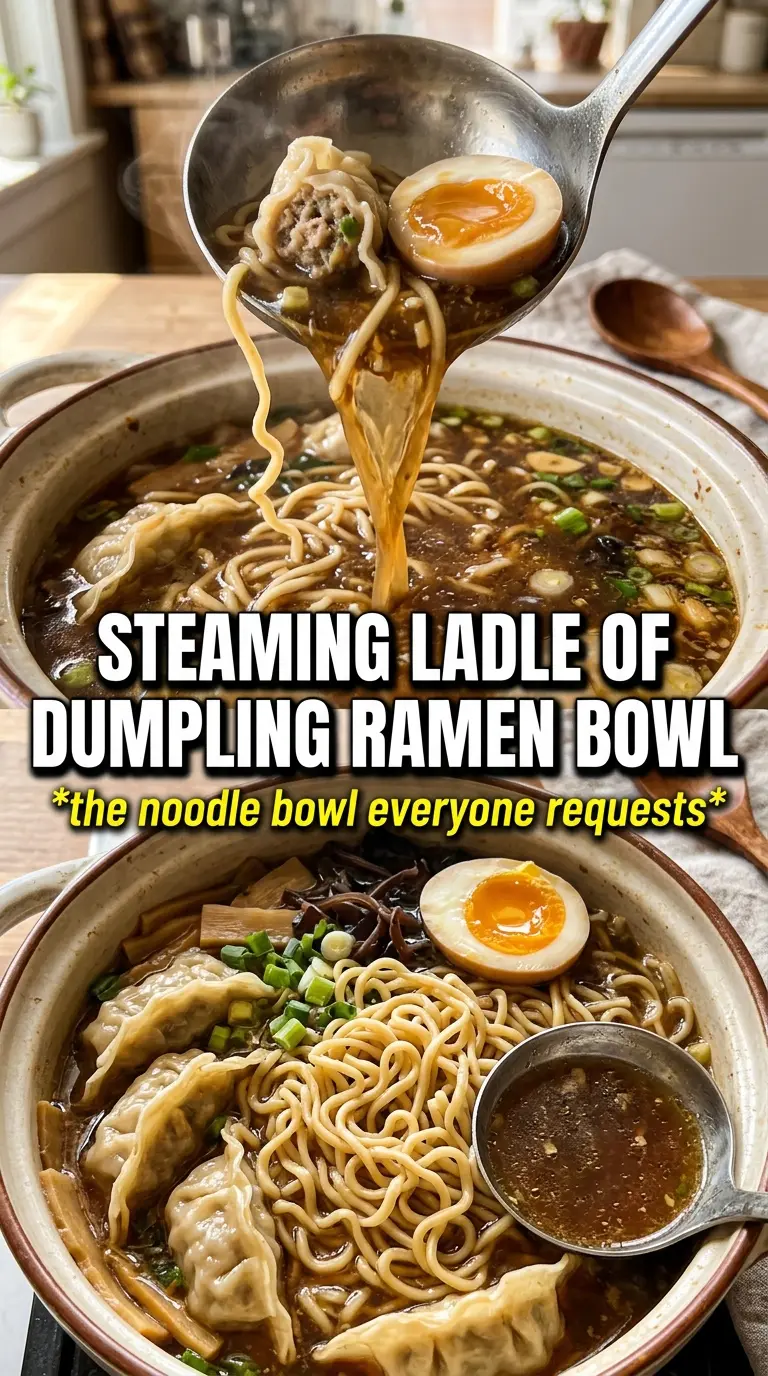
- Frozen dumplings — These do the heavy lifting for texture and make the bowl feel substantial. Pork dumplings bring a little more richness, while chicken dumplings keep the broth lighter. Use them straight from frozen; thawed dumplings can fall apart before the filling cooks through.
- White miso paste — This is the backbone of the broth. White miso is milder and sweeter than darker miso, so it blends easily without taking over the bowl. Stir it into warm broth until fully dissolved; don’t drop it into high heat and expect it to behave.
- Fresh ramen noodles — Fresh noodles give you that springy bite that dried noodles can’t quite match. If you only have dried ramen, use it, but pull it just before it turns fully tender because it keeps softening in the bowl.
- Soft-boiled eggs — The jammy yolk turns the broth silky as soon as it breaks. Seven minutes usually gives you the right center, but an extra 30 seconds can be the difference between soft and set depending on the size of the eggs.
- Bok choy and corn — Bok choy adds crunch and a clean green note, while corn brings little pops of sweetness that work especially well against the soy-miso broth. Baby bok choy cooks the fastest, but regular bok choy is fine if you halve it and give it another minute or two.
- Mirin and sesame oil — Mirin rounds out the saltiness, and sesame oil gives the broth a toasted finish. A little goes a long way with sesame oil; too much can make the broth taste heavy instead of fragrant.
Building the Bowl So the Dumplings Stay Tender
Season the Broth First
Bring the broth to a gentle simmer before you add the miso, soy sauce, mirin, and sesame oil. Whisk until the miso is fully dissolved and the liquid looks even and slightly opaque. If you see little flecks of miso floating around, keep whisking for another few seconds before anything else goes in. This is the point where the flavor gets set, so taste the broth now and adjust the salt only after the soy sauce has had a chance to blend in.
Cook the Dumplings in the Broth
Add the dumplings and let them simmer until they’re cooked through and the filling feels hot all the way to the center, usually 5 to 7 minutes. Don’t let the broth boil hard, or the wrappers can split and release starch into the pot. You want movement, not agitation. Frozen dumplings go in directly from the freezer, and they’re done when they float and feel plump rather than dense.
Finish with Greens and Separate Noodles
Stir in the bok choy near the end so it stays bright and just tender. The noodles should be cooked in a separate pot, drained well, and divided among the bowls before the broth goes over them. That order keeps the noodles from drinking up all the broth before the bowls hit the table. Top each bowl with egg, corn, green onions, nori, sesame seeds, and chili oil right at the end so the textures stay distinct.
How to Adapt This Bowl Without Losing What Makes It Good
Make It Vegetarian
Use vegetable broth and swap in vegetable dumplings or potstickers. The broth will be a little lighter, so add an extra teaspoon of miso if it tastes thin at the end. Keep the sesame oil and chili oil, because they give the bowl the same savory finish.
Go Gluten-Free
Use gluten-free dumplings if you can find them, plus tamari instead of soy sauce. Check the miso label too, since some brands contain barley. The noodles can be rice noodles, but the bowl will feel softer and less springy than the ramen version.
Turn Up the Heat
Add more chili oil at the table or stir a little gochujang into the broth for a deeper heat. Go slowly with the gochujang because it adds both spice and body. If the broth starts tasting too intense, a splash of hot water brings it back into balance.
Storage and Reheating
- Refrigerator: Store the broth, dumplings, and toppings separately for up to 3 days. The noodles soften as they sit, so keep them apart if you want the best texture.
- Freezer: The broth and dumplings freeze well together, but the noodles, egg, and vegetables don’t. Freeze the broth in portions and cook fresh noodles when you’re ready to eat.
- Reheating: Warm the broth gently on the stove until steaming, then add the dumplings just long enough to heat through. Reheat noodles separately or they’ll turn gummy in the soup.
Answers to the Questions Worth Asking
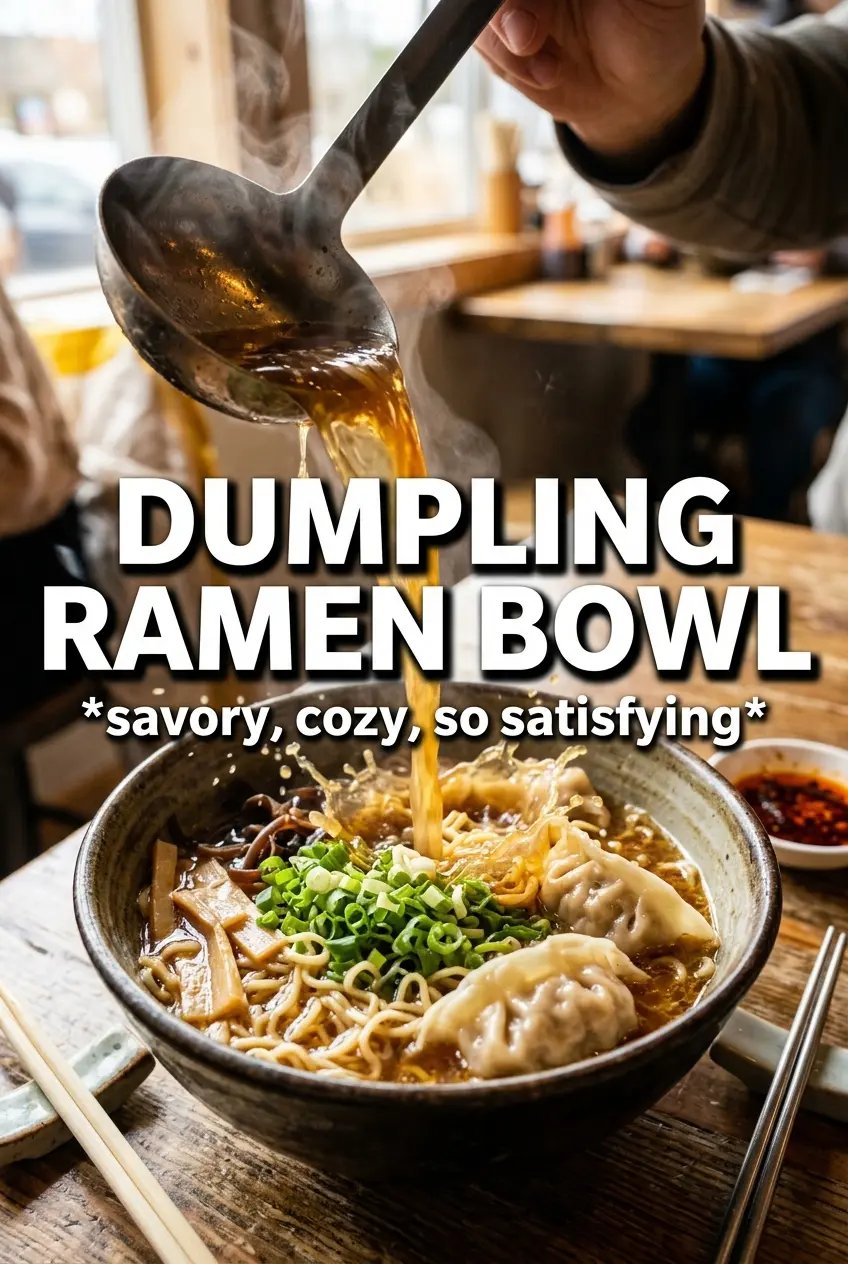
Dumpling Ramen Bowl
Ingredients
Equipment
Method
- Bring the chicken broth to a simmer in a Dutch oven, then whisk in the white miso paste, soy sauce, mirin, and sesame oil until smooth. Stop when you see steady bubbling around the edges.
- Add the frozen dumplings to the simmering broth and cook for 5-7 minutes until cooked through. Look for dumplings that are heated all the way through with no cold centers.
- Add the halved bok choy and cook for 2-3 minutes until wilted. You should see bright green leaves that soften while staying slightly tender.
- Cook the fresh ramen noodles separately according to the package instructions, then drain. Keep them steaming hot so they don’t clump while you assemble the bowls.
- Divide the drained noodles between 4 bowls and ladle the broth and dumplings over the top. Make sure each bowl gets a mix of dumplings, broth, and wilted bok choy.
- Top each bowl with a halved soft-boiled egg, corn kernels, and sliced green onions. Add nori, sesame seeds, and a drizzle of chili oil for serving.