Slow cooker lasagna soup gives you all the things people love about a baked pan of lasagna: rich tomato broth, savory sausage, tender noodles, and a blanket of melted cheese on top. The best part is that it keeps the layered, comforting feel of lasagna without the fuss of stacking noodles or babysitting the oven. What lands in the bowl is brothy at the edges, thickened by pasta and tomato paste, and finished with a creamy cheese spoonful that melts right into the soup.
This version works because the sausage is browned first, which builds a deeper base before anything goes into the slow cooker. Tomato paste adds backbone, not just color, and the crushed plus fire-roasted tomatoes keep the broth from tasting flat. The noodles go in at the end so they stay tender instead of turning soft and bloated, which is the fastest way to ruin a lasagna soup.
Below you’ll find the part that matters most: how to keep the noodles from overcooking, how to get the cheese topping thick and scoopable, and a few smart swaps if you want to lighten it up or stretch it further.
The soup had that deep lasagna flavor without getting gummy, and the noodles stayed perfectly tender because I waited to add them. The cheese topping melted into the bowl just enough and made it taste like baked lasagna in spoonable form.
Love the creamy ricotta topping and tender noodle texture in this crockpot lasagna soup? Save it to Pinterest for an easy Italian-American dinner that tastes baked, even though it starts in the slow cooker.
The Trick to Keeping Slow Cooker Lasagna Soup From Turning Mushy
The failure point in lasagna soup is almost always the noodles. Add them too early and they soak up broth until the whole pot turns heavy and starchy. Add them too late and they stay underdone at the center. The sweet spot is the last 30 minutes, after the broth has had time to deepen and the sausage has already seasoned everything underneath.
The second thing that matters is heat. Slow cookers vary more than people expect, and a soup that barely simmers won’t soften pasta the same way a hot one will. If your cooker runs cool, switch it to High for the noodle finish. That gives the broth enough energy to cook the pasta through without needing to extend the time so long that the noodles fall apart.
- Browned sausage — This isn’t just about food safety. Browning creates little caramelized bits that keep the broth from tasting one-note. Drain the excess grease, though, or the soup will feel oily on top.
- Tomato paste — This is the quiet ingredient doing a lot of work. It gives the soup body and a deeper tomato taste that crushed tomatoes alone can’t match.
- Fire-roasted tomatoes — They add a faint smoky edge that makes the soup taste like it cooked longer than it did. Regular diced tomatoes work, but the broth will be a little flatter.
- Broken lasagna noodles — Break them into rough pieces, not tiny shards. Bigger pieces hold up better and give you that lasagna feel in the bowl instead of pasta bits floating in broth.
What Each Ingredient Is Doing in the Pot
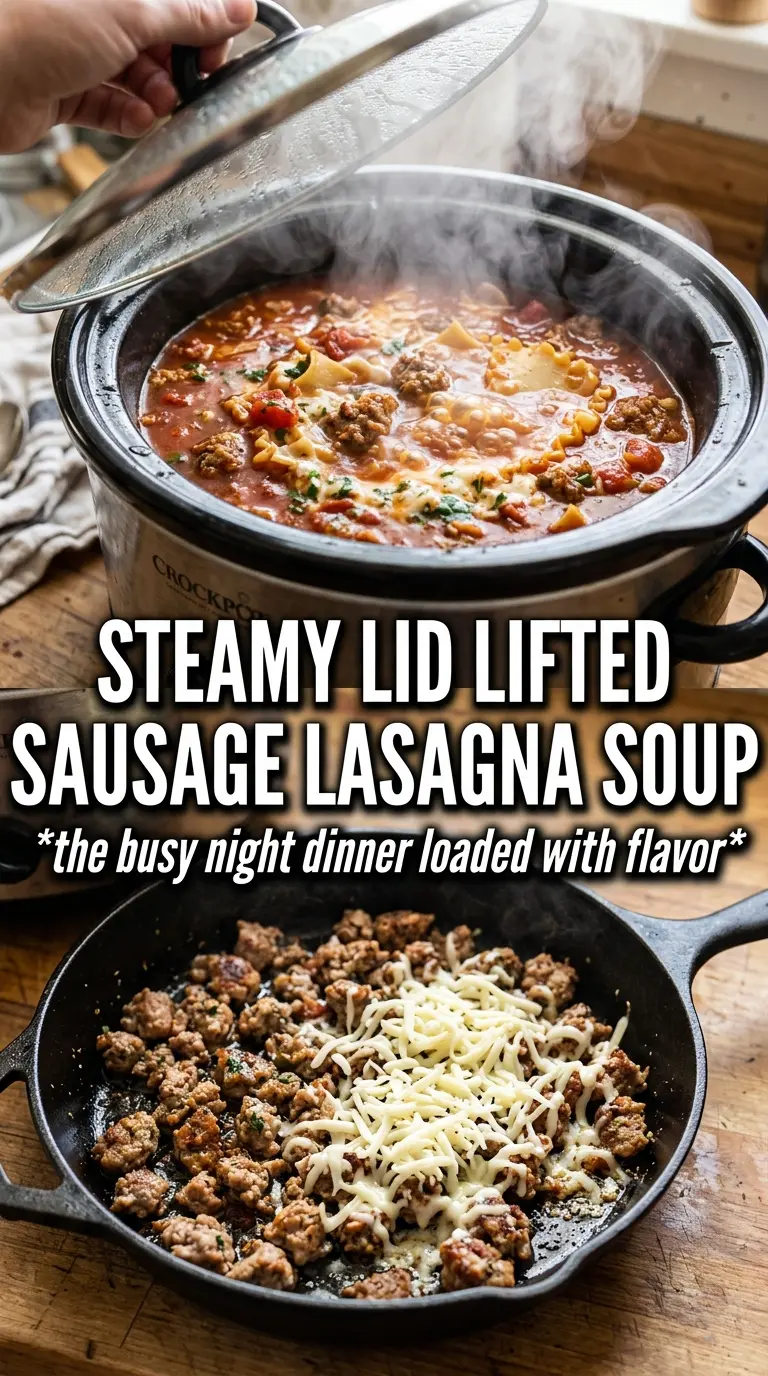
- Italian sausage — This is the main source of seasoning and richness. Mild sausage keeps the soup balanced; hot sausage gives it more bite. Either way, browning it first is worth the extra pan.
- Onion and garlic — They round out the broth and keep the tomato base from tasting sharp. If you rush the garlic into a hot pan and scorch it before it goes in the slow cooker, the whole soup picks up bitterness.
- Crushed tomatoes plus fire-roasted tomatoes — The crushed tomatoes build the body, while the fire-roasted tomatoes add depth. If you only have two cans of crushed tomatoes, the soup still works; it just needs a little more basil or parmesan at the end.
- Ricotta, mozzarella, and parmesan — This three-cheese topping is what makes the bowl taste like lasagna. Whole-milk ricotta gives the creamy base, mozzarella brings the melt, and parmesan sharpens everything. Low-fat ricotta will work, but the topping won’t be as lush.
- Fresh basil and nutmeg — Basil brightens the cheese mixture and nutmeg makes the ricotta taste more like a baked filling. That pinch of nutmeg doesn’t jump out; it just makes the topping taste complete.
Building the Broth Before the Noodles Go In
Brown the sausage first
Cook the sausage in a skillet until it has real color, not just no longer-pink meat. Those browned edges are where the best flavor lives. Drain off the excess fat before it goes into the Crockpot, especially if your sausage renders heavily, or the soup can end up greasy instead of rich.
Let the slow cooker do the middle work
Once the sausage, onion, garlic, tomatoes, broth, tomato paste, and spices are in the pot, stir until the tomato paste disappears into the liquid. You want the soup to look evenly red-brown, not streaked with paste. Cook it until the broth tastes rounded and the onion is soft enough that it practically melts when stirred.
Add the noodles at the end
Break the lasagna noodles into rough pieces and stir them in during the last 30 minutes. Keep them under the liquid as much as you can, and give the soup a stir once or twice so the pieces don’t clump. If the noodles are still a little firm when time is up, let them sit off heat for 5 minutes; the carryover heat usually finishes them without turning them soft.
Finish with the cheese topping
Mix the ricotta, mozzarella, parmesan, basil, and nutmeg until it looks thick and spoonable. Add a generous mound to each bowl right before serving so it softens on top of the hot soup without fully disappearing. If you stir the cheese directly into the pot, it gets lost and the soup stops tasting like lasagna.
How to Adapt Crockpot Lasagna Soup When You Need a Different Version
Make it gluten-free with short pasta
Swap the lasagna noodles for a sturdy gluten-free pasta shape and add it only near the end, just like the original. Gluten-free noodles soften faster and can break apart if they sit too long, so start checking a few minutes early. The soup stays just as satisfying, but the texture will be a little softer around the edges.
Use ground turkey for a lighter bowl
Ground turkey works well if you want a less rich soup, but it needs help from the seasoning. Add an extra pinch of salt and a little more Italian seasoning, and don’t skip browning it well so the broth still has depth. The flavor will be cleaner and less robust than sausage, which is the tradeoff.
Make it dairy-free at serving time
Skip the ricotta and top each bowl with a dairy-free mozzarella-style shred or a spoonful of cashew cream. You won’t get the same lasagna-style richness, but the soup itself still tastes complete because the broth carries the main flavor. Add a little extra basil on top to keep the finish bright.
Stretch it for a bigger crowd
Add another cup of broth and an extra handful of broken noodles if you need to feed more people, but don’t double the pasta blindly. Pasta thickens the soup fast, and too much turns it into a stew. Keep the cheese topping generous so each bowl still feels finished.
Storage and Reheating
- Refrigerator: Store leftovers for up to 4 days. The noodles will keep absorbing broth, so expect the soup to thicken.
- Freezer: The soup freezes well without the noodles. Freeze the base on its own, then cook fresh noodles when you reheat it.
- Reheating: Warm gently on the stove over medium-low heat with a splash of broth until loosened. The biggest mistake is boiling it hard, which breaks the pasta and can make the sausage texture grainy.
Questions I Get Asked About This Recipe

Crockpot Lasagna Soup With Italian Sausage And Cheese
Ingredients
Equipment
Method
- Brown and drain the Italian sausage, then add it to the crockpot with the diced onion and minced garlic.
- Add the crushed tomatoes, diced fire-roasted tomatoes, beef broth, tomato paste, Italian seasoning, dried basil, dried oregano, and red pepper flakes to the crockpot.
- Stir to combine so everything is evenly distributed throughout the soup.
- Cook on Low 5-7 hours (or High 3-4 hours) with the lid on.
- In the last 30 minutes, add the broken lasagna noodles and increase heat to High if you started on Low.
- Cook until the noodles are tender, stirring occasionally to prevent sticking.
- Season with salt and pepper to taste.
- Mix the three-cheese topping thoroughly with the fresh basil and nutmeg until fully combined.
- Ladle the soup into bowls and top each serving with a very generous, heaping spoonful of the cheese topping, letting it melt into the hot soup.