Golden-seared chicken breasts in a silky sun-dried tomato and spinach cream sauce earn their keep fast. The sauce clings to the chicken instead of running off the plate, the Parmesan gives it body, and the sun-dried tomatoes bring a concentrated sweetness that keeps the cream from tasting flat. It’s the kind of skillet dinner that looks like you stood over it for an hour, even though it lands on the table in under 40 minutes.
What makes this version work is the order. The chicken gets real color first, then the garlic and tomatoes pick up those browned bits from the pan before the broth loosens everything up. Cream goes in after that, over a gentler simmer, so it thickens without splitting. Spinach waits until the end so it stays bright instead of disappearing into the sauce.
Below you’ll find the small details that matter most: how to keep the sauce glossy, what to do if it tightens too much, and a few swaps that still keep the dish in the same rich, restaurant-style lane.
The sauce thickened up beautifully and stayed silky even after I added the spinach. I served it with pasta, and my husband asked if we could put it on the weekly rotation.
Save this creamy Tuscan chicken for the night you want a glossy skillet sauce, tender chicken, and a dinner that feels special without extra fuss.
The Part That Keeps the Sauce from Breaking
Most creamy skillet chicken goes wrong in one of two places: the pan is too hot when the cream goes in, or the sauce never gets any real body before the chicken returns. This version avoids both problems by using the browned chicken drippings as the base, then simmering the cream just long enough for the Parmesan to melt and thicken the sauce naturally. You want a gentle bubble, not a hard boil. If the sauce is boiling aggressively, the fat can separate and the Parmesan can turn grainy.
The other thing that matters is the chicken itself. Thin, evenly sized breasts sear faster and finish more predictably, which keeps them juicy while the sauce cooks. If one breast is much thicker than the others, pound it lightly so the whole pan finishes at the same time instead of leaving you with dry edges and a raw center.
What Each Ingredient Is Actually Doing in This Skillet
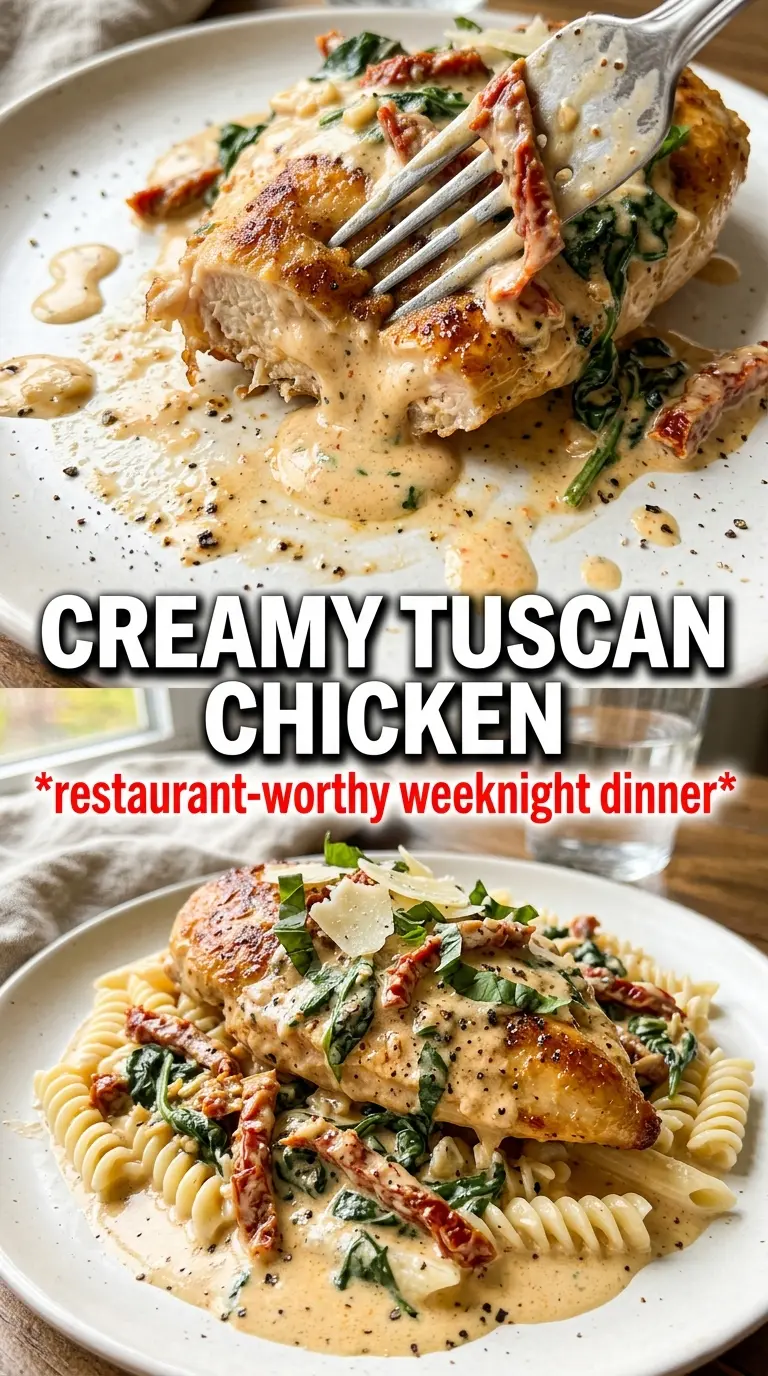
- Chicken breasts — Boneless, skinless breasts give you the classic Tuscan chicken look and enough surface area for a good sear. If they’re thick, slice them in half horizontally or pound them to an even thickness so they cook through before the sauce reduces too far.
- Sun-dried tomatoes in oil — These carry the most flavor in the dish. The oil helps the tomatoes stay tender and plush; drained, sliced tomatoes work best here. Dry-packed sun-dried tomatoes can work, but they should be rehydrated in hot water first or they’ll stay leathery.
- Heavy cream — This is what gives the sauce its glossy body. Half-and-half can be used in a pinch, but it won’t thicken the same way and is more likely to look thin after simmering.
- Parmesan — Freshly grated Parmesan melts smoother than the shelf-stable stuff and gives the sauce its savory backbone. Pre-shredded cheese often contains anti-caking agents that can leave the sauce a little gritty.
- Baby spinach — It wilts fast and keeps the sauce bright. If you use mature spinach, strip the stems first and expect a little more texture.
- Chicken broth — This loosens the browned bits in the pan and keeps the cream from becoming too heavy. Use a low-sodium broth so you can control the salt after the Parmesan goes in.
Building the Sauce in the Right Order
Getting Color on the Chicken First
Season the chicken generously so the outside has flavor, then sear it in hot oil until the surface turns deep golden and the chicken releases from the skillet without sticking. If you try to move it too early, it’ll tear and leave the good crust behind. That crust is the beginning of the sauce, so let it form. Pull the chicken once it reaches 165°F and let it rest on a plate while you finish the pan.
Using the Same Pan for the Base
Garlic goes into the pan after the chicken comes out, and it only needs about 30 seconds. You’re looking for fragrance, not browning. Add the sun-dried tomatoes next so they warm through and start giving up their flavor before the liquid goes in. Then pour in the broth and scrape the pan clean; those browned bits dissolve into the sauce and carry a lot of the savory depth.
Thickening Without a Grainy Finish
Stir in the cream, Parmesan, Italian seasoning, and red pepper flakes, then let the sauce simmer gently for a few minutes. If you rush this part over high heat, the sauce can separate or turn oily around the edges. You want it to coat a spoon and leave a clear trail when you drag a finger through it. If it tightens too much, loosen it with a splash of broth rather than more cream.
Finishing with Spinach and Basil
Add the spinach at the end and stir just until it wilts into the sauce. It should stay bright green and soft, not collapse into mush. Return the chicken to the pan, spoon sauce over the top, and let it warm through for a minute or two. Fresh basil goes on right before serving so it stays aromatic instead of sinking into the cream.
How to Adapt It Without Losing the Creamy Skillet Feel
Make It Lighter with Half-and-Half
You can swap the heavy cream for half-and-half, but the sauce won’t be as thick or as stable. Keep the simmer very gentle and add the Parmesan slowly so it has time to melt cleanly. If you go this route, serve the chicken right away while the sauce is still glossy.
Make It Gluten-Free Without Changing the Method
This recipe is naturally gluten-free as written, as long as your broth and Parmesan are certified gluten-free. The pan sauce depends on reduction, not flour, so you don’t need any extra thickeners.
Turn It into a Pasta Dinner
Toss the finished sauce with hot pasta and slice the chicken before serving. A little reserved pasta water helps the sauce cling if it seems tight, but add it sparingly so you don’t dilute the Parmesan.
Storage and Reheating
- Refrigerator: Store in an airtight container for up to 3 days. The sauce will thicken as it chills.
- Freezer: I don’t recommend freezing this one. Cream sauces can separate after thawing, and the spinach loses its texture.
- Reheating: Warm it slowly in a skillet over low heat with a splash of broth or cream. High heat is the mistake here; it can split the sauce before the chicken is hot through.
Questions I Get Asked About This Recipe
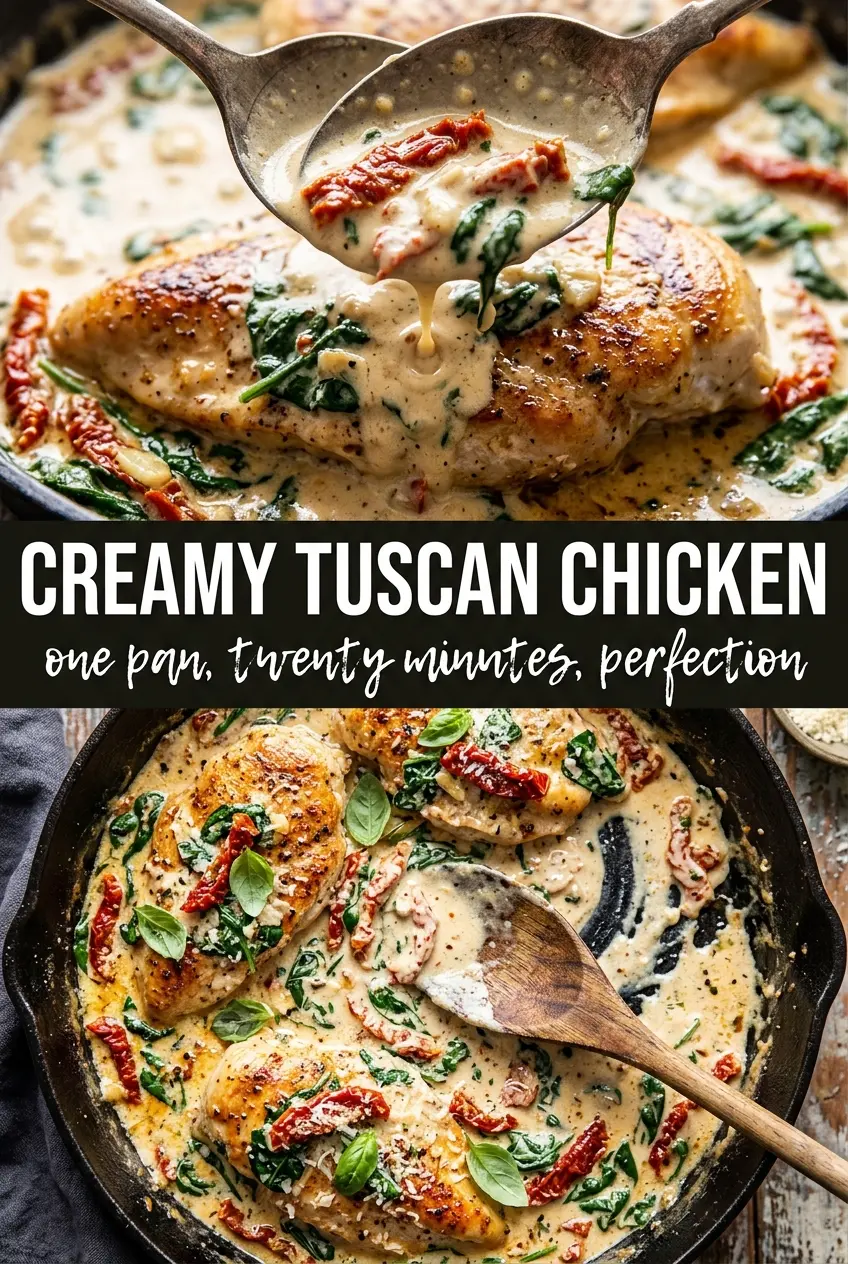
Creamy Tuscan Chicken
Ingredients
Equipment
Method
- Pat the chicken dry, then season both sides generously with salt, pepper, garlic powder, Italian seasoning, and smoked paprika to taste. Heat olive oil in a large cast iron skillet over medium-high until shimmering, then place chicken in the pan.
- Sear the chicken for 5-6 minutes per side until golden brown and the internal temperature reaches 165°F. Transfer to a plate or rack to rest while you make the sauce.
- In the same skillet, cook minced garlic over medium-high for 30 seconds until fragrant. Stir in the drained, sliced sun-dried tomatoes and cook for 1 minute.
- Pour in chicken broth and deglaze the pan, scraping up the browned bits. Stir in heavy cream, Parmesan, Italian seasoning, and red pepper flakes, then simmer for 4-5 minutes until thickened and glossy.
- Stir in the baby spinach and cook just until wilted, keeping the sauce creamy and thick. Return the chicken to the pan and spoon the sauce over each breast.
- Garnish with fresh basil and serve immediately with any pan sauce remaining.