Golden seared chicken breasts in a silky tomato cream sauce are the kind of dinner that earns repeat requests because the pan sauce tastes like it took a lot more work than it did. The chicken stays juicy, the sauce turns a deep rosy pink, and every bite gets that sharp tomato edge softened by cream and Parmesan. It’s rich without being heavy and quick enough to pull off on a weeknight.
The part that makes this version work is the order. The chicken gets a hard sear first, which leaves the browned bits behind to season the sauce, and the garlic goes into the pan just long enough to bloom without burning. A splash of wine or broth loosens everything from the skillet, then the tomatoes simmer before the cream goes in so the sauce thickens instead of turning thin and bland.
Below, I’ll walk through the one pan step that matters most, the ingredient choices that change the texture of the sauce, and a few smart variations if you want to adjust the richness or make it dairy-free.
The sauce thickened up beautifully and never broke, even after I added the cream. I served it over gnocchi and my husband went back for seconds before I sat down.
Save this creamy tomato chicken for the night you want a glossy pink sauce, seared chicken, and pasta-worthy comfort without a long simmer.
The Sear Is What Gives the Sauce Its Depth
Chicken breasts can taste flat in a creamy sauce if you rush the first few minutes. The browning in the skillet is doing two jobs at once: building flavor on the chicken itself and leaving behind fond, those caramelized brown bits that turn the sauce from one-note into something layered. If you crowd the pan or turn the heat too low, the chicken steams and the sauce loses that savory backbone.
The other mistake is pulling the chicken out too soon and forgetting that carryover heat matters. The goal is a deep golden crust and an internal temperature of 165°F, not pale chicken with a sauce trying to hide it. Once it’s seared, set it aside and use the same pan for everything else. That one choice makes this dish taste like it came from a much more deliberate kitchen.
What the Cream, Tomatoes, and Parmesan Each Do Here
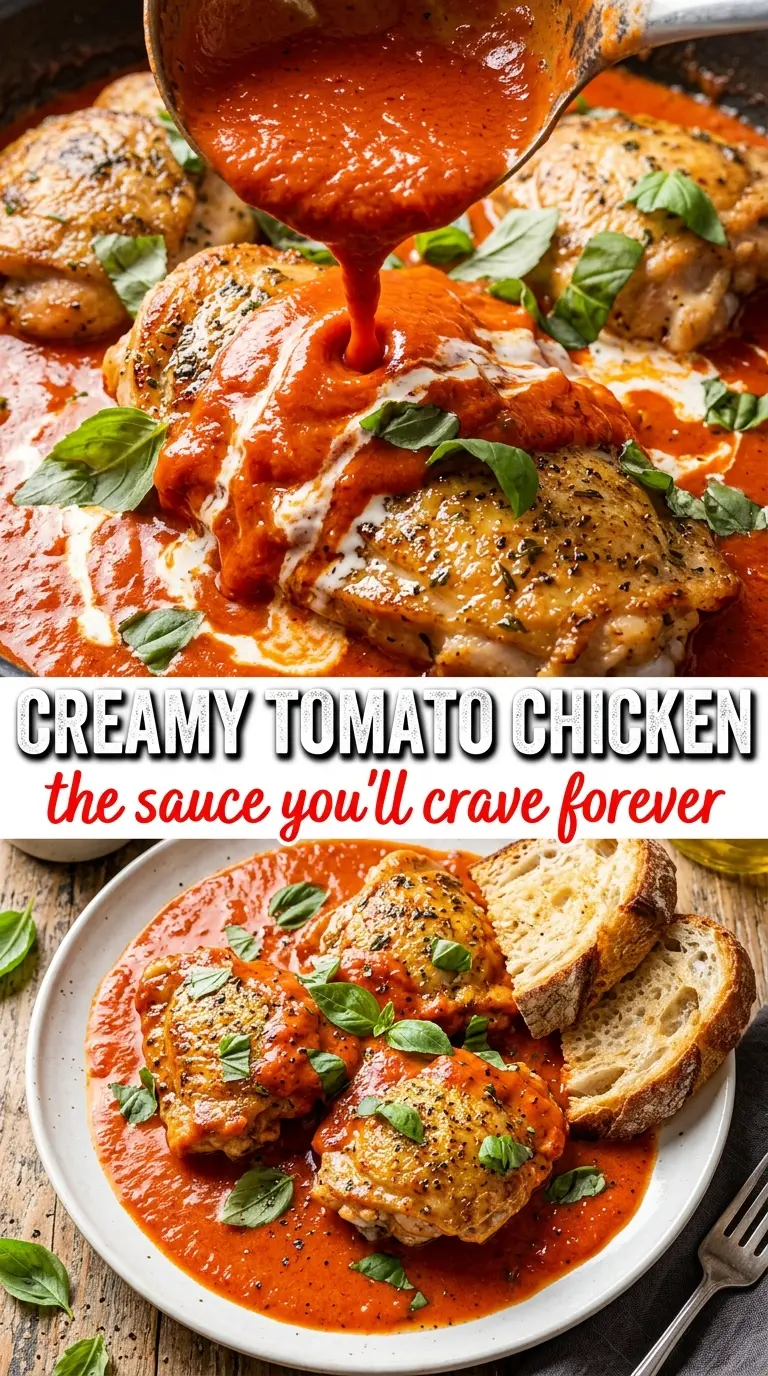
- Crushed tomatoes — These give the sauce body and the bright tomato backbone that keeps the cream from tasting heavy. Crushed tomatoes work better than smooth puree here because they still have enough texture to cling to the chicken. If all you have is tomato sauce, it’ll work, but the finished sauce will be softer and less textured.
- Heavy cream — This is what turns the pan sauce rosy and silky. Half-and-half can work in a pinch, but it won’t thicken as cleanly and it’s more likely to look loose after simmering. Add it after the tomatoes have had a few minutes on their own so the acidity has time to mellow.
- Parmesan — Parmesan adds salt, body, and a little nutty sharpness that makes the sauce taste finished. Grate it finely so it melts smoothly; pre-shredded cheese can leave the sauce grainy. If you want the closest swap, use Grana Padano.
- Dry white wine or chicken broth — Wine adds a little brightness and lifts the browned bits off the pan faster, but broth is a perfectly solid substitute. Use what you’ve got. The important part is deglazing while the pan is still hot so none of that flavor stays stuck to the skillet.
Building the Rosy Sauce Without Breaking It
Season and Sear the Chicken
Pat the chicken dry, season it well, and lay it into hot olive oil. You want an active sizzle as soon as it hits the pan. If the oil isn’t hot enough, the chicken will gray before it browns. Let it cook undisturbed for 5 to 6 minutes per side until the crust is golden and the center reaches 165°F, then move it to a plate.
Wake Up the Pan
Drop the garlic into the same skillet and stir for about 30 seconds, just until fragrant. Any longer and it can burn in the leftover heat from the sear. Pour in the wine or broth and scrape up the browned bits with a wooden spoon. That quick deglaze is what keeps the sauce from tasting like tomatoes stirred into plain cream.
Let the Tomatoes Cook Before the Dairy Goes In
Add the crushed tomatoes and Italian seasoning, then simmer for about 5 minutes. The sauce should darken a little and smell less sharp, more rounded. This is where the tomato flavor settles in. If you rush the cream in too early, the sauce can taste thin and the acid stays louder than it should.
Finish with Cream and Cheese
Stir in the cream, Parmesan, and red pepper flakes, then keep the heat low and let the sauce bubble gently for 4 to 5 minutes. It should thicken enough to coat a spoon and turn that deep pink color. Pull the pan off the burner and swirl in the butter at the end for a glossy finish. If the sauce looks greasy or separated, the heat was too high; lowering it fixes the texture before you add the chicken back in.
How to Adapt This for a Different Table
Make It Dairy-Free
Use full-fat coconut cream in place of the heavy cream and skip the Parmesan, then add a little extra salt at the end. The sauce will still turn rich and silky, but it won’t have quite the same sharp cheesy finish. It’s a good option if you want the tomato base to stay front and center.
Swap the Chicken Breasts for Thighs
Boneless skinless thighs give you a juicier, more forgiving result and can handle a little extra simmer time in the sauce. They also bring more built-in richness, so the dish feels a touch deeper and less lean. Brown them well and give them a few extra minutes to cook through.
Make It Gluten-Free
The sauce itself is naturally gluten-free if you use broth instead of wine and check that your Parmesan is gluten-free. Serve it over rice, mashed potatoes, or gluten-free pasta. The texture of the sauce doesn’t need flour to work, which keeps the finish clean and silky.
Add More Heat Without Changing the Balance
Increase the red pepper flakes to 1 teaspoon or add a pinch of cayenne with the tomatoes. That gives the sauce a slow burn without stealing the creamy tomato character. I’d add heat in the sauce, not on the chicken, so it disperses evenly and doesn’t overpower the first bite.
Storage and Reheating
- Refrigerator: Store leftovers in an airtight container for up to 3 days. The sauce will thicken as it chills.
- Freezer: You can freeze it, but cream sauces sometimes separate a bit when thawed. If you do freeze it, cool it completely first and thaw overnight in the refrigerator.
- Reheating: Warm gently on the stove over low heat with a splash of broth or cream, stirring often. High heat is the fastest way to split the sauce and dry out the chicken.
Answers to the Questions Worth Asking
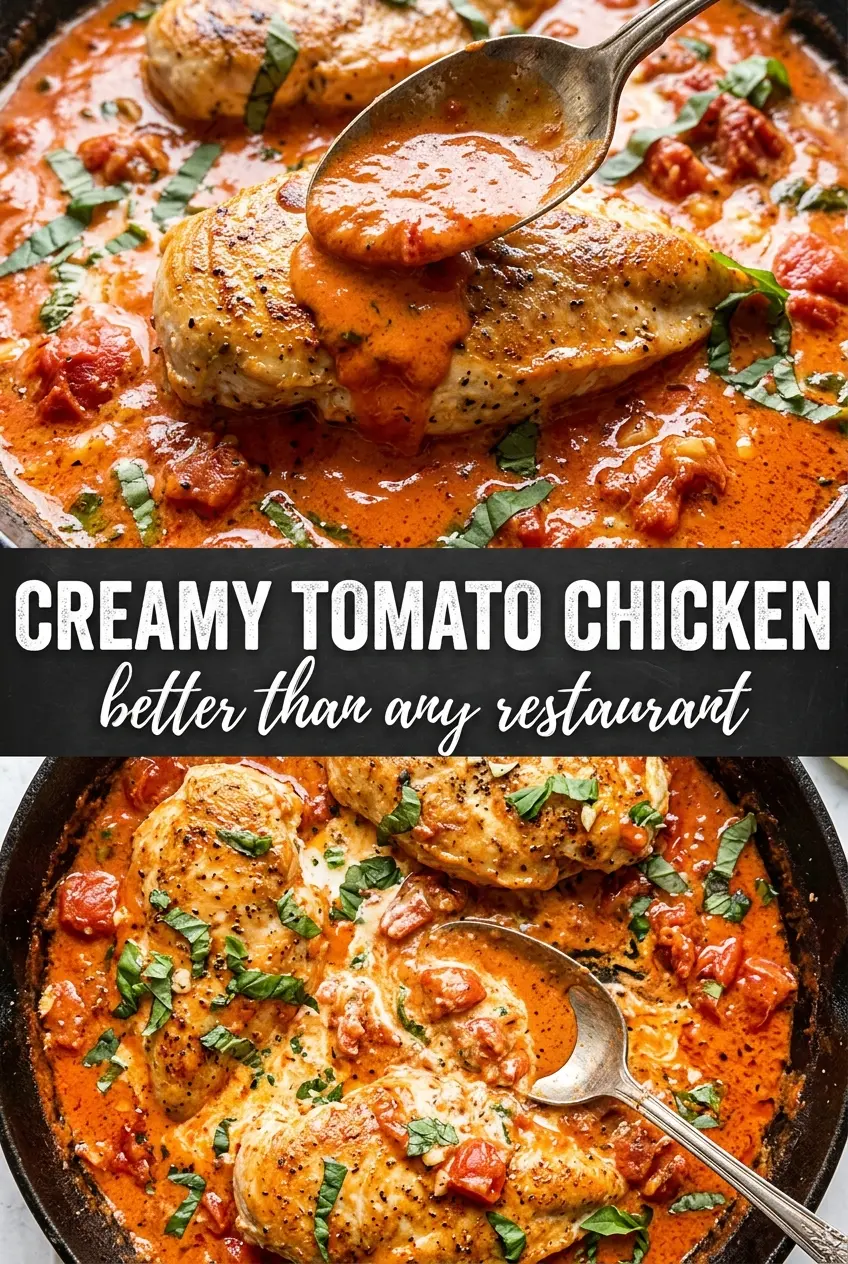
Creamy Tomato Chicken
Ingredients
Equipment
Method
- Season the chicken breasts with salt, pepper, garlic powder, and Italian seasoning to taste. Heat olive oil in a wide skillet over medium-high heat and sear for 5-6 minutes per side until golden, reaching an internal temperature of 165°F, then remove.
- Reduce heat slightly and cook the minced garlic in the same pan for 30 seconds until fragrant. Deglaze with the white wine or chicken broth, then stir in crushed tomatoes and Italian seasoning and simmer for 5 minutes.
- Stir in the heavy cream, Parmesan cheese, and red pepper flakes. Simmer for 4-5 minutes until the sauce is thick and rose-colored.
- Swirl in the butter until the sauce looks glossy. Return the chicken to the pan, spoon the tomato cream sauce over each breast, garnish with fresh basil, and serve over pasta or gnocchi.