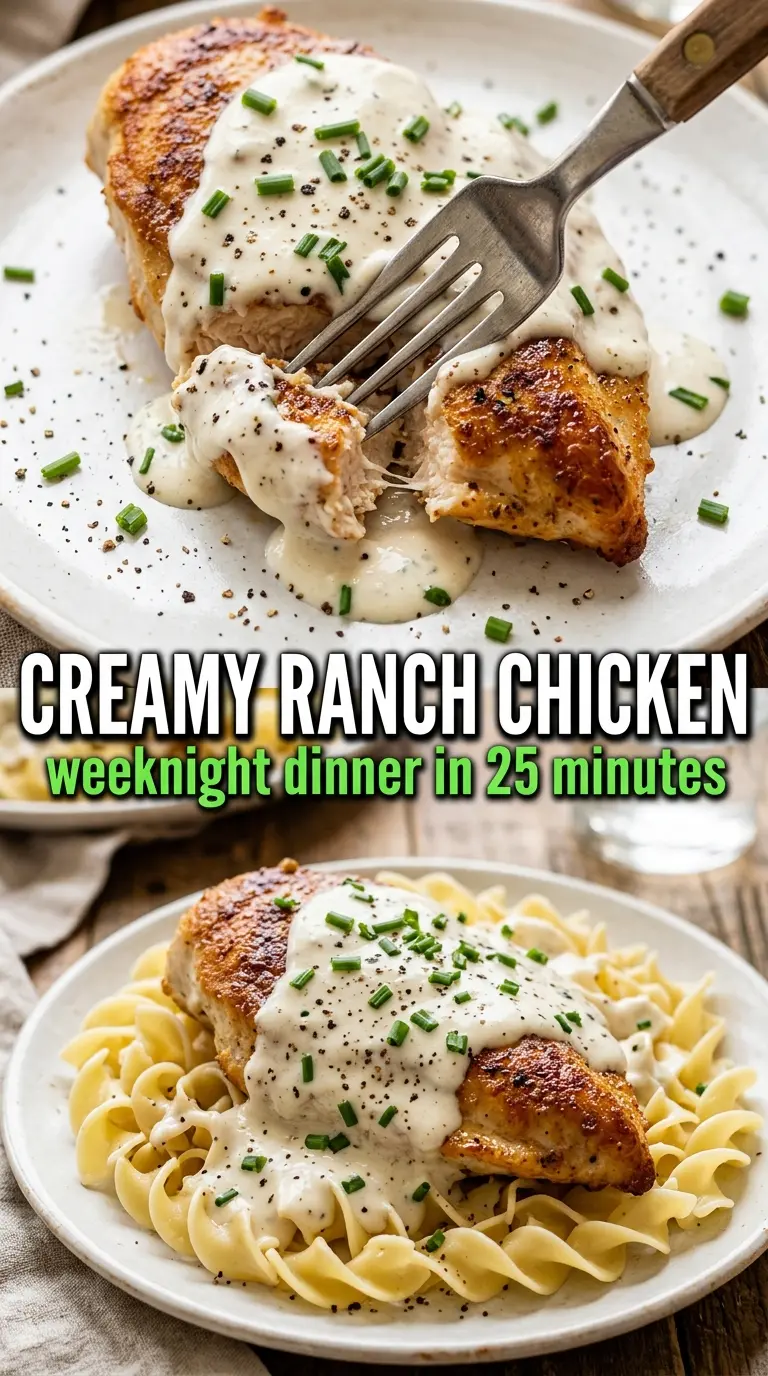
Juicy chicken breasts in a thick ranch cream sauce are the kind of dinner that quietly disappears from the table before anyone says much about it. The chicken stays tender because it gets a proper sear first, then finishes gently in the sauce instead of drying out in the skillet. What you end up with is a skillet meal that tastes rich and tangy, with a sauce thick enough to cling to every slice.
The trick here is building the sauce in the same pan after the chicken comes out. Those browned bits on the bottom dissolve into the broth and give the sauce a deeper, savory edge that plain cream can’t provide on its own. Cream cheese helps the sauce turn smooth and spoonable, while ranch seasoning and dill keep the flavor bright instead of flat.
Below you’ll find the small details that make this creamy ranch chicken work the way it should, plus a few smart swaps and storage notes for the nights when you want dinner to be easy without tasting rushed.
The sauce thickened up perfectly and the chicken stayed juicy all the way through. I served it over mashed potatoes, and my husband asked if I could put it on the menu again next week.
Creamy ranch chicken with that thick, spoonable sauce belongs in your Pinterest dinner board for the nights you want something fast, cozy, and built for mashed potatoes.
The Secret to Keeping the Sauce Smooth Instead of Grainy
The biggest mistake with a ranch cream sauce is letting the heat run too high once the dairy goes in. Cream cheese, cream, and ranch seasoning all want gentle heat. If the pan is boiling, the sauce can turn oily or look slightly broken before the cheese finishes melting. Keep it at a low simmer and stir until the cream cheese disappears completely.
The other important move is deglazing the skillet after the chicken comes out. Those browned bits carry the best flavor in the pan, and the broth lifts them into the sauce instead of leaving them stuck to the bottom. That gives the finished dish a deeper, roasted taste that balances the richness of the cream.
What Each Ingredient Is Actually Doing in This Dish
- Chicken breasts — Boneless, skinless breasts cook quickly and hold their shape in the sauce. If yours are thick, pound them to an even thickness so they sear evenly and don’t need extra time that would dry them out.
- Olive oil — You need just enough to get a good golden crust without steaming the chicken. Any neutral cooking oil works here, but olive oil adds a little more flavor in the pan.
- Garlic — Fresh minced garlic gives the sauce a sharper, fresher backbone than garlic powder alone. Cook it for only 30 seconds or it can turn bitter fast.
- Chicken broth — This loosens the pan and keeps the sauce from tasting too heavy. Broth is where the deglazing happens, so don’t swap in water unless you have to.
- Heavy cream — This is what gives the sauce its silky body. Half-and-half will work in a pinch, but the sauce will be thinner and a little more likely to split if you rush the simmer.
- Ranch seasoning mix — This brings the signature tang, herbs, and salt all at once. Store-bought mix is the easiest route, and homemade ranch seasoning works too if it has dried dill, onion, garlic, and buttermilk notes.
- Cream cheese — The cream cheese is what turns the sauce from thin and pourable into rich and clingy. Cube it first so it melts faster and more evenly.
- Dried dill — This sharpens the ranch flavor and makes the sauce taste more finished. If your ranch mix is already heavy on dill, reduce this a little so it doesn’t take over.
Building the Chicken and Sauce in the Right Order
Searing the Chicken First
Season the chicken on both sides, then lay it into a hot skillet with the olive oil. Let it cook without moving it until a deep golden crust forms and it releases cleanly from the pan, about 5 to 6 minutes per side depending on thickness. If the pan is too cool, the chicken will pale and steam instead of browning, and you’ll lose both texture and flavor.
Using the Same Pan for the Sauce
When the chicken is cooked through, move it to a plate and keep the skillet on the stove. Add the garlic and stir it for just 30 seconds, then pour in the broth and scrape up every browned bit from the bottom. That step is what turns the pan juices into part of the sauce instead of leaving all that flavor behind.
Melting the Dairy Gently
Stir in the cream, ranch seasoning, and cream cheese, then lower the heat and keep the sauce at a gentle simmer. The cream cheese should melt into the liquid until the sauce looks smooth and slightly thickened, not bubbling hard at the edges. If you see little soft lumps, keep stirring over low heat until they disappear before the chicken goes back in.
Finishing With the Chicken
Return the chicken to the skillet and spoon sauce over the top so every piece gets coated. Let it simmer for a few minutes so the chicken absorbs some of the sauce and the whole dish comes together. The sauce should cling to a spoon and coat the chicken in a thick layer, not run off like broth.
How to Adjust Creamy Ranch Chicken for Different Nights
Make It a Little Lighter
Use half-and-half instead of heavy cream and reduce the cream cheese slightly if you want a sauce that feels less rich. It will still taste creamy, but it won’t be quite as thick or as glossy when it finishes.
Dairy-Free Version
Use unsweetened coconut cream or a plain dairy-free cooking cream and swap in a dairy-free cream cheese. The flavor will be a little different, but the sauce can still turn silky if you keep the heat low and avoid boiling it.
Make It Work With Chicken Thighs
Boneless thighs are a great swap if you want darker, juicier meat. They usually need a few extra minutes in the skillet, but they stay tender even if the sauce simmers a bit longer.
Storage and Reheating
- Refrigerator: Store leftovers in an airtight container for up to 3 days. The sauce will thicken as it chills.
- Freezer: It freezes, but the cream sauce can separate a little when thawed. If you do freeze it, cool it completely first and thaw it slowly in the refrigerator.
- Reheating: Warm it gently on the stove over low heat with a splash of broth or cream. High heat is what makes dairy sauces break, so don’t blast it in the microwave unless you want to stir it constantly at low power.
Questions I Get Asked About This Recipe

Creamy Ranch Chicken
Ingredients
Equipment
Method
- Season the chicken breasts with salt, pepper, and garlic powder to taste. Sear in olive oil in a large skillet over medium-high heat for 5-6 minutes per side until golden and internal temperature reaches 165°F; remove.
- Cook the minced garlic in the same pan for 30 seconds. Pour in the chicken broth and deglaze, scraping up browned bits.
- Stir in the heavy cream and ranch seasoning, then bring the mixture to a simmer over medium heat.
- Add the cubed cream cheese and stir over medium-low heat until completely melted and the sauce is smooth.
- Stir in the dried dill. Return the chicken to the pan and spoon sauce over each breast, then simmer for 3 minutes.
- Garnish with fresh chives and serve with mashed potatoes or pasta.