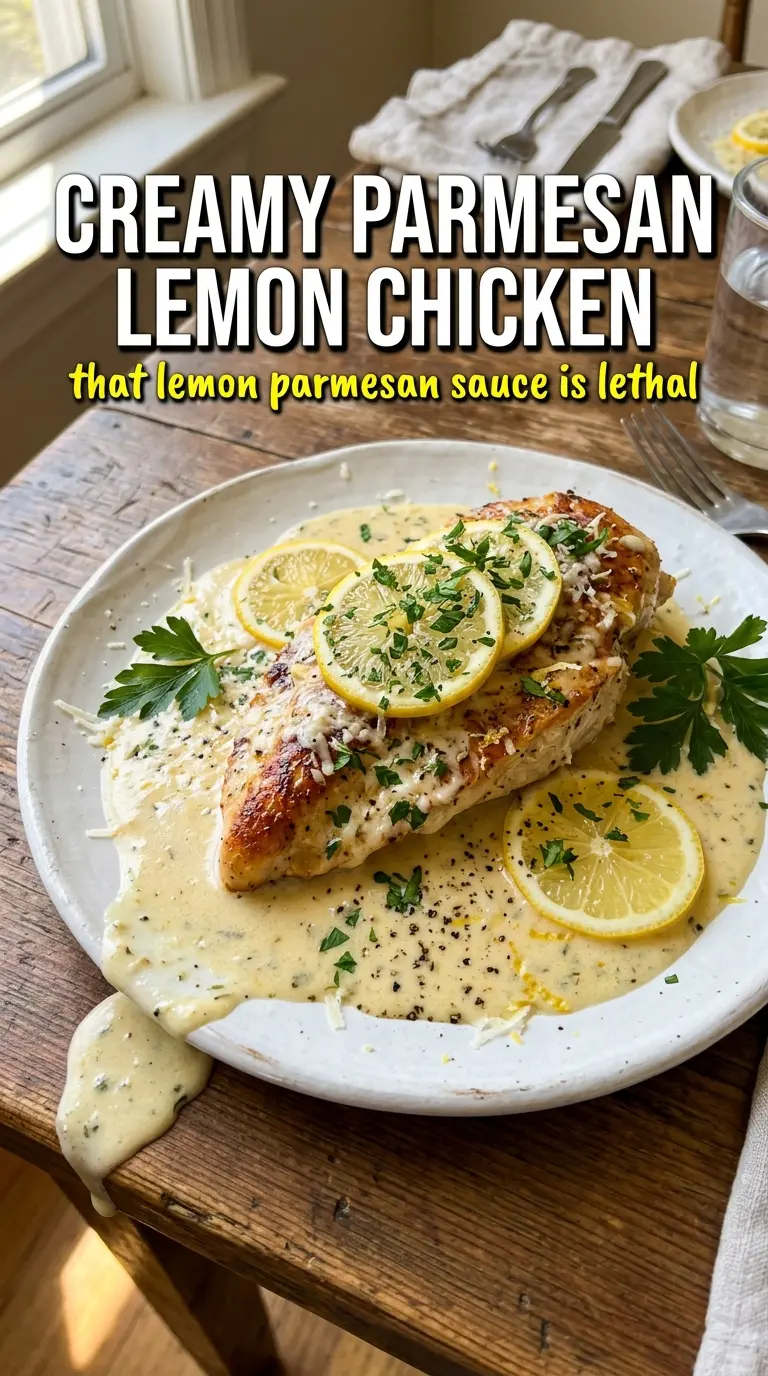
Golden seared chicken breasts tucked into a silky lemon Parmesan sauce earn a permanent place in the weeknight rotation because they deliver contrast in every bite: crisp-edged chicken, a glossy cream sauce, and enough lemon to keep the richness from feeling heavy. The pan sauce clings to the meat instead of sliding off, and that makes the whole dish feel finished and restaurant-worthy without asking for much more than a skillet and a steady hand.
What makes this version work is the order. The chicken gets a hard sear first, which builds flavor in the pan, and the sauce starts with garlic and a splash of wine or broth to lift up all those browned bits. Parmesan goes into cream, not the other way around, and the lemon is added near the end so it stays bright instead of turning flat or bitter.
Below, you’ll find the small details that keep the sauce smooth, the best way to swap the wine, and a few ways to adjust the dish if you want it a little lighter or a little richer.
The sauce thickened up beautifully and stayed smooth after I added the Parmesan. I used the chicken broth instead of wine, and the lemon still came through with just the right brightness.
Save this creamy Parmesan lemon chicken for the nights when you want a glossy skillet sauce and bright lemon flavor without extra fuss.
The Trick to Keeping the Lemon Sauce Smooth, Not Grainy
Parmesan cream sauces fail for one of two reasons: the heat is too high, or the cheese goes in too fast. Both lead to a sauce that looks broken or turns sandy at the bottom of the pan. This recipe avoids that by simmering the cream gently and letting the Parmesan melt in gradually, off a furious boil.
The lemon juice is another place people get into trouble. Add it early and too aggressively, and the sauce can look curdled before it has a chance to come together. Here, it goes in after the cream has warmed and the cheese has started to melt, so it brightens the sauce without shocking it.
- Keep the heat at a bare simmer. Bubbling hard is what makes cream separate and cheese seize.
- Use freshly grated Parmesan. Pre-shredded cheese often has anti-caking starches that make the sauce gritty.
- Add lemon at the end of the sauce build. That keeps the flavor fresh and protects the texture.
What Each Ingredient Is Actually Doing in the Pan
- Chicken breasts — Boneless skinless breasts give you a lean canvas for the sauce, but they need even thickness so the outside doesn’t overcook before the center is done. If one side is much thicker, pound it lightly before seasoning.
- Olive oil — This is what gives you the sear. Use a neutral olive oil or regular olive oil; extra-virgin works too, but it can be a little less forgiving at higher heat.
- Garlic — Fresh minced garlic perfumes the sauce in seconds. It burns fast, so it only needs a brief cook before you add liquid.
- Dry white wine or chicken broth — Wine adds a little sharpness and depth, while broth keeps things family-friendly and still helps deglaze the pan. If you use broth, add a tiny extra squeeze of lemon at the end to replace the wine’s lift.
- Heavy cream — This is the body of the sauce, and there isn’t a true stand-in that behaves the same way. Half-and-half can work in a pinch, but the sauce will be thinner and needs a gentler simmer.
- Freshly grated Parmesan — This is the ingredient that gives the sauce its salty, nutty backbone. Grate it yourself so it melts smoothly instead of clumping.
- Lemon juice and zest — Juice brings brightness; zest carries the fragrant oils that make the lemon taste fresh instead of flat. Don’t skip the zest if you want the sauce to taste lively.
- Butter — Swirled in at the end, it gives the sauce a soft shine and rounds off the edges. That last little bit of fat makes a noticeable difference.
How to Build the Sauce Around the Chicken Without Losing the Sear
Seasoning and Searing the Chicken
Season the chicken generously on both sides before it hits the pan. A dry surface and a hot skillet are what give you that deep golden crust. If the chicken sticks when you first try to move it, leave it alone for another minute; once it browns properly, it releases on its own. Pull it out when it reaches 165°F, because overcooked chicken breast turns dry fast in a cream sauce.
Deglazing the Pan
After the chicken comes out, the browned bits in the pan are your starting point, not a mess to clean away. Add the garlic for just 30 seconds, then pour in the wine or broth and scrape the bottom with a wooden spoon. The liquid should sizzle, loosen the fond, and reduce a little before you move on. If the garlic darkens too fast, the pan is too hot, so take it off the heat for a moment before adding liquid.
Finishing the Cream Sauce
Stir in the cream, Parmesan, lemon juice, and zest, then keep the sauce at a gentle simmer until it thickens enough to coat a spoon. It should look glossy and slightly napped, not like a rolling boil. Add the butter once the sauce has thickened; that gives you a smoother finish than tossing it in earlier. Return the chicken to the pan and spoon the sauce over the top so it warms through without overcooking.
How to Adapt This for a Lighter Dinner or a Different Pantry
Make It Gluten-Free Without Changing the Texture
This dish is naturally gluten-free as written, as long as your broth is certified gluten-free. The sauce thickens from reduction and cheese, not flour, so you don’t need a separate thickener.
Swap the Chicken Breasts for Thighs
Boneless skinless thighs bring more fat and a little more forgiveness, which is helpful if you’re worried about dry chicken. They’ll need a few extra minutes in the pan, but the sauce clings to them nicely.
Use Half-and-Half for a Slightly Lighter Sauce
Half-and-half will give you a lighter finish, but the sauce won’t be as plush and it’s easier to split if it boils. Keep the heat low and add the Parmesan slowly so the texture stays smooth.
Skip the Wine and Lean on Broth
Chicken broth works well if you don’t cook with wine, but the sauce benefits from a little extra lemon juice at the end. That keeps the flavor balanced and replaces the brightness the wine would have added.
Storage and Reheating
- Refrigerator: Store leftovers in an airtight container for up to 3 days. The sauce will thicken as it chills.
- Freezer: I don’t recommend freezing this one. Cream sauces often separate after thawing, and the texture won’t come back cleanly.
- Reheating: Warm it slowly in a skillet over low heat with a splash of broth or cream. High heat is the fastest way to make the sauce break.
Answers to the Questions Worth Asking

Creamy Parmesan Lemon Chicken
Ingredients
Equipment
Method
- Season the chicken breasts on both sides generously with salt, pepper, garlic powder, and Italian seasoning.
- Heat the olive oil in a large skillet over medium-high heat and sear the chicken for 5-6 minutes per side until golden.
- Check the thickest part of the chicken and remove when it reaches 165°F internal temperature.
- Add the minced garlic to the skillet and cook for 30 seconds until fragrant.
- Deglaze with the white wine (or chicken broth) and simmer for 2 minutes, scraping up browned bits.
- Stir in the heavy cream, Parmesan, lemon juice, and lemon zest, then simmer for 4-5 minutes until the sauce thickens.
- Swirl in the butter until fully melted and glossy.
- Return the chicken to the skillet and spoon the sauce over each breast to coat.
- Garnish with fresh parsley and lemon slices and serve immediately.