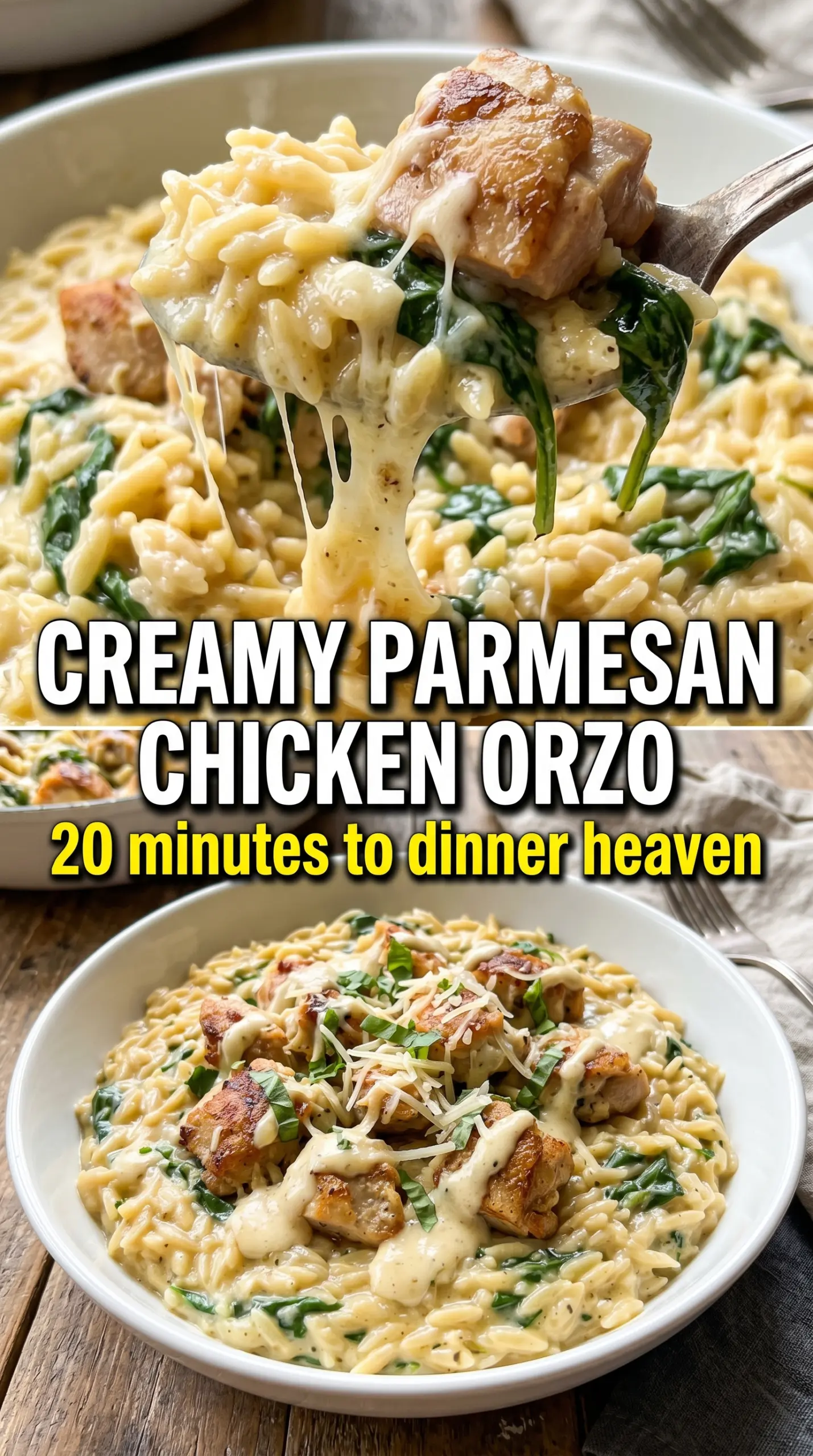
Golden chicken thighs over silky Parmesan orzo is the kind of skillet dinner that earns a permanent place in the rotation. The chicken stays juicy, the orzo turns plush and saucy instead of mushy, and the spinach and sun-dried tomatoes give every bite a little color and lift. It eats like comfort food, but it still feels polished enough to put in the center of the table.
What makes this version work is the order. The chicken gets a real sear first, which gives the pan those browned bits that season the sauce later. The orzo is toasted for a minute before the liquid goes in, which helps it keep some body. Then the cream and broth simmer together uncovered, so the sauce reduces into something glossy instead of thin. The Parmesan goes in off the back of that gentle simmer, not at a hard boil, so it melts smoothly instead of turning grainy.
Below, I’ll walk through the part that matters most: keeping the orzo creamy without overcooking it, plus a few smart swaps if you need to work with what’s already in your kitchen.
The orzo stayed creamy the whole time, and the chicken browned beautifully without drying out. I loved that the sun-dried tomatoes cut through the richness just enough.
Save this creamy Parmesan chicken and orzo for a one-pan dinner with golden chicken, silky sauce, and just enough sun-dried tomato brightness.
The Pan Order That Keeps the Orzo Creamy Instead of Gluey
Orzo can go from tender to sticky fast, especially in a creamy skillet dish where the starch has nowhere to hide. The fix is to build the dish in stages and keep the simmer gentle. Brown the chicken first, then toast the dry orzo in the same pan before adding liquid. That quick toast adds a little nutty flavor and helps the pasta hold its shape as it cooks.
The other thing that matters is heat control. Once the broth and cream go in, the sauce should barely simmer, not boil. A hard boil tightens the dairy and pushes the orzo past tender before the liquid has time to reduce properly. If the pan looks dry before the pasta is done, add a splash of broth, not more cream. Broth loosens the texture without making the sauce heavy.
What Each Ingredient Is Actually Doing in This Recipe
- Primary ingredient (the star) — Quality matters most. Choose the best you can find.
- Cooking medium (oil, butter, or broth) — This carries flavors and prevents dryness.
- Seasonings (salt, pepper, spices, herbs) — Layer flavors so nothing overpowers. Build depth gradually.
- Aromatics (garlic, onion, herbs) — Cook with fat to bloom flavors. Become the foundation.
- Supporting ingredients — Complement the main ingredient without overpowering it.
- Sauce or liquid (if applicable) — Brings flavors together. Balance richness with acid.
- Acid (lemon, vinegar, wine, or other) — Brightens and prevents flat-tasting results.
- Final finish (garnish, glaze, or sauce) — Prevents one-dimensional taste and adds visual appeal.
What Each Ingredient Is Doing in This Skillet
- Chicken thighs — Thighs stay juicy through searing and the final simmer, which is why they work better here than chicken breast. If you use breast, cut it a little thicker and pull it as soon as it hits 165°F so it doesn’t dry out in the sauce.
- Orzo — This is the pasta that gives the dish its creamy, risotto-like body. Regular small pasta shells won’t behave the same way, so if you swap, expect a looser sauce and a different texture.
- Heavy cream — Cream gives the sauce its silkiness and helps it cling to the pasta. Half-and-half can work in a pinch, but the sauce will be thinner and more likely to separate if you boil it.
- Parmesan — Freshly grated Parmesan melts smoothly and seasons the whole pan. Pre-shredded cheese often contains anti-caking agents, and that can leave the sauce a little grainy instead of glossy.
- Sun-dried tomatoes and spinach — The tomatoes bring acidity and chew, while the spinach softens into the sauce without taking over. If your tomatoes are packed in oil, drain them well so the sauce doesn’t turn greasy.
- Chicken broth — Broth carries the seasoning into the orzo as it cooks and keeps the sauce savory instead of flat. Low-sodium broth is the best choice here because the Parmesan adds plenty of salt on its own.
Building the Sauce So the Parmesan Stays Smooth
Getting the Chicken Color First
Season the chicken well and sear it in a hot skillet until the outside is deep golden and the meat releases easily from the pan. If it sticks, it isn’t ready yet. Pull it out once it’s cooked through, then leave the browned bits in the pan. That’s where the flavor starts, and wiping the skillet out would cost you the best part of the sauce.
Toasting the Orzo Before the Liquid Goes In
After the garlic has cooked for just 30 seconds, stir in the dry orzo and let it sit in the pan long enough to pick up a little color. You’ll smell a faint nutty aroma when it’s ready. Don’t rush this into the liquid too soon; that quick toast keeps the pasta from turning soft on the outside before the center is done.
Simmering the Cream to the Right Texture
Pour in the broth and cream, bring the pan to a gentle simmer, then keep stirring often while the orzo cooks. The sauce should thicken gradually and coat the back of a spoon. If it starts bubbling hard, lower the heat right away. Hard boiling is the fastest way to make the dairy separate and the pasta catch on the bottom.
Finishing With Cheese and Greens
Stir in the Parmesan once the orzo is tender and the sauce looks creamy, then add the spinach and sun-dried tomatoes. The spinach should wilt in a minute or two, just enough to soften without losing its color. Nestle the chicken back into the pan at the end so it warms through without overcooking. Finish with basil right before serving for a fresh note against all that richness.
How to Adapt This for a Different Night at the Table
Make it lighter with chicken breast
Use boneless skinless chicken breasts if that’s what you have, but pound them lightly so they cook evenly. They won’t stay as juicy as thighs, so pull them the moment they reach temperature and let them rest in the finished orzo for just a couple of minutes.
Dairy-free version that still feels creamy
Swap the heavy cream for full-fat canned coconut milk and use a dairy-free Parmesan-style cheese or nutritional yeast for a savory finish. The sauce will taste a little different and less sharp, but it will still turn rich and spoonable if you keep the simmer gentle.
Gluten-free swap for the orzo
Use a gluten-free orzo or small rice-shaped pasta and watch the liquid closely, since some brands soften faster than wheat orzo. Add a splash of extra broth if the pan tightens before the pasta finishes cooking.
Storage and Reheating
- Refrigerator: Store leftovers in an airtight container for up to 4 days. The orzo will thicken as it sits, which is normal.
- Freezer: It freezes, but the cream sauce loses some of its silky texture after thawing. If you plan to freeze it, stop just before adding the spinach and Parmesan, then finish those after reheating.
- Reheating: Warm it gently on the stove with a splash of broth or cream over low heat, stirring often. High heat will make the sauce break and can dry out the chicken.
Answers to the Questions Worth Asking
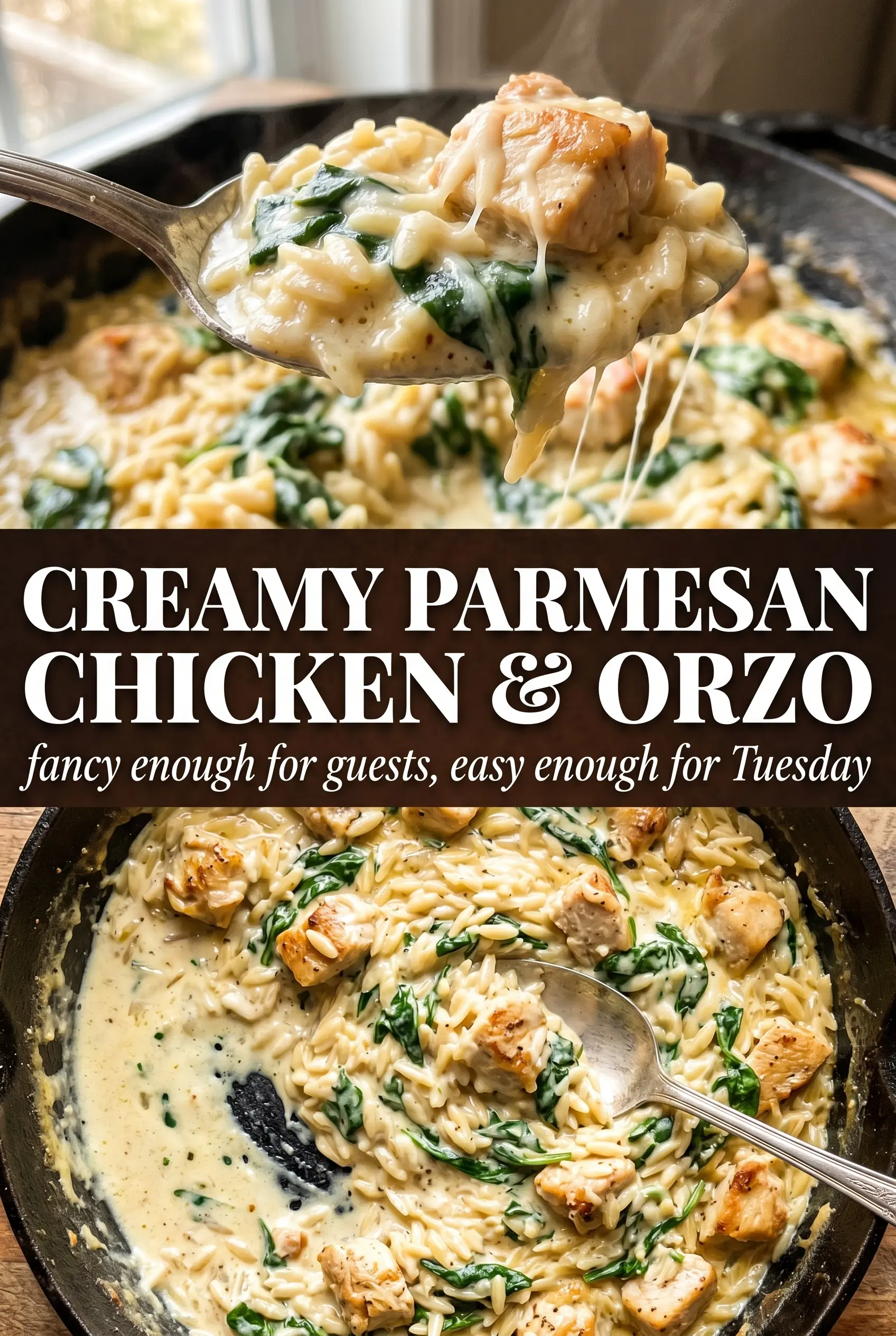
Creamy Parmesan Chicken and Orzo
Ingredients
Equipment
Method
- Season the chicken thighs with salt, pepper, garlic powder, Italian seasoning, and smoked paprika to taste. Heat olive oil in a large skillet over medium-high heat, then sear chicken for 4-5 minutes per side until golden and cooked through; remove to a plate.
- In the same pan, cook the minced garlic for 30 seconds until fragrant, then add the uncooked orzo and toast for 1 minute while stirring.
- Pour in chicken broth and heavy cream, bring to a simmer, and cook uncovered for 10-12 minutes, stirring often, until the orzo is tender and the sauce is creamy.
- Stir in the grated Parmesan, baby spinach, and sliced sun-dried tomatoes, then cook until the spinach wilts and the sauce turns glossy.
- Nestle the chicken thighs back into the orzo and heat through for 2 minutes, keeping the surface simmering gently.
- Garnish with fresh basil and serve immediately so the chicken stays hot and the orzo remains creamy.