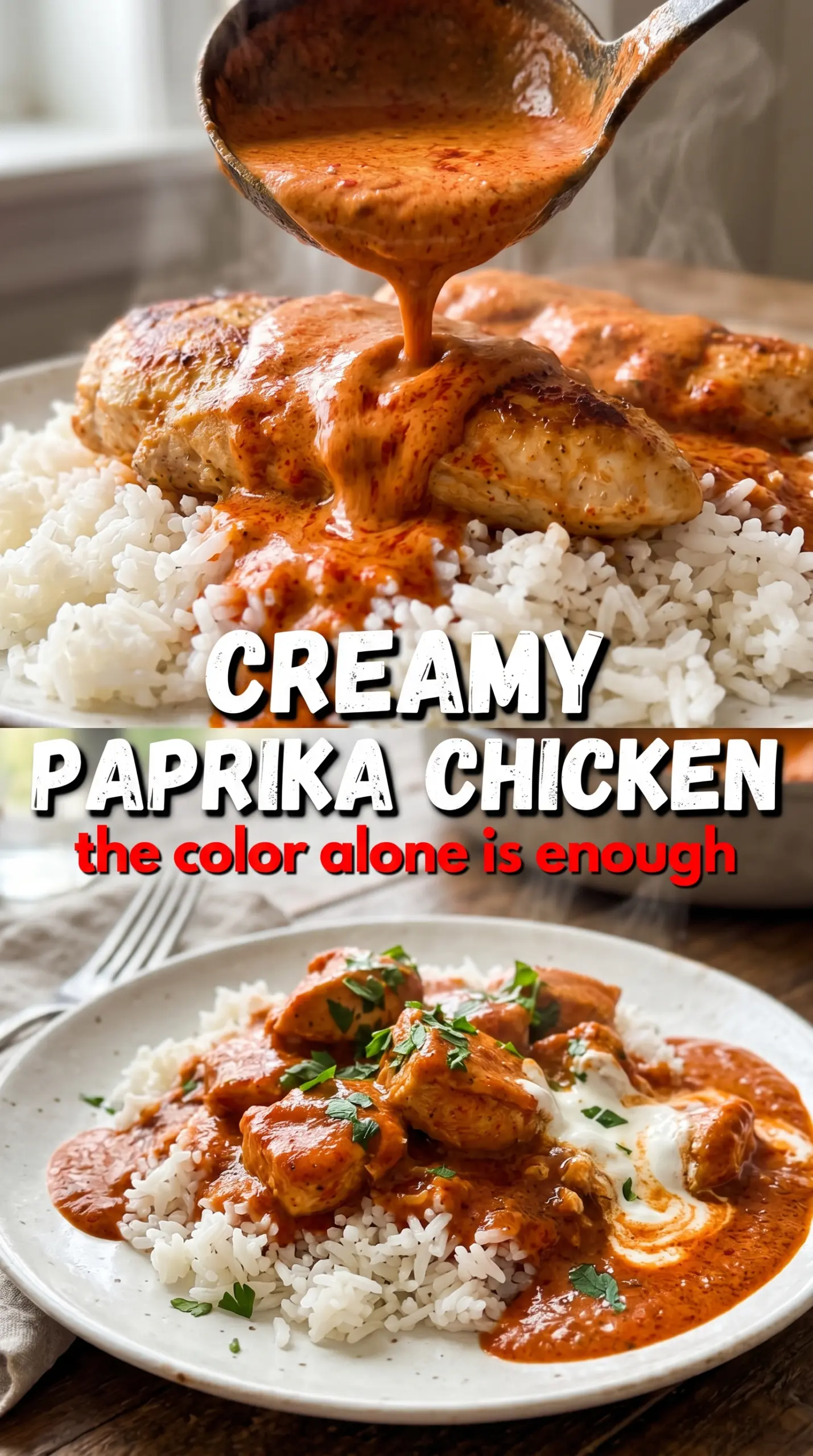
Golden chicken thighs tucked into a rich paprika sauce are the kind of dinner that gets scraped clean from the bowl. The skin sears until crisp and deep amber, then the pan fills with onion, garlic, sweet paprika, and just enough smoked paprika to give the sauce a warm edge without overpowering the sour cream finish. Spoon it over fluffy rice and the whole dish lands somewhere between comforting and quietly impressive.
What makes this version work is the order. The chicken browns first, and those browned bits stay in the pan to season the sauce instead of getting washed away. Paprika goes in briefly with the garlic so it blooms in the oil, not long enough to scorch and turn bitter. Sour cream goes in off the heat at the end, which keeps the sauce smooth instead of grainy or split.
Below, you’ll find the little details that matter most: how to keep the chicken skin from going soft, how to know when the sauce has enough body, and what to change if you want a lighter or dairy-free version.
The sauce thickened up beautifully and stayed silky after I stirred in the sour cream. I served it over rice and the chicken had that deep paprika color all the way through, not just on top.
Save this creamy paprika chicken with rice for the nights when you want a silky sour cream sauce and a proper skillet dinner with almost no cleanup.
The Trick to Keeping Paprika Cream Sauce Smooth Instead of Grainy
Paprika sauce can go wrong fast if the heat is too high when the dairy goes in. Sour cream is gentle, but it still needs a calm pan. If the sauce is boiling hard, the fat can separate and the texture turns slightly curdled instead of glossy. The fix is simple: finish the simmering first, then take the pan off the heat before stirring in the sour cream.
The chicken also matters here. Bone-in, skin-on thighs stay juicier during the simmer than breasts would, and the skin gives you flavor at the start even though it softens later in the sauce. That deep browning is what gives the final dish its backbone, so don’t rush the first sear. Color on the chicken means color in the sauce.
What Each Ingredient Is Actually Doing in This Dish
- Bone-in, skin-on chicken thighs — These stay tender through the simmer and give the sauce more flavor than boneless pieces. If you use boneless thighs, cut the simmer time down and watch the texture closely so they don’t dry out.
- Sweet Hungarian paprika — This is the main paprika flavor, and it’s worth using a fresh jar. Old paprika tastes dull and dusty, while a fresh one gives the sauce its red color and round, mellow depth.
- Smoked paprika — Just a little adds warmth and keeps the dish from tasting flat. Too much will push it into barbecue territory, so keep the measure tight unless you want a much smokier result.
- Sour cream — This is what turns the tomato and broth mixture into a creamy sauce. Full-fat sour cream is the safest choice because it handles heat better and gives the smoothest finish.
- Crushed tomatoes — They bring body and acidity, which balance the richness of the sour cream. Tomato paste can work in a pinch, but it makes a denser, sweeter sauce and you’ll need a little extra broth.
- White rice — Plain rice is the right base here because it catches the sauce without competing with it. Long-grain rice works best if you want separate, fluffy grains.
Building the Sauce in the Same Pan You Sear the Chicken In
Getting a Deep Brown Sear
Season the chicken well before it hits the pan, then lay it skin-side down in hot oil and let it sit. The skin should release when it has browned enough; if it sticks, it needs another minute. You’re looking for a deep golden crust, not pale spots, because that first sear is where the flavor starts. Once the skin is crisp and the fat has rendered, flip the thighs briefly, then move them out so the onions can cook in that same fat.
Cooking the Onion and Blooming the Paprika
Cook the onion until it’s soft and translucent, with a little color on the edges. Add the garlic and both paprikas and stir for just about a minute. Paprika burns faster than people expect, and burnt paprika tastes harsh and bitter, so the spices should be fragrant before the liquids go in, not dark. If the pan looks dry at this point, lower the heat instead of adding more oil unless the onion is sticking.
Letting the Sauce Simmer Before the Dairy Goes In
Stir in the tomatoes and broth, then bring everything to a steady simmer before the chicken goes back in. The sauce should look loose at first; it tightens as the tomatoes cook and the chicken finishes. Cover the pan and keep the simmer gentle so the thighs stay tender and the sauce doesn’t reduce too fast. If it starts boiling hard, the sauce can turn too salty and the chicken can get stringy around the edges.
Finishing With Sour Cream
Once the chicken reaches 165°F and feels tender, take the pan off the heat before adding the sour cream. Stir slowly until the sauce turns smooth and pale, with no streaks left behind. If you add the sour cream while the sauce is actively boiling, it can break. Fresh dill on top adds a clean finish that keeps the dish from feeling heavy.
How to Adjust This Recipe Without Losing What Makes It Work
Use boneless chicken thighs for a faster dinner
Boneless thighs cook faster and are easier to serve over rice, but they won’t give you quite the same rich pan drippings. Sear them well, then shorten the simmer so they stay juicy. The sauce will still be full-bodied, just a little less luxurious than with skin-on pieces.
Make it dairy-free with a cashew cream finish
Use a thick unsweetened cashew cream in place of sour cream, and stir it in off the heat the same way. The sauce won’t have the same tang, so a small squeeze of lemon helps wake it up. It stays creamy, but the finish tastes a little softer and nuttier.
Swap the rice for mashed potatoes or buttered noodles
The sauce works on almost any starch, but each one changes the feel of the dish. Mashed potatoes make it richer and more old-school, while noodles catch more sauce in every bite. Rice keeps it lightest and gives the cleanest contrast to the paprika cream.
Storage and Reheating
- Refrigerator: Keeps for 3 to 4 days in a sealed container. The sauce thickens as it chills, and the rice will soak up extra liquid.
- Freezer: Freezes fairly well, though the sour cream sauce may look a little less smooth after thawing. For the best texture, cool it completely and freeze the chicken and sauce separately from the rice.
- Reheating: Warm it gently on the stovetop over low heat with a splash of broth or water. Don’t boil it, or the sour cream can separate and the chicken will dry out before the sauce loosens again.
Questions I Get Asked About This Recipe

Creamy Paprika Chicken with Rice
Ingredients
Equipment
Method
- Season the chicken thighs with salt, pepper, garlic powder, and smoked paprika to taste. Heat vegetable oil in a cast iron skillet over medium-high heat, then sear the chicken skin-side down for 6-7 minutes until deeply golden.
- Flip the chicken and sear on the second side for 4 minutes. Continue cooking until both sides show deep browning, then remove the chicken to a plate.
- Add the onion to the same pan and cook for 5-6 minutes until softened. Stir in the garlic, sweet Hungarian paprika, and smoked paprika, then cook for 1 minute until fragrant.
- Pour in the crushed tomatoes and chicken broth, scraping up browned bits. Bring the mixture to a simmer.
- Return the chicken to the pan skin-side up. Cover and simmer at a gentle simmer for 18-20 minutes, until the internal temperature reaches 165°F.
- Remove the pan from the heat. Stir in the sour cream until the sauce is smooth and creamy, keeping the color vibrant red.
- Serve the chicken and paprika sauce over cooked white rice. Garnish with fresh dill for a bright finish.