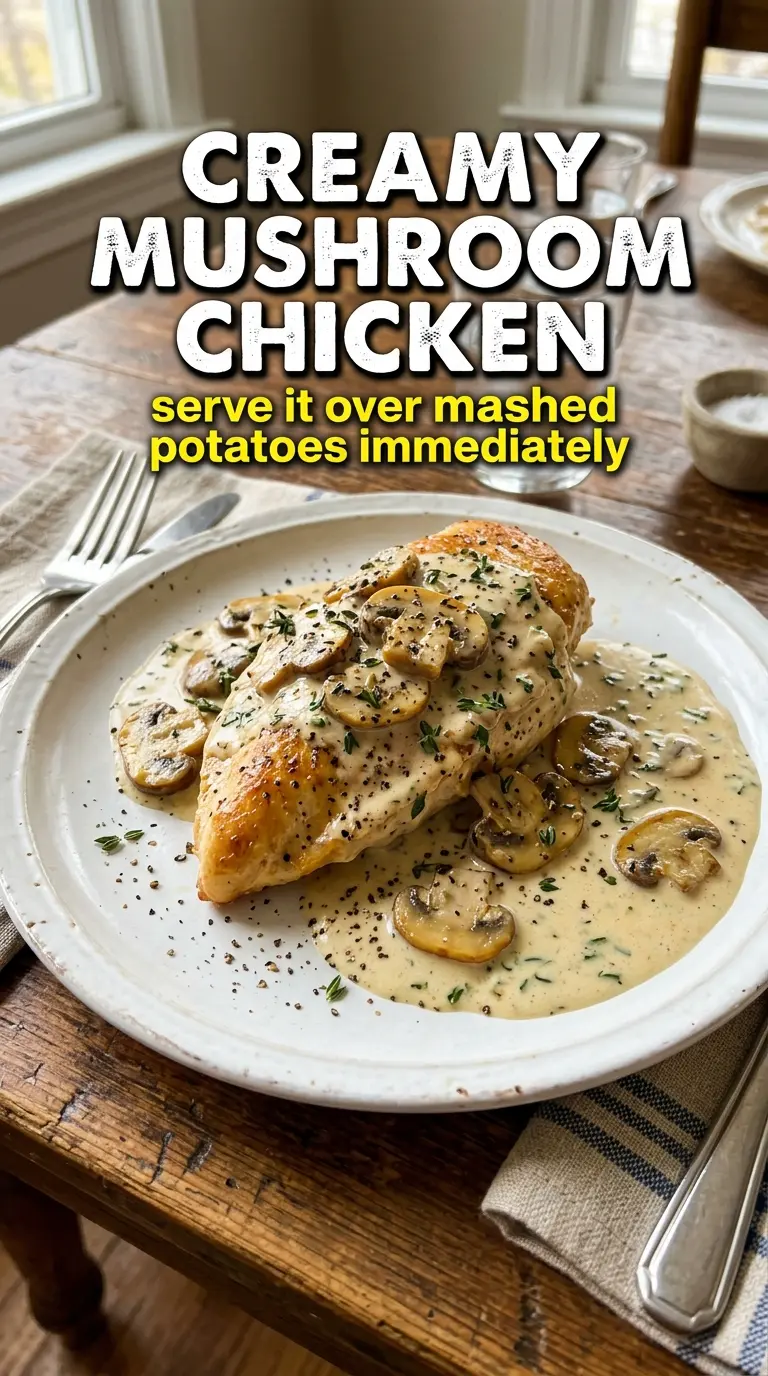
Golden seared chicken breasts tucked into a silky mushroom cream sauce make one of those skillet dinners that feels a little special without asking much from you. The chicken stays juicy, the mushrooms turn deep and savory, and the sauce thickens just enough to coat a spoon without turning gluey or heavy.
What makes this version work is the order. The chicken gets a hard sear first so it develops color before it ever touches the sauce, and the mushrooms cook long enough to lose their water and pick up some real browning. That step matters more than people think. If the pan is crowded or the heat is too low, the mushrooms steam and the sauce tastes flat instead of rich.
Below you’ll find the exact cues I watch for at each stage, plus a few smart swaps if you need to change the dairy or use a different mushroom. Once you’ve made it this way, the skillet rhythm starts to feel easy.
The mushrooms browned beautifully and the sauce thickened right in the skillet without turning grainy. I served it over mashed potatoes and my husband asked if I could put it on the dinner rotation.
Save this creamy mushroom chicken skillet for the night you want a fast pan sauce with real depth and juicy seared chicken.
The Part People Rush: Getting Real Browning Before the Sauce Goes In
The biggest mistake with creamy mushroom chicken is trying to build the sauce before the chicken and mushrooms have earned their flavor. You need a hot skillet and enough space for the chicken to sear, not steam. That first golden crust on the chicken and the deep color on the mushrooms are what keep the finished dish tasting savory instead of bland and milky.
When the chicken comes out, don’t wipe the pan. Those browned bits stuck to the bottom are concentrated flavor, and the broth pulls them right back into the sauce. If the pan looks dry after the mushrooms cook, that is a good sign, not a problem. The mushrooms should lose their moisture and start to turn browned at the edges before the garlic goes in.
- Chicken breasts — Use pieces that are close to the same thickness so they sear and finish at the same time. If one side is much thicker, pound it gently or butterfly it. That keeps the center juicy while the outside gets color.
- Cremini mushrooms — These hold up better than white mushrooms and give the sauce a deeper, earthier taste. If you use baby bellas or sliced white mushrooms, cook them until the liquid they release has cooked off and the pan starts to look almost dry again.
- Heavy cream — This is what makes the sauce cling instead of separate. Half-and-half can work in a pinch, but it won’t thicken as smoothly and it is easier to break if the heat is too high.
- Parmesan — Grate it fresh if you can. Pre-grated cheese often has anti-caking agents that can make the sauce a little grainy. Add it off a strong boil so it melts in cleanly.
What Each Ingredient Is Actually Doing in This Recipe
- Primary ingredient (the star) — Quality matters most. Choose the best you can find.
- Cooking medium (oil, butter, or broth) — This carries flavors and prevents dryness.
- Seasonings (salt, pepper, spices, herbs) — Layer flavors so nothing overpowers. Build depth gradually.
- Aromatics (garlic, onion, herbs) — Cook with fat to bloom flavors. Become the foundation.
- Supporting ingredients — Complement the main ingredient without overpowering it.
- Sauce or liquid (if applicable) — Brings flavors together. Balance richness with acid.
- Acid (lemon, vinegar, wine, or other) — Brightens and prevents flat-tasting results.
- Final finish (garnish, glaze, or sauce) — Prevents one-dimensional taste and adds visual appeal.
Building the Sauce in the Same Pan the Chicken Used
Seasoning and Searing the Chicken
Season the chicken generously on both sides, then lay it into hot oil and leave it alone long enough to develop a real crust. If you move it too early, it sticks and tears instead of releasing cleanly. Five to six minutes per side is the right range for average breasts, but the real cue is color: deep golden on the outside, 165°F in the thickest part.
Pull the chicken out as soon as it is done. It finishes gently in the sauce later, and overcooking it here is how you end up with dry chicken under a great sauce.
Cooking the Mushrooms Until They Turn Brown, Not Wet
Melt the butter in the same skillet and add the mushrooms in a single layer if possible. Let them sit until they release moisture, then keep cooking until that liquid evaporates and the edges start to darken. If the mushrooms go in a heap, they steam and stay pale, which leaves the sauce tasting one-note.
Add the garlic after the mushrooms have browned. Garlic burns fast in a skillet like this, and burnt garlic will take over the whole dish with a sharp bitter edge.
Turning the Pan Drippings Into a Smooth Cream Sauce
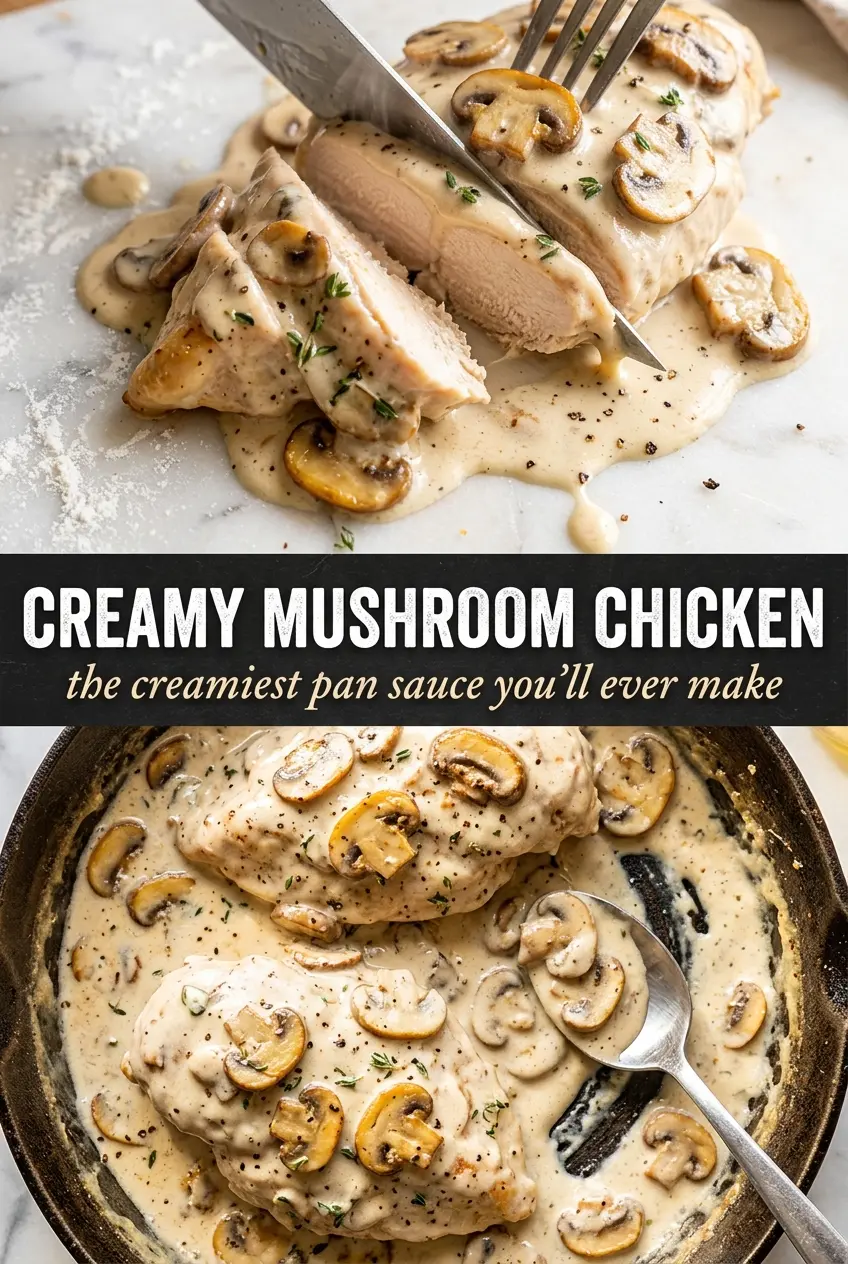
Pour in the broth and scrape up every browned bit from the bottom of the pan. That deglazing step is where the sauce gets its depth. Stir in the cream, Parmesan, thyme, and Italian seasoning, then let the sauce simmer until it lightly coats the back of a spoon.
If the sauce looks thin at first, give it a few minutes. If it boils hard, the cream can split and the Parmesan can turn sandy. Keep the heat at a gentle simmer, not a rolling boil, and the sauce will stay glossy.
Finishing the Chicken in the Sauce
Return the chicken to the skillet and spoon the sauce over the top. Let it warm through for a couple of minutes so the chicken picks up the seasoning from the pan. The sauce should pool thickly around the skillet and cling to the chicken in a soft, silky layer, not run off like broth.
Finish with fresh thyme and parsley right before serving. That last bit of green makes the dish taste brighter and keeps the sauce from feeling too heavy.
How to Adapt This Skillet for Different Kitchens and Different Eaters
For a dairy-light version
Use half-and-half instead of heavy cream if you need to lighten it up, but keep the heat low and expect a thinner sauce. Skip the Parmesan or stir in a smaller amount at the very end. The finished dish will still be creamy, just less rich and less stable than the original.
For a gluten-free dinner
This recipe is naturally gluten-free as written, which is one reason it lands on my table often. Just check your chicken broth and Parmesan label if you’re cooking for someone who needs to avoid hidden gluten ingredients.
For extra mushroom flavor
Mix cremini mushrooms with a handful of sliced shiitakes if you want a deeper, more woodsy taste. Shiitakes bring stronger flavor, but they also cook down faster, so watch the pan and pull them the moment they brown.
Storage and Reheating
- Refrigerator: Store in an airtight container for up to 3 days. The sauce will thicken as it chills.
- Freezer: It freezes, but the cream sauce can separate a bit when thawed. If you plan to freeze it, cool it quickly and reheat gently for the best texture.
- Reheating: Warm it slowly in a covered skillet over low heat with a splash of broth or cream. High heat is the mistake here; it tightens the chicken and can make the sauce break.
Answers to the Questions Worth Asking
Creamy Mushroom Chicken
Ingredients
Equipment
Method
- Season the chicken breasts generously on both sides with salt, pepper, garlic powder, and onion powder.
- Heat the olive oil in a large skillet over medium-high heat, then sear the chicken for 5-6 minutes per side until golden and the internal temperature reaches 165°F; remove the chicken to a plate.
- Melt the butter in the same skillet, then cook the mushrooms for 4-5 minutes until deeply golden.
- Add the garlic and cook for 1 minute, stirring so it doesn’t burn.
- Pour in the chicken broth and deglaze the skillet, scraping up the browned bits from the bottom.
- Stir in the heavy cream, Parmesan cheese, dried thyme, and Italian seasoning, then simmer for 4-5 minutes until the sauce thickens.
- Return the chicken to the skillet and spoon the mushroom cream sauce over each breast, letting it pool around the edges.
- Garnish with fresh thyme and fresh parsley before serving.