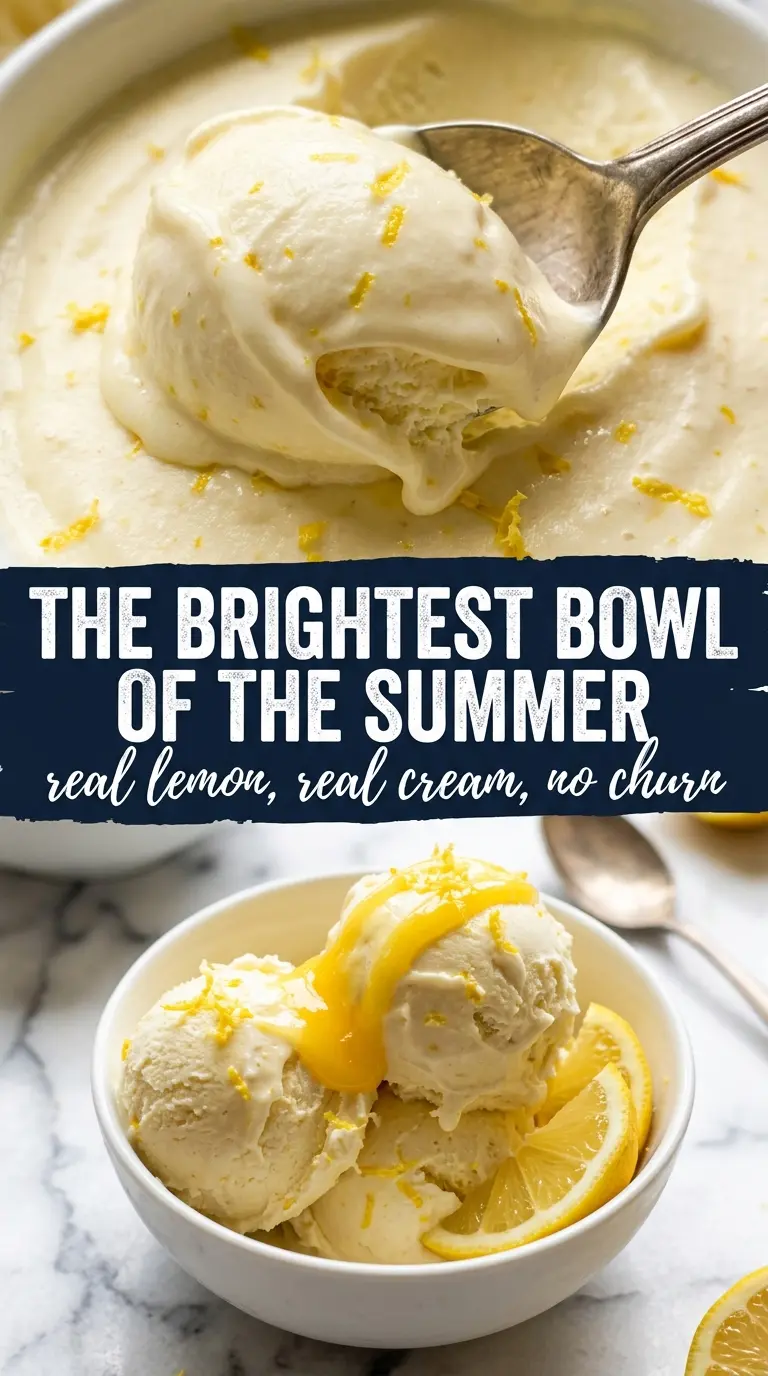
Bright lemon ice cream earns its place when the spoon hits that first cold, custardy bite and the citrus pops cleanly instead of tasting flat or one-note. This version leans into both sides of the equation: sharp fresh lemon flavor up front, then a rich dairy finish that keeps it from eating like lemon sorbet with cream added as an afterthought.
The key is building a real custard base before the lemon goes in. Egg yolks, sugar, cream, and milk create the body, and cooking the custard just to the point where it thickens gives the ice cream a dense, smooth texture once churned. The lemon juice is added after straining so the acid doesn’t curdle the custard on the stove, and the zest brings the brightest flavor without extra tartness.
Below you’ll find the part that matters most: how to keep the custard silky, when to add the lemon so the base stays smooth, and how long to chill it for the cleanest churn.
The custard turned out silky and the lemon flavor stayed bright after freezing. I loved that it wasn’t icy at all, and the zest gave it that fresh lemon smell the whole time it was churning.
Save this creamy lemon ice cream for the custard base, fresh zest, and bright citrus finish.
The Part That Keeps Lemon Ice Cream Creamy Instead of Icy
Lemon ice cream turns icy fast when the base is too lean or the acid gets added too early. The custard here solves both problems. Heavy cream gives the fat needed for a smoother freeze, while the egg yolks add enough body to keep the finished texture from setting up like a frozen lemon slush.
The other detail that matters is timing. Lemon juice goes in after the custard is cooked and strained, not before. If it goes in while the mixture is still over heat, the acid can tighten the eggs and leave you with a grainy base. Once you’ve cooked the custard to 175°F, it should coat the back of a spoon and leave a clean line when you swipe a finger through it.
- Egg yolks — These are what turn the mixture into custard. They add richness and help the ice cream churn up dense instead of hollow and icy.
- Heavy cream — Don’t swap this for half-and-half if you want the same texture. The fat in cream keeps the lemon flavor rounded and gives the ice cream a softer scoop straight from the freezer.
- Fresh lemon juice — Bottled juice tastes dull here. Fresh juice gives the clean, sharp citrus punch that defines the recipe.
- Lemon zest — Zest carries the strongest lemon aroma. It adds intensity without adding more acid, which is why the flavor stays bright even after freezing.
What Each Ingredient Is Actually Doing in This Ice Cream
- Base ingredient (cream, milk, or custard) — This provides the foundation and richness. Quality matters.
- Sweetener (sugar, honey, or condensed milk) — This sweetens and prevents ice crystals. The ratio is critical.
- Flavor element (vanilla, fruit, chocolate, or other) — This defines the ice cream personality. Use quality ingredients.
- Egg yolks (if making custard base) — These create richness and silky texture. Optional but elevates ice cream.
- Churning (if using ice cream maker) — This incorporates air and prevents ice crystals. Critical for smooth texture.
- Freezing temperature and time — Proper freezing prevents rock-hard texture. Store at 0°F or below.
- Mix-ins (chocolate, cookies, fruit, or swirls) — These add texture and prevent one-dimensional flavor. Add near end of churning.
- Serving temperature (slightly soft, not rock hard) — This provides creamy mouthfeel. Remove from freezer 5 minutes before serving.
How to Build the Custard and Add the Lemon at the Right Moment
Warming the Dairy
Heat the cream and milk until they’re steaming but not boiling. You want gentle heat here, because a rolling boil can scorch the dairy and make the final flavor taste cooked instead of clean. While that warms, whisk the yolks and sugar until they look paler and a little thicker.
Tempering Without Scrambling
Stream the hot dairy into the yolk mixture slowly while whisking constantly. If you dump it in all at once, the eggs can seize into little bits before they have a chance to blend. Once everything is combined, return it to the saucepan and keep the heat at medium-low so the custard thickens gradually.
Knowing When the Custard Is Done
Stir constantly and watch for the mixture to coat the spoon. At 175°F, it should feel slightly thicker than heavy cream and leave a clear path when you run your finger across the back of the spoon. If it starts to bubble, the heat is too high and the eggs are pushing toward curdled.
Finishing With Citrus
Strain the custard through a fine-mesh sieve first, then stir in the lemon juice, zest, vanilla, and salt. Straining catches any tiny cooked egg bits, and adding the lemon after the heat is off keeps the base smooth. Set the bowl over an ice bath and stir until it cools, then refrigerate it until it’s fully cold. A warm base churns poorly and tends to freeze with a grainier texture.
Churning and Hardening
Churn the chilled custard in your ice cream maker until it looks like soft serve and holds shape on the paddle. Transfer it to a freezer container and press parchment or plastic wrap directly on the surface to limit ice crystals. The last freeze firms it up enough to scoop cleanly, but if it gets rock hard, let it sit on the counter for a few minutes before serving.
How to Adapt This Creamy Lemon Ice Cream Without Losing the Good Part
Make it extra tart
Use the full 1/2 cup lemon juice and add an extra teaspoon of zest. That gives you a sharper citrus edge without changing the base, but don’t increase the juice much beyond that or the custard can taste thin once frozen.
Dairy-free version
This recipe depends on dairy fat and egg yolks for its custard texture, so a straight swap won’t behave the same way. If you need a dairy-free version, use full-fat coconut milk in place of the cream and milk, then expect a lighter coconut note and a softer set.
No ice cream maker
You can freeze the custard in a shallow pan and stir it every 30 to 40 minutes until firm. The texture won’t be quite as smooth as churned ice cream, but the custard base still keeps it from freezing into a hard block.
Storage and Reheating
- Refrigerator: The base can be chilled up to 2 days before churning. After churning, refrigerate only long enough to soften a scoopable portion; it will melt into a puddle if left there.
- Freezer: Freeze the churned ice cream in a covered container for up to 2 weeks for the best texture. After that, it stays safe to eat but starts losing its creamy edge and picks up more ice crystals.
- Reheating: Not applicable for this recipe. For serving, let the container sit at room temperature for 5 to 10 minutes so it scoops cleanly; forcing a spoon through it straight from the freezer can break the texture into shards.
Questions I Get Asked About This Recipe
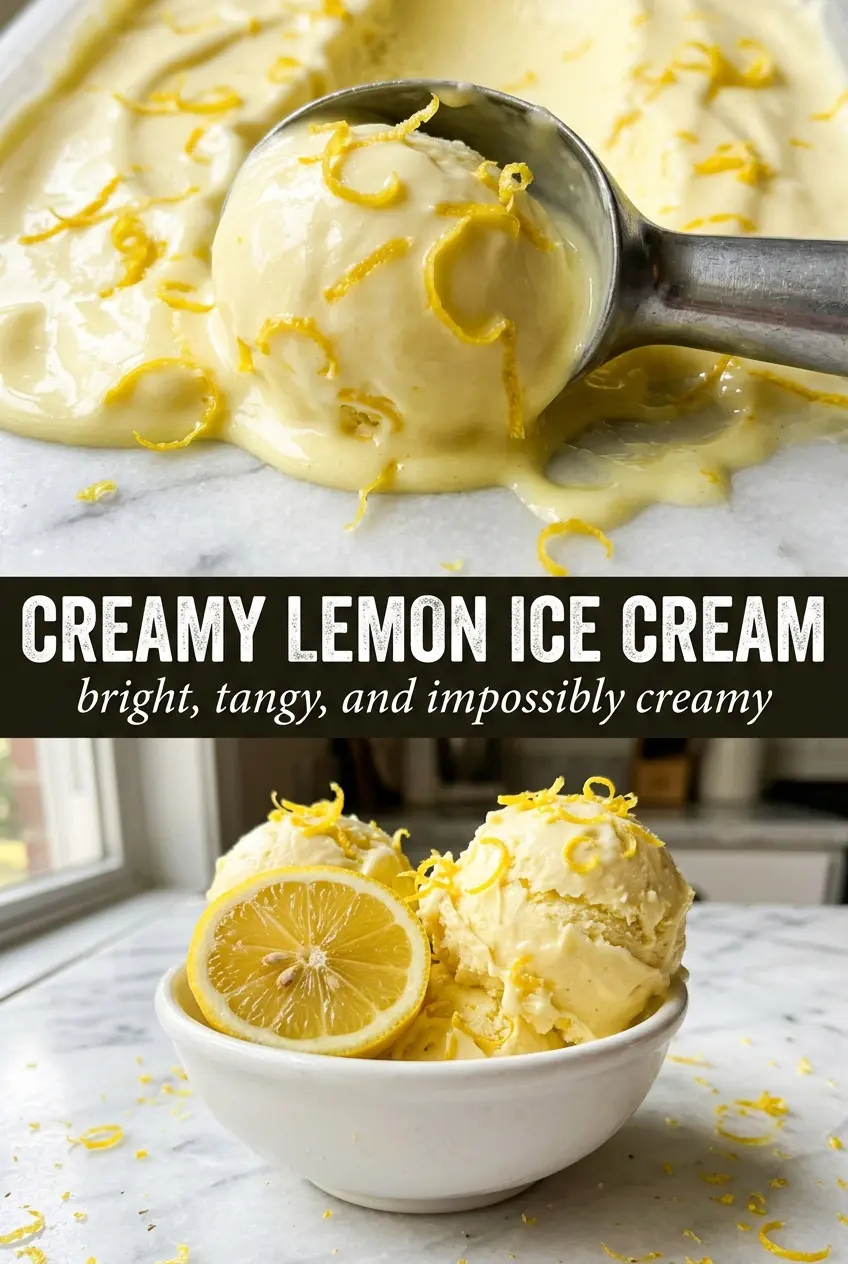
Creamy Lemon Ice Cream
Ingredients
Equipment
Method
- Heat the heavy cream and whole milk in a saucepan over medium-low heat until steaming, with small bubbles forming at the edges (do not boil).
- In a bowl, whisk the egg yolks and granulated sugar until smooth, then slowly whisk the hot cream mixture into the yolks to avoid curdling.
- Return the mixture to the saucepan and cook over medium-low heat, stirring constantly, until the custard reaches 175F and coats the back of a spoon.
- Strain the custard through a fine mesh sieve into a clean container, then stir in the lemon juice, lemon zest, vanilla extract, and salt until fully combined.
- Cool the custard completely over an ice bath until no longer warm to the touch, stirring occasionally for even cooling (visual cue: pale golden and smooth).
- Refrigerate at least 4 hours to fully chill before churning.
- Churn the chilled custard in an ice cream maker until it thickens and becomes scoopable, then transfer to a container.
- Freeze until firm, about 1–2 hours, so the texture sets into a creamy, dense scoop.