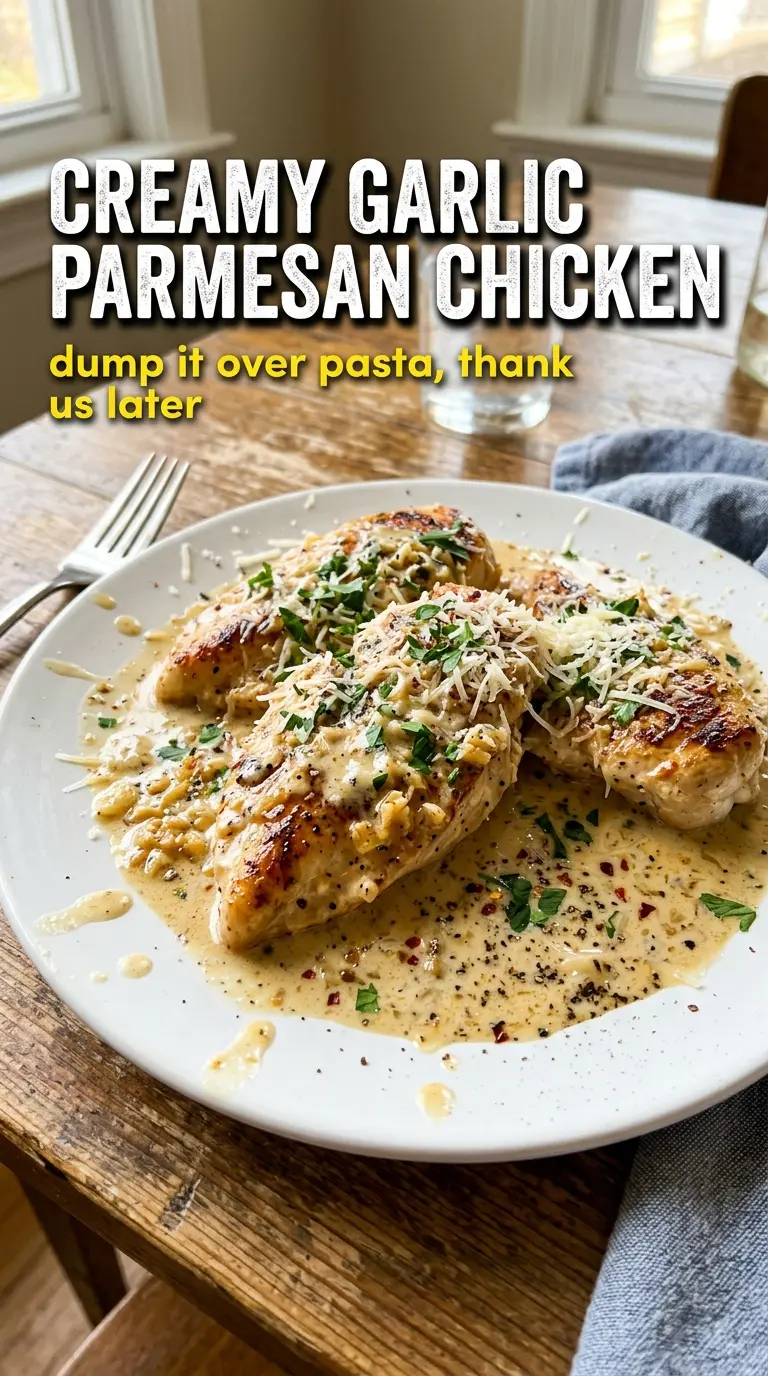
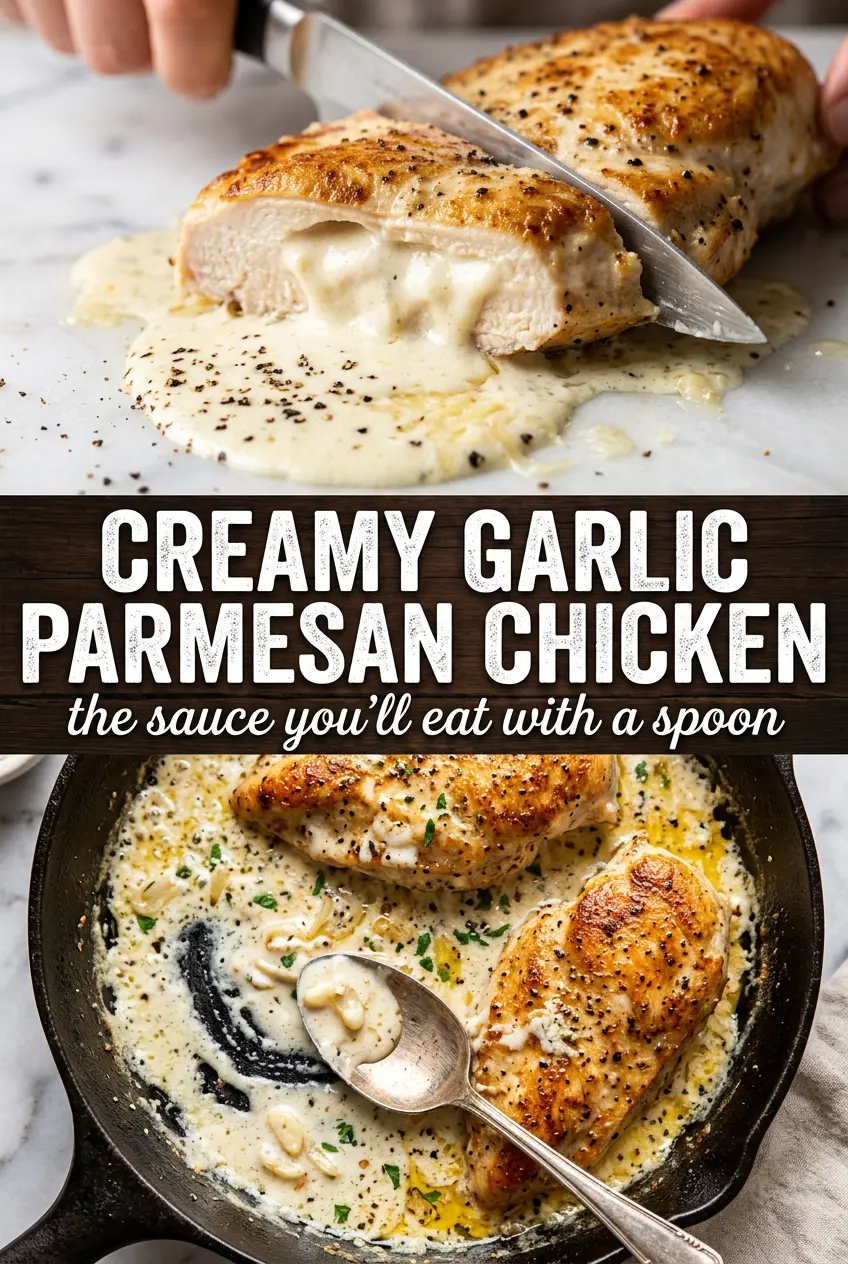
Golden seared chicken breasts in a garlic Parmesan cream sauce never last long at my table. The chicken gets a real crust before it goes back into the pan, and the sauce finishes glossy and spoon-coating instead of thin and watery. That contrast is what makes this dish worth putting on repeat: crisp edges, juicy chicken, and a sauce that clings to every bite.
The trick is keeping the sauce in the same skillet you used for the chicken. Those browned bits left behind after searing are the backbone of the flavor, and a quick deglaze pulls them into the sauce instead of letting them go to waste. Freshly grated Parmesan matters here too. Pre-shredded cheese can make the sauce grainy or dull because it doesn’t melt as cleanly.
Below you’ll find the little details that keep the sauce smooth, how to avoid overcooking the chicken, and a few smart variations if you want to stretch the dish or adapt it for what you have on hand.
The sauce thickened up exactly the way you described and never broke, even after I added the Parmesan. My husband kept sneaking bites from the skillet before I could get it to the table.
Save this creamy garlic Parmesan chicken for the nights when you want a glossy skillet sauce and tender seared chicken without a long ingredient list.
The Part Where the Sauce Usually Breaks
This dish lives or dies on heat control. The chicken needs a proper sear, but the sauce does not want the same kind of aggressive heat. If the cream goes in while the pan is ripping hot, it can look fine for a minute and then turn greasy or separate once the Parmesan hits it.
That is why the pan gets deglazed first, then the heat comes down before the cream and cheese go in. Parmesan thickens best when the liquid is at a gentle simmer, not a hard boil. The sauce should move from thin to velvety in a few minutes, with a sheen that tells you it is emulsified and stable.
- Chicken breasts — Pound them lightly if one end is much thicker than the other. Even thickness keeps the center juicy while the outside gets a good color.
- Fresh garlic — This is not the place for garlic powder alone. Fresh garlic gives the sauce its sharp, savory base, but it only needs about a minute in the butter or it can turn bitter.
- Dry white wine or chicken broth — Wine adds a little acidity and depth, while broth gives you a milder pan sauce. If you skip the wine, use broth and add a small splash of lemon juice at the end to wake up the sauce.
- Freshly grated Parmesan — Grate it yourself so it melts smoothly. Pre-grated cheese often contains anti-caking agents that keep the sauce from turning silky.
What Each Ingredient Is Actually Doing in the Skillet
- Olive oil — Helps the chicken brown without burning the butter. The butter comes in later for flavor, after the main sear is already done.
- Butter — Builds richness and carries the garlic flavor into the sauce. Use it with the garlic, not before the sear, or it can scorch.
- Heavy cream — This gives the sauce its body and protects it from curdling better than milk or half-and-half. If you want a lighter sauce, half-and-half works, but it will not coat the spoon the same way.
- Italian seasoning — Brings a herbal background that keeps the sauce from tasting flat. It is a small amount, but it rounds out all the dairy and Parmesan.
- Fresh thyme and parsley — These are not just garnish. The herbs cut through the richness at the end and make the finished dish taste brighter.
How to Get a Golden Sear and a Smooth Finish in the Same Pan
Seasoning and Searing the Chicken
Pat the chicken dry, then season both sides generously with salt, pepper, garlic powder, and smoked paprika. Dry chicken is what gives you that deep golden crust instead of pale steam. Heat the olive oil until it shimmers, then lay the chicken in and leave it alone until it releases easily. If it sticks, it needs another minute; forcing it too early tears the crust you worked for.
Building the Garlic Base
Once the chicken is out of the skillet, lower the heat and add the butter. Stir in the garlic and cook just until fragrant, about a minute. If the garlic turns dark, the sauce will taste sharp and bitter, so move quickly into the deglaze as soon as you smell it bloom. The wine or broth should bubble up and loosen the browned bits from the pan bottom.
Turning the Pan Juices into Sauce
Pour in the cream, chicken broth, Parmesan, and Italian seasoning, then let the sauce simmer gently. Do not boil it hard. A steady, small bubble is enough to thicken the cream and melt the cheese into a glossy sauce. If it looks thin at first, keep it moving and give it a few minutes; Parmesan thickens as it heats and settles.
Bringing the Chicken Back
Return the chicken to the pan and spoon the sauce over the top so the meat picks up flavor on both sides. Let it warm through just until the internal temperature reaches 165°F. If you cook it much longer at this stage, the chicken can go from juicy to dry while the sauce keeps reducing. Finish with thyme and parsley right before serving so the herbs stay fresh and bright.
How to Adapt This for a Lighter Pan Dinner or a Bigger Crowd
Dairy-Free Version
Use full-fat unsweetened coconut cream in place of the heavy cream and a dairy-free Parmesan-style cheese if you have one that melts well. The sauce will taste a little different and carry a faint coconut note, but the texture still turns rich and spoonable. Keep the heat low and add the cheese gradually so it doesn’t turn grainy.
Gluten-Free by Default
This recipe is naturally gluten-free as written, as long as your broth is certified gluten-free. The sauce gets its body from cream and Parmesan, not flour, so you don’t need a separate thickener.
Using Chicken Thighs Instead
Boneless, skinless thighs bring a little more richness and stay forgiving if you cook them a minute too long. They brown a little differently and may need a couple of extra minutes in the skillet, but the sauce works exactly the same way.
Doubling for Four to Six People
Double the sauce ingredients, but sear the chicken in batches so the pan doesn’t overcrowd. Crowding traps steam and robs you of the browned bits that make the sauce taste like something. If you rush that part, the whole dish gets flatter.
Storage and Reheating
- Refrigerator: Store leftovers in an airtight container for up to 3 days. The sauce will thicken as it chills.
- Freezer: It freezes, but the cream sauce can separate a little when thawed. If you do freeze it, cool it completely first and thaw overnight in the refrigerator.
- Reheating: Warm it slowly in a covered skillet over low heat with a splash of broth or cream. High heat is the fastest way to make the sauce oily and split.
Questions I Get Asked About This Recipe
Creamy Garlic Parmesan Chicken
Ingredients
Equipment
Method
- Season chicken breasts generously with salt, pepper, garlic powder, and smoked paprika on both sides.
- Heat olive oil in a large cast iron skillet over medium-high heat and sear chicken for 5-6 minutes per side until golden; cook to an internal temperature of 165°F, then remove to a plate.
- Add butter and minced garlic to the same pan and cook for 1 minute until fragrant.
- Deglaze with dry white wine (or chicken broth) and cook for 2 minutes, scraping up the browned bits from the pan.
- Stir in heavy cream, chicken broth, Parmesan cheese, and Italian seasoning, then simmer for 4-5 minutes until the sauce is thick and glossy.
- Return the chicken to the pan and spoon the sauce over each breast.
- Garnish with fresh thyme and parsley and serve immediately.