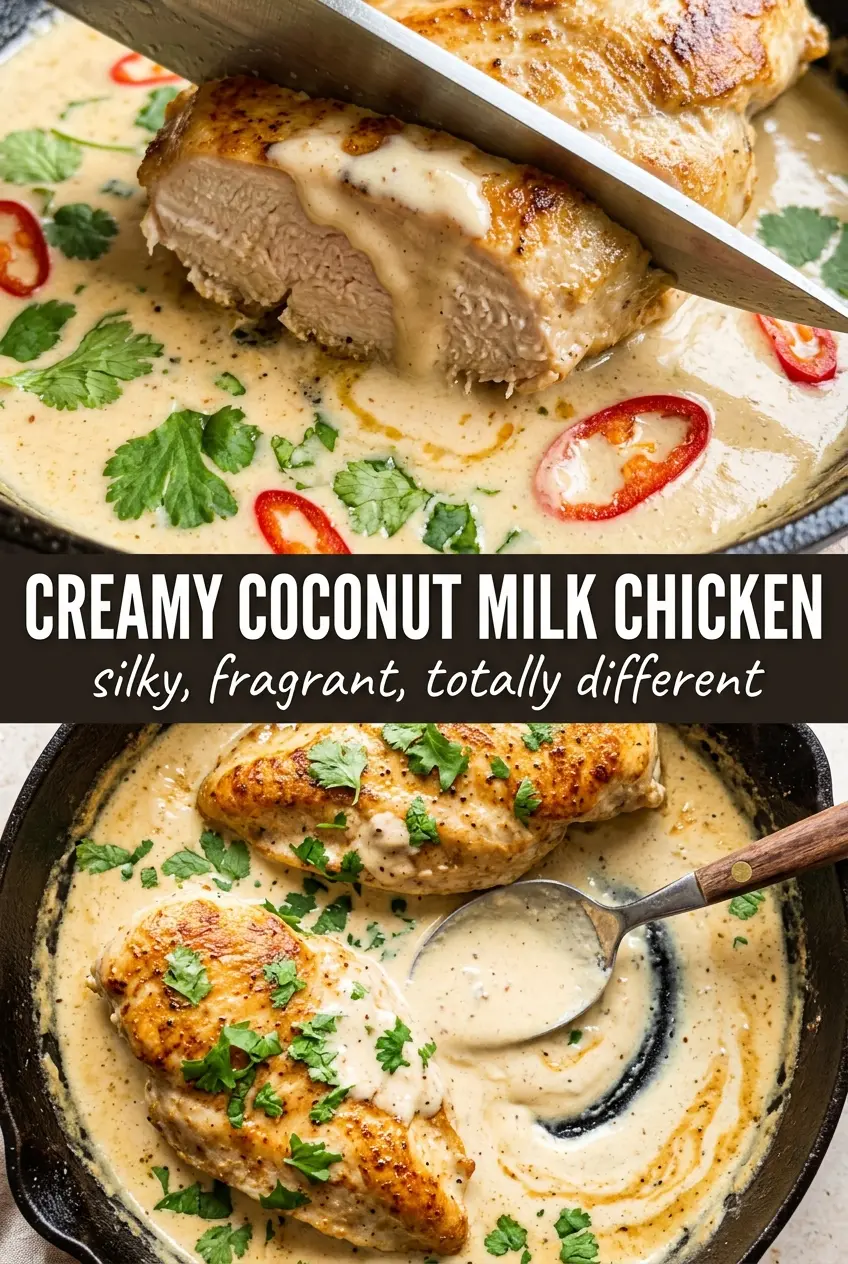
Golden seared chicken thighs tucked into a silky coconut milk sauce earn their place in the dinner rotation fast. The skin stays crisp enough to give you that first satisfying bite, then the sauce follows with ginger, garlic, lime, and just enough heat to keep every spoonful lively. It’s the kind of skillet meal that tastes like it took a lot more effort than it did.
What makes this version work is the way the chicken is browned before the sauce goes in. That sear builds flavor in the pan and keeps the thighs from tasting flat, while full-fat coconut milk gives the sauce body without needing flour or cream. The lime goes in at the end on purpose; if it cooks too long, the sauce loses the bright finish that makes the whole dish pop.
Below, you’ll find the small details that matter here, like how to keep the coconut sauce smooth, when to cover the skillet, and what to swap if you want to make it dairy-free, lower-carb, or a little spicier.
The coconut sauce stayed silky and never broke, and the chicken finished right on time at 20 minutes. I served it over jasmine rice and my husband went back for seconds before I even sat down.
Save this creamy coconut milk chicken for the nights when you want a silky skillet sauce with ginger, lime, and crispy-edged chicken thighs.
The Secret to Keeping Coconut Milk Sauce Silky, Not Split
Coconut milk behaves better when you treat it like a sauce, not a boil. Once the chicken comes out, the onion, garlic, and ginger build the base in the same skillet, and those browned bits left behind matter more than they look like they should. They dissolve into the sauce and keep the whole dish tasting layered instead of one-note.
The biggest mistake here is hard boiling the coconut milk after it goes in. That’s how you end up with a greasy-looking sauce and a grainy texture. Keep the heat at a simmer, not a bubble, and return the chicken skin-side up so the top stays above the liquid and the skin doesn’t go soft before dinner hits the table.
- Full-fat coconut milk — This is the backbone of the sauce. Light coconut milk turns thin and can taste watery once it simmers with broth. Shake the can before opening, or stir it well if it has separated.
- Chicken broth — It loosens the sauce just enough so it clings instead of feeling heavy. Stock works too, but broth usually tastes cleaner in this dish.
- Fresh ginger and garlic — Fresh is worth it here. Powder won’t give you the same sharp, aromatic lift in the finished sauce, and this recipe depends on that contrast with the rich coconut milk.
- Lime juice and zest — The juice wakes up the sauce, and the zest adds the part people notice as “fresh” before they can name it. Add both at the end so the citrus stays bright.
What Each Ingredient Is Actually Doing in This Recipe

- Primary ingredient (the star) — Quality matters most. Choose the best you can find.
- Cooking medium (oil, butter, or broth) — This carries flavors and prevents dryness.
- Seasonings (salt, pepper, spices, herbs) — Layer flavors so nothing overpowers. Build depth gradually.
- Aromatics (garlic, onion, herbs) — Cook with fat to bloom flavors. Become the foundation.
- Supporting ingredients — Complement the main ingredient without overpowering it.
- Sauce or liquid (if applicable) — Brings flavors together. Balance richness with acid.
- Acid (lemon, vinegar, wine, or other) — Brightens and prevents flat-tasting results.
- Final finish (garnish, glaze, or sauce) — Prevents one-dimensional taste and adds visual appeal.
Building the Skillet in the Right Order
Seasoning and Searing the Chicken
Pat the chicken thighs dry before seasoning them. Dry skin is what gives you that deep golden crust instead of pale, rubbery chicken. Lay the thighs skin-side down in hot coconut oil and leave them alone for 6 to 7 minutes; if you keep nudging them, the skin tears and sticks. When they release easily and look bronzed around the edges, they’re ready to flip.
Blooming the Aromatics
After the chicken comes out, the onion goes into the same pan so it can pick up the fat and the browned bits. Cook it until softened and translucent, then add the garlic, ginger, and red pepper flakes for just a minute. If the garlic starts to brown hard, the heat is too high and the sauce will taste bitter, so pull the pan back a little if needed.
Simmering the Coconut Sauce
Pour in the coconut milk and broth, then stir in the soy sauce before the chicken goes back in. Bring it just to a simmer. You want small bubbles around the edges, not a rolling boil. Nestle the chicken skin-side up, cover, and let it finish gently so the meat turns tender while the sauce stays smooth.
Finishing With Lime and Herbs
Once the chicken reaches 165°F, take the pan off the heat and stir in the lime juice and zest. That off-heat finish keeps the citrus from turning dull. Cilantro goes on right before serving so it stays fresh and doesn’t wilt into the sauce. Spoon everything over jasmine rice while the sauce is still glossy.
How to Adapt This Coconut Chicken for Different Nights
Make it dairy-free without changing a thing
It’s already dairy-free as written, which is one reason this skillet works so well for mixed-diet households. The coconut milk gives you the creamy body that dairy cream would normally provide, without needing any extra thickener.
Use boneless chicken thighs for a faster dinner
Boneless thighs cook faster and are easier to eat over rice, but they won’t give you quite the same rich flavor as bone-in pieces. Reduce the simmering time and start checking early so they stay juicy instead of turning stringy.
Swap the heat level without changing the base
Red pepper flakes give the sauce a gentle back-of-the-throat warmth, not a loud burn. Cut them in half for a milder version, or add an extra pinch if you want the ginger and lime to land against more heat.
Storage and Reheating
- Refrigerator: Store leftovers in a covered container for up to 4 days. The sauce may thicken as it chills, but it loosens again when reheated.
- Freezer: This freezes well for up to 2 months. Cool it completely first, then freeze in portions; the sauce may separate slightly, but a gentle reheat usually brings it back together.
- Reheating: Reheat on the stovetop over low heat with a splash of broth or water. High heat can split the coconut milk and dry out the chicken, so warm it slowly until the sauce is smooth again.
Questions I Get Asked About This Recipe
Recipe Card
Creamy Coconut Milk Chicken
Ingredients
Equipment
Method
- Season the bone-in skin-on chicken thighs with salt, pepper, garlic powder, and turmeric to taste.
- Pat seasoning lightly so it adheres to the skin, then set the chicken aside while you heat the skillet.
- Heat 2 tablespoons coconut oil in a large skillet over medium-high heat until shimmering.
- Place chicken thighs skin-side down and sear for 6-7 minutes until the skin is deep golden.
- Flip the chicken and sear for 3 more minutes until the second side has color, then remove to a plate.
- In the same skillet, cook the diced small onion for 3 minutes until softened and slightly translucent.
- Add minced garlic, grated fresh ginger, and red pepper flakes, and cook for 1 minute until fragrant with visible bubbling at the edges.
- Pour in full-fat coconut milk and chicken broth, stirring well to dissolve any browned bits.
- Add soy sauce and bring the mixture to a simmer, with small bubbles breaking the surface.
- Return the chicken to the skillet skin-side up, cover, and simmer over medium-low for 18-20 minutes until the internal temperature reaches 165°F and the sauce thickens slightly.
- Stir in lime juice and lime zest, letting the sauce turn brighter and aromatic.
- Garnish with fresh cilantro and serve over jasmine rice with lime wedges.