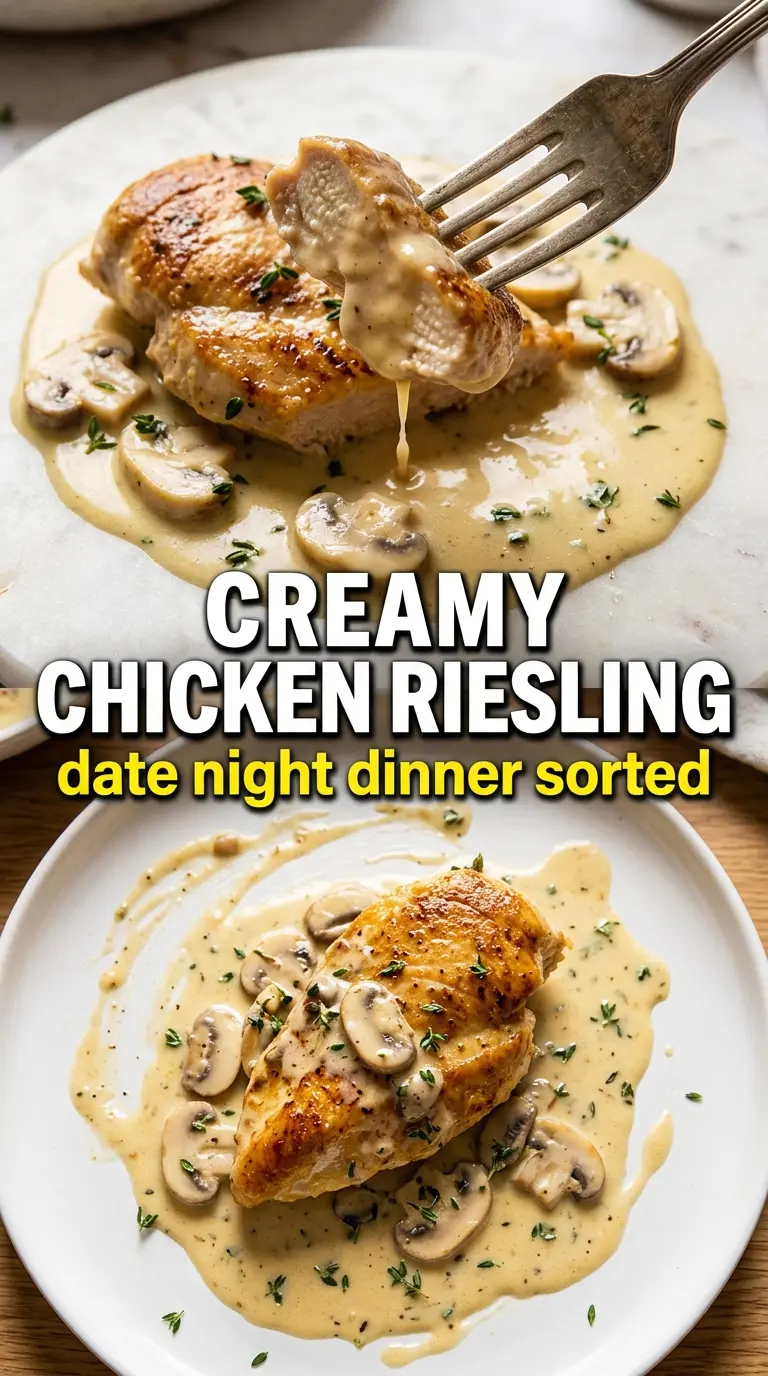
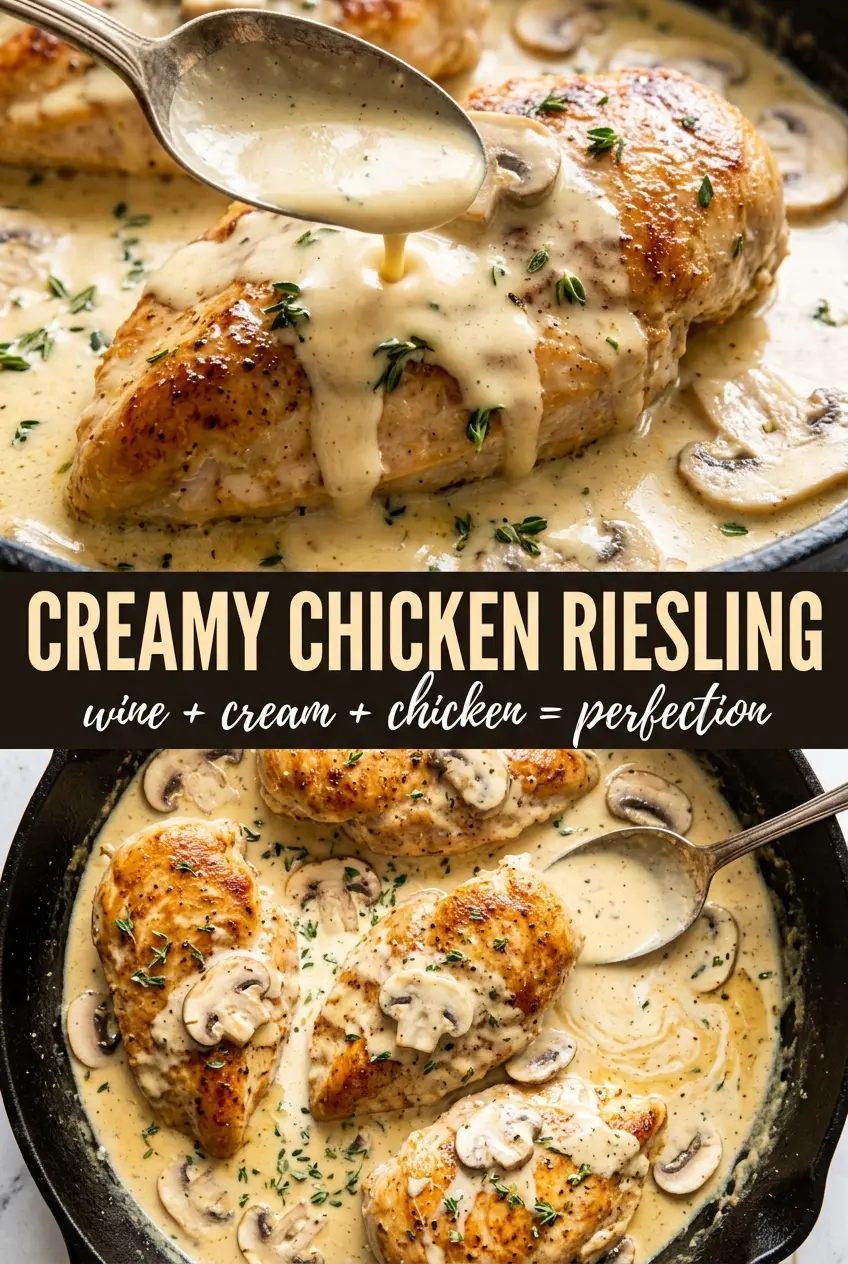
Golden chicken thighs in a Riesling cream sauce are the kind of skillet dinner that earns repeat requests fast. The chicken comes out with crisp, deeply browned skin, then settles into a pale, fragrant sauce that tastes elegant without being fussy. Mushrooms, shallots, and tarragon give the dish that savory-wine balance that keeps each bite interesting instead of heavy.
The trick here is treating the wine like an ingredient, not just a liquid. Riesling needs a few minutes to cook down before the cream goes in, or the sauce can taste sharp and thin. Bone-in, skin-on thighs also matter because they stay juicy during the simmer and give the sauce extra richness as they finish cooking.
Below, I’ve added the small details that make this skillet work: when to let the mushrooms take on color, why the Dijon goes in with the cream, and how to keep the sauce glossy instead of broken. If you’ve ever had chicken braised in wine turn bland or muddy, this version fixes that.
The sauce reduced beautifully and stayed silky after I added the butter. I loved that the mushrooms picked up the Riesling flavor without turning soggy, and the chicken skin still had some texture after simmering.
Creamy Chicken Riesling has that glossy mushroom sauce and crisp-skinned chicken worth pinning for an elegant skillet dinner.
The Real Trick to Keeping Riesling Sauce Fragrant Instead of Flat
The difference between a bright wine sauce and one that tastes sleepy is how long the Riesling cooks before the dairy goes in. If you add cream too soon, the wine stays sharp and the sauce can taste a little raw. Give it those few minutes in the pan so the alcohol cooks off and the fruitiness concentrates; that’s what gives the finished dish its round, delicate flavor.
Chicken thighs are the right cut here because they forgive a lot. They stay juicy during the simmer, and the skin can still hold onto some texture if you sear it hard enough at the start. The mushrooms should take on color before the liquid goes in, or they’ll steam and turn soft instead of adding that savory base the sauce needs.
- Chicken thighs — Bone-in, skin-on thighs bring richness and stay tender through the braise. Boneless thighs work in a pinch, but they cook faster and won’t give you the same deep flavor from the skin and pan drippings.
- Riesling — Choose a dry or off-dry bottle you’d actually drink. It adds fruit, acidity, and perfume; a very sweet wine can make the sauce clingy, while a cheap, harsh one can read bitter after reduction.
- Heavy cream — This is what makes the sauce stable and silky. Half-and-half is more likely to split during simmering, especially once the wine and mustard are in the pan.
- Dijon mustard — It sharpens the cream and helps the sauce taste layered instead of bland. Stir it in with the cream so it dissolves evenly and doesn’t leave little streaks.
- Fresh tarragon — Tarragon is what makes the dish taste distinctly German-American and not just generic creamy chicken. Dried works, but use less; it’s more concentrated and can take over if you’re heavy-handed.
What Each Ingredient Is Actually Doing in This Recipe
- Primary ingredient (the star) — Quality matters most. Choose the best you can find.
- Cooking medium (oil, butter, or broth) — This carries flavors and prevents dryness.
- Seasonings (salt, pepper, spices, herbs) — Layer flavors so nothing overpowers. Build depth gradually.
- Aromatics (garlic, onion, herbs) — Cook with fat to bloom flavors. Become the foundation.
- Supporting ingredients — Complement the main ingredient without overpowering it.
- Sauce or liquid (if applicable) — Brings flavors together. Balance richness with acid.
- Acid (lemon, vinegar, wine, or other) — Brightens and prevents flat-tasting results.
- Final finish (garnish, glaze, or sauce) — Prevents one-dimensional taste and adds visual appeal.
How to Build the Sauce Without Losing the Chicken Skin
Getting the First Sear Right
Season the chicken well, then lay it skin-side down in hot olive oil and don’t move it until the skin releases on its own. You want a deep golden crust, not pale spots with a few browned patches. If the pan is crowded or the heat is too low, the skin steams and turns rubbery, and you lose the texture that makes this dish worth making. Flip just long enough to color the other side, then pull the chicken out so it doesn’t overcook while you build the sauce.
Cooking the Mushrooms Until They Taste Nutty
Shallots and mushrooms need enough time in the pan to shed their moisture and start browning. That browning is what gives the sauce depth, so don’t rush them with the garlic too early. Once the mushrooms have collapsed a little and picked up color around the edges, add the garlic for just a minute so it stays fragrant instead of bitter.
Turning Wine Into Sauce
Pour in the Riesling and let it bubble for a few minutes before anything creamy goes in. The alcohol needs time to burn off and the wine needs to lose some volume, or the sauce will taste too sharp. When you add the cream, broth, tarragon, and Dijon, lower the heat and keep the simmer gentle. A hard boil is the fastest way to make a cream sauce look grainy.
Finishing to a Glossy Skillet Sauce
Return the chicken skin-side up so it stays above the sauce as much as possible, then cover and simmer until the thighs reach 165°F. When the chicken comes out, whisk in the butter off the heat until the sauce looks shiny and smooth. If the sauce seems thin at first, give it another minute or two uncovered; it thickens as it cools slightly, and that last bit of butter gives it the finish that clings to the chicken instead of puddling in the pan.
How to Adapt This for Different Tables and Pantry Realities
Make It Dairy-Free With Coconut Cream
Swap the heavy cream for full-fat coconut cream and skip the butter at the end. The sauce will still be rich, but it will pick up a faint coconut note and won’t taste as classic or neutral as the original. Keep the heat low, because coconut-based sauces can separate if they boil hard.
Use Boneless Thighs for Faster Weeknights
Boneless thighs cook faster and are easier to serve, but they won’t baste the sauce with quite as much richness. Sear them well, then cut the simmer time back and check early so they stay juicy. The sauce still works, but you lose a little of the deep, braised character that bone-in thighs bring.
Swap Tarragon If You Don’t Love Its Anise Note
Parsley or thyme can stand in for tarragon if you want the sauce to taste less herbal and more straightforward. Parsley keeps it fresh, while thyme leans earthier and more savory. Use the same amount, but add thyme sparingly if it’s dried, because it can take over the wine and mushroom flavor fast.
Storage and Reheating
- Refrigerator: Store for up to 3 days. The sauce will thicken as it chills, and the chicken skin will soften.
- Freezer: It freezes, but the cream sauce may separate a bit when thawed. Freeze in an airtight container for up to 2 months if needed, and expect to whisk it back together.
- Reheating: Reheat gently on the stove over low heat with a splash of broth or water. Don’t boil it, or the sauce can split and the chicken can turn stringy.
Answers to the Questions Worth Asking
Creamy Chicken Riesling
Ingredients
Equipment
Method
- Season bone-in skin-on chicken thighs with salt, pepper, and garlic powder to taste, then pat to help the coating adhere. Set a large skillet over medium-high heat and add the olive oil until shimmering.
- Place chicken skin-side down in the skillet and sear for 7-8 minutes until deeply golden. Visual cue: the skin should look crisp and browned.
- Flip the chicken and sear for 4 minutes, keeping the heat at medium-high. Visual cue: the second side should also be golden.
- Remove the chicken to a plate after both sides are browned, leaving any drippings in the skillet. Keep the browned layer as the base for the sauce.
- Add the minced shallots and sliced cremini mushrooms to the skillet and cook for 5-6 minutes until golden. Stir occasionally and scrape up any browned bits.
- Add the minced garlic and cook for 1 minute. Visual cue: the garlic should smell fragrant without turning dark.
- Pour in the Riesling wine and cook for 3 minutes to let the alcohol cook off. Visual cue: the liquid should reduce slightly and look less sharp.
- Add the heavy cream, chicken broth, fresh tarragon (or 1 teaspoon dried), and Dijon mustard, then stir to combine. Bring the mixture to a gentle simmer.
- Return the chicken skin-side up to the skillet and cover with a lid. Visual cue: the sauce should bubble at the edges.
- Simmer covered for 15-18 minutes over a gentle simmer until the chicken reaches an internal temperature of 165°F. Visual cue: the sauce thickens to a pale golden coat.
- Remove the chicken from the skillet, then swirl in the butter until the sauce turns glossy. Visual cue: the sauce should look smooth and lightly thickened.
- Return the chicken to the sauce, garnish with fresh tarragon for garnish, and serve. Visual cue: add bright green tarragon sprigs on top.