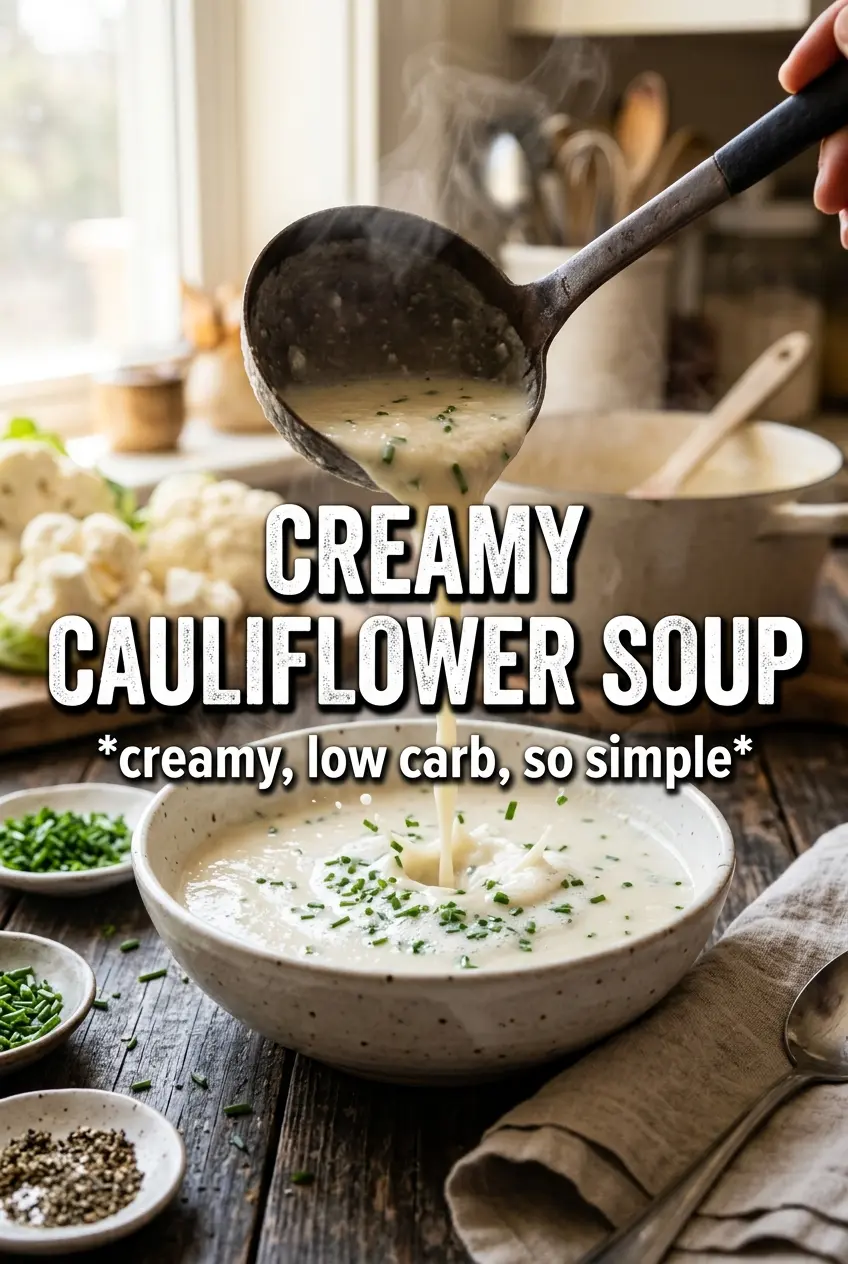
Silky, pale, and surprisingly rich, creamy cauliflower soup earns its place when you want something that tastes clean but still feels like dinner. The cauliflower blends into a smooth base that carries butter, cream, and a little nutmeg without turning heavy. A handful of roasted cauliflower on top gives you the texture contrast this kind of soup needs, so every spoonful has a little bite instead of eating flat and uniform.
The trick is building flavor before the blender ever comes out. Onion and garlic soften in butter, then the cauliflower simmers just until it’s tender enough to break down without becoming watery. That balance matters. If the cauliflower is undercooked, the soup stays grainy; if it cooks too long in too much liquid, the flavor gets thin. Roasting some florets separately is worth the extra pan, because that caramelized edge turns a simple bowl of soup into something with actual depth.
Below, I’m walking through the small details that keep the texture smooth, the seasoning balanced, and the garnish worth bothering with. There’s also a note on swaps if you want to lighten it up or make it dairy-free without losing the creamy finish.
The soup turned out velvety smooth, and roasting the cauliflower for the topping made such a difference. The truffle oil and chives gave it that restaurant-style finish without being fussy.
Save this creamy cauliflower soup for the nights when you want a silky bowl with roasted cauliflower, cream, and a truffle oil finish.
The Mistake That Turns Cauliflower Soup Thin Instead of Luxurious
Cauliflower soup can go watery fast if the vegetable is boiled hard for too long or if the broth is overused. The goal is tender florets, not a pot that has cooked down into bland vegetable water. A gentle simmer gives the cauliflower time to soften and release starch into the broth, which helps the soup thicken naturally before the cream goes in.
The other place this recipe succeeds is in the finish. Heavy cream gets stirred in after blending, not before, so it stays smooth and doesn’t need to withstand a long boil. White pepper keeps the color clean and gives a soft heat that black pepper would interrupt visually. Nutmeg is subtle here, but it rounds out the cream and keeps the soup from tasting one-note.
What Each Ingredient Is Actually Doing in the Bowl

- Cauliflower — This is the body of the soup, so freshness matters. Use firm heads with tight florets. If you’re short on quantity, the soup still works, but it will be thinner and less substantial.
- Onion and garlic — These build the base flavor. The onion needs a full 5 minutes to soften and sweeten before the garlic goes in, because rushed garlic tastes sharp instead of mellow.
- Vegetable or chicken broth — Broth seasons the cauliflower from the inside out. A homemade or low-sodium version gives you more control, which matters because the soup concentrates as it simmers.
- Heavy cream — This gives the soup its velvety finish. Half-and-half will work in a pinch, but the result will be lighter and a little less plush. Add it after blending so it stays smooth.
- Butter and olive oil — Butter brings richness, while olive oil helps the reserved florets roast without burning. The mix gives you better browning than butter alone.
- Nutmeg and white pepper — Nutmeg makes the cream taste rounder, and white pepper keeps the soup pale while adding gentle heat. Don’t skip both and expect the same depth.
Building the Soup So the Texture Stays Silky
Roasting the Garnish First
Toss the reserved cauliflower florets with olive oil and roast them at 425°F until the edges are browned and the centers are tender. You want caramelized spots, not a dried-out tray of florets, so keep an eye on the last few minutes. These roasted pieces do more than decorate the bowl; they give the soup a needed contrast in texture and a deeper cauliflower flavor.
Softening the Onion and Garlic
Melt the butter in a large pot, then cook the onion until it turns translucent and smells sweet, about 5 minutes. Add the garlic for just 1 minute; if it browns, it turns bitter and that bitterness carries through the whole pot. The fat in the butter carries the aromatics and starts the soup with a rounder flavor than boiling them in broth alone.
Simmering Until Tender
Add the cauliflower and broth, bring it up to a boil, then drop it to a steady simmer until the florets are very tender. A knife should slide through them without resistance. If the cauliflower still has a firm core, the soup won’t blend fully smooth and you’ll end up chasing lumps instead of a creamy finish.
Blending and Finishing
Blend the soup completely smooth with an immersion blender, then stir in the cream, nutmeg, and white pepper. If you’re using a countertop blender, work in batches and vent the lid so steam doesn’t build up. Season with salt only after the soup is blended, because the final texture and concentration change once everything comes together.
How to Adjust This Soup Without Losing the Creamy Finish
Make it dairy-free without thinning it out
Swap the butter for olive oil and use full-fat coconut milk or unsweetened cashew cream instead of heavy cream. Coconut milk adds a faint sweetness, while cashew cream stays more neutral. Either way, add it after blending so the soup keeps its smooth texture.
Use chicken broth for a deeper savory flavor
Vegetable broth keeps the soup vegetarian, but chicken broth gives it a fuller, rounder taste that works well with the cream. The change is subtle, not dramatic, but it shows up in the background and makes the soup taste a little more finished.
Skip the truffle oil if you want a cleaner cauliflower flavor
Truffle oil brings a strong, earthy note, but it can dominate fast. Leave it off if you want the soup to taste more purely of roasted cauliflower and cream, then finish with extra chives and a few crisp florets instead.
Storage and Reheating
- Refrigerator: Store for up to 4 days. It thickens as it chills, so expect a denser texture the next day.
- Freezer: It freezes well, though the texture can loosen slightly after thawing. Cool it completely first, then freeze without the garnish. Stir well after reheating to bring it back together.
- Reheating: Warm it slowly over low heat and stir often. High heat can cause the cream to separate or make the soup taste flat, so give it time to come back to a gentle simmer instead of rushing it.
Questions I Get Asked About This Recipe
Creamy Cauliflower Soup
Ingredients
Equipment
Method
- Toss reserved cauliflower florets with olive oil, then roast at 425F for 20-25 minutes until golden. Transfer to a plate and set aside for serving garnish.
- Melt the butter in a large pot, then sauté the onion for 5 minutes. Stir in the garlic and cook for 1 minute.
- Add the remaining cauliflower and broth to the pot, then bring to a boil. Reduce to a simmer and cook for 20 minutes until very tender.
- Blend the soup completely smooth with an immersion blender. Stir in the heavy cream, nutmeg, and white pepper.
- Season with salt to taste, then serve topped with roasted cauliflower, truffle oil drizzle, and chives.