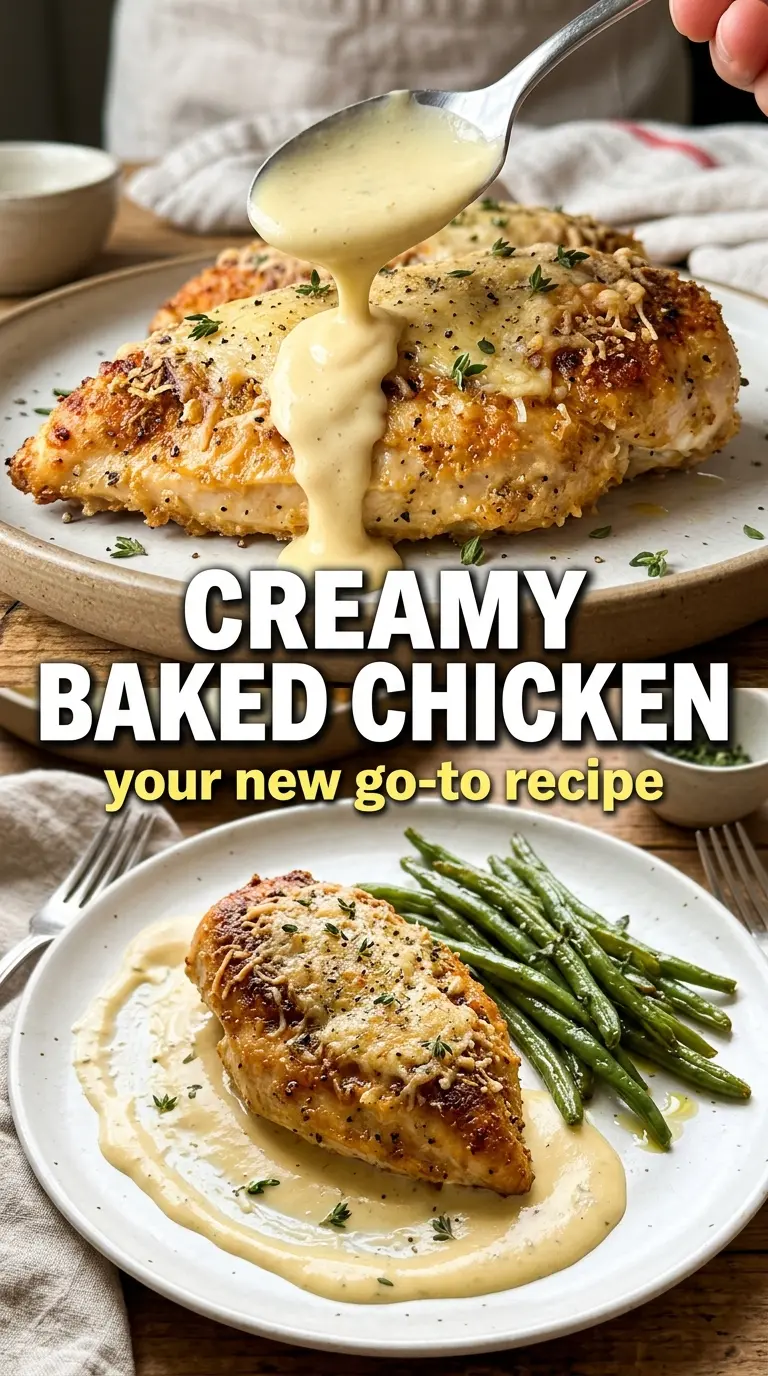
Baked chicken breasts turn out at their best when the sauce does more than coat the top. Here, the cream mixture settles around the chicken in the pan, bakes into a thick golden sauce, and keeps the meat tender while the edges pick up a little caramelized color. You get the comfort of a casserole without the usual dry, stringy chicken that can happen with boneless breasts.
The trick is in the sauce balance. Cream of chicken soup gives it body, sour cream brings tang and richness, and mayonnaise helps everything bake up silky instead of separate or grainy. Ranch seasoning does a lot of the heavy lifting for flavor, but the Parmesan on top is what gives you that browned, savory finish that makes the dish taste finished rather than just covered.
Below, I’m walking through the parts that matter most: how to keep the chicken juicy, how to get the sauce smooth before it goes in the oven, and what to change if you want a lighter or gluten-free version.
The sauce baked up thick and bubbly, and the chicken stayed juicy all the way through. I served it over rice, and my husband went back for seconds before I even sat down.
Creamy Baked Chicken Breasts are the kind of dinner that bakes into its own sauce, so every bite stays tender and coated.
The Part That Keeps Chicken Breasts Juicy Instead of Dry
Baking chicken breasts under a creamy topping changes the whole game, but only if the chicken bakes in a single layer and the sauce fully covers the surface. The sauce traps moisture as it heats, and the topping browns before the chicken has a chance to overcook. That means you’re aiming for an even bake, not a deep casserole-style mound.
The most common failure here is overbaking. Chicken breasts keep cooking after they leave the oven, so pull the dish when the thickest part of the chicken hits 165°F and the sauce is bubbling at the edges. If the breasts are much thicker on one end, pound them lightly so they finish at the same time.
What Each Part of the Sauce Is Actually Doing
IMAGE BLOCK — Paste this verbatim into Block 5 before the ingredient notes. Change only the alt attribute to match this recipe. Do not touch any other attribute or value:
- Cream of chicken soup — This gives the sauce its body and helps it bake into something spoonable instead of thin. If you use a lower-sodium version, the flavor stays cleaner and you get more control over the seasoning.
- Sour cream — This adds tang and keeps the sauce from tasting flat. Full-fat sour cream works best here because it stays creamy in the oven; light versions can loosen up more than you want.
- Mayonnaise — Mayo makes the sauce richer and helps it stay smooth as it bakes. If you don’t love mayo, you can swap in plain Greek yogurt, but the sauce will be a little sharper and less plush.
- Ranch seasoning — This is what gives the dish its familiar savory backbone without needing a long spice list. A packet is easiest, but if you’re using homemade ranch seasoning, taste before salting because it can vary a lot.
- Parmesan cheese — This melts into the top and browns into a salty crust. Freshly grated Parmesan melts better than the shelf-stable kind and gives you a deeper finish.
Building the Sauce and Baking It Until Golden
Seasoning the Chicken First
Season both sides of the chicken breasts before they go into the dish. That first layer of salt, pepper, garlic powder, and onion powder matters because the sauce on top won’t season the meat all the way through on its own. Lay the breasts in a greased 9×13 dish with a little space between them so the sauce can flow around the edges.
Whisking the Sauce Until Smooth
Mix the soup, sour cream, mayonnaise, ranch seasoning, and garlic powder until the sauce looks completely even with no streaks. If it looks lumpy now, it will bake up lumpy later, so take the extra minute to smooth it out before pouring. The sauce should be thick enough to mound on the chicken but loose enough to spread with a spoon.
Baking to Bubbly, Not Dry
Spoon the sauce over the chicken, then top with Parmesan and bake at 375°F until the sauce is bubbling and the cheese is golden in spots. Start checking around 28 minutes, especially if your chicken breasts are on the smaller side. The center should reach 165°F, but don’t keep baking just because the top looks pale; the residual heat finishes the job once it comes out.
Dairy-Free Version
Use a dairy-free sour cream and mayonnaise, then choose a dairy-free cream soup or a thick homemade white sauce. The result will still be creamy, but it won’t brown the same way Parmesan does, so add a little extra seasoning to keep the flavor bold.
Lower-Carb Serving Idea
Serve this over cauliflower mash or sautéed greens instead of pasta or rice. The sauce is rich enough to carry the whole plate, so you don’t lose anything by skipping the starch.
Using Chicken Thighs Instead
Boneless, skinless thighs work well and stay extra juicy. They may need a few extra minutes in the oven, and the sauce will taste a little richer because thighs bring more natural fat.
Storage and Reheating
- Refrigerator: Store leftovers in an airtight container for up to 4 days. The sauce thickens as it chills, which is normal.
- Freezer: It freezes, but the sauce may separate a little when thawed. Freeze in portions and reheat gently for the best texture.
- Reheating: Warm covered in a 325°F oven until heated through, or reheat gently in the microwave at reduced power. High heat is what dries out the chicken and makes the sauce split.
Answers to the Questions Worth Asking
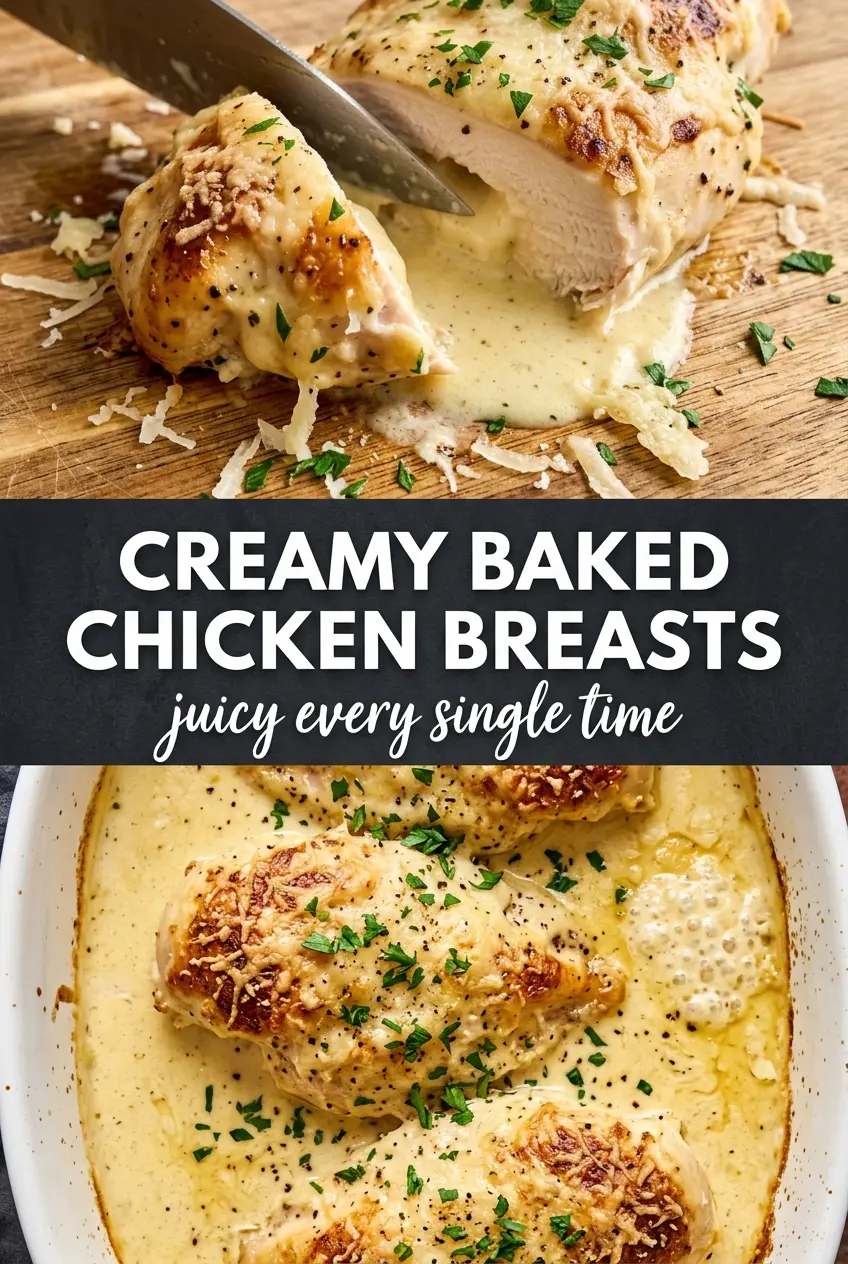
Creamy Baked Chicken Breasts
Ingredients
Equipment
Method
- Preheat the oven to 375°F and grease a 9x13 baking dish.
- Season the chicken breasts on both sides, then place them in the prepared dish.
- Whisk together cream of chicken soup, sour cream, mayonnaise, ranch seasoning mix, and garlic powder until smooth.
- Pour the cream sauce evenly over the chicken, coating completely.
- Top the chicken with Parmesan cheese.
- Bake at 375°F for 28-32 minutes, until the sauce is bubbly and golden and the internal temperature reaches 165°F.
- Garnish with fresh parsley and serve over pasta or rice.