Creamed pearl onions land on the table with a soft, spoonable texture and a savory sweetness that makes them easy to keep passing around. The onions turn tender without falling apart, the sauce stays silky, and the sage brings a clean, earthy edge that keeps the whole dish from tasting heavy. It’s the kind of side that quietly steals attention from the main course.
The key is letting the thawed onions cook long enough to pick up a little color before the flour goes in. That quick browning builds flavor fast, and it also keeps the final sauce from tasting flat. I use both fresh sage and thyme here: sage gives the dish its backbone, while thyme brightens the cream so the Parmesan doesn’t take over.
Below, I’ll walk through the part that matters most: how to thicken the sauce without getting pasty, how to avoid breaking the cream, and how to make the crisp sage garnish stay snappy until serving.
The onions turned buttery and tender, and the sauce thickened up beautifully without turning gluey. I served it with roast chicken and my husband scraped the skillet clean.
Save these creamy pearl onions for the next roast dinner, where that sage-Parmesan sauce can do all the quiet showing off.
The Trick to Keeping Pearl Onions Tender, Not Mushy
Pearl onions need a little patience before the cream goes in. If you rush straight to the sauce, they taste pale and the dish feels one-note. Letting them cook in butter first builds a light golden edge, which adds sweetness and gives the finished dish more depth without extra work.
The other failure point is heat. Once the flour is in, the broth and cream should simmer, not boil hard. A rolling boil can tighten the sauce too fast and make it grainy around the Parmesan. Gentle heat gives the onions time to finish softening while the sauce settles into that glossy, spoon-coating texture.
What the Sage, Thyme, and Cream Are Each Doing Here

- Frozen pearl onions — Frozen is the smart shortcut here. They’re already peeled, and once thawed they cook evenly without the hassle of prepping fresh pearl onions. Dry them briefly after thawing so they brown instead of steaming.
- Fresh sage — Sage is the dominant herb, so use the real thing here. The chopped leaves flavor the sauce, while the whole leaves crisp up in butter and give you a fragrant garnish that breaks through the richness.
- Fresh thyme — Thyme keeps the sauce from tasting flat and heavy. Dried thyme works in a pinch, but use less because it blooms quickly and can turn dusty if overdone.
- Heavy cream and Parmesan — This is where the sauce gets its body. Half-and-half will work, but it won’t coat the onions as luxuriously, and it’s more likely to thin out after the cheese goes in. Add the Parmesan off a hard boil so it melts smoothly instead of clumping.
Building the Sauce Without Curdling the Cream
Crisping the Sage First
Start by frying the whole sage leaves in butter just until they darken and crisp, then move them to a paper towel. They’ll continue to firm up as they cool, so don’t leave them in the pan too long or they can taste bitter. The butter picks up a little sage flavor here, which gives the onions a head start.
Getting Color on the Onions
Add the thawed onions to the same skillet and let them sit long enough to pick up some golden spots before stirring much. That light browning is what keeps the dish from tasting like plain cream sauce with onions in it. If the pan looks dry, the onions are still thawing out moisture, and that’s normal.
Thickening the Base
Stir in the chopped sage, thyme, and flour and cook for a full minute so the raw flour taste disappears. When you add the broth and cream, whisk steadily and scrape the bottom of the pan. If the sauce looks thin at first, that’s fine; it thickens as it simmers, and forcing it with high heat is how you end up with a broken, chalky sauce.
Finishing with Cheese and Spice
Once the onions are tender and the sauce has thickened, take the pan down to a lower heat before adding the Parmesan, salt, white pepper, and nutmeg. Parmesan melts cleanly when the sauce is hot but not boiling. The nutmeg should stay in the background; you want warmth, not a dessert note.
How to Adapt These Creamed Pearl Onions for Your Menu
Dairy-Free Version with a Silkier Finish
Use plant butter, unsweetened oat cream, and a dairy-free Parmesan-style cheese. The sauce will be a little less rich and slightly softer, but the flour still gives it body and the herbs carry the same way. Keep the heat low when you add the dairy-free cream, since many substitutes tighten or separate faster than heavy cream.
Gluten-Free Swaps That Still Thicken Properly
Swap the all-purpose flour for a gluten-free blend that includes starch, or use a small slurry of cornstarch mixed with cold broth. The texture will be a touch more glossy and less velvety than a flour-thickened sauce, but it still clings well to the onions. Add cornstarch near the end so it doesn’t lose its thickening power.
Make-Ahead for a Holiday Table
Cook the onions and sauce a little looser than you think you need, then chill and rewarm gently before serving. The sauce will tighten in the fridge, so a splash of broth or cream when reheating brings it back to the right consistency. Add the crispy sage right before serving so it stays crunchy.
Extra-Parmesan, More Savory Finish
If you want a saltier, more pronounced cheese flavor, add an extra tablespoon or two of Parmesan at the end. The sauce gets thicker and slightly sharper, which works well next to roasted meats. Just taste before adding more salt, since Parmesan brings plenty on its own.
Storage and Reheating
- Refrigerator: Store in an airtight container for up to 3 days. The sauce will thicken and set as it chills.
- Freezer: Not ideal. Cream sauces can separate after freezing, and the onions lose some of their tender bite.
- Reheating: Warm slowly in a skillet over low heat with a splash of broth or cream, stirring often. Don’t boil it, or the sauce can turn grainy and the onions can break apart.
Answers to the Questions Worth Asking
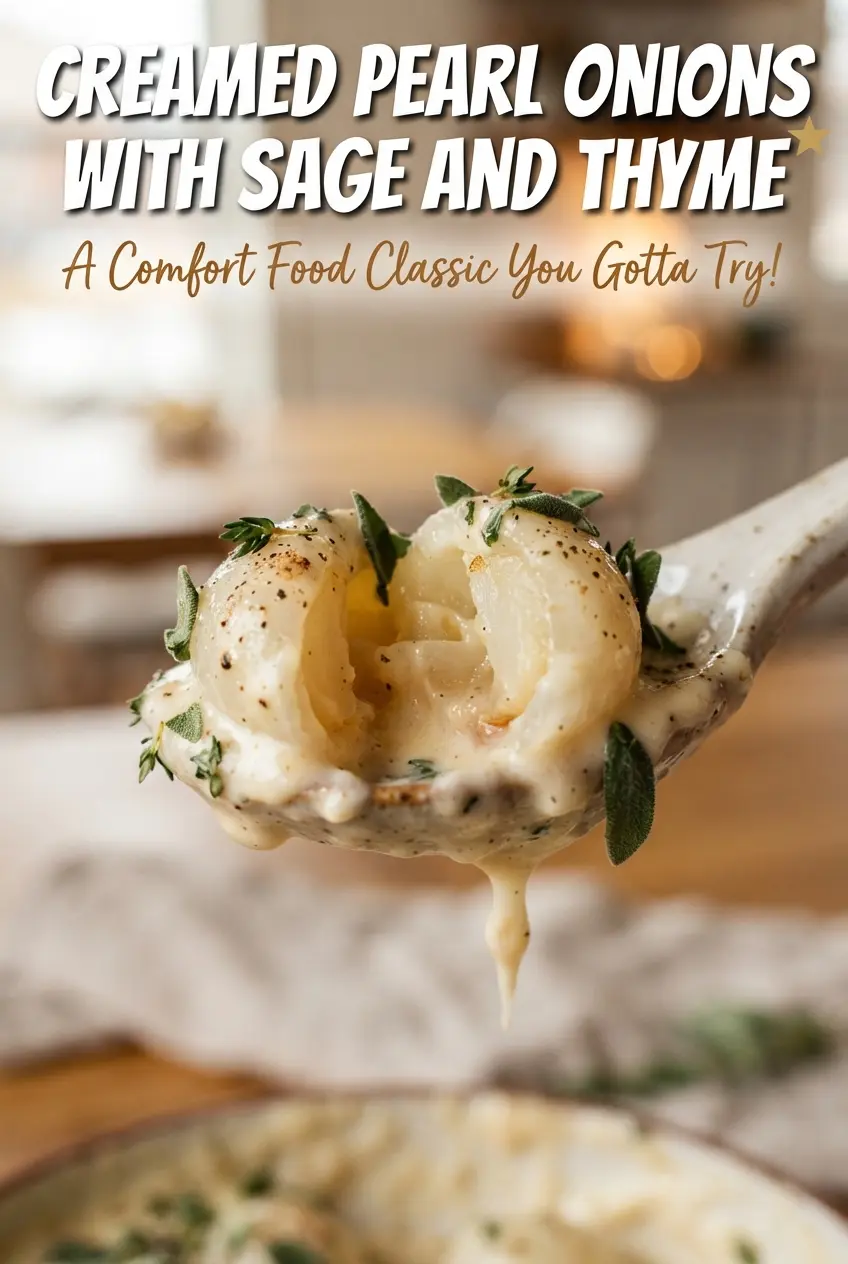
Creamed Pearl Onions with Sage and Thyme
Ingredients
Equipment
Method
- Melt the butter in a large skillet over medium heat. Fry a few whole sage leaves for 30 seconds until crisp, then set them aside.
- Add the thawed pearl onions to the skillet and cook for 8-10 minutes over medium heat. Stir occasionally until the onions look lightly golden.
- Stir in the chopped sage, thyme, and all-purpose flour and cook for 1 minute over medium heat. The mixture should smell fragrant and look slightly thickened.
- Whisk in the chicken broth and heavy cream. Simmer for 6-8 minutes over medium-low heat until the sauce thickens and the onions are tender.
- Stir in the grated Parmesan, salt, white pepper, and nutmeg. Cook 1 more minute, until the sauce is smooth and glossy.
- Top the creamed pearl onions with the crispy sage leaves and serve warm. The garnish should stay crisp against the hot, creamy onions.