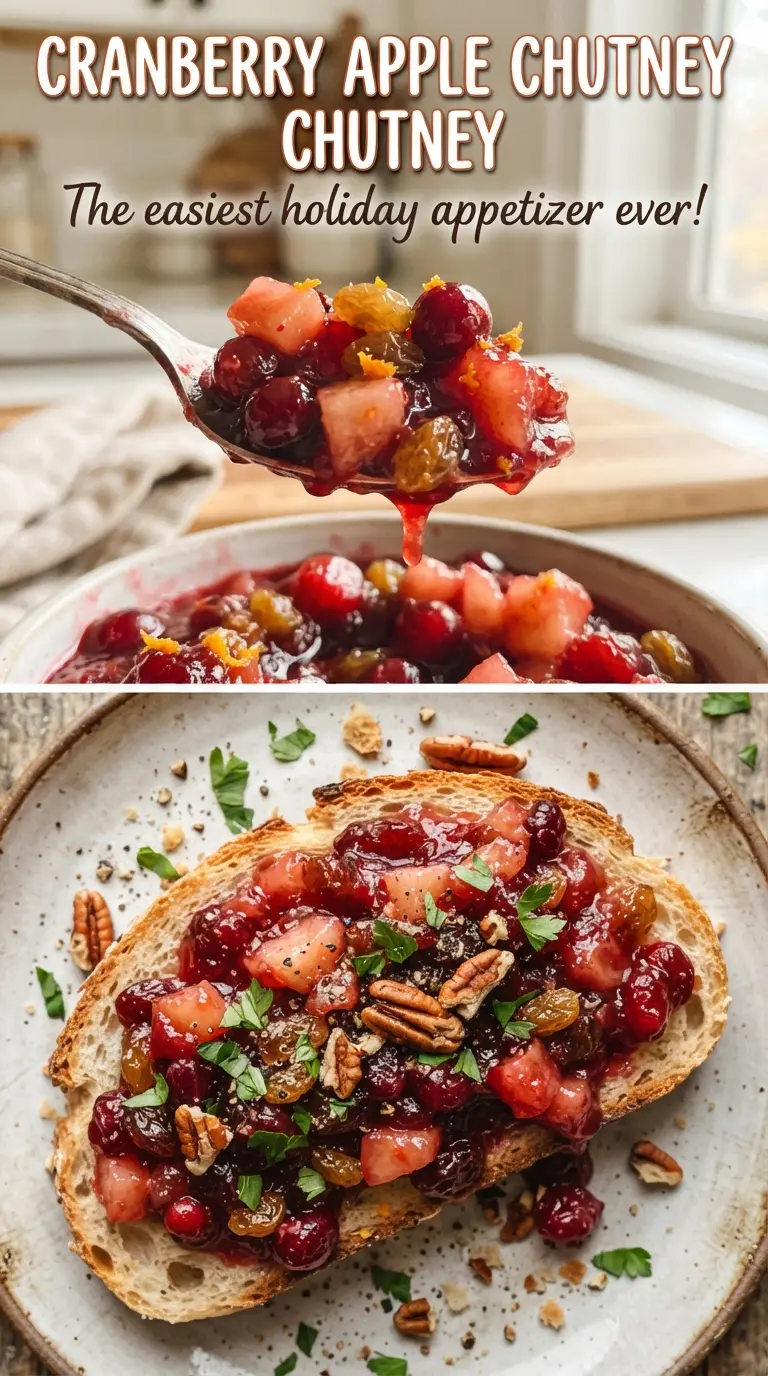
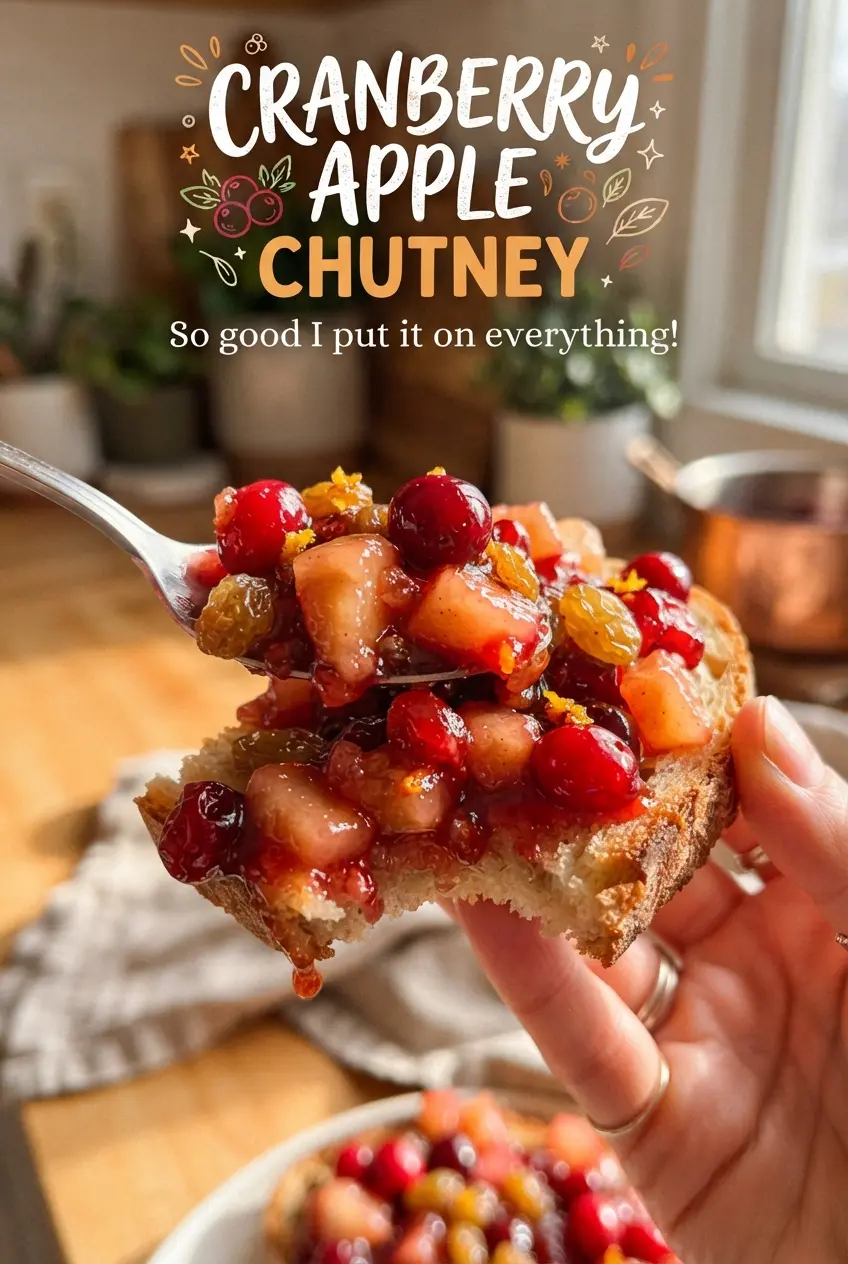
Cranberry apple chutney brings sharp, sweet, and spiced flavors together in a way that makes almost anything beside it taste better. It cooks down into a thick, spoonable mix with popped cranberries, tender apple pieces, and just enough vinegar to keep the whole thing lively instead of sugary. By the time it cools, it has the kind of glossy, jammy texture that belongs on turkey sandwiches, pork chops, and cheese boards.
The trick here is starting with the sugar, vinegar, and water before the fruit goes in. That gives the base a chance to balance out, and it keeps the spices from tasting raw. The apples hold their shape better than you’d expect, while the cranberries break down just enough to thicken the chutney naturally. Golden raisins add sweetness and a little chew, which matters when you want each bite to feel layered instead of one-note.
You’ll find the timing that keeps this chutney thick without turning it into paste, plus a few swaps that still keep the balance intact. Once you’ve made it, it’s the kind of condiment you’ll want in the fridge whenever something needs a bright, savory-sweet edge.
The chutney thickened up beautifully and the apples stayed tender instead of turning mushy. I served it with baked pork chops and my husband kept sneaking spoonfuls straight from the jar.
Save this cranberry apple chutney for turkey sandwiches, cheese boards, and any time you need a sweet-tart condiment with real body.
The Part Where Chutney Turns Thick Instead of Watery
The difference between a chutney that clings and one that runs all over the plate comes down to how much liquid is left when the fruit finishes cooking. Cranberries release pectin as they burst, but they still need enough simmer time for the mixture to reduce. If you pull it too early, it’ll look loose in the pan and set up only a little after cooling. If you cook it too long, the apples lose their shape and the sugar can start to dull the bright cranberry flavor.
The other thing that helps is the order. The onion, ginger, and spices simmer first in the vinegar mixture, which softens the sharp edges before the fruit goes in. That keeps the finished chutney from tasting raw or harsh, especially after it chills.
- Cranberries — Fresh cranberries give you the tart pop and the natural thickening this chutney depends on. Frozen cranberries also work; add them straight from frozen and expect a minute or two more simmer time.
- Apples — A firm, crisp apple holds its shape best. Soft apples turn to mush before the cranberries are finished, and you lose that chunky texture.
- Apple cider vinegar — This is what keeps the chutney bright. White vinegar works in a pinch, but it tastes sharper and less rounded.
- Golden raisins — They melt into the sauce a little and add gentle sweetness. Regular raisins work too, though they taste deeper and less delicate.
What Each Ingredient Is Actually Doing in the Pot
- Brown sugar — It adds sweetness and a light molasses note that pairs well with the vinegar. Pack it firmly for the correct balance, because a loose measure makes the chutney taste sharper than intended.
- Fresh ginger — Grated ginger melts into the sauce and keeps the flavor bright. Ground ginger won’t taste the same here; it reads drier and more one-dimensional.
- Cinnamon and cloves — These spices turn the chutney from tart fruit into something warm and layered. Cloves are strong, so don’t overdo them; this small amount gives depth without taking over.
- Red onion — It softens into the background and adds savory balance. White onion can work, but red onion brings a little more sweetness and color.
How to Cook It Until It’s Jammy, Not Muddled
Building the Sweet-Tart Base
Start by boiling the brown sugar, apple cider vinegar, and water together until the sugar dissolves completely. That quick boil sets the balance before the fruit starts releasing juice, which helps the chutney taste rounded instead of flat. If you rush past this stage, the finished chutney can taste like sweetened fruit salad instead of a proper condiment.
Softening the Aromatics
Add the onion, ginger, cinnamon, cloves, red pepper flakes, and salt, then let them simmer for about 5 minutes. The onion should lose its raw bite and look glossy, and the kitchen should smell warm and spiced, not sharp. This step blooms the spices and gives the vinegar time to mellow, which matters more than it sounds like it should.
Letting the Fruit Break Down
Stir in the cranberries, apples, and raisins, then simmer gently for 20 to 25 minutes, stirring often so the sugars don’t catch on the bottom. You’re looking for cranberries that have burst and a sauce that mounds on a spoon instead of pooling like syrup. If the heat is too high, the bottom can scorch before the cranberries have finished doing their work, so keep it at a steady simmer.
Cooling for the Final Set
Turn off the heat when the chutney still looks a little looser than you want. It thickens a lot as it cools, and waiting for it to look perfect in the pan usually means it’ll set up too firmly in the fridge. Let it cool completely before refrigerating so you don’t trap steam and water down the texture.
How to Adapt This for a Bigger Table or a Different Diet
Make it dairy-free and gluten-free without changing a thing
This chutney already fits both diets as written, which is part of why it’s such a handy side for holiday meals. Just serve it with foods that match your menu, and you’ve got an easy condiment that works for almost everyone at the table.
Swap the apples based on texture
Use firm apples like Honeycrisp, Fuji, or Granny Smith if you want distinct pieces in the finished chutney. Softer apples cook down more quickly and make the mixture looser and smoother, which changes the feel of the dish even if the flavor still works.
Make it hotter and more savory
Add another pinch of red pepper flakes or a little black pepper if you want the chutney to lean more toward a savory sandwich spread. That sharper finish works well with pork and cured meats, but it will pull some attention away from the fruit.
Storage and Reheating
- Refrigerator: Store in a covered jar or container for up to 2 weeks. It thickens as it chills and the spice notes settle in.
- Freezer: It freezes well for up to 3 months. Leave a little space at the top of the container because the chutney can expand slightly as it freezes.
- Reheating: Serve it cold or let it sit at room temperature. If you warm it, do it gently over low heat; boiling can make the apples collapse and thin out the texture.
Questions I Get Asked About This Recipe
Cranberry Apple Chutney
Ingredients
Equipment
Method
- Combine brown sugar, apple cider vinegar, and water in a saucepan and bring to a boil over medium-high heat, until the sugar dissolves and the liquid looks glossy.
- Add red onion, fresh ginger, ground cinnamon, ground cloves, red pepper flakes, and salt, then simmer for 5 minutes so the spices bloom and the onion softens.
- Stir in fresh cranberries, diced apples, and golden raisins until evenly distributed throughout the bubbling mixture.
- Simmer for 20-25 minutes, stirring often, until the chutney is thick and jammy and the fruit pieces look softened and slightly translucent.
- Cool completely before refrigerating so the chutney thickens as it cools.
- Refrigerate until ready to serve, then spoon over turkey, pork, or alongside a cheese board.