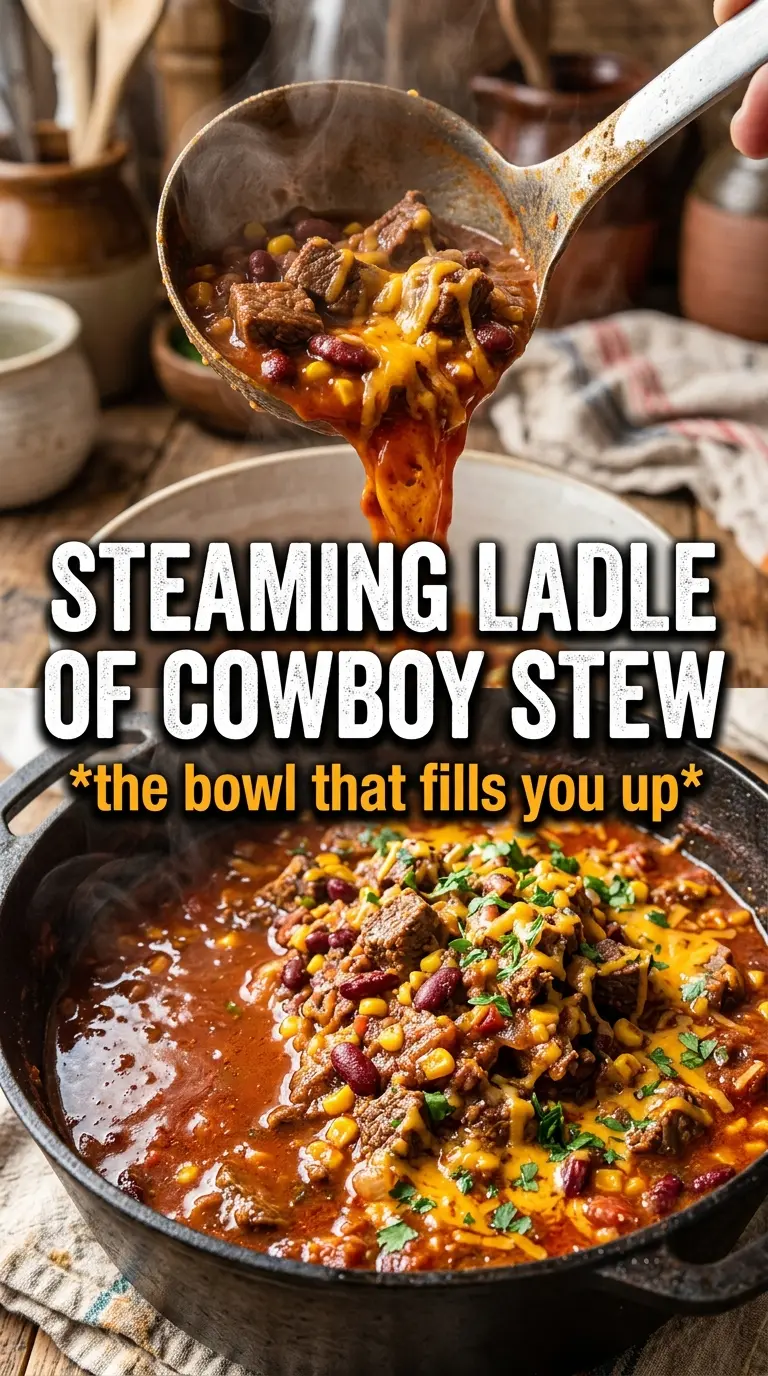
Cowboy stew hits the table thick, smoky, and packed with enough beans, potatoes, beef, and sausage to make a bowl feel like a full meal. The broth stays savory instead of watery, the potatoes turn tender without falling apart, and the little hit of ranch seasoning ties everything together in a way that keeps people going back for one more ladleful.
What makes this version work is the layering. Browning the beef and sausage first gives the stew depth before any liquid goes in, and blooming the chili powder with the onions wakes up the spice instead of leaving it flat. The potatoes simmer right in the broth, where they help thicken the pot just enough without needing flour or cornstarch.
Below, I’m walking through the parts that matter most, including how to keep the potatoes tender, how to keep the broth from tasting thin, and a few smart swaps if you need to stretch what’s already in the pantry.
The broth had so much flavor after simmering with the ranch seasoning, and the potatoes held their shape without getting mushy. I topped mine with jalapeños and cheddar like you suggested, and my husband went back for seconds before I even sat down.
Love a smoky, hearty bowl of cowboy stew? Save this one for the nights when you want beef, sausage, beans, and potatoes in one pot.
The Part That Keeps Cowboy Stew Thick Instead of Watery
The biggest mistake with a stew like this is dumping everything into the pot at once and expecting the broth to taste rich on its own. It won’t. The browned beef and sausage leave behind fond, and that browned bottom is where the real flavor lives. If you skip the browning or rush it, the stew still cooks through, but it tastes flatter and more like soup than a proper one-pot dinner.
The other thing that matters is when the potatoes go in. They need enough time to soften and give the broth body, but if they boil too hard from the start, the edges break down before the center is tender. A steady simmer is the sweet spot. You want small bubbles, not a rolling boil that beats the starch out of the potatoes.
- Browned meat: This is where the savory depth starts. Don’t crowd the pot, or the beef and sausage will steam instead of browning.
- Potatoes: Baby potatoes hold their shape better than russets and give you a stew with structure. Halving them keeps the cook time predictable.
- Ranch seasoning: It adds herbs, garlic, and a little tang that fits the smoky broth. A homemade blend can work, but the packet gives the most consistent result here.
- Rotel and diced tomatoes: The combo gives both brightness and body. Using only one or the other makes the stew either too sharp or too flat.
What Each Ingredient Is Actually Doing in This Pot
- Ground beef: This builds the base of the stew and helps carry the seasoning. An 80/20 blend gives you better flavor, but drain off excess fat so the broth doesn’t turn greasy.
- Smoked sausage: This is the shortcut to that campfire-style flavor. If you swap in another sausage, choose one with smoke and seasoning already built in, not plain fresh sausage.
- Beef broth: Use a broth you’d actually drink here. Since the recipe only simmers for a short time, a bland broth stays bland.
- Pinto beans and corn: The beans add creaminess and heft, while the corn gives little sweet pops that balance the smoky meat. Canned works perfectly well; just drain both before adding.
- Jalapeños and cheddar for serving: The topping matters. The cheddar melts into the hot stew and the jalapeños cut through the richness, which keeps the bowl from feeling heavy.
Building Cowboy Stew in the Right Order
Brown the Meat for the First Layer of Flavor
Start by browning the ground beef in a large pot until it’s no longer pink and you see caramelized bits on the bottom. Drain off the excess fat, then give the sausage a quick browning too. That fast sear wakes up the smokiness and keeps the slices from tasting boiled later. If the pot looks pale at this stage, the finished stew will taste pale too.
Cook the Onion Until It Softens, Not Until It Colors
After the meat comes out, cook the onion in the same pot for about three minutes, then add the garlic for just a minute. You’re looking for softened onion and fragrant garlic, not browned garlic. Garlic burns fast, and once it does, the whole pot picks up a bitter edge that no amount of simmering can fix.
Toast the Spices Before the Liquids Go In
Stir in the chili powder and smoked paprika and let them cook for about a minute. This step matters because dry spices bloom in fat and release more flavor than they do sitting in broth. If the pot seems dry, that’s a sign to keep stirring rather than adding liquid too soon; you want the spices to coat the onion before they get diluted.
Simmer Until the Potatoes Give Easily at the Center
Add the tomatoes, broth, ranch seasoning, potatoes, and beans, then bring everything to a boil before lowering it to a simmer. Cook until the potatoes are tender when pierced with a fork, usually 15 to 18 minutes. Add the corn and sausage near the end so the corn stays sweet and the sausage doesn’t lose its texture. If the potatoes are still firm at the center, give them a few more minutes before you stir in the finishing ingredients.
Make It Spicier Without Overpowering the Stew
Add diced jalapeños with the onion or stir in a pinch of cayenne with the spices. That keeps the heat woven through the pot instead of sitting on top. If you want a bigger kick, use hot Rotel, but taste before adding extra salt because the heat can make the seasoning seem stronger than it is.
Make It Dairy-Free
The stew itself is already dairy-free as written; just skip the cheddar on top. If you still want a creamy finish, add a spoonful of dairy-free sour cream to each bowl. It softens the smoke and heat without changing the texture of the stew in the pot.
Stretch It for a Bigger Crowd
Add another can of beans or an extra cup of broth if you need to feed more people. The stew is forgiving, but if you add more liquid, bump up the ranch seasoning and spices a little so the flavor doesn’t thin out. Extra potatoes also work well because they absorb seasoning and help the pot feel hearty.
Storage and Reheating
- Refrigerator: Store in an airtight container for up to 4 days. The broth thickens as it sits, and the potatoes soften a little more.
- Freezer: It freezes well for up to 3 months, though the potatoes will be softer after thawing. Cool it completely before freezing in portions.
- Reheating: Warm it gently on the stove over medium-low heat with a splash of broth or water. A hard boil can break down the potatoes and make the sausage tough.
Answers to the Questions Worth Asking

Cowboy Stew
Ingredients
Equipment
Method
- In a large Dutch oven over medium-high heat, brown the ground beef until no longer pink, then drain off excess fat. You should see browned bits stuck lightly to the bottom.
- Add the sliced smoked sausage and brown briefly, about 2 minutes, then remove from the pot. Look for lightly caramelized edges.
- In the same pot, sauté the diced onion for 3 minutes until softened. Stir until it looks glossy and the edges start to turn translucent.
- Add the minced garlic and cook for 1 minute. It should smell fragrant without browning.
- Add chili powder and smoked paprika and cook for 1 minute, stirring constantly. The spices should look slightly darkened and smell toasted.
- Add Rotel tomatoes, diced tomatoes, beef broth, ranch seasoning, baby potatoes, and pinto beans, then stir to combine. Bring everything to a boil, with visible bubbling across the surface.
- Simmer for 15-18 minutes, until the potatoes are tender. A fork should slide in easily and the stew should be gently bubbling.
- Add the corn and browned sausage, then simmer for 5 more minutes. The corn should be hot and the broth should look thick and cohesive.
- Season with salt and pepper to taste. Taste and adjust until the flavors are balanced and bold.
- Ladle the cowboy stew into bowls and top with shredded cheddar, jalapeños, and green onions. The toppings should melt slightly from the hot stew for a layered finish.