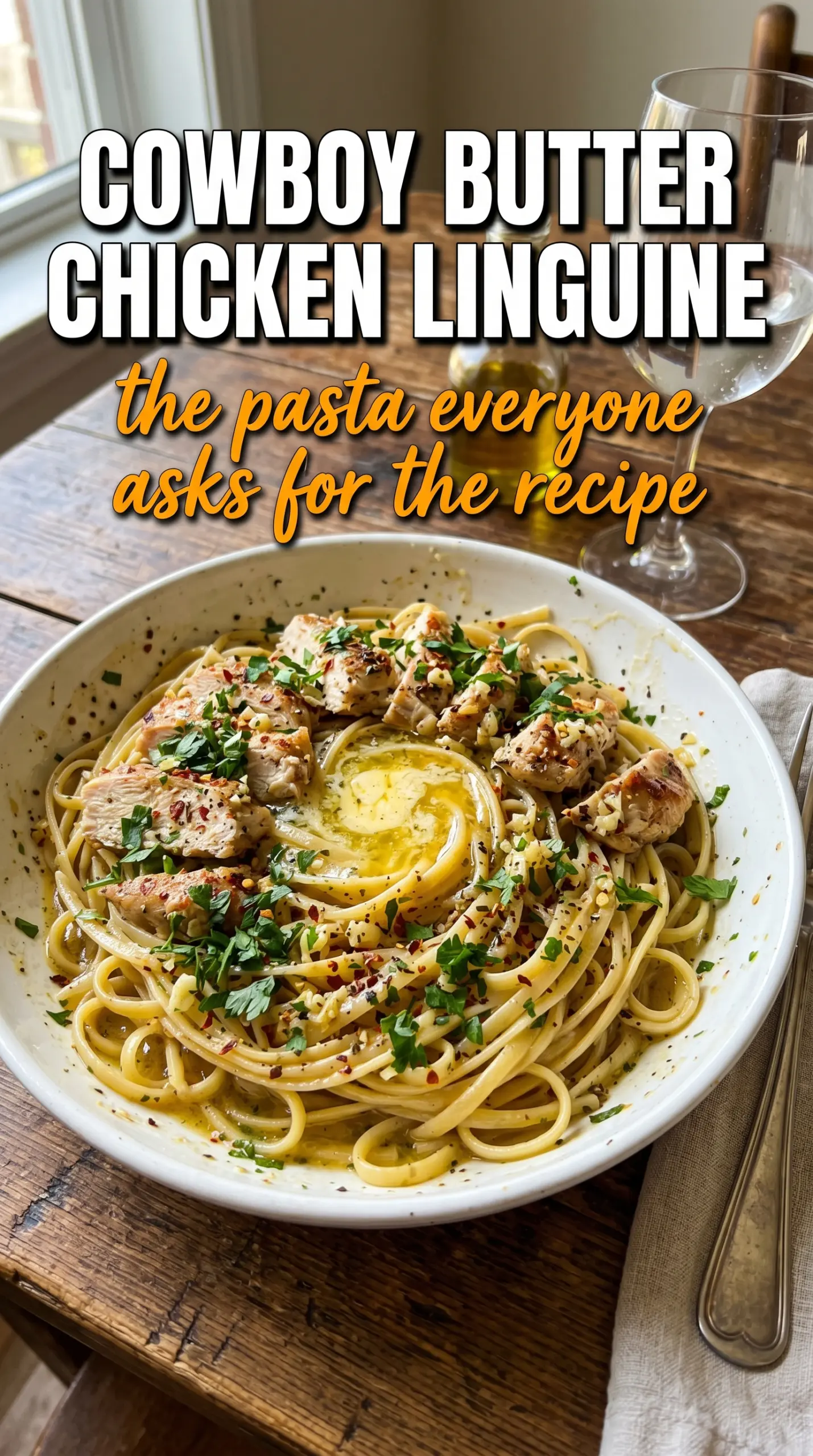
Cowboy Butter Chicken Linguine lands on the plate with a gloss of garlicky butter, a hit of lemon, and just enough heat to keep every bite interesting. The chicken stays seared and savory, the linguine catches the sauce in all the right places, and the whole dish eats like something far more deliberate than a weeknight pasta tossed together at the last minute.
What makes this version work is the way the sauce is built. The chicken gets cooked first in a hot skillet, so the browned bits left behind become the base of the cowboy butter sauce. Dijon gives the butter a little backbone, lemon keeps it from feeling heavy, and the pasta water turns everything silky instead of greasy. That balance matters more here than a long ingredient list ever could.
Below, I’m breaking down the part that keeps this pasta from turning flat or oily, plus a few smart swaps if you want a slightly different heat level or need to work with what’s already in the kitchen.
The sauce clung to every strand of linguine and the chicken stayed juicy even with the high-heat sear. I loved the lemon at the end because it kept the butter from tasting heavy.
Save this Cowboy Butter Chicken Linguine for the nights when you want a smoky, lemony pasta sauce that clings to every strand.
The Secret Is in the Skillet Leftovers, Not the Butter Alone
The biggest mistake with a pasta like this is treating the sauce like a separate step and missing the flavor left in the pan. Once the chicken comes out, the skillet should still hold the browned seasoning, garlic oil, and fond from the sear. That residue is what gives the cowboy butter sauce its depth, so the butter goes into the same pan instead of a clean one.
The other thing that matters is heat control. Butter, lemon juice, and Dijon can turn muddy or greasy if the pan is too hot when they go in. Keep the flame at medium once the chicken is done, stir the garlic just until fragrant, then pull the heat back if the sauce starts looking split. A splash of pasta water fixes the texture by helping the sauce emulsify around the noodles instead of sitting on top of them.
What Each Ingredient Is Actually Doing in This Pasta
- Chicken breasts — Cutting them into strips gives you more browned surface area and keeps the cook time short. Thighs work if that’s what you have, but breasts are the cleanest fit here because the sauce is rich enough on its own.
- Cajun seasoning — This does more than add heat. It brings salt, paprika, garlic, and a little background savoriness to the chicken, which means every bite tastes seasoned before the sauce even hits the pan. If your blend is salty, ease up on added salt until you taste the finished dish.
- Butter — Use real butter here. It carries the spices and gives the sauce its silky finish, but it also means you need to respect the heat. High heat is how butter goes from glossy to broken.
- Dijon mustard — This is the quiet ingredient that holds everything together. It helps emulsify the sauce and adds a sharp edge that keeps the butter from tasting flat.
- Smoked paprika, red pepper flakes, and cayenne — This trio builds the cowboy butter character. Smoked paprika gives warmth, red pepper flakes give texture and little pops of heat, and cayenne sharpens the finish. Cut the cayenne in half if you want a gentler burn.
- Lemon juice — Fresh lemon juice is worth using here. Bottled juice tastes dull in a sauce this simple, and you need the bright acid to balance the butter.
- Parsley and chives — Add them at the end so they stay fresh and green. If they cook too long, the sauce loses that clean herbal finish that makes the dish taste lively instead of heavy.
- Pasta water — This is not optional if the sauce seems tight. The starch in the water helps the butter sauce coat the linguine and gives you a glossy finish without adding more fat.
Building the Sauce So It Clings Instead of Breaking
Searing the Chicken Hard and Fast
Heat the olive oil until it shimmers, then add the seasoned chicken in a single layer. You want a deep browned edge in 4 to 5 minutes, not a pale simmered surface. If the pan is crowded, the chicken steams and the bits left behind turn weak, which means less flavor in the sauce. Pull the chicken out as soon as it’s cooked through so it doesn’t dry out while you build the butter sauce.
Letting the Garlic Bloom, Not Burn
When the butter melts, add the garlic and stir for about a minute, just until it smells nutty and fragrant. Garlic goes bitter fast in butter, especially after a high-heat sear, so keep the heat moderate and watch the color. You want soft and aromatic, not browned.
Emulsifying the Cowboy Butter
Stir in the Dijon, paprika, red pepper flakes, and cayenne before the lemon juice goes in. That gives the spices a chance to wake up in the butter, and the mustard helps the sauce stay smooth once the acid hits. Add the lemon juice, then the herbs, then toss in the pasta with a splash of reserved water. The sauce should turn silky and glossy, coating the linguine instead of pooling at the bottom of the skillet.
Bringing It Together
Add the chicken back only after the pasta is coated. That keeps the seared edges intact and prevents the chicken from overcooking while you toss. If the pasta looks dry, add more water a tablespoon at a time. If it looks oily, it needs another little splash of starchy water and a good toss to pull everything together.
How to Adjust the Heat, the Richness, or the Pantry List
Make it milder without losing the cowboy butter character
Cut the cayenne in half and use a light hand with the Cajun seasoning if your blend already runs hot. You’ll still get smoked paprika, garlic, lemon, and herbs, but the finish will be warmer than spicy.
Swap in shrimp for a faster dinner
Use peeled shrimp and sear them for just 1 to 2 minutes per side, then remove them before making the sauce. Shrimp picks up the lemony butter beautifully, but it overcooks fast, so it needs a shorter trip through the skillet than chicken.
Make it dairy-free
Use a good plant-based butter that melts cleanly and add a little extra pasta water to help the sauce emulsify. The flavor will be a touch less rich, but the garlic, mustard, lemon, and herbs still carry the dish.
Use a different pasta shape
Fettuccine, spaghetti, or even rotini all work if linguine isn’t in the pantry. Long noodles give you the best sauce coating, while short pasta catches little pockets of the cowboy butter in the twists and ridges.
Storage and Reheating
- Refrigerator: Store leftovers in an airtight container for up to 3 days. The pasta will absorb some sauce as it sits, so expect it to look a little tighter the next day.
- Freezer: This dish doesn’t freeze well. The butter sauce can separate and the pasta turns soft after thawing, so it’s better made fresh.
- Reheating: Warm gently in a skillet over low heat with a splash of water or broth. The common mistake is blasting it in the microwave, which tightens the chicken and makes the sauce greasy instead of glossy.
Answers to the Questions Worth Asking
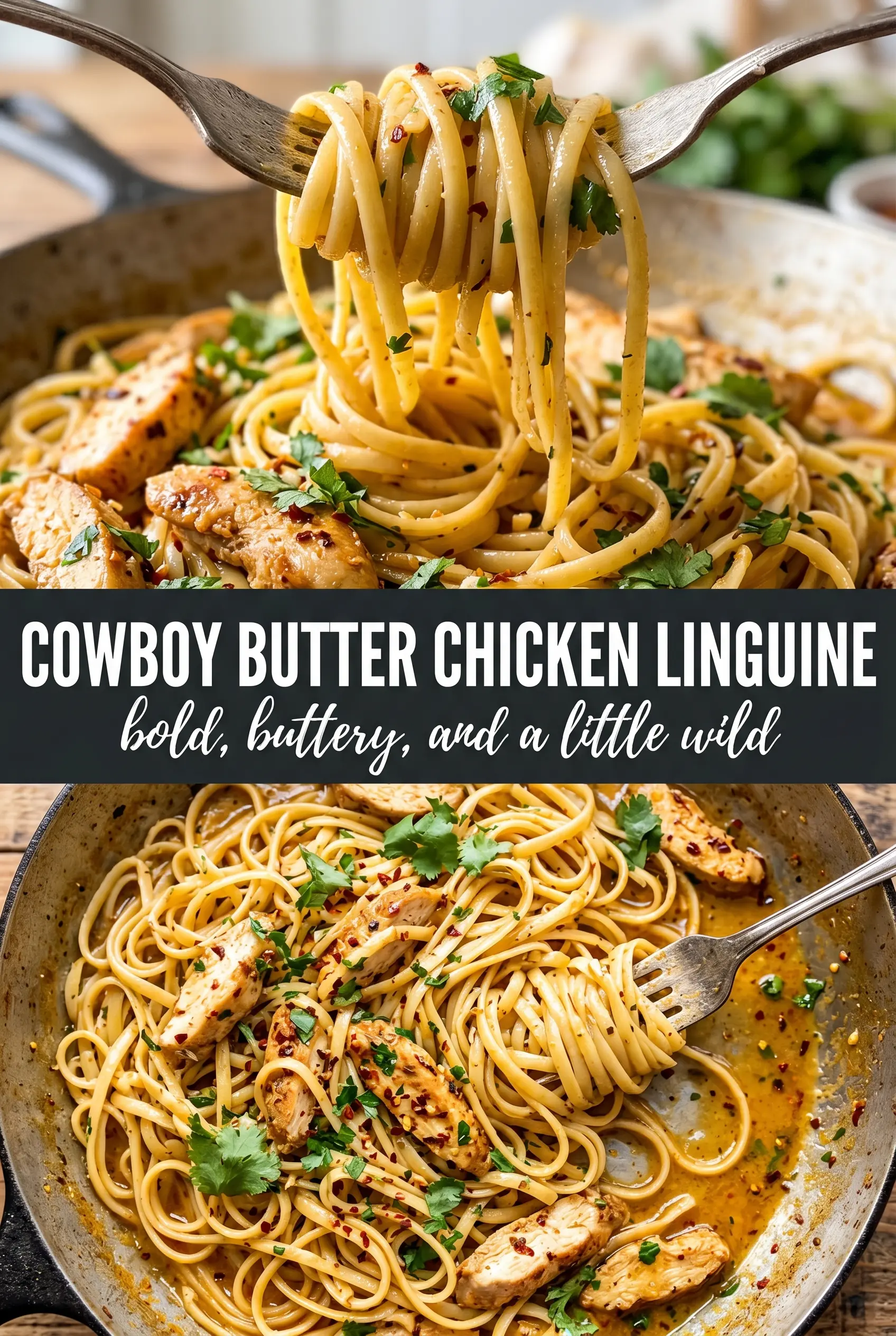
Cowboy Butter Chicken Linguine
Ingredients
Equipment
Method
- Season the chicken strips with salt, pepper, and Cajun seasoning to taste. Heat olive oil in a large skillet over high heat until shimmering, then cook chicken for 4-5 minutes, stirring occasionally, until charred and cooked through. Remove chicken to a plate.
- Melt the butter in the same skillet over medium heat. Add the minced garlic and cook for 1 minute, stirring, until fragrant.
- Stir in Dijon mustard, smoked paprika, red pepper flakes, and cayenne pepper. Cook for 30 seconds to bloom the spices.
- Add fresh lemon juice, chopped parsley, and chopped chives. Toss the cooked linguine in the cowboy butter sauce, adding reserved pasta water as needed until the sauce coats every strand.
- Top the pasta with the seared chicken strips, fanning them over the linguine. Serve immediately while the sauce is glossy.