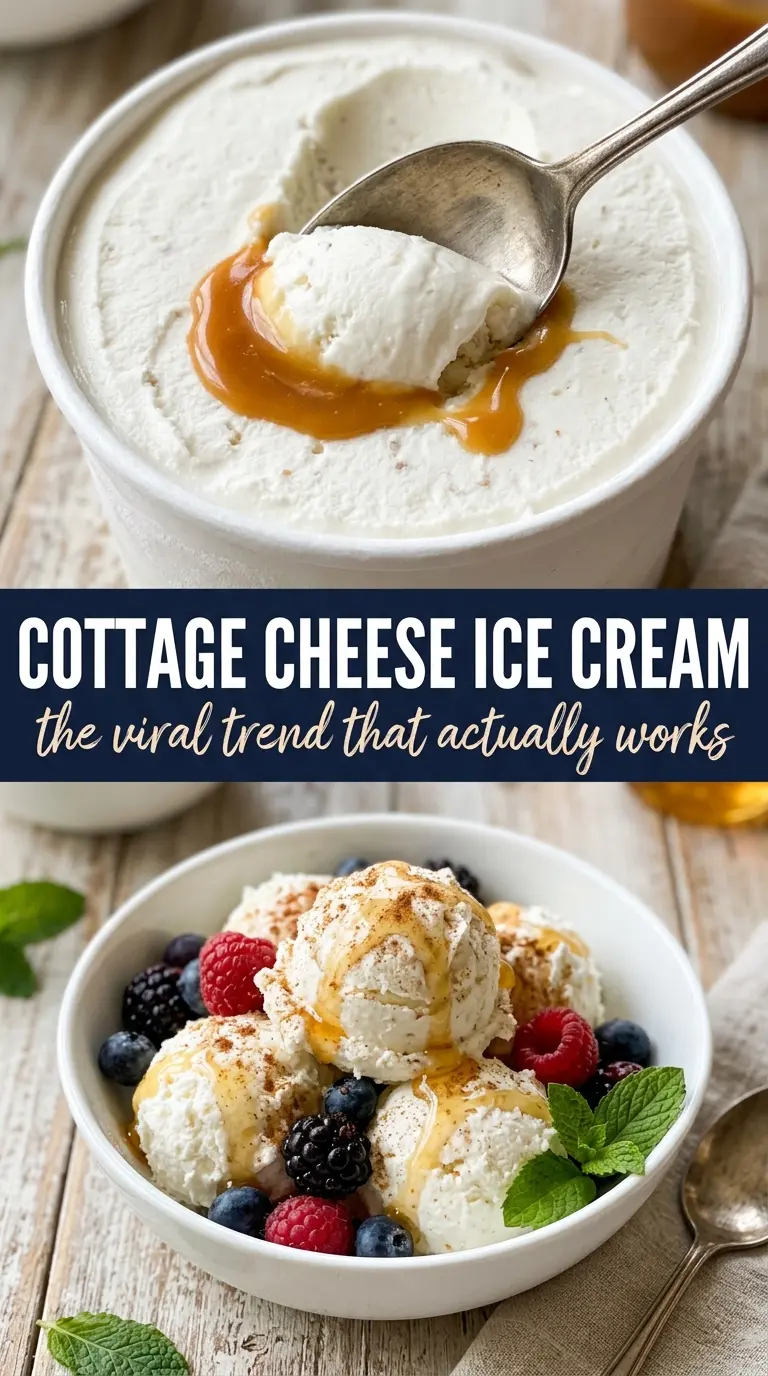
Cold, creamy, and spoonable straight from the freezer, cottage cheese ice cream pulls off the kind of texture that usually takes eggs, custard, and a lot more work. The payoff is a dessert that tastes indulgent, scoops like real ice cream, and still brings a good hit of protein to the bowl. The vanilla base stays mild enough to pair with berries, chocolate chips, or a ribbon of honey, so it works as an everyday treat instead of a one-note trend.
The trick is blending longer than most people think they need to. Cottage cheese has to be completely processed until it looks glossy and uniform, or you’ll end up with tiny curds frozen into the mix. Honey helps keep the texture softer than granulated sugar would, and a little lemon juice brightens the dairy so the finished ice cream tastes clean instead of flat. After that, the freezer does the rest.
Below you’ll find the small details that matter most: how to get the base silky, which sweetener gives the smoothest freeze, and what to expect when it comes out of the freezer a few hours later.
I was skeptical about cottage cheese ice cream, but blending it until totally smooth made all the difference. After 4 hours in the freezer it was creamy, not icy, and the honey kept it scoopable.
Save this cottage cheese ice cream for the nights when you want a creamy frozen dessert with a protein boost and no churn.
The Smooth Texture Starts Before the Freezer
The biggest mistake with cottage cheese ice cream is treating the blender as optional. If the base still looks grainy going into the freezer, it will freeze that way. Full-fat cottage cheese gives you a richer body and a softer set than low-fat, which matters here because there’s no churning to build air into the mixture. Honey also helps the final texture stay scoopable; granulated sugar can work, but it doesn’t blend as seamlessly and can leave the base a little less plush.
- Full-fat cottage cheese — This gives the ice cream its best body and the least icy finish. Low-fat cottage cheese will still work, but the result is a little harder and more prone to freezing into a firmer block.
- Honey or maple syrup — Either one sweetens and softens the mixture. Honey gives a rounder, more classic vanilla-ice-cream feel, while maple adds a deeper note that leans a little richer.
- Vanilla extract — This is what makes the base taste like dessert instead of blended dairy. Use pure vanilla if you can; it carries better once frozen.
- Lemon juice — You don’t taste lemon in the finished ice cream, but it keeps the flavor from going flat. It also sharpens the sweetness just enough that the cottage cheese reads as creamy, not tangy.
What Each Ingredient Is Actually Doing in This Ice Cream
- Base ingredient (cream, milk, or custard) — This provides the foundation and richness. Quality matters.
- Sweetener (sugar, honey, or condensed milk) — This sweetens and prevents ice crystals. The ratio is critical.
- Flavor element (vanilla, fruit, chocolate, cookie, or other) — This defines the ice cream personality. Use quality ingredients.
- Egg yolks (if making custard base) — These create richness and silky texture. Optional but elevates ice cream.
- Churning (if using ice cream maker) — This incorporates air and prevents ice crystals. Critical for smooth texture.
- Freezing temperature and time — Proper freezing prevents rock-hard texture. Store at 0°F or below.
- Mix-ins (chocolate, cookies, candy, or swirls) — These add texture and prevent one-dimensional flavor. Add near end of churning.
- Serving temperature (slightly soft, not rock hard) — This provides creamy mouthfeel. Remove from freezer 5 minutes before serving.
What Actually Happens in the Blender and the Freezer
Blending Until No Curds Survive
Add everything to a high-powered blender or food processor and let it run long enough for the mixture to turn glossy and completely uniform, usually about 2 minutes. Stop once to scrape down the sides if needed, because even one stubborn pocket of curds will show up later as a frozen grainy spot. The base should look like thick, smooth cream before you move on.
Freezing Into a Scoopable Texture
Pour the blended mixture into a freezer-safe container and spread it into an even layer. A shallow container freezes more evenly than a deep loaf pan, which helps the texture set before large ice crystals can form. Four hours is the sweet spot for a firm-but-scoopable result; much longer and it gets harder, especially if your freezer runs cold.
The Short Rest Before Serving
Let the container sit at room temperature for about 5 minutes before scooping. That short rest is what turns a stubborn block into creamy scoops without melting the edges into soup. If it still feels too firm, give it another couple of minutes instead of forcing the spoon through it.
How to Adapt This Frozen Base Without Ruining the Texture
Dairy-Free Version
This recipe depends on dairy for its body, so a straight swap won’t behave the same way. For a dairy-free version, use a thick coconut-based yogurt or a vegan cottage-style product if you can find one, then expect a softer, more sorbet-like finish with a coconut note.
Maple Vanilla Variation
Swap the honey for maple syrup and add a pinch more vanilla. The result tastes a little deeper and more caramel-like, which works especially well with berries or chopped toasted nuts on top.
Chocolate Chip Style
Stir in mini chocolate chips after blending, right before freezing, so they stay scattered through the ice cream instead of disappearing into the blender. Mini chips work better than full-size ones because they stay easier to scoop once frozen.
Lower-Sweetness Batch
You can cut the honey back a little if you prefer a less sweet dessert, but don’t remove it entirely. The sweetener helps keep the frozen base softer, so too little makes the texture denser and more brick-like after a full freeze.
Storage and Reheating
- Refrigerator: Not recommended. This is meant to be frozen, and it will turn loose and slushy if held in the fridge.
- Freezer: Store covered for up to 2 weeks. The texture gets firmer with time, so press parchment or plastic wrap directly onto the surface if you want to limit ice crystals.
- Reheating: No reheating needed. For the best scoop, let it sit at room temperature for 5 to 10 minutes before serving; microwaving melts the edges before the center softens.
Answers to the Questions Worth Asking
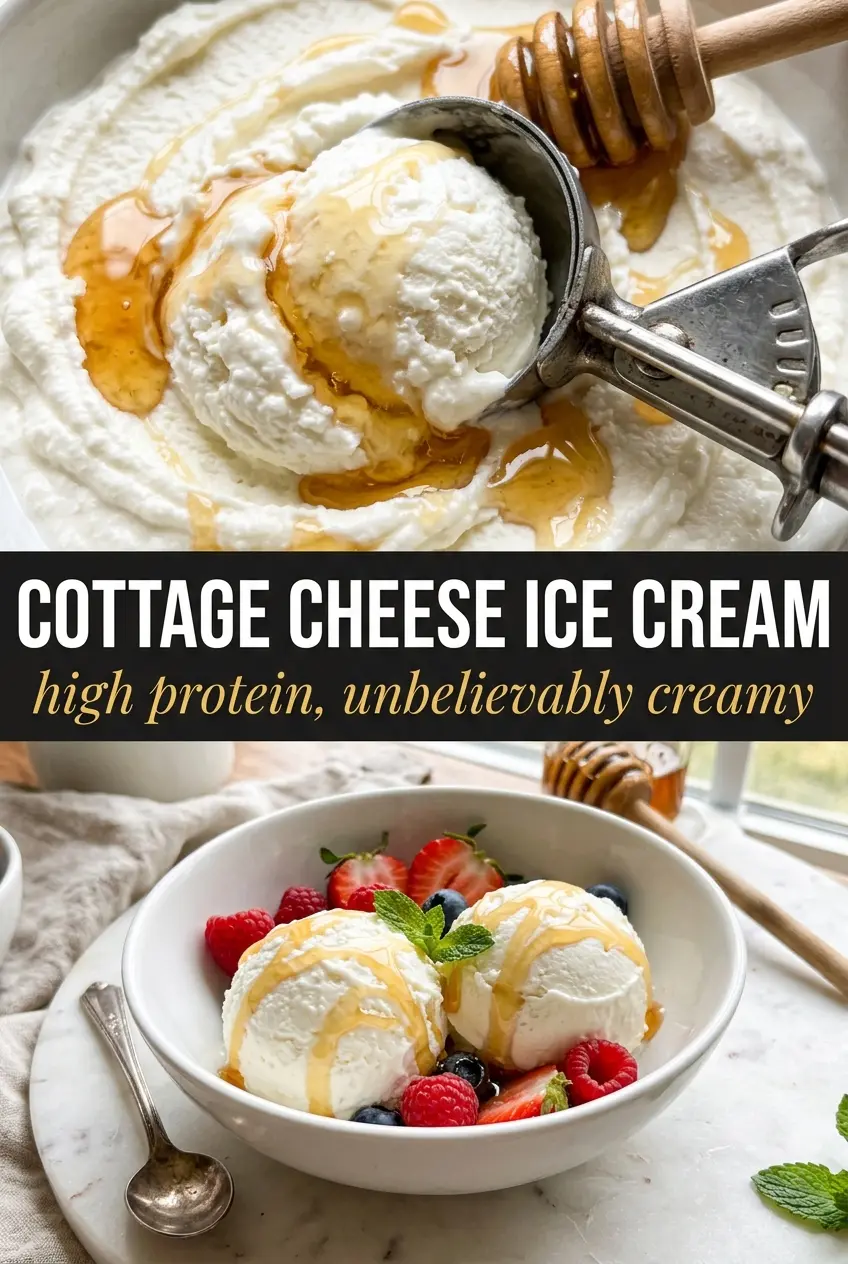
Cottage Cheese Ice Cream
Ingredients
Equipment
Method
- Add full-fat cottage cheese, honey (or maple syrup), vanilla extract, salt, and lemon juice to a high-powered blender or food processor, then blend until completely smooth with no lumps, about 2 minutes, scraping down as needed.
- Taste the blended mixture and adjust sweetness by adding a little more honey or maple syrup if desired.
- Pour the mixture into a freezer-safe container, cover, and freeze for 4 hours until firm.
- Let the container sit at room temperature for 5 minutes before scooping so the texture softens slightly.
- Scoop and top with fresh berries, chocolate chips, or a drizzle of honey, then serve immediately.