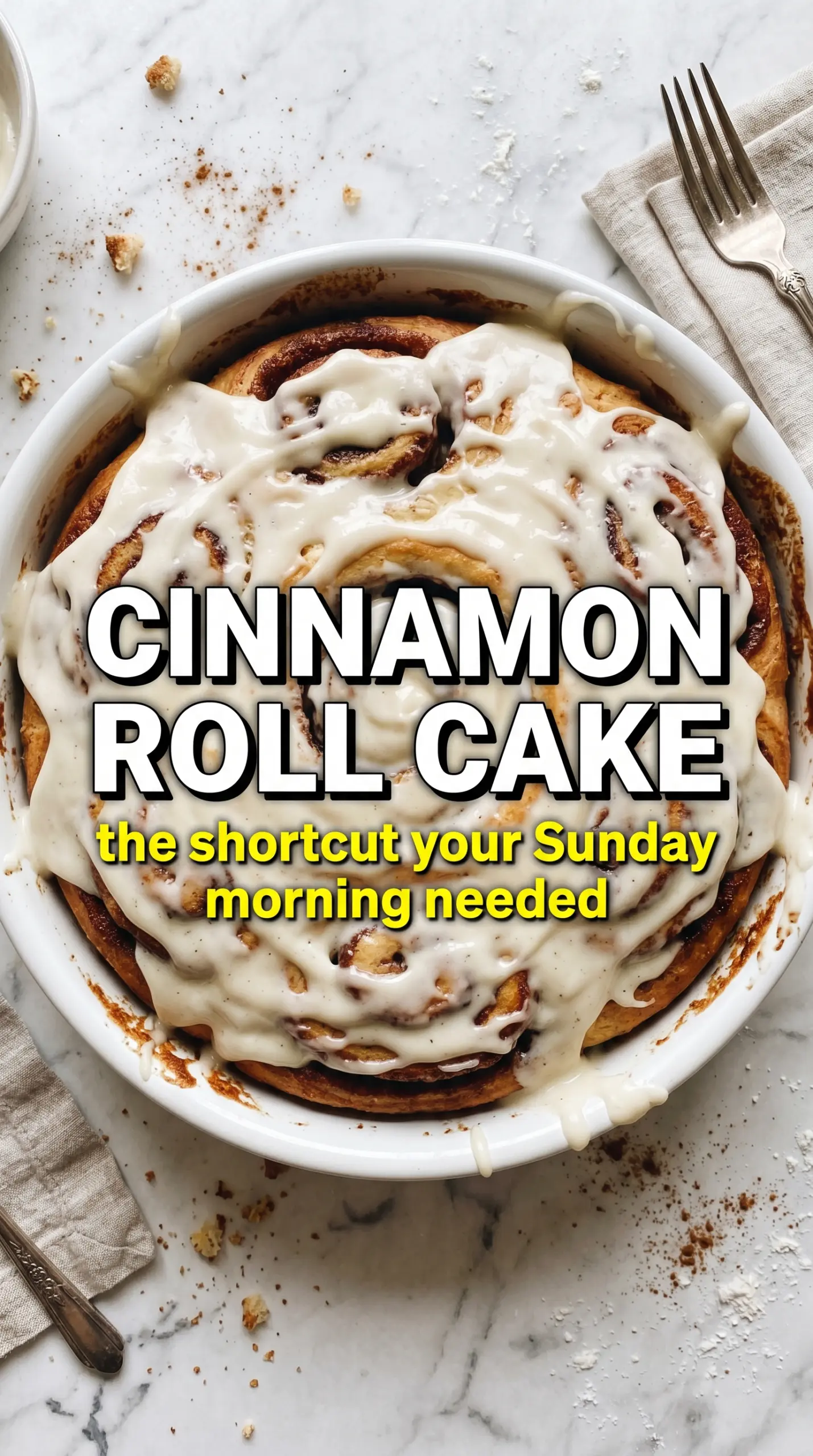
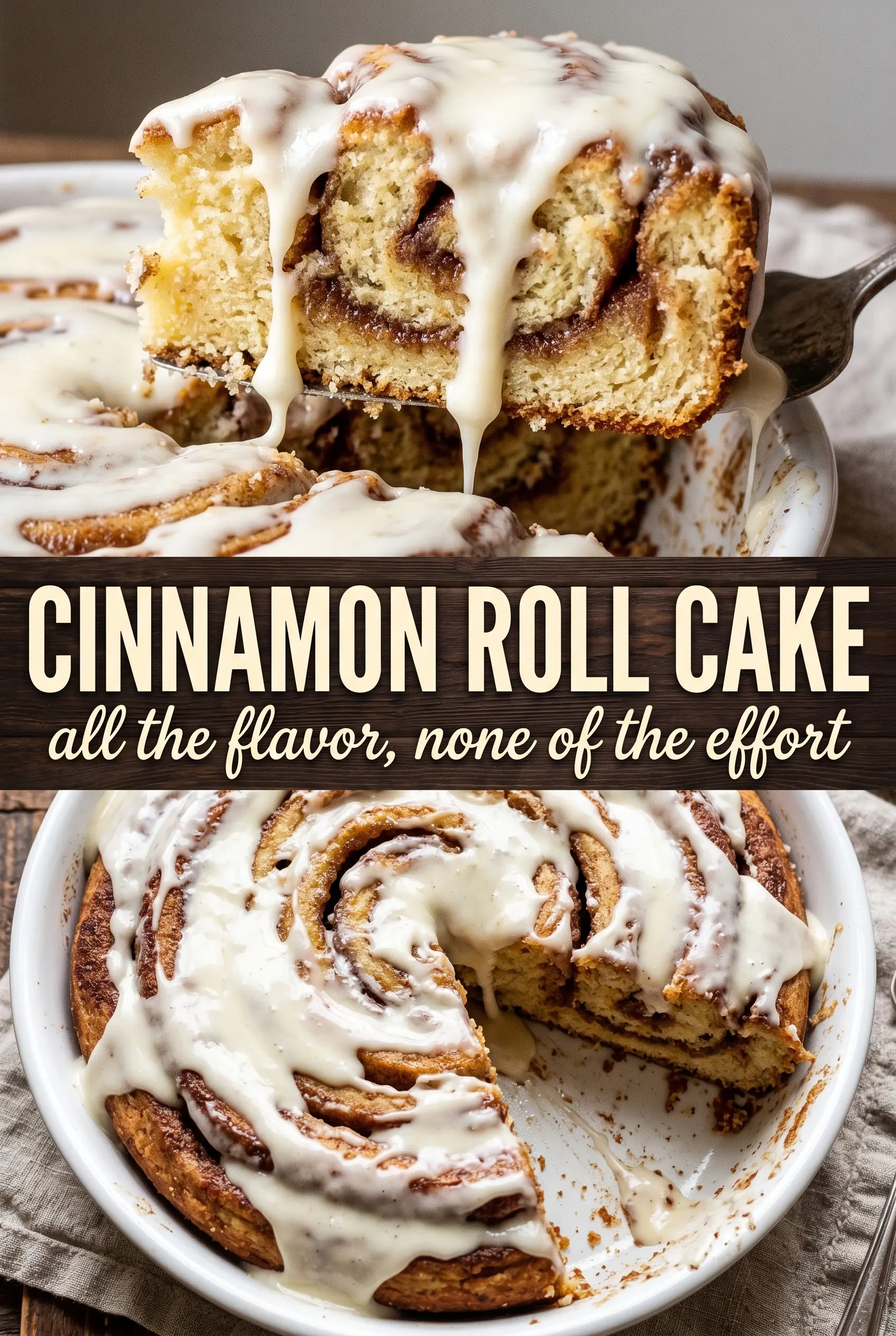
Warm cinnamon roll cake bakes up with the best parts of a bakery-style cinnamon roll without the fussy shaping, proofing, or rolling. The crumb stays soft and tender, the brown sugar cinnamon swirl sinks into the cake in ribbons, and the cream cheese glaze melts into every crack and pocket while the cake is still warm. That contrast is what makes this one worth keeping around.
The cake batter is kept simple and slightly thick so it can hold the cinnamon filling instead of letting it vanish to the bottom. The swirl mixture uses softened butter, not melted, which helps it stay marbled instead of disappearing into the batter. Pouring the glaze over the warm cake matters too. If you wait until it cools completely, the glaze sits on top instead of seeping into those sweet cinnamon layers.
Below, I’ll walk through the small details that keep the swirl dramatic, the cake tender, and the glaze silky. There’s also a storage note for making this ahead, plus a few variations if you want to change the sweetness or make it fit what you already have in the kitchen.
The swirl stayed in pretty ribbons instead of sinking, and the glaze soaked in just enough to make the top taste like a real cinnamon roll. My family ate half the pan before it cooled.
Like this cinnamon roll cake? Save it to Pinterest for the mornings when you want bakery-style swirls and cream cheese glaze without making dough.
The Swirl That Stays Marbled Instead of Melting Away
The biggest mistake with cinnamon roll cake is treating the swirl like a thin ribbon of filling. It needs enough body to sit on top of the batter in spoonfuls before you marble it in. That’s why softened butter, brown sugar, and cinnamon are beaten together until fluffy. If the mixture is too loose, it blends straight into the cake and you lose those deep cinnamon pockets.
The other thing that matters here is the batter thickness. This is a quick batter, but it shouldn’t be runny. A thicker batter gives the swirl something to rest on, which is how you get dramatic brown sugar streaks instead of a uniform cinnamon cake. Drag a knife through in wide figure-eights and stop before it turns muddy. A few bold swirls beat overmixing every time.
What the Cake, Swirl, and Glaze Are Each Doing Here
- All-purpose flour — This gives the cake enough structure to hold the cinnamon swirl without turning dense. Cake flour makes the crumb softer, but it also makes the cake a little too delicate for the heavy topping.
- Whole milk — The fat in whole milk keeps the crumb tender and gives the batter a little more richness. Lower-fat milk works in a pinch, but the cake won’t taste as plush.
- Butter in two places — Melted butter in the cake keeps the crumb moist, while softened butter in the swirl gives you that thick, spreadable cinnamon layer. Don’t swap both for oil; you’ll lose the bakery-style texture and the swirl won’t hold the same way.
- Brown sugar and cinnamon — Brown sugar gives the filling depth and helps it stay gooey after baking. Cinnamon alone tastes flat here, so don’t cut it back unless you’re deliberately dialing down the spice.
- Cream cheese — This is what turns the glaze from sweet icing into something that tastes like an actual cinnamon roll finish. If you use only milk and powdered sugar, the topping is thinner and one-note.
Getting the Swirl and Glaze in the Right Order
Building the Batter
Whisk the dry ingredients first, then add the milk, eggs, vanilla, and melted butter just until the batter comes together. A few small streaks of flour are better than overmixing, because too much stirring develops gluten and makes the cake tough. Spread the batter into the pan in an even layer so the swirl can sit on top instead of pooling in one corner.
Marbling the Cinnamon Layer
Drop the cinnamon mixture over the batter in spoonfuls rather than spooning it all into one spot. That gives you better coverage and keeps the filling from tunneling. Use a knife to swirl through the top layer only. If you push all the way to the bottom, the swirl sinks and the cake bakes up patchy.
Knowing When It’s Done
Bake until the top is golden and a toothpick comes out clean from the cake portion, not from a pocket of cinnamon filling. The middle should spring back lightly when touched. If the center still looks wet and shiny, give it a few more minutes; underbaked cake turns gummy once the glaze goes on.
Glazing While Warm
Beat the cream cheese, powdered sugar, milk, and vanilla until smooth, then pour it over the cake while it’s still warm. The warmth helps the glaze sink into the swirls instead of sitting like frosting. Let it rest for a few minutes before slicing so the topping settles and the squares cut cleanly.
How to Adjust This Cake Without Losing the Cinnamon Roll Feel
Dairy-Free Version
Use a neutral plant milk and a dairy-free butter substitute in both the cake and the swirl. The texture stays close, but the glaze will need a dairy-free cream cheese that you know whips well, since some brands stay loose and won’t set up the same way.
Extra Gooey Cinnamon Filling
Add an extra 1/4 cup brown sugar to the swirl if you want a darker, stickier middle. Keep the butter softened, not melted, or the extra sugar will slide right through the batter and settle on the bottom.
Less Sweet Breakfast Cake
Cut the glaze in half and drizzle it lightly instead of pouring it on. You’ll still get that cinnamon roll flavor, but the cake reads more like coffee cake and less like dessert.
Storage and Reheating
- Refrigerator: Store covered for up to 4 days. The glaze firms up in the fridge, but the cake stays tender.
- Freezer: Freeze individual slices tightly wrapped for up to 2 months. Thaw in the fridge so the glaze doesn’t turn watery.
- Reheating: Warm slices in the microwave for 15 to 20 seconds, just until the glaze loosens again. Don’t overheat it or the cream cheese topping can separate and the cake turns dry around the edges.
Answers to the Questions Worth Asking
Cinnamon Roll Cake
Ingredients
Equipment
Method
- Preheat the oven to 350°F and grease a 9x13 baking dish for easy release.
- Whisk together flour, granulated sugar, baking powder, and salt, then stir in whole milk, eggs, vanilla extract, and melted butter until just combined.
- Spread the batter into the prepared dish so it reaches the corners evenly.
- Beat softened butter, brown sugar, and cinnamon until fluffy.
- Drop spoonfuls of the cinnamon swirl over the batter and swirl into the top using a knife for marbled streaks.
- Bake for 30-35 minutes, until a toothpick comes out clean and the top turns golden.
- While the cake is still warm, beat the cream cheese glaze ingredients until smooth.
- Pour the glaze over the warm cake so it runs into the swirl crevices and forms a glossy layer.
- Let the glaze soak in for 5 minutes before serving warm.