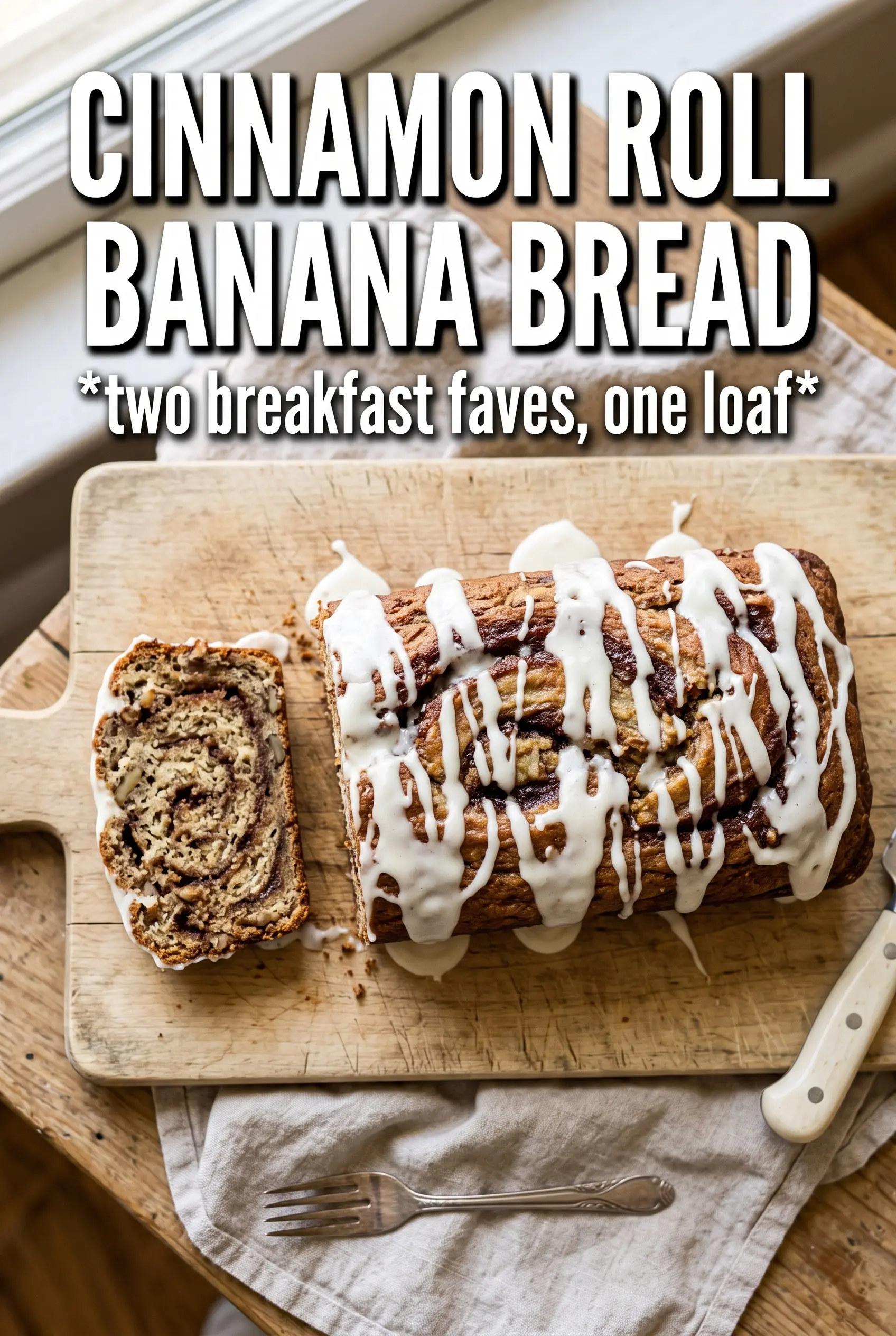
Cinnamon roll banana bread bakes up with a tender crumb, a ribbon of brown sugar cinnamon running through the middle, and a cream cheese glaze that melts into every warm slice. It tastes like the best parts of two breakfast favorites in one loaf, and the swirl keeps each bite from feeling one-note. The top turns golden and just a little crisp while the center stays soft and fragrant.
The trick is keeping the cinnamon swirl thick enough to stay put, not disappear into the batter. Softened butter, brown sugar, and cinnamon make a paste that bakes into a real layer instead of muddy streaks. Sour cream matters here too; it gives the loaf a plush, bakery-style texture and balances the sweetness from the glaze and swirl.
Below, I’ve included the exact point where the swirl should go in, how to avoid overmixing the batter, and a few smart swaps if you need them. If you’ve ever had banana bread turn out dry or the filling sink straight to the bottom, this version fixes both of those problems.
The cinnamon layer stayed in a perfect ribbon and the loaf came out super moist without being gummy. I glazed it while it was still warm, and the cream cheese topping soaked into the cracks just enough.
Save this cinnamon roll banana bread for the mornings when you want a dramatic swirl and a soft cream cheese glaze.
The Swirl Needs to Stay Thick, Not Melt Into the Loaf
A cinnamon swirl that disappears usually means the filling was too loose or the batter was too thin. This version uses softened butter, brown sugar, and cinnamon mixed into a paste, which holds its shape long enough to bake into a visible ribbon. The goal is a distinct layer that cuts cleanly, not a cinnamon haze through the whole loaf.
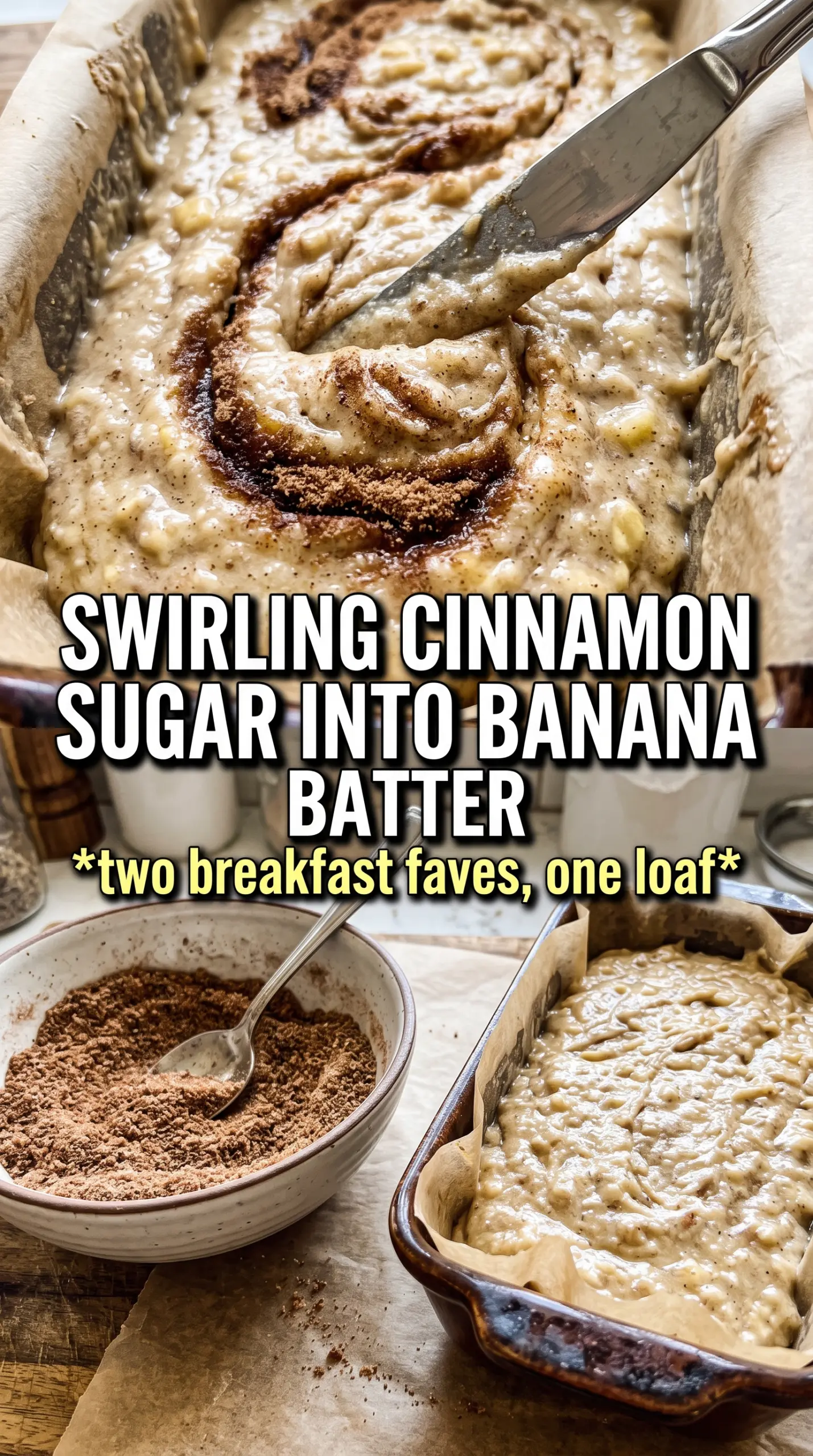
There’s also a timing detail that matters: the swirl goes in after the first layer of batter, then gets covered before you drag a knife through it. If you streak the filling too aggressively, it sinks and blends. A few deliberate figure-eight passes are enough to create that dramatic marbled center without collapsing the layers.
- Butter in the swirl gives the filling body. Melted butter turns runny fast, which is why the swirl can vanish into the loaf.
- Brown sugar is what makes the filling bake into a caramel-like ribbon. Granulated sugar won’t give you the same depth or texture.
- Sour cream keeps the crumb tender and helps the loaf hold onto the swirl instead of drying out around it.
What Each Ingredient Is Actually Doing in This Loaf
- Very ripe bananas bring sweetness and moisture. The darker and spottier they are, the better the flavor and texture.
- All-purpose flour keeps the loaf sturdy enough to support the swirl. Bread flour makes it chewy, and cake flour can make it too fragile.
- Butter and sugar build the base with a light, fluffy texture once beaten together. That early aeration helps the loaf rise without getting heavy.
- Sour cream is the ingredient I’d keep if you need one small upgrade. Plain Greek yogurt works in a pinch, but the loaf may bake up a little tighter and tangier.
- Cream cheese glaze is worth the extra bowl. It adds the classic cinnamon-roll finish and softens the top of the loaf just enough as it drips down.
Building the Batter Without Overworking It
Cream the Butter and Sugar First
Beat the softened butter and granulated sugar until it looks pale and a little fluffy. That step traps air and gives the loaf a lighter crumb, which matters because banana bread can get dense fast. Once the eggs go in, mix just until they disappear. If the mixture looks slightly broken when the bananas and sour cream are added, keep going; it smooths out when the dry ingredients come in.
Fold the Dry Ingredients in at the End
Add the flour, baking soda, salt, and cinnamon last, then mix only until you stop seeing dry pockets. Overmixing develops too much gluten and gives you a tough loaf instead of a tender one. The batter should look thick and spoonable, not loose like cake batter. If it seems streaky, a few folds with a spatula is enough.
Layer, Swirl, and Stop
Spread half the batter in the loaf pan, add the cinnamon paste, then cover it with the rest of the batter before swirling with a knife. Keep the swirl shallow; you’re chasing a ribbon through the center, not mixing the layers together. Bake until the top is set and a toothpick comes out clean or with just a few moist crumbs. If the top browns before the center finishes, tent it loosely with foil for the last 15 minutes.
Glaze While Warm
Stir the cream cheese glaze until smooth and drizzle it over the loaf while it’s still warm. Warm bread helps the glaze sink into the cracks, which gives each slice that sticky bakery finish. If the loaf is piping hot, wait a few minutes so the glaze doesn’t run straight off. You want it to melt in, not disappear.
How to Adapt This Banana Bread Without Losing the Swirl
Dairy-Free Version
Use plant-based butter in both the loaf and the swirl, and swap the sour cream for an unsweetened dairy-free yogurt. The texture stays moist, though the crumb may be a touch less rich. For the glaze, use a dairy-free cream cheese alternative or skip it and dust the top with powdered sugar.
Gluten-Free Swap
Replace the all-purpose flour with a good 1:1 gluten-free baking blend that includes xanthan gum. The loaf will be a little more delicate, so let it cool before slicing or it can crumble at the center. The swirl and glaze work the same way.
Less Sweet Breakfast Loaf
Cut the granulated sugar in the batter to 1/2 cup and drizzle the glaze sparingly. You’ll get a more banana-forward loaf with the same cinnamon roll look, but the top won’t have quite as much bakery-style sweetness. This is the version I’d make when I plan to serve it with coffee or fruit.
Mini Loaves or Muffins
Divide the batter into smaller pans or muffin cups and add a smaller amount of swirl to each one. The bake time drops a lot, so start checking early and pull them when the centers spring back and a tester comes out clean. Smaller versions give you more swirl in every bite, which is the best part of the recipe anyway.
Storage and Reheating
- Refrigerator: Store covered for up to 5 days. The glaze firms up, but the loaf stays moist.
- Freezer: Freeze slices tightly wrapped for up to 3 months. I’d freeze without glaze if possible, then add fresh glaze after thawing for the best texture.
- Reheating: Warm individual slices in the microwave for 10 to 15 seconds or in a low oven until just soft. Don’t overheat it or the glaze can separate and the crumb turns dry at the edges.