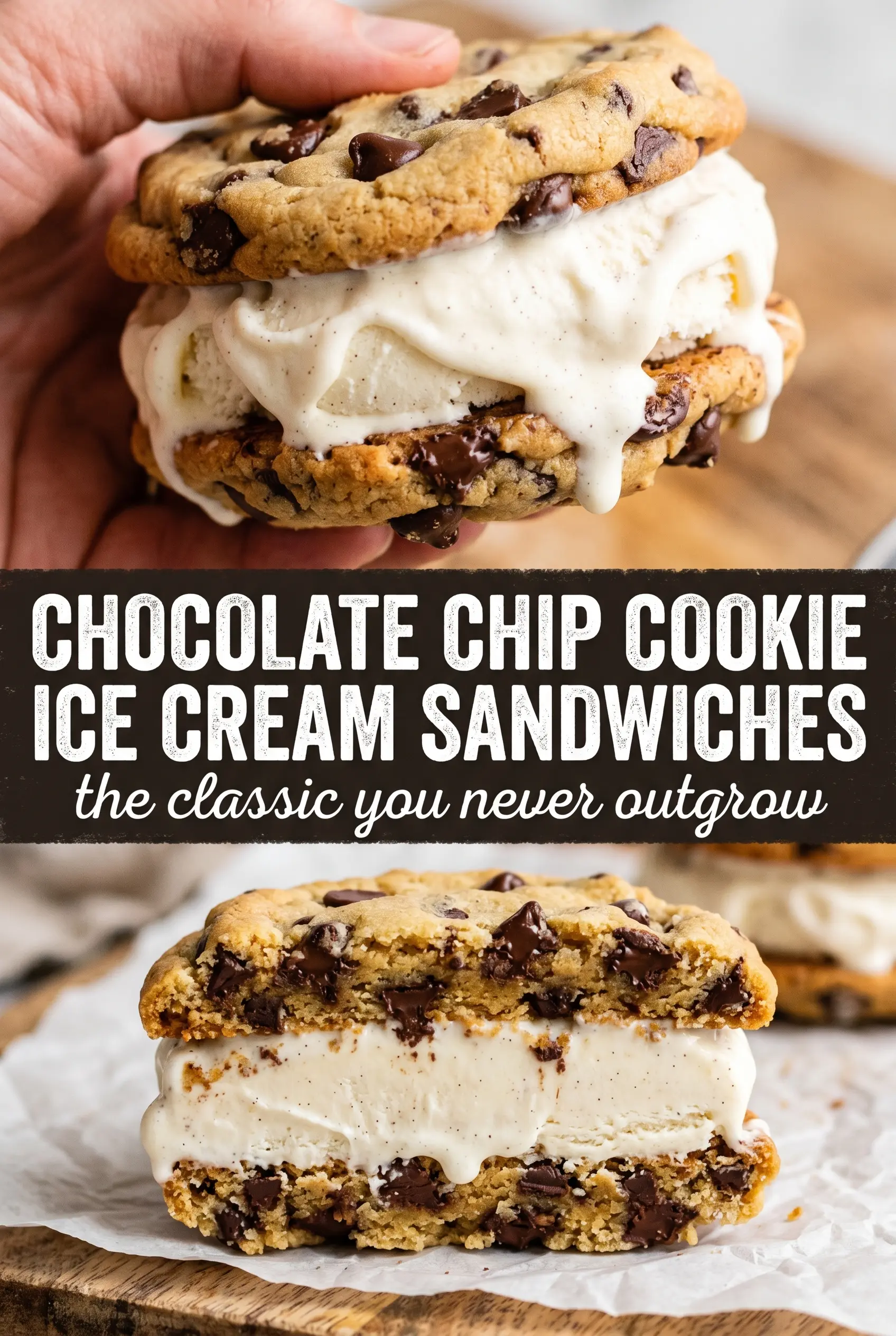
Chocolate chip cookie ice cream sandwiches hit that perfect middle ground between nostalgic and homemade. The cookies stay just soft enough to bite cleanly from the freezer, while the edges keep a little chew so the whole sandwich doesn’t turn into a brick. When the ice cream is pressed between two warm-looking, golden cookies and the edges get rolled in chips, you get the classic ice cream truck idea with a much better cookie underneath.
This version works because the cookies are baked just shy of fully set. That little bit of underbaking matters after freezing — it keeps the sandwich from eating dry or crumbly. A mix of brown sugar and granulated sugar gives you both structure and chew, and the cookies are flattened before baking so they match the ice cream layer without a lot of trimming or mess. I also use standard vanilla ice cream, not a fancy churned version, because it slices more cleanly and freezes back together without fighting you.
Below, I’ve included the trick for cutting the ice cream into neat rounds, plus a couple of variations that help if you want to make these ahead or change up the cookies without losing that soft, creamy center.
The cookies stayed soft after freezing and didn’t crack when I bit into them, and slicing the ice cream into discs made assembly so much easier. I rolled the edges in mini chips and they looked like something from a bakery freezer case.
Save these chocolate chip cookie ice cream sandwiches for the day you want crisp edges, soft centers, and a freezer treat that actually tastes homemade.
The Part Most Cookie Sandwiches Get Wrong: Baking the Cookies for Freezer Life
The biggest mistake here is baking the cookies all the way to a crisp finish. Fresh from the oven, that can feel right. After a night in the freezer, it turns into a hard bite that fights the ice cream instead of supporting it. These cookies should look set at the edges and still a little soft in the center when they come out. They finish cooling into that ideal sandwich texture without becoming dry.
Size matters too. Large, evenly portioned rounds give you a better match for the ice cream disc and keep the sandwich from tipping or squeezing out the filling. Pressing them flat before baking helps them spread in a controlled way, which is much easier than trying to trim odd-shaped cookies after the fact.
- Brown sugar — This brings chew and a deeper caramel note. It also helps the cookies stay softer after freezing, which is exactly what you want here.
- Granulated sugar — This gives the edges a little more snap and helps the cookies spread enough to sandwich neatly.
- Softened butter — Use butter that bends under pressure but isn’t oily. If it’s melted or too warm, the cookies spread too much and get thin at the edges.
- Vanilla ice cream — A standard, full-fat vanilla freezes into a cleaner disc than many softer artisanal flavors. It slices neatly and holds its shape while you assemble.
- Mini chocolate chips for the edges — The little chips cling better than full-size chips and give the sandwich that classic finished look without making it hard to bite.
What Each Ingredient Is Actually Doing in This Ice Cream

- Base ingredient (cream, milk, or custard) — This provides the foundation and richness. Quality matters.
- Sweetener (sugar, honey, or condensed milk) — This sweetens and prevents ice crystals. The ratio is critical.
- Flavor element (vanilla, fruit, chocolate, or other) — This defines the ice cream personality. Use quality ingredients.
- Egg yolks (if making custard base) — These create richness and silky texture. Optional but elevates ice cream.
- Churning (if using ice cream maker) — This incorporates air and prevents ice crystals. Critical for smooth texture.
- Freezing temperature and time — Proper freezing prevents rock-hard texture. Store at 0°F or below.
- Mix-ins (chocolate, cookies, fruit, or swirls) — These add texture and prevent one-dimensional flavor. Add near end of churning.
- Serving temperature (slightly soft, not rock hard) — This provides creamy mouthfeel. Remove from freezer 5 minutes before serving.
Getting the Cookies and Ice Cream to Meet Cleanly
Mixing the dough until it’s fluffy
Beat the butter with both sugars until the mixture looks pale and airy. That step adds structure and gives the cookies a lighter bite. Add the eggs and vanilla after the butter mixture is fluffy so everything emulsifies instead of looking greasy or separated. If the butter is too soft, the dough can turn loose and the cookies will spread too much in the oven.
Shaping for an even sandwich
Use a generous scoop so each cookie bakes into a size that can actually hold a thick layer of ice cream. Press each round to about 3.5 inches wide before baking. That small extra step keeps the cookies from doming too much and makes the finished sandwiches stack and freeze evenly. If the dough balls are different sizes, the ice cream will squish out the smaller ones when you press them together.
Keeping the centers soft on purpose
Bake until the edges are set and the centers still look a touch underdone. They’ll finish setting as they cool on the pan. Move them to a rack only after they’ve firmed up enough to lift cleanly, then cool them completely before adding ice cream. If you rush this part, the cookies melt the filling and you end up with a messy seam instead of a clean sandwich.
Cutting and assembling the ice cream layer
Slice the ice cream into thick rounds while it’s still firm but not rock hard. A round cutter that matches the cookies makes the cleanest result, but a knife warmed in hot water works in a pinch. Work fast and keep the ice cream on a cold plate or tray while you assemble. Once the cookies are paired, press gently just until the ice cream reaches the edges. Don’t crush them together or the filling will bulge and crack later in the freezer.
How to Change These Chocolate Chip Cookie Ice Cream Sandwiches Without Losing the Texture
Dairy-Free Version
Swap in a plant-based butter that’s meant for baking and use a dairy-free vanilla ice cream with a firm freeze. The cookie texture stays close, but the flavor will be a little less rich and the filling may soften faster at room temperature, so keep the sandwiches wrapped until serving.
Gluten-Free Cookies
Use a good 1:1 gluten-free flour blend with xanthan gum included. The cookies may spread a little less, so flatten them a touch more before baking. The flavor stays classic, but the texture is a little more delicate, so let them cool completely before moving them around.
Chocolate-Chocolate Sandwiches
Swap one half cup of flour for unsweetened cocoa powder and use chocolate ice cream instead of vanilla. You’ll lose some of the classic cookie-and-cream contrast, but you’ll gain a darker, fudgier sandwich that tastes richer and a little more grown-up.
Storage and Reheating
- Refrigerator: Not ideal for this recipe. The sandwiches soften fast and lose their neat shape within minutes.
- Freezer: Wrap each sandwich individually in plastic wrap and freeze up to 2 weeks for the best texture. After that, the cookies can dry out a bit at the edges.
- Reheating: No reheating needed. Let one sit at room temperature for 3 to 5 minutes before eating so the cookie softens slightly. If you wait too long, the ice cream edge starts to melt before the center does.
Answers to the Questions Worth Asking
Chocolate Chip Cookie Ice Cream Sandwiches
Ingredients
Equipment
Method
- Preheat oven to 375F, then beat the softened butter with both sugars until fluffy and lighter in color. This helps the cookies spread less and bake with a crisp edge.
- Add the eggs and vanilla extract to the butter mixture and beat until smooth. Stop when no streaks remain so the dough bakes evenly.
- In a separate bowl, whisk together the flour, baking soda, and salt. This distributes the leaveners so the centers stay slightly soft.
- Stir the flour mixture into the butter mixture until just combined. Overmixing can make the cookies tough.
- Fold in the semi-sweet chocolate chips. You want chips evenly scattered throughout the dough.
- Scoop dough into large rounds (3 tablespoons) and press flat to about 3.5 inches wide on lined baking sheets. Leave space between rounds so they can bake without merging.
- Bake for 10-12 minutes at 375F until the edges are set but the centers are still slightly soft. Cool completely before assembling so the ice cream doesn’t melt.
- Slice the vanilla ice cream into 1-inch thick discs using a round cookie cutter matching the cookie size. Keep the discs flat so they sandwich cleanly.
- Place a disc of vanilla ice cream between two cookies and press gently to seal. Roll the edges in mini chocolate chips for a crisp, tidy finish.
- Wrap each sandwich individually in plastic wrap and freeze for at least 1 hour before serving. This firms the ice cream so the cookies stay crisp without sliding.