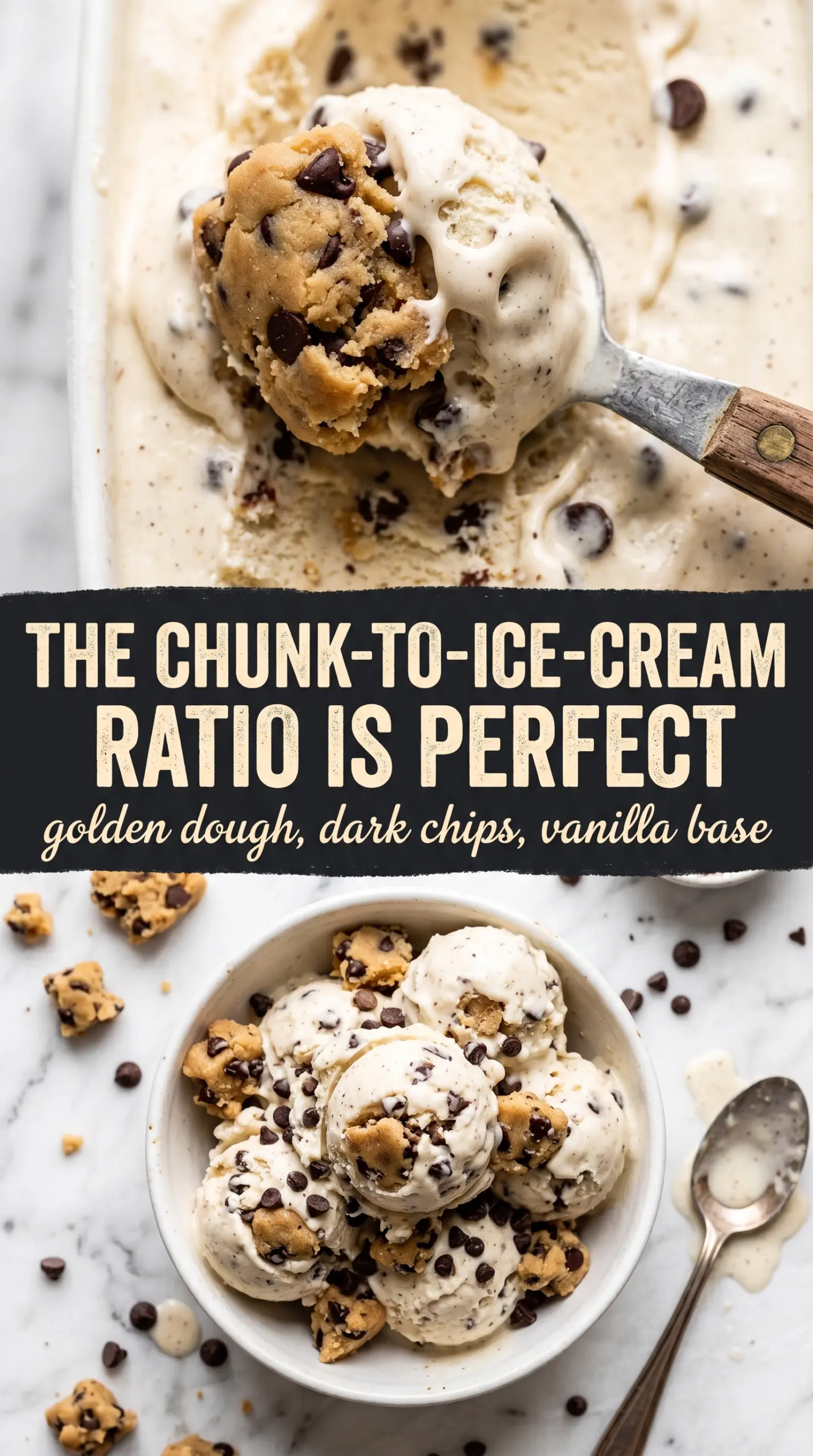
Chocolate chip cookie dough ice cream delivers the kind of spoonful that keeps people coming back to the freezer for one more bite. The vanilla custard stays smooth and rich, while the frozen cookie dough pieces soften just enough to give you that familiar buttery chew without ever turning icy or hard. Every scoop should have a mix of creamy base, mini chips, and a few generous chunks of dough, not tiny crumbs lost in the churn.
The part that makes this version work is treating the cookie dough like its own component, not just something stirred in at the end. Heat-treating the flour takes care of safety, and freezing the dough balls before they go into the churn keeps them distinct instead of melting into the base. The custard base also matters here: cooking it to the right thickness gives the ice cream enough body to hold all those mix-ins without feeling thin.
Below, you’ll find the exact texture cues I look for, plus the one freezer step that keeps the dough from disappearing into the ice cream. It’s the difference between a good cookie dough ice cream and one that tastes like you actually built it on purpose.
The custard turned out smooth and the cookie dough stayed in real chunks instead of melting away. I froze the dough balls overnight, and every scoop had that soft, buttery bite my kids kept digging for.
Like this cookie dough ice cream? Save it to Pinterest for the nights when you want creamy vanilla custard with big, chewy dough chunks.
The Part That Stops Cookie Dough from Turning into One Big Swirl
The biggest mistake in cookie dough ice cream is adding dough that’s too soft or too warm. It looks fine going into the machine, then it breaks down and disappears into the churn. Freezing the dough pieces first gives them enough structure to stay separate, and that’s what creates those big, obvious bites in the finished ice cream.
The custard matters just as much. If you stop cooking it too early, the base stays thin and the ice cream freezes with a weak body that can’t support the mix-ins. If you overcook it, the yolks can scramble and the texture turns grainy. Aim for a smooth custard that lightly coats a spoon and holds a line when you drag your finger through it.
What Each Ingredient Is Actually Doing in This Ice Cream
- Heat-treated flour — This is what makes the cookie dough safe to eat. Don’t skip the cooling step after baking it, or the warm flour will melt the butter in the dough and make it greasy.
- Mini chocolate chips — Mini chips distribute better through the dough balls than standard chips. Regular chips work, but the smaller ones give you more even bites and keep the dough from feeling bulky.
- Heavy cream and whole milk — This combination gives the ice cream its rich body without turning it into butter. If you use low-fat milk here, the base freezes harder and loses that smooth scoopability.
- Egg yolks — They thicken the custard and make the final ice cream creamier. Whisk them with the sugar before adding hot dairy so they temper gradually instead of curdling.
- Brown sugar in the dough — It gives the dough that classic cookie flavor and a softer chew. Granulated sugar won’t give the same warm, caramel note or texture.
Building the Custard and Folding in the Dough at the Right Moment
Heat-Treating the Flour
Spread the flour on a baking sheet and bake it at 350°F for 5 minutes, then let it cool all the way down. That quick bake is enough to make it safe without changing the flavor much. If you add warm flour straight into the butter mixture, the dough will get pasty and the butter will start to separate.
Mixing the Cookie Dough Base
Beat the softened butter, brown sugar, milk, vanilla, and salt until the mixture looks smooth and a little fluffy. Stir in the cooled flour, then fold in the mini chips. The dough should hold together when pressed, but still be soft enough to roll into small balls without cracking.
Cooking the Custard
Heat the cream and milk until steaming, then whisk some of it slowly into the egg yolks and sugar before returning everything to the pan. Keep the heat low and stir constantly until the custard reaches 175°F and lightly coats the back of a spoon. If you rush this over high heat, the eggs will curdle before the base thickens properly.
Churning and Adding the Mix-Ins
Chill the custard for the full 4 hours before churning so it freezes with a smooth, fine texture. Add the frozen cookie dough balls in the last 5 minutes of churning, when the ice cream is thick enough to suspend them. If you add them too early, the dasher will break them up and they’ll disappear into the base.
Freezing for Scoopable Texture
Transfer the churned ice cream to a freezer container and press a piece of parchment directly on the surface before sealing it. That helps protect the top from ice crystals. Give it enough time to firm up before scooping, because this ice cream tastes best when the dough pieces are cold but still tender enough to bite through.
How to Adapt It When You Need a Different Finish
Dairy-Free Version
Use full-fat coconut milk in place of the milk and cream, then churn as usual. The flavor shifts a little toward coconut, and the ice cream will set a bit firmer, but you’ll still get a creamy base that holds the dough chunks well.
No Ice Cream Maker
You can freeze the custard in a shallow pan and stir it every 30 minutes until thick, then fold in the frozen dough pieces near the end. The texture won’t be as airy as churned ice cream, but it still gives you a scoopable, homemade result.
Extra Chunky Cookie Dough
Make the dough balls slightly larger and freeze them longer before churning. You’ll get bigger bites and more dramatic chunks, but the finished ice cream will need a little more time in the freezer before it scoops cleanly.
Storing Leftovers
- Refrigerator: Not recommended; ice cream will melt and lose its texture.
- Freezer: Store in an airtight container for up to 2 weeks. The dough stays best when the container is pressed tightly closed so ice crystals don’t form around the edges.
- Reheating: Not applicable. Let the container sit at room temperature for 5 to 10 minutes before scooping if it freezes very hard.
Questions I Get Asked About This Recipe

Chocolate Chip Cookie Dough Ice Cream
Ingredients
Equipment
Method
- Heat-treat the all-purpose flour by spreading it on a sheet pan and baking at 350°F for 5 minutes, then cool completely before using.
- Mix the unsalted butter, brown sugar, milk, vanilla extract, and salt until smooth, then stir in the heat-treated flour and mini chocolate chips.
- Roll the dough into small balls, then freeze until solid so the chunks stay intact in the ice cream.
- Heat the heavy cream and whole milk until hot, then whisk it into the egg yolks beaten with granulated sugar.
- Cook the custard, stirring, until it reaches 175°F, then strain for a smooth base.
- Stir in vanilla extract and salt, then cool and refrigerate for 4 hours to chill completely.
- Churn the chilled custard in an ice cream maker, then fold in the frozen cookie dough pieces during the last 5 minutes for visible chunks.
- Transfer the ice cream to a container and freeze until firm so the texture is scoopable.