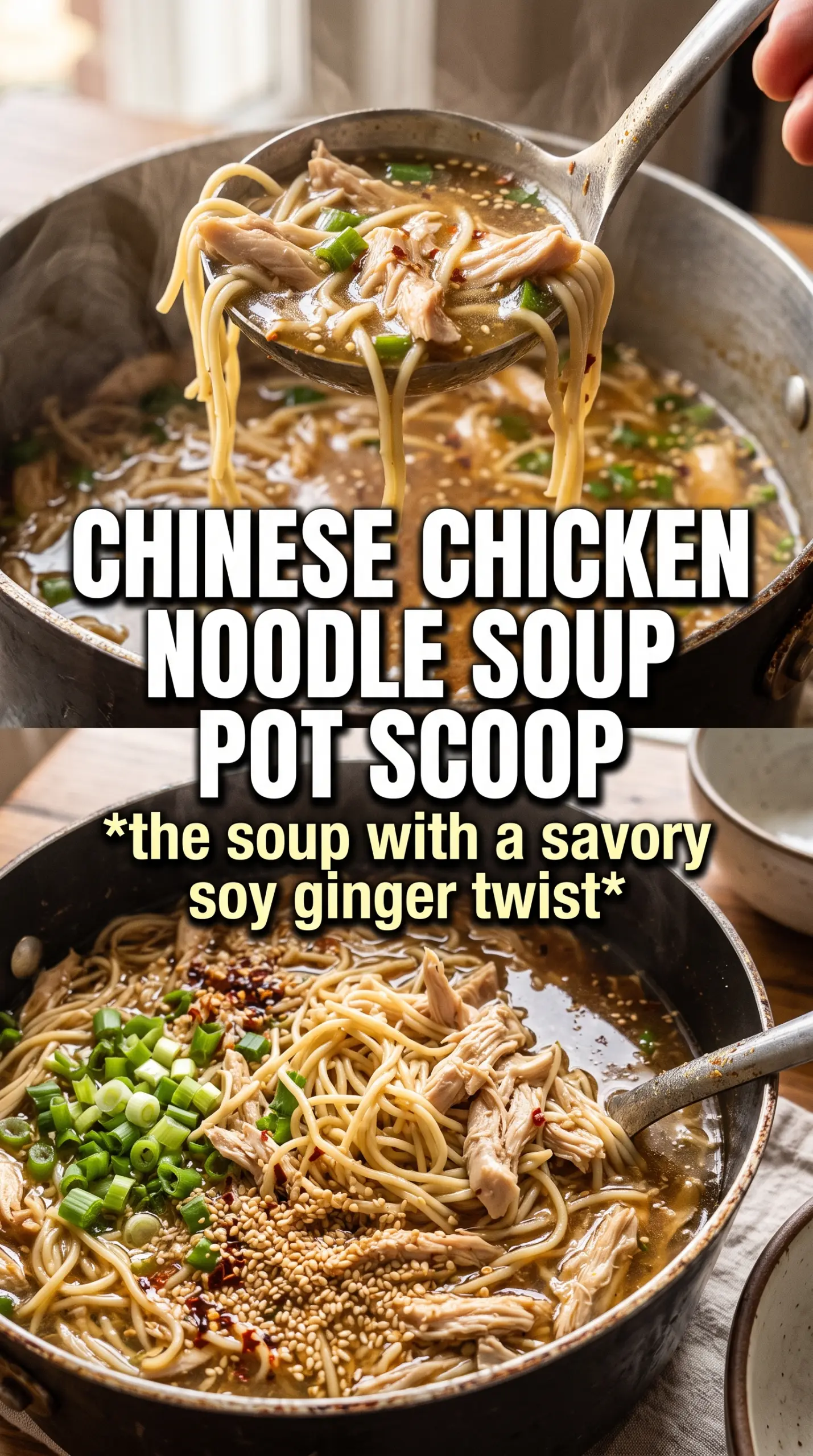
Clear, savory broth, tender chicken, and springy noodles make this Chinese chicken noodle soup the kind of bowl that settles in fast and keeps you coming back for another spoonful. The broth stays light instead of heavy, but it still tastes full and layered, thanks to garlic, ginger, soy sauce, and a finish of sesame oil and white pepper. It’s comforting without being bland, which is the whole point.
The trick here is keeping the noodles separate until serving. That one move keeps them from soaking up too much broth and turning soft by the time you sit down to eat. Thinly sliced chicken also cooks quickly and stays tender, while shiitake mushrooms and bok choy add that clean, savory depth that makes the bowl feel complete.
Below you’ll find the small timing details that matter, plus a few swaps that help if you need to work with what’s already in the pantry. Once you’ve made it this way, the soup starts to feel less like a recipe and more like a dependable habit.
The broth had that clean ginger-garlic taste I was hoping for, and cooking the noodles separately kept them from getting mushy. I added a little extra white pepper at the table and it tasted like the kind of takeout soup you always hope arrives this good.
Save this Chinese chicken noodle soup for the nights when you want a clean, fragrant broth with tender chicken and noodles that stay springy.
The Part That Keeps the Noodles from Turning to Mush
The biggest mistake in noodle soup is letting the noodles sit in the pot with the broth. They keep drinking, and what starts as a tidy bowl turns into a thick, bloated tangle. Cooking them separately keeps the texture clean and gives you control over every bowl, especially if you know there will be leftovers.
Thin chicken breast works here because it cooks fast in a hot simmer and stays tender when you pull it at the right moment. If you use thicker pieces, the broth has to cook longer than it should, and the vegetables lose their brightness. Keeping the broth clear and steady instead of at a hard boil also helps the chicken stay soft and the broth stay elegant.
- Thin Chinese wheat noodles or rice noodles — Either one works, but the key is the separate cook. Wheat noodles bring a little chew; rice noodles keep the bowl lighter and softer. If you use rice noodles, rinse them briefly after draining so they don’t clump.
- Shiitake mushrooms — Fresh shiitakes add a deeper, woodsy note than button mushrooms. If you only have dried shiitakes, soak them first and use the soaking liquid only if it’s strained clean; it adds real depth.
- White pepper — This is not garnish here. It gives the soup that classic gentle heat and slightly earthy finish that black pepper won’t fully mimic. Add it at the end so you can taste the difference clearly.
- Sesame oil — A little goes a long way. Use a good one, because it finishes the broth with aroma rather than just fat. Heating it too hard can flatten the flavor, so add it with the seasonings instead of frying it.
- Bok choy — Add it late. It should stay bright and just tender, not swampy. If you only have napa cabbage, cut it into small pieces and add it in the same last few minutes.
What Each Ingredient Is Actually Doing in This Recipe
- Primary ingredient (the star) — Quality matters most. Choose the best you can find.
- Cooking medium (oil, butter, or broth) — This carries flavors and prevents dryness.
- Seasonings (salt, pepper, spices, herbs) — Layer flavors so nothing overpowers. Build depth gradually.
- Aromatics (garlic, onion, herbs) — Cook with fat to bloom flavors. Become the foundation.
- Supporting ingredients — Complement the main ingredient without overpowering it.
- Sauce or liquid (if applicable) — Brings flavors together. Balance richness with acid.
- Acid (lemon, vinegar, wine, or other) — Brightens and prevents flat-tasting results.
- Final finish (garnish, glaze, or sauce) — Prevents one-dimensional taste and adds visual appeal.
Building the Broth Without Overcooking the Chicken
Wake Up the Garlic and Ginger
Bring the broth to a steady simmer, then add the garlic and ginger and let them cook for about five minutes. You want the broth fragrant, not aggressively boiled, because a hard boil can muddy the flavor and make the ginger taste sharp instead of warm. If the garlic starts browning, the heat is too high and the broth will pick up bitterness. Keep it at a gentle bubble.
Season the Broth Before the Add-Ins
Stir in the soy sauce, sesame oil, and rice vinegar while the broth is still hot. That gives the base time to taste balanced before the chicken and vegetables go in. Taste it now, not at the end, because this is where you decide whether it needs salt or a little more vinegar to brighten the bowl. The broth should taste a touch bold on its own since the noodles will dilute it slightly.
Cook the Chicken and Mushrooms Just Until Tender
Add the sliced chicken and mushrooms and simmer until the chicken is cooked through, about 10 to 12 minutes. Thin slices cook quickly, so don’t wander off; once the chicken is opaque and no longer pink in the center, it’s done. Overcooking is the real risk here, and it turns the meat stringy. The mushrooms should soften and deepen in color without collapsing completely.
Finish with Bok Choy and the Noodles in Their Own Bowls
Stir in the bok choy for the last three minutes so it stays crisp-tender and bright. Cook the noodles separately according to the package directions, then divide them into bowls before ladling the soup on top. That keeps the broth clear and the noodles from soaking beyond their sweet spot. Finish with white pepper, salt, green onions, cilantro, and a little chili oil if you want heat.
What to Change When You Need a Different Bowl
Gluten-Free Version with Rice Noodles
Swap the wheat noodles for rice noodles and use a gluten-free soy sauce or tamari. The broth stays just as fragrant, but the texture becomes a little softer and silkier. Cook the noodles separately and rinse them briefly so they don’t stick together.
Dairy-Free and Naturally Light
This soup already fits a dairy-free table as written. If you want it richer without dairy, use a broth with a little more body and finish with a tiny extra drizzle of sesame oil instead of adding anything creamy. The clean broth stays the point.
Make It with Chicken Thighs
Boneless thighs give you a slightly richer, more forgiving result. They can handle a longer simmer without drying out, which is handy if you like to let the broth sit for a minute before serving. The soup will taste a little fuller and less lean.
Storage and Reheating
- Refrigerator: Store the broth and noodles separately for up to 4 days. If they sit together, the noodles keep absorbing liquid and soften fast.
- Freezer: The broth, chicken, and mushrooms freeze well for up to 2 months. Freeze without the noodles and bok choy for the best texture.
- Reheating: Warm the broth gently on the stove until steaming, then add fresh noodles or reheat the noodles separately with a splash of broth. A hard boil will overcook the chicken and turn the noodles gummy.
Answers to the Questions Worth Asking
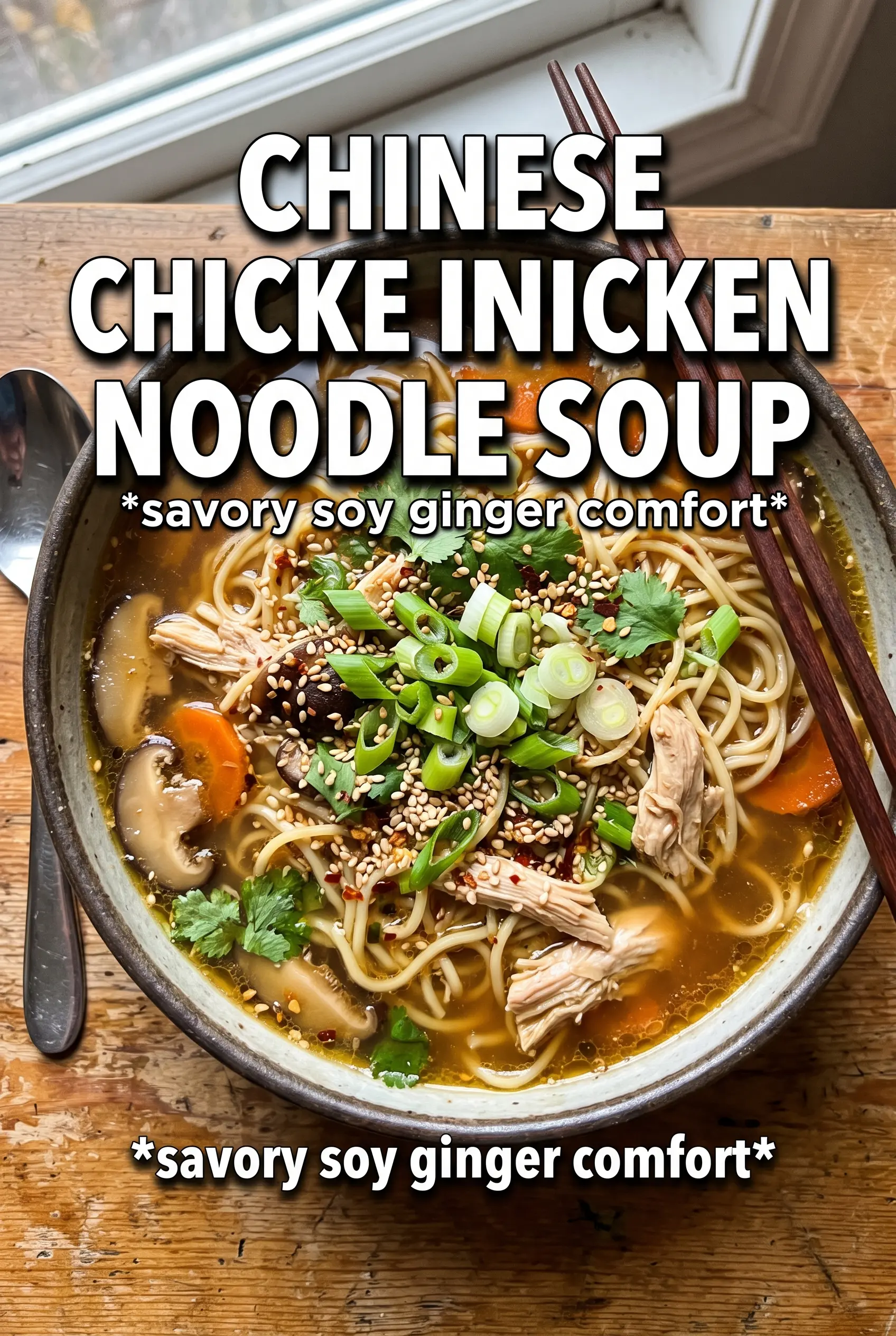
Chinese Chicken Noodle Soup
Ingredients
Equipment
Method
- Bring the chicken broth to a simmer in a large pot. Add the garlic and ginger, then cook for 5 minutes.
- Stir in the soy sauce, sesame oil, and rice vinegar. Adjust the seasoning to taste.
- Add the sliced chicken and mushrooms to the simmering broth. Keep at a simmer for 10-12 minutes, until the chicken is cooked and opaque.
- Cook the noodles separately according to package directions. Drain the noodles and divide them into serving bowls.
- Add the bok choy to the broth. Simmer for 3 minutes, until wilted.
- Ladle the hot soup over the noodles in the bowls. Season with white pepper and salt to taste.
- Finish by garnishing with green onions, cilantro, and a drizzle of chili oil. Serve hot.