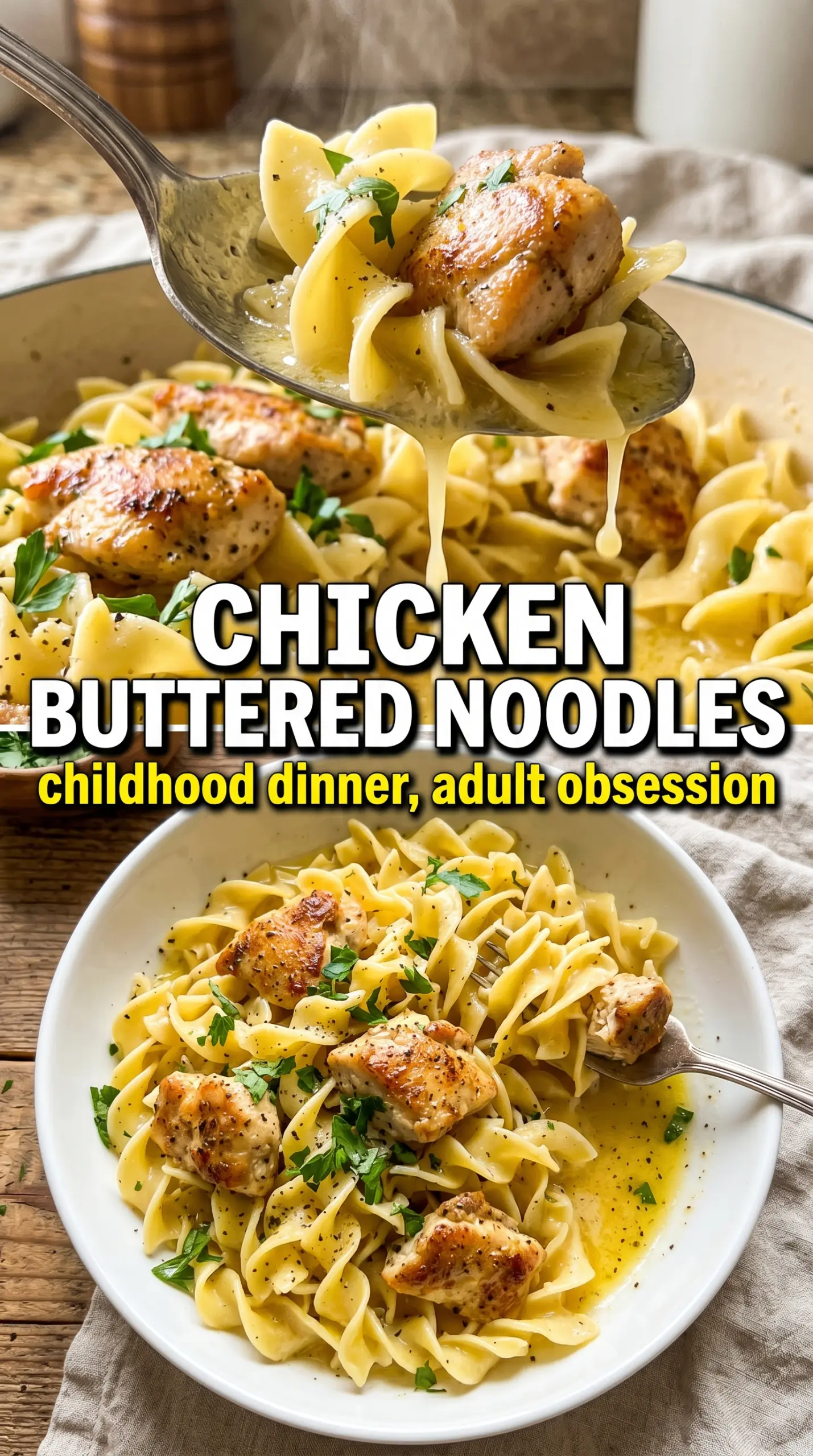
Chicken with buttered noodles hits the table with the kind of comfort that makes people quiet down for the first few bites. The noodles stay glossy and slippery from the butter, the chicken brings a golden sear and enough richness to feel like a full meal, and the Parmesan at the end gives every forkful a salty little finish that keeps you going back for more.
What makes this version work is that the chicken and the sauce never fight each other. The chicken gets cooked first, then the same skillet picks up the garlic and butter, so the noodles absorb all those browned bits instead of starting from a blank pan. A splash of pasta water loosens the sauce just enough to coat the noodles without making them greasy, which is the difference between buttered noodles and a bowl that tastes flat.
Below, I’ll walk through the little details that matter here: how to keep the chicken juicy, when to add the pasta water, and how to adjust the seasoning so the whole dish tastes balanced instead of heavy.
The garlic butter coated the noodles perfectly, and the pasta water made the sauce cling instead of pool at the bottom. My chicken stayed juicy, and even the leftovers reheated well the next day.
Save these chicken with buttered noodles for the nights when you want a silky garlic butter sauce and juicy sliced chicken in one pan-friendly dinner.
The Part That Keeps the Noodles from Tasting Flat
The biggest mistake with buttered noodles is treating them like plain pasta with fat added at the end. Butter alone can taste heavy, especially once it cools, and without a little starchy pasta water the sauce just slides off the noodles instead of clinging to them. That’s why this dish works best when the noodles go straight into the skillet while they’re still hot and the sauce has just enough looseness to coat every strand.
The chicken matters too, because it’s not just a topping here. Searing it hard enough to get color builds flavor in the pan, and those browned bits become part of the sauce once the butter goes in. If your chicken looks pale, the whole dish will taste weaker than it should.
- Egg noodles — Their soft texture and curly shape catch the butter sauce better than most pastas. If you swap them, use a pasta with some texture, like rotini or fettuccine, and keep a close eye on the pasta water so the sauce still coats instead of puddling.
- Butter — This is the base of the sauce, so use a butter you actually like the taste of. Salted or unsalted both work; just season at the end so the Parmesan doesn’t push the dish over the edge.
- Garlic — Fresh garlic gives the sauce its backbone. Jarred garlic works in a pinch, but it cooks faster and can taste sharp, so pull the pan off the heat if it starts browning too fast.
- Parmesan — Grated Parmesan melts into the noodles and adds salt and body. Pre-grated cheese can work, but finely grated from a block melts smoother and gives you a cleaner finish.
- Pasta water — Don’t skip the reserved water. That starch is what turns melted butter into a sauce that clings to the noodles instead of turning oily.
What Each Ingredient Is Actually Doing in This Recipe
- Primary ingredient (the star) — Quality matters most. Choose the best you can find.
- Cooking medium (oil, butter, or broth) — This carries flavors and prevents dryness.
- Seasonings (salt, pepper, spices, herbs) — Layer flavors so nothing overpowers. Build depth gradually.
- Aromatics (garlic, onion, herbs) — Cook with fat to bloom flavors. Become the foundation.
- Supporting ingredients — Complement the main ingredient without overpowering it.
- Sauce or liquid (if applicable) — Brings flavors together. Balance richness with acid.
- Acid (lemon, vinegar, wine, or other) — Brightens and prevents flat-tasting results.
- Final finish (garnish, glaze, or sauce) — Prevents one-dimensional taste and adds visual appeal.
How to Build the Pan Sauce Without Breaking It
Searing the Chicken First
Season the chicken well before it hits the pan, then lay it into hot oil and leave it alone long enough to build a deep golden crust. If you move it too early, it sticks and tears instead of browning cleanly. Cook until the thickest part reaches 165°F, then let it rest before slicing so the juices stay in the meat instead of running onto the cutting board.
Turning the Skillet Drippings into Sauce
Once the chicken comes out, lower the heat before the butter goes in. Garlic burns fast in a hot skillet, and burnt garlic will make the whole dish taste bitter. Let it cook just until fragrant, with the red pepper flakes blooming in the butter, then add the noodles while the sauce still looks glossy and fluid.
Coating the Noodles the Right Way
Add the cooked noodles and toss them gently so the butter gets between the strands. If the pan looks dry, add the pasta water a spoonful at a time until the noodles shine and move easily in the skillet. Stop before it looks soupy; the sauce should cling, not sit underneath the pasta.
Finishing with Cheese and Herbs
Stir in the parsley off the heat so it stays fresh and bright. Then add the Parmesan over the top right before serving, not too early, or it can clump instead of melting into the noodles. The chicken should go on last so it stays warm and the sliced edges stay tender.
How to Adapt This for a Different Crowd
Make it dairy-free
Use a good plant-based butter and skip the Parmesan or replace it with a dairy-free grated topping that melts well. The sauce will be a little lighter and less salty, so taste carefully at the end and add an extra pinch of salt if needed.
Make it gluten-free
Use gluten-free egg noodles or another sturdy gluten-free pasta that can hold up to tossing in the skillet. Gluten-free pasta can turn mushy fast, so pull it just before fully tender and use the pasta water sparingly.
Use chicken thighs instead of breasts
Boneless thighs stay juicier and give you a little more richness, especially if you like a darker sear. They usually need a minute or two longer per side, but the rest of the recipe stays the same.
Add vegetables without watering it down
Wilted spinach, peas, or sautéed mushrooms fit in well, but cook them separately if they release a lot of moisture. If you dump watery vegetables straight into the noodles, the butter sauce thins out and loses that silky finish.
Storage and Reheating
- Refrigerator: Store in an airtight container for up to 3 days. The noodles will soak up some sauce as they sit.
- Freezer: Not ideal. Buttered noodles can turn soft after thawing, and the chicken texture is better fresh.
- Reheating: Warm gently in a skillet over low heat with a splash of water or broth. The most common mistake is blasting it in the microwave until the chicken turns dry and the butter separates.
Answers to the Questions Worth Asking
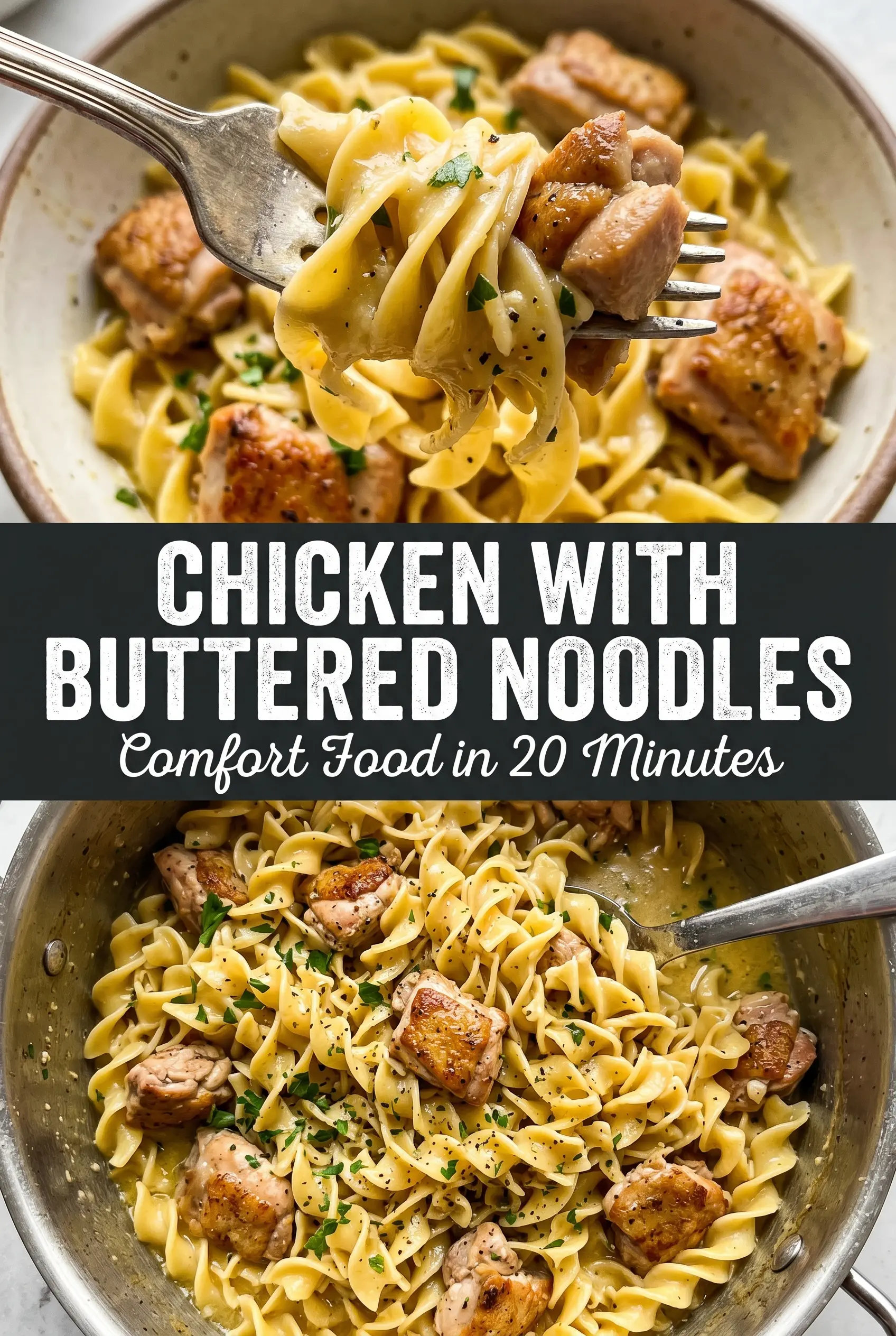
Chicken with Buttered Noodles
Ingredients
Equipment
Method
- Season the chicken breasts with salt, pepper, garlic powder, and Italian seasoning to taste. Heat olive oil in a skillet over medium-high heat and sear for 5-6 minutes per side until golden and the internal temperature reaches 165°F; rest 5 minutes and slice.
- Melt the butter in the same skillet over medium heat. Add minced garlic and red pepper flakes and cook for 1-2 minutes until fragrant.
- Add the cooked egg noodles to the garlic butter and toss to coat. Add reserved pasta water as needed to loosen and create a silky coating.
- Season with salt and pepper to taste, then stir in the chopped fresh parsley.
- Divide the buttered noodles among plates and top with sliced chicken. Scatter Parmesan generously over the top and serve immediately.