Chicken pot pie casserole brings all the comfort of the classic pie without the rolling, crimping, or waiting around for a crust to cooperate. The filling turns creamy and rich in the oven, the vegetables stay tucked into every bite, and the biscuit topping bakes up golden with just enough structure to catch the sauce underneath. It lands right in that sweet spot between weeknight practical and Sunday-dinner cozy.
The part that makes this version work is building the filling on the stovetop until it’s already thick before it goes into the oven. That keeps the casserole from turning watery under the biscuits or puff pastry. A little thyme, plenty of black pepper, and a mix of chicken broth and cream give the sauce depth without making it heavy. Shredded cooked chicken also makes this fast enough to pull together on a busy night.
Below, I’ll walk through the one step that keeps the filling silky, the ingredient swaps that still hold up, and the best way to reheat leftovers so the topping doesn’t go soft.
The filling thickened up beautifully before baking, and the biscuits stayed crisp on top instead of getting soggy. My husband went back for seconds and said it tasted like the pot pie filling he grew up with.
Save this chicken pot pie casserole for the nights when you want that creamy filling and biscuit topping without making a full pie crust.
The Filling Has to Be Thick Before It Meets the Topping
The most common mistake with chicken pot pie casserole is treating the filling like soup and hoping the oven will fix it. It won’t. Biscuits and puff pastry both trap steam, so if the sauce is loose when it goes into the dish, it stays loose and you end up with a watery bottom instead of a creamy casserole.
Cooking the flour in the butter for a full minute takes away that raw, pasty taste and gives the sauce enough body to cling to the chicken and vegetables. The simmer should look like lazy bubbles around the edge, not a hard boil. If it starts looking grainy or too thick before you add the chicken, the heat is too high.
What Each Ingredient Is Actually Doing in This Casserole
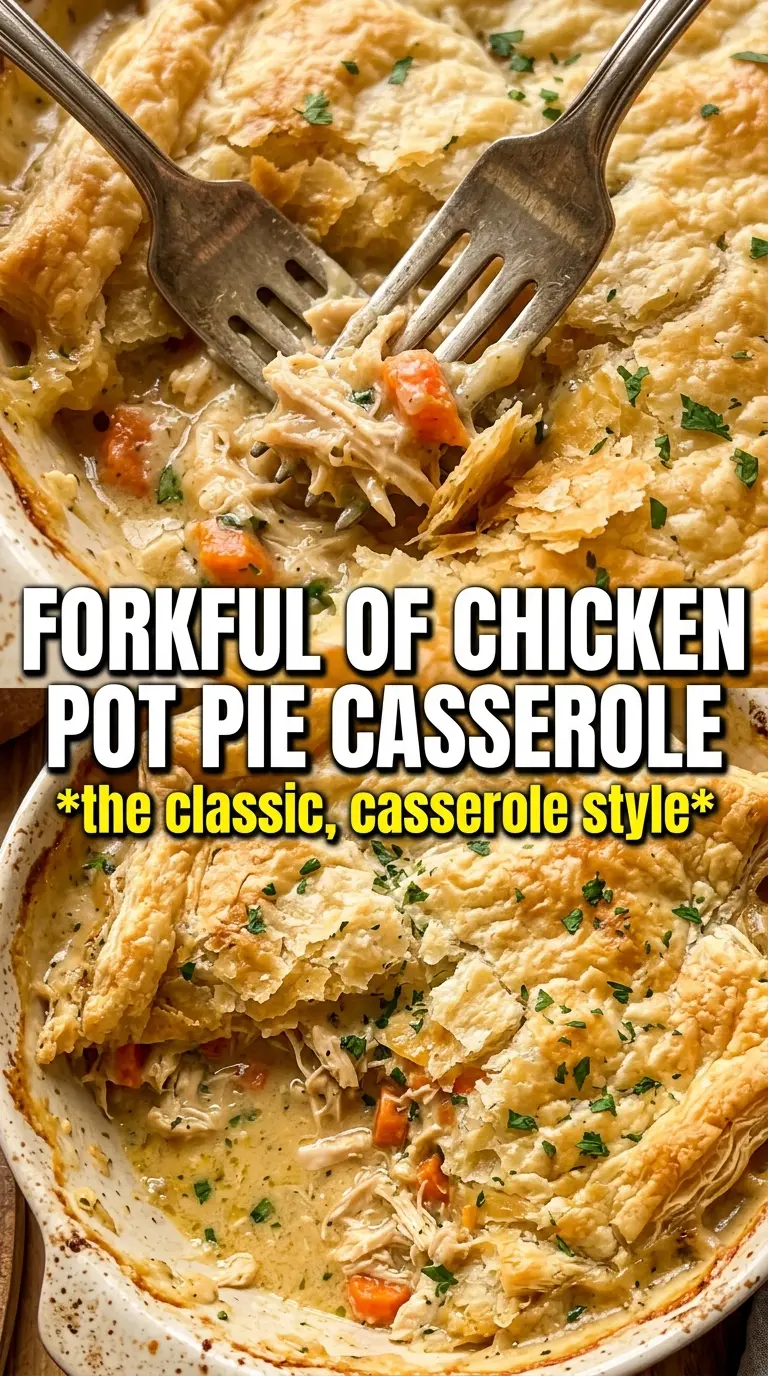
- Cooked chicken — Shredded chicken gives you the right texture and lets the filling stay hearty without extra cooking time. Rotisserie chicken works well here because it’s already seasoned and stays tender in the sauce.
- Butter, flour, broth, and cream — This is the sauce base. The butter and flour build the thickener, broth adds savory depth, and cream rounds everything out. Half-and-half will work in a pinch, but the sauce won’t feel as rich.
- Frozen peas and corn — Frozen vegetables hold their shape better than canned versions and don’t need to be pre-cooked. Add them straight from the freezer so they stay bright and don’t turn mushy.
- Carrots, celery, and onion — These give the casserole its classic pot pie backbone. Dice them evenly so they soften at the same pace; if the pieces are too large, they’ll still be crunchy when the biscuits are done.
- Biscuits or puff pastry — Biscuits give you a more rustic, self-contained topping, while puff pastry bakes into a flakier, more elegant lid. Both work, but puff pastry needs a hot oven and should go on frozen or very cold.
Building the Sauce So It Stays Creamy Under the Biscuits
Softening the Vegetables First
Start by cooking the onion, carrots, and celery in butter until the onion turns translucent and the carrots just begin to lose their raw edge. You’re not trying to brown them; you want them tender enough to blend into the sauce later. If the pan looks dry before the vegetables soften, the heat is too high and the butter is cooking off instead of coating the vegetables.
Cooking Out the Flour
Sprinkle in the flour and stir it through the vegetables until you don’t see dry spots anymore. Let it cook for about a minute so the sauce won’t taste chalky. The mixture should smell nutty, not burnt; if it darkens too fast, pull the pan off the burner for a few seconds.
Turning It Into a Thick Filling
Add the broth slowly while whisking so the flour mixture stays smooth, then pour in the cream and let the sauce simmer until it coats the back of a spoon. That is the moment you want before adding the chicken and vegetables. If you dump the liquid in all at once, you’ll get lumps that take longer to smooth out and can leave the sauce uneven.
Baking Until the Top Goes Deep Golden
Once the filling is in the dish, arrange the biscuits or puff pastry across the top and bake until the topping is deeply golden and the filling is bubbling at the edges. Those bubbles matter; they tell you the center is hot enough and the sauce has finished setting. If the top browns before the filling bubbles, cover it loosely with foil and keep baking until the casserole is fully heated through.
How to Adapt This for Different Kitchens and Different Nights
Dairy-Free Version
Swap the butter for olive oil or a plant-based butter and use an unsweetened dairy-free cream that’s meant for cooking. The sauce will still thicken, but it will taste a little less rich and more broth-forward, so add an extra pinch of salt and pepper at the end.
Puff Pastry Instead of Biscuits
Use a sheet of puff pastry if you want a lighter, flakier top. Lay it over the filling while it’s still cold and cut a few vents in the top so steam can escape. Puff pastry turns soggy faster than biscuits if the filling is too loose, so don’t skip the stovetop thickening step.
Gluten-Free Direction
Use a gluten-free all-purpose flour blend in the sauce and top the casserole with a certified gluten-free biscuit dough or skip the topping and serve it with mashed potatoes. The filling itself adapts well, but the thickener needs enough starch to stand up to the cream and broth.
Storage and Reheating
- Refrigerator: Store leftovers covered for up to 4 days. The topping softens a bit, but the filling stays creamy.
- Freezer: Freeze the filling without the biscuit topping for best results. Biscuit tops turn soggy after thawing, while the filling freezes well for up to 2 months.
- Reheating: Reheat in a 350F oven until hot in the center. If you use the microwave, the topping will go soft, so the oven is the better choice when you want the top to stay crisp.
Answers to the Questions Worth Asking
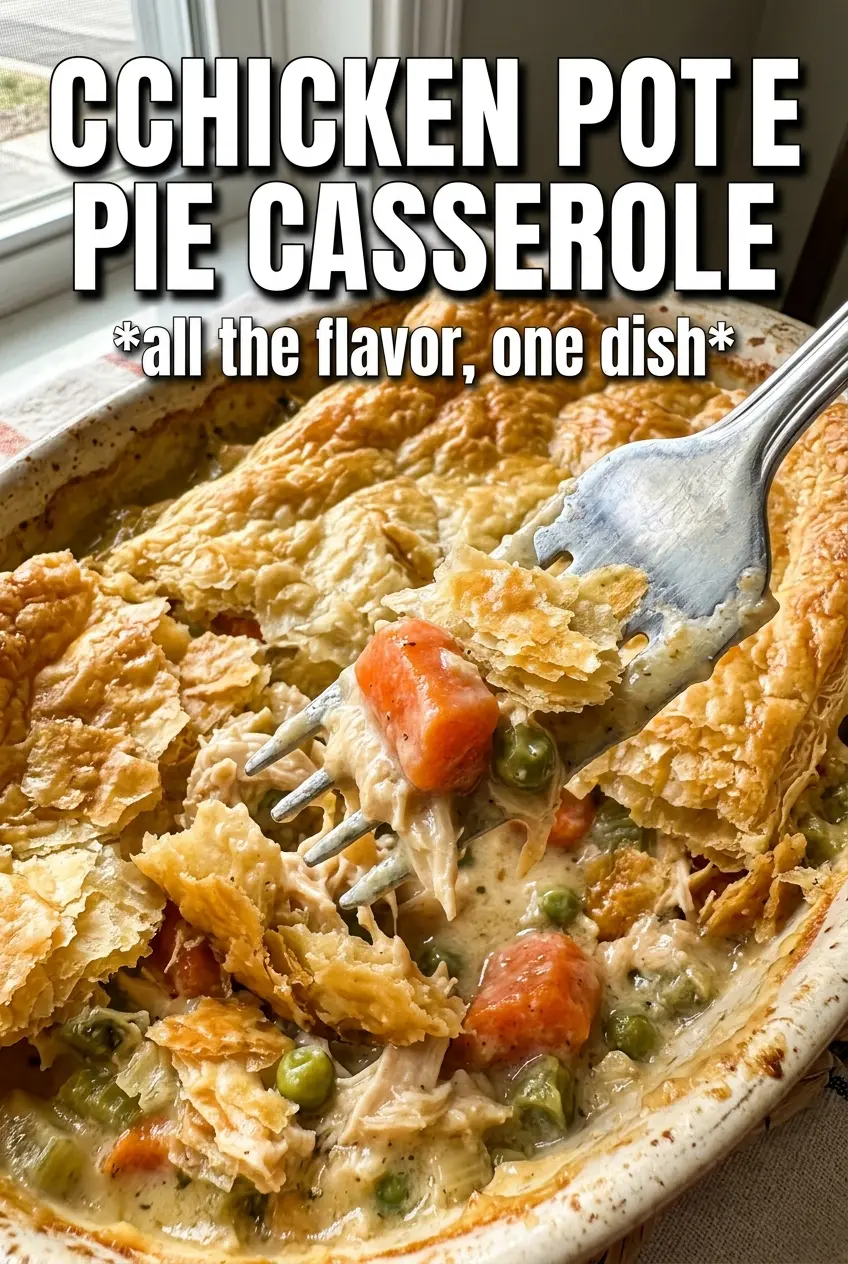
Chicken Pot Pie Casserole
Ingredients
Equipment
Method
- Preheat the oven to 400°F. Sauté onion, carrots, and celery in butter for 5 minutes, stirring until softened and fragrant with a light sheen.
- Whisk in flour and cook for 1 minute to remove the raw flour taste. Gradually add chicken broth and heavy cream while whisking, then simmer until thick enough to coat the back of a spoon.
- Stir in cooked chicken, peas, corn, thyme, and garlic powder, then season with salt and pepper to taste. Pour the filling into a 9x13 dish and top with refrigerated biscuits or puff pastry.
- Bake at 400°F for 25–30 minutes, until the topping is golden and the filling is bubbling. Let it rest for 5 minutes so the filling sets and slices cleanly, with visible steam when you cut.