Golden breaded chicken, twirled through penne and baked under bubbling mozzarella, gives you all the comfort of chicken Parmesan without the extra fuss of serving cutlets and pasta separately. The chicken stays crisp enough to stand up to the sauce, and the penne catches every bit of marinara in the ridges and center hollow. When it comes out of the oven, the top is bronzed and cheesy, with just enough sauce underneath to keep the whole dish juicy.
What makes this version work is the order. The chicken gets browned first so it doesn’t steam in the oven, and the pasta is tossed with sauce before it goes into the baking dish so every bite tastes seasoned, not dry. A little Parmesan goes into the breading for a sharper crust, then more Parmesan finishes the top for that salty, nutty hit that makes chicken parm taste like chicken parm.
Below, you’ll find the little details that keep the chicken crisp, the cheese melty instead of greasy, and the whole pan easy enough for a weeknight. There’s also a smart way to vary it if you need a gluten-free version or want to stretch it for a bigger crowd.
The chicken stayed crisp even after baking, and the pasta soaked up the marinara without turning mushy. My husband went back for seconds and asked if I could make it again next week.
Save this Chicken Parmesan Pasta for the nights when you want crispy chicken, saucy penne, and a bubbling mozzarella top in one pan.
The Crunch-and-Cheese Balance That Keeps Chicken Parm Pasta from Going Soft
The main thing that can go wrong here is moisture. If the chicken goes into the oven pale or the pasta goes in under-sauced, you end up with breading that turns soggy and noodles that taste disconnected from the rest of the dish. Browning the chicken in a skillet first sets the crust, and tossing the pasta with marinara before baking gives the sauce time to cling instead of pooling at the bottom of the pan.
The other thing worth watching is cheese placement. Mozzarella on top should melt into a blanket, not drown the chicken underneath. A little Parmesan over the mozzarella helps it brown faster and adds a sharper finish, which matters here because the sauce and breading are both rich and the dish needs a salty edge to keep it from tasting flat.
What Each Ingredient Is Actually Doing in This Chicken Parmesan Pasta
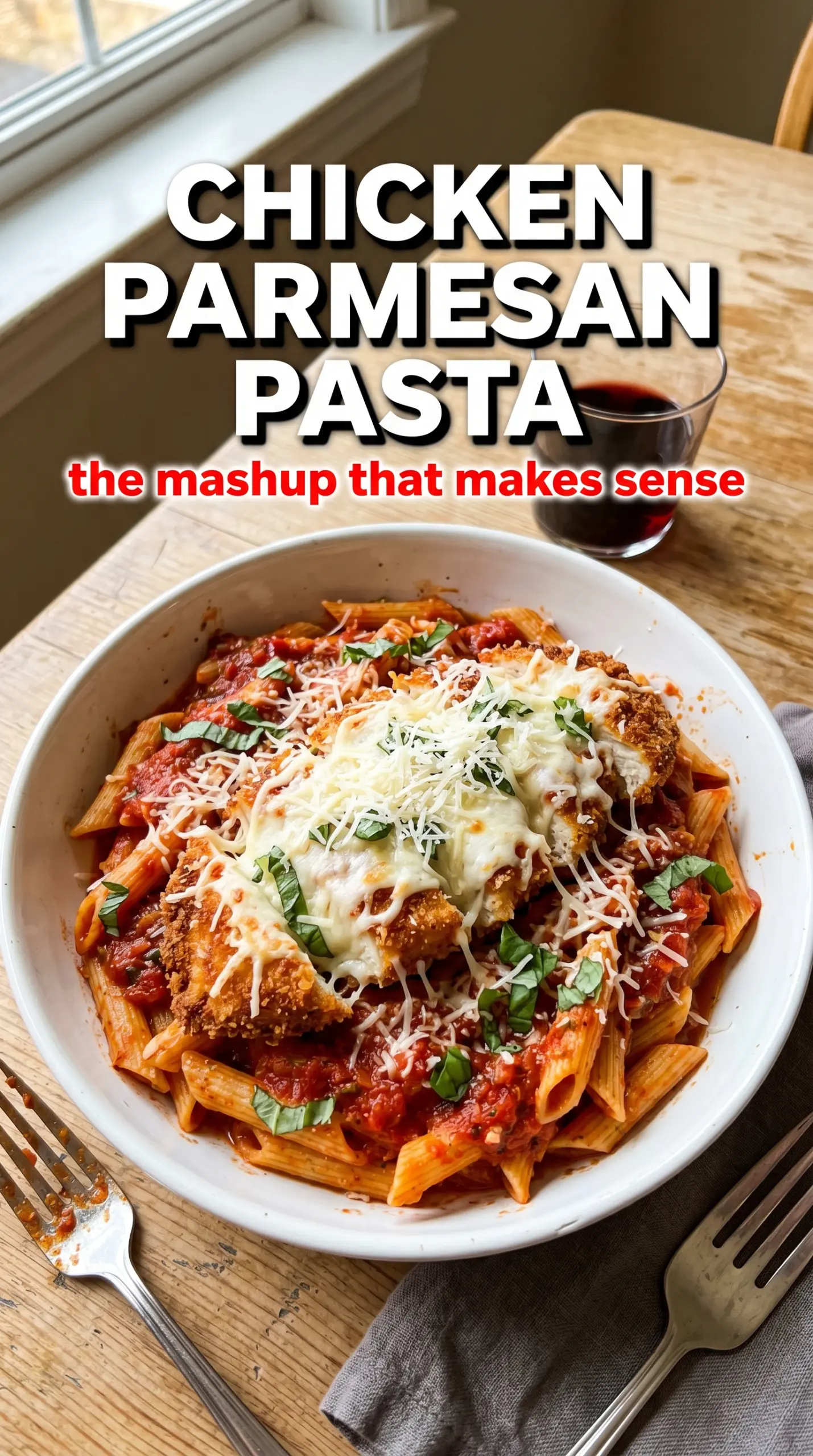
- Chicken breasts — Cutting them into bite-sized pieces gives you more browned surface area and keeps the whole dish easy to serve. Chicken thighs work if that’s what you have, but they’ll taste richer and won’t hold that classic chicken parm texture quite the same way.
- Italian breadcrumbs — These bring the seasoned crust. Plain breadcrumbs work in a pinch, but you’ll need to add more seasoning and the coating will taste a little less complete.
- Parmesan — The Parmesan inside the breading and on top does two jobs: it seasons the chicken and helps the crust brown with a deeper, nuttier finish. Use the real grated stuff if you can, not the powdery shelf-stable kind, because the melt and flavor are noticeably better.
- Marinara sauce — This is the base of the pasta, so use one you already like eating by the spoonful. A thicker sauce works best because thin sauce can make the pasta watery and soften the coating on the chicken too fast.
- Mozzarella — Shredded mozzarella melts into that stretchy top layer everyone expects. Fresh mozzarella is tasty, but it releases more moisture and can make the pan looser unless you blot it well.
- Penne — Penne holds the sauce inside the tubes and stays sturdy under the cheese. Any short pasta with ridges will work, but long noodles will clump and make serving messier.
Building the Chicken, Pasta, and Cheese So They Finish Together
Coating the Chicken for a Crisper Bake
Set up the flour, egg, and breadcrumb mixture before you start frying so the chicken goes from one bowl to the next without sitting around wet. Press the breadcrumbs onto each piece so the coating sticks in an even layer instead of falling off in the pan. If the flour layer looks pasty or thick, shake off more before the egg dip; too much flour turns the crust gummy under the sauce.
Getting Color on the Chicken Before the Oven
Pan-fry the breaded chicken over medium-high heat until the coating is deep golden and the pieces are cooked through. Don’t crowd the pan, or the chicken will steam and the crust will stay blond. The goal here isn’t to fully bake it dry; it’s to build flavor and structure so the oven only has to melt the cheese and marry everything together.
Layering the Pasta So It Stays Saucy
Toss the cooked penne with marinara before it goes into the baking dish. That step keeps the sauce from sitting on top of bare noodles, which is how you end up with dry edges and a bland middle. Spread the pasta out in an even layer so the chicken can sit on top and the heat reaches everything at the same rate.
Finishing Under the Cheese
Arrange the chicken over the pasta, cover it with mozzarella and Parmesan, and bake until the cheese is melted, bubbling, and just turning golden at the edges. If the top browns before the center is hot, lay a piece of foil loosely over the dish for the last few minutes. Let it rest briefly before serving so the sauce settles and doesn’t run all over the plate.
Three Ways to Bend This Chicken Parmesan Pasta Without Losing the Point
Gluten-Free Version
Use gluten-free flour, gluten-free breadcrumbs, and a gluten-free penne with good structure. The crust won’t brown quite the same way as wheat breadcrumbs, but a little extra Parmesan in the coating helps it crisp and keeps the flavor close to the original.
Dairy-Free Version
Swap in dairy-free Parmesan-style shreds for the breading and a good melting dairy-free mozzarella for the topping. The dish still works, but the top won’t brown as deeply, so watch the bake closely and lean on a punchy marinara for more flavor.
Turn It Into a Bigger Pan Dinner
Stretch the pasta with another 4 to 6 ounces of penne and add a little extra sauce so the pan doesn’t dry out in the oven. The flavor stays the same, but you’ll get a more casserole-like result that feeds more people without changing the technique.
Make-Ahead Prep for Faster Assembly
You can bread and cook the chicken earlier in the day, then refrigerate it until you’re ready to assemble. Keep the pasta and sauce separate until just before baking so the noodles don’t soak up too much liquid and turn soft before they hit the oven.
Storage and Reheating
- Refrigerator: Store leftovers in an airtight container for up to 4 days. The breading softens a bit, but the flavor holds up well.
- Freezer: This freezes best before the final bake. Assemble, wrap tightly, and freeze for up to 2 months, then thaw overnight before baking.
- Reheating: Reheat covered in a 350°F oven until hot in the center. The microwave will work for a bowlful, but it softens the chicken crust fast, so the oven keeps the texture closer to fresh.
Answers to the Questions Worth Asking
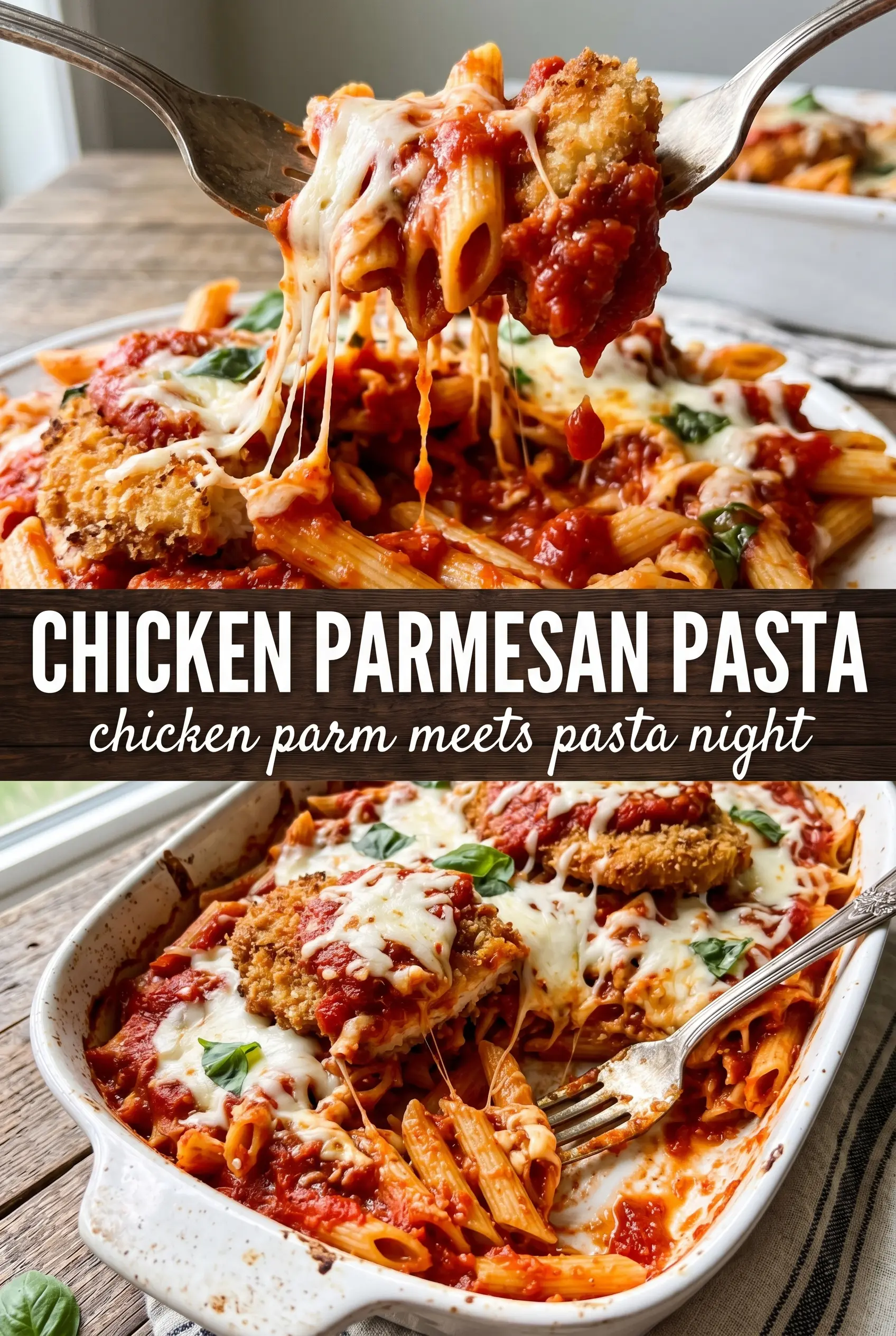
Chicken Parmesan Pasta
Ingredients
Equipment
Method
- Dredge the chicken pieces in flour, then dip them in the beaten eggs.
- Coat the chicken in breadcrumbs mixed with 1/2 cup Parmesan.
- Pan-fry the coated chicken in olive oil over medium-high heat for 3-4 minutes per side until golden and cooked through; drain on paper towels.
- Toss the cooked penne with marinara sauce, then pour into a greased 9x13 baking dish.
- Arrange the crispy chicken pieces over the pasta.
- Top with shredded mozzarella and the remaining Parmesan cheese.
- Bake at 375°F for 20-22 minutes until the cheese is melted and golden; garnish with fresh basil.