Golden chicken cutlets under a deep Marsala mushroom sauce have a way of turning a normal dinner into something that feels like it came from a good Italian restaurant. The chicken stays crisp at the edges, the sauce turns silky and dark, and the mushrooms carry all that winey, savory flavor into every bite. It’s the kind of skillet meal people ask for again because it tastes layered, not just heavy.
What makes this version work is the balance: thin cutlets cook fast enough to stay tender, the flour helps the chicken brown and gives the sauce just enough body, and the Marsala gets a minute to reduce before the broth and cream go in. That order matters. If you rush the wine or crowd the pan, you miss the glossy sauce and the browned bits that give this dish its depth.
Below, I’ve included the small details that make a real difference, from getting the chicken evenly cut to finishing the sauce so it clings to the meat instead of pooling on the plate.
The sauce thickened up beautifully and the chicken stayed tender even after I returned it to the pan. The Marsala and mushrooms tasted like something from a nice restaurant, and I didn’t end up with a watery skillet.
Save this Chicken Marsala for the night you want glossy mushroom sauce, tender cutlets, and a skillet dinner that feels restaurant-style without extra fuss.
The Reason the Sauce Stays Silky Instead of Turning Thin
The difference between a good Chicken Marsala and a watery one usually comes down to the pan. Once the chicken comes out, the mushrooms need room to brown before the wine goes in. If they steam instead of color, you lose the deep, savory base that makes the sauce taste finished.
The other mistake is adding the broth too soon or boiling the cream too hard. Marsala needs a short reduction first so the alcohol cooks off and the flavor concentrates. After that, the cream and butter work as the finishing layer, not the main event. That’s what gives the sauce its sheen instead of making it taste flat.
- Thin cutlets cook quickly and brown evenly, which keeps the chicken tender and gives you more surface area for that flour coating.
- Cremini mushrooms bring a deeper flavor than white button mushrooms. They’re worth using here because the sauce leans on them for body.
- Dry Marsala wine gives the sauce its signature flavor. Sweet Marsala tastes heavier and can throw off the balance unless you’re after a softer, sweeter finish.
- Cold butter at the end is what makes the sauce glossy. Stir it in off the heat or over very low heat so it emulsifies instead of separating.
What Each Ingredient Is Actually Doing in the Pan
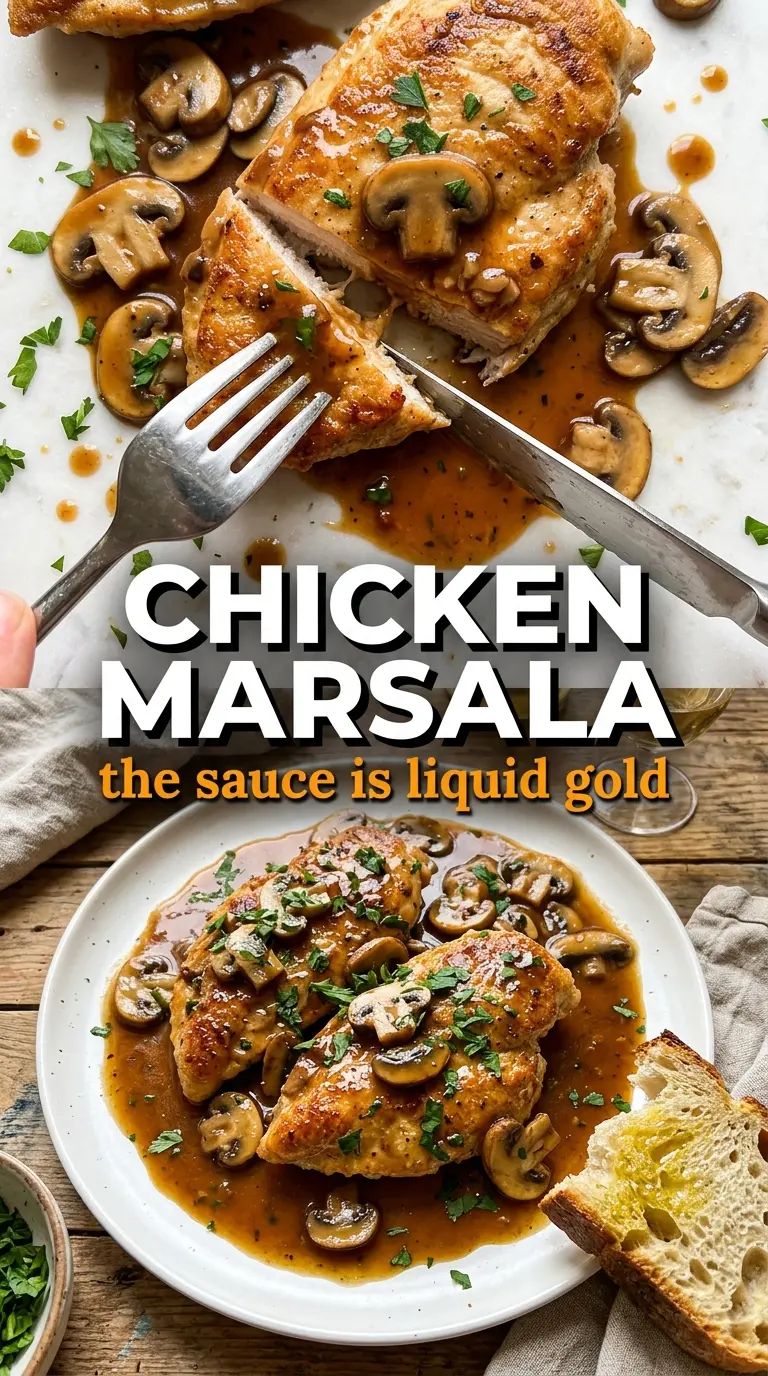
- Chicken breasts are sliced into thin cutlets so they cook fast and stay tender. If they’re thick, they’ll overcook before the sauce is ready.
- Flour does two jobs: it helps the chicken brown and gives the sauce a little structure. A light dredge is enough; too much flour makes the sauce pasty.
- Butter and olive oil together give you better browning than either one alone. The oil keeps the butter from burning, and the butter adds flavor right away.
- Shallots and garlic build sweetness and depth under the wine. Shallots are softer and more elegant here than onions, and they melt into the sauce instead of standing out.
- Heavy cream rounds out the Marsala and smooths the edges of the sauce. Half-and-half can work, but the sauce will be looser and less plush.
- Fresh thyme and parsley keep the dish from tasting heavy. Thyme goes into the sauce, and parsley belongs at the end for freshness.
Building the Skillet in the Right Order
Coating the Chicken Lightly
Season the cutlets first, then dredge them in flour and shake off the excess. You want a whisper-thin coating, not a thick crust. That light layer helps the chicken brown and gives the sauce something to cling to without turning gummy. If the pan gets crowded or the cutlets sit too long after dredging, the flour gets damp and won’t brown properly.
Getting the First Sear
Cook the chicken in olive oil and butter over medium-high heat until the outside is golden and the center is just cooked through. A deep golden color is the goal, not pale beige with a few spots. If the pan looks dry, the butter likely burned or soaked up too fast, and you may need to lower the heat slightly for the next batch. Pull the chicken out as soon as it’s done; it finishes later in the sauce.
Reducing the Marsala
After the mushrooms, shallots, and garlic have cooked down, pour in the Marsala and let it bubble for a couple of minutes. This is where the sauce starts tasting like Chicken Marsala instead of plain mushroom gravy. The wine should smell sharper at first, then softer as it reduces. If it still tastes raw and boozy, it needs another minute.
Finishing with Butter and Herbs
Stir in the broth and cream, then let the sauce simmer until it lightly coats a spoon. Add the remaining butter at the end and swirl until the sauce turns glossy. This last step is what gives you that restaurant-style sheen. Return the chicken to the pan just long enough to warm through, then spoon the sauce over the top and finish with parsley.
Three Ways to Adjust Chicken Marsala Without Losing the Point
Dairy-Free Marsala
Use all olive oil for the chicken and finish the sauce with a tablespoon of olive oil instead of butter. The sauce won’t have quite the same glossy finish, but it will still be rich if you let the wine reduce properly and don’t skip the mushrooms.
Gluten-Free Version
Swap the all-purpose flour for a gluten-free flour blend that you trust for dredging. The crust will still brown, but it may be a little more delicate, so don’t move the cutlets around while they’re searing.
For a Little More Body
If you like a thicker sauce, let the Marsala reduce a full minute longer before adding the broth. That concentrates the flavor and gives the final sauce a more clingy texture without needing extra flour.
Using Chicken Thighs
Boneless thighs work if you want a richer, juicier bite, but they take a few minutes longer than thin breast cutlets. Sear them well, then let the sauce finish them gently so they stay tender.
Storage and Reheating
- Refrigerator: Store leftovers in an airtight container for up to 3 days. The sauce will thicken as it chills.
- Freezer: Freezing isn’t ideal because the cream sauce can separate. If you must freeze it, cool it completely and reheat gently, knowing the texture may not be as smooth.
- Reheating: Warm it slowly in a covered skillet over low heat with a splash of broth. High heat is what breaks the sauce and dries out the chicken.
Answers to the Questions Worth Asking
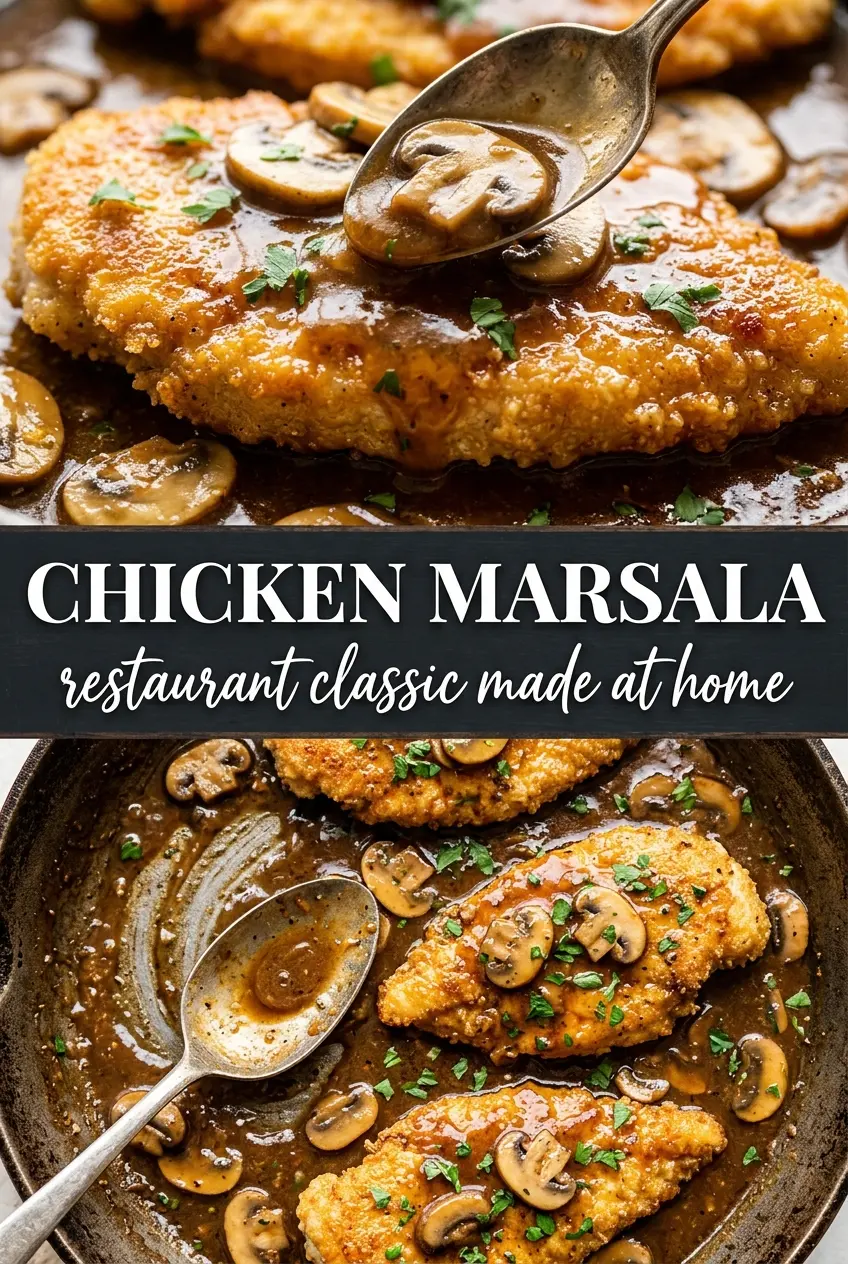
Chicken Marsala
Ingredients
Equipment
Method
- Season the chicken cutlets with salt and pepper to taste. Aim for even coverage so the seasoning stays put during dredging.
- Dredge the cutlets in all-purpose flour, shaking off excess. Keep them lightly coated—no thick clumps.
- Heat olive oil and 2 tablespoons butter in a cast iron skillet over medium-high heat. Wait until the butter is melted and shimmering.
- Pan-fry the cutlets for 3-4 minutes per side until golden. Cook in batches if needed to avoid crowding, then remove to a plate.
- Add sliced cremini mushrooms and minced shallots to the same pan. Cook for 5-6 minutes until golden.
- Add minced garlic and cook for 1 minute. Stir just until fragrant so the garlic doesn’t brown too hard.
- Pour in dry Marsala wine and let it bubble for 2-3 minutes. Scrape up any browned bits for extra flavor.
- Add chicken broth and heavy cream, then simmer for 5 minutes. Reduce slightly so the sauce coats the back of a spoon.
- Swirl in the remaining 2 tablespoons cold butter until the sauce is glossy, then stir in fresh thyme leaves. The sheen should look smooth and rich.
- Return the cutlets to the pan and spoon the sauce over them. Warm through briefly so the cutlets absorb the sauce.
- Garnish with fresh parsley and serve immediately. Add parsley right before serving for the brightest color.