Chicken lasagna soup lands in that sweet spot between comforting and practical: all the tomato-rich, cheesy, noodle-filled satisfaction of lasagna, but in a pot that comes together on a weeknight. The broth turns silky and savory, the chicken stays tender, and those broken lasagna noodles give every spoonful the same familiar bite you’d want from the baked version without the layering or waiting.
What makes this version work is building the flavor before the liquid goes in. Browning the chicken first leaves behind fond in the pot, and that’s what gives the broth depth instead of a flat tomato base. Tomato paste gets cooked with the onion and garlic so it turns sweet and concentrated, and the cheese dollop goes on at the end so it melts into creamy ribbons instead of disappearing into the soup.
Below, I’ll walk you through the part that matters most: keeping the noodles tender without letting them go mushy, plus the small cheese-bowl trick that makes this taste like lasagna in a spoonable form.
The noodles stayed perfectly tender and the ricotta-mozzarella topping melted into the soup instead of clumping. I used thighs, and the broth had so much more flavor after just 45 minutes on the stove.
Save this chicken lasagna soup for the nights when you want creamy ricotta topping, tender noodles, and a tomato broth that tastes like lasagna without the baking.
The Trick to Keeping the Noodles from Taking Over
The biggest mistake in soup like this is treating the noodles like pasta water pasta. Lasagna noodles keep softening in the hot broth, so if you simmer them too long, they turn bloated and the soup loses its structure. The fix is simple: bring the broth to a steady boil, then drop it to a simmer as soon as the noodles go in and start checking them at the 10-minute mark.
Chicken thighs give you a little more insurance here because they stay juicy even if the soup sits for a few minutes. Chicken breast works fine too, but dice it evenly so it cooks through at the same pace as the noodles. The tomato paste is another quiet helper; cooking it with the onion and garlic deepens the base so the broth tastes layered instead of thin and canned.
What Each Ingredient Is Actually Doing in the Pot
- Chicken breast or thighs — Thighs bring more richness and are harder to overcook, which is handy in a simmering soup. Breast works if that’s what you have, but cut it into even pieces so it doesn’t dry out before the noodles are tender.
- Crushed tomatoes plus diced tomatoes — The crushed tomatoes build body, while the diced tomatoes leave little pockets of texture that keep the soup from feeling one-note. If you only have one type, use it, but the mix gives you a better balance.
- Tomato paste — This is what gives the broth that slow-cooked depth. Let it cook with the onion and garlic for a full 2 minutes so it loses the raw edge and turns sweet and concentrated.
- Lasagna noodles — Break them into rough pieces, not tiny shards. Bigger pieces give you that lasagna feel and hold up better in the bowl.
- Ricotta, mozzarella, parmesan, and basil — The cheese dollop is the lasagna part that makes this dish feel finished. Ricotta keeps it creamy, mozzarella melts, parmesan sharpens the flavor, and basil cuts through the richness.
Building the Broth, Then Letting the Pasta Finish It
Browning the Chicken First
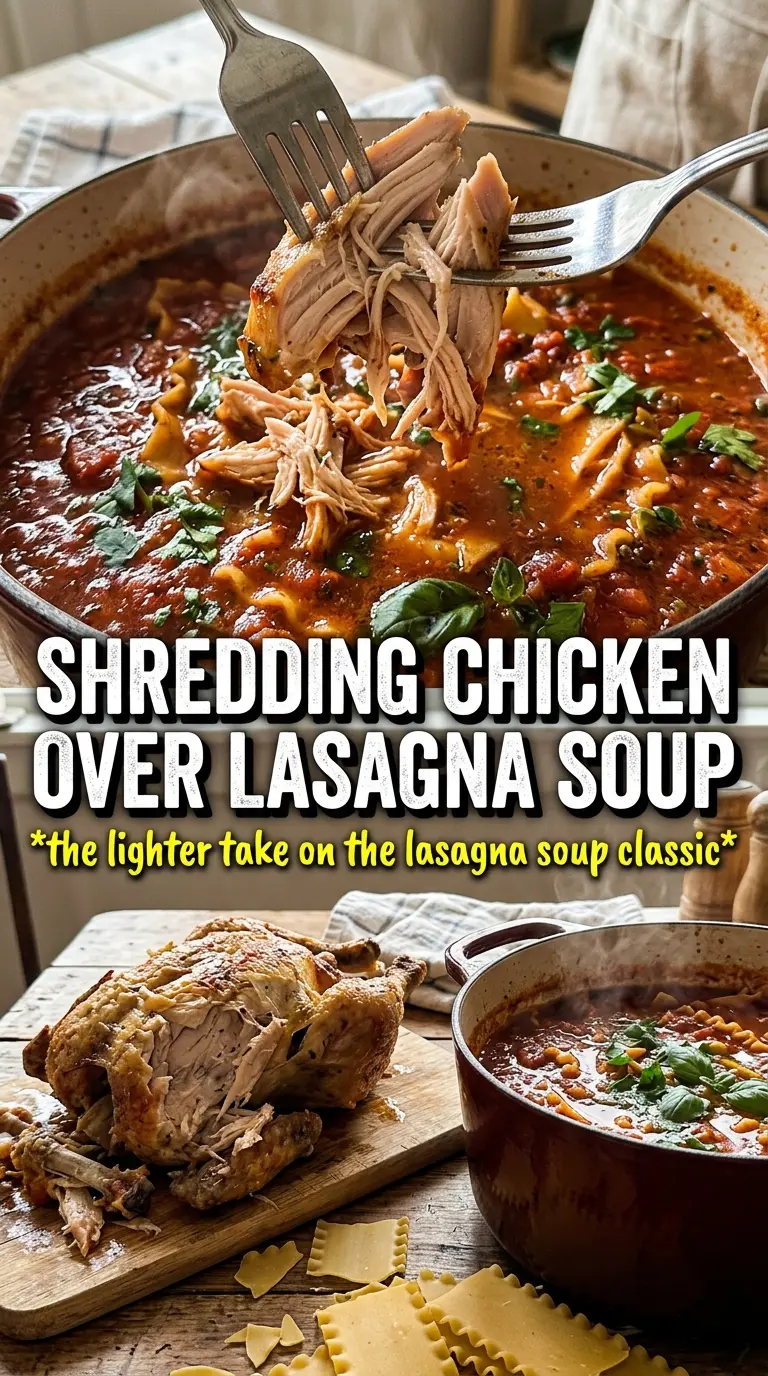
Heat the oil in a large pot and cook the diced chicken until you get some golden color on the outside. You don’t need to cook it through at this stage; you’re building flavor and setting up that browned layer on the bottom of the pot. Pull the chicken out once it’s no longer raw on the surface, because leaving it in while the onions cook can make it tough before the soup even simmers.
Cooking the Tomato Base
Add the onion to the same pot and cook it until it softens and starts to look translucent at the edges. Stir in the garlic and tomato paste and let them cook together for about 2 minutes, until the paste darkens slightly and smells sweet instead of sharp. If you rush this part, the broth tastes flat and the tomato paste stays a little sour.
Simmering with the Noodles
Pour in the tomatoes, broth, seasoning, and red pepper flakes, then bring the pot to a boil before adding the chicken back in. Once the broken noodles go in, keep the soup at a steady simmer, not a hard boil, so the pasta cooks evenly and the chicken stays tender. The noodles are done when they’re flexible with a little bite in the center; if they go soft all the way through in the pot, they’ll keep turning mushy in the bowl.
Finishing with the Cheese Dollop
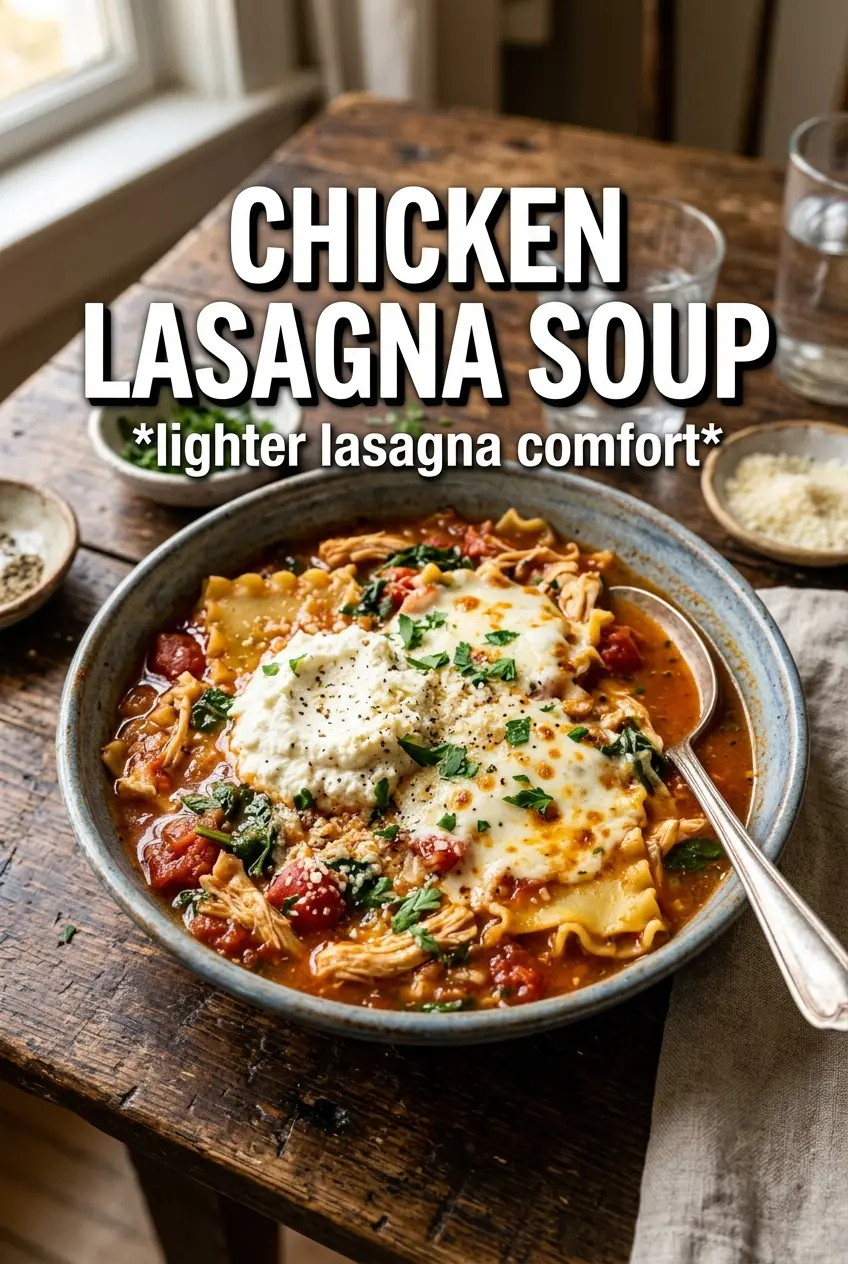
Mix the ricotta, mozzarella, parmesan, and basil in a bowl and spoon a generous mound over each serving. The heat from the soup softens the cheese just enough to make a creamy topping without dissolving it completely. Season the soup with salt and pepper at the end, after the noodles are cooked, because the broth reduces a bit and the cheese adds its own saltiness.
How to Adjust Chicken Lasagna Soup Without Losing the Lasagna Part
Use ground chicken for a looser, faster version
Ground chicken cooks faster than diced chicken and gives the soup a softer, more blended texture. Brown it well so it doesn’t taste steamed, then continue with the onion and garlic in the same pot. You lose a little of the bite from the diced chicken, but you gain speed and a more spoonable broth.
Make it dairy-free with a herby topping
Skip the ricotta-mozzarella-parmesan dollop and finish the bowls with olive oil, chopped basil, and a little dairy-free parmesan if you like. The soup still works because the broth carries the flavor, but you’ll lose the creamy, stretchy top layer that makes it taste closest to lasagna.
Use gluten-free pasta only if you plan to eat it right away
Gluten-free lasagna noodles work, but they soften faster and can break down if the soup sits too long. Cook the soup just until the noodles are tender and serve immediately. If you expect leftovers, keep the noodles separate and add them to each bowl when reheating.
Add spinach at the end for a little more color
A handful or two of baby spinach wilts into the hot soup in the last minute or two and adds a fresh note without changing the base flavor. Stir it in after the noodles are cooked so it stays bright instead of disappearing into the broth.
Storage and Reheating
- Refrigerator: Store for up to 4 days. The noodles keep absorbing broth, so the soup thickens as it sits.
- Freezer: Freeze the broth and chicken without the noodles for the best texture. Cook fresh noodles when you reheat if you want the closest result to day one.
- Reheating: Warm it gently on the stove over medium-low heat with a splash of broth or water. Don’t boil it hard, or the noodles will break apart and the chicken will dry out.
Questions I Get Asked About This Recipe
Chicken Lasagna Soup
Ingredients
Equipment
Method
- Heat a large pot over medium-high heat with enough olive oil to coat the bottom. Add diced chicken and cook until browned, then remove and set aside.
- Keep the pot over medium-high heat with the browned bits in place. Sauté diced onion for 4 minutes, until softened.
- Add minced garlic and tomato paste to the pot. Cook for 2 minutes, stirring, until fragrant and darker in color.
- Add crushed tomatoes, diced tomatoes, chicken broth, Italian seasoning, dried basil, dried oregano, and red pepper flakes. Bring the mixture to a boil, then keep it at a steady boil for a moment to fully combine.
- Return the browned chicken to the pot. Add broken lasagna noodles and stir to spread them evenly through the broth.
- Simmer for 10-12 minutes, until the noodles are tender and the chicken is cooked through. If needed, stir once or twice so the noodles don’t stick.
- Season with salt and pepper to taste. Taste the broth and adjust until balanced.
- Mix ricotta, shredded mozzarella, parmesan, and fresh basil together until combined. Keep the mixture thick enough to hold a spoonful.
- Ladle soup into bowls and add a generous spoonful of cheese dollop in the center of each bowl. Serve right away so the cheese melts into the hot tomato broth.