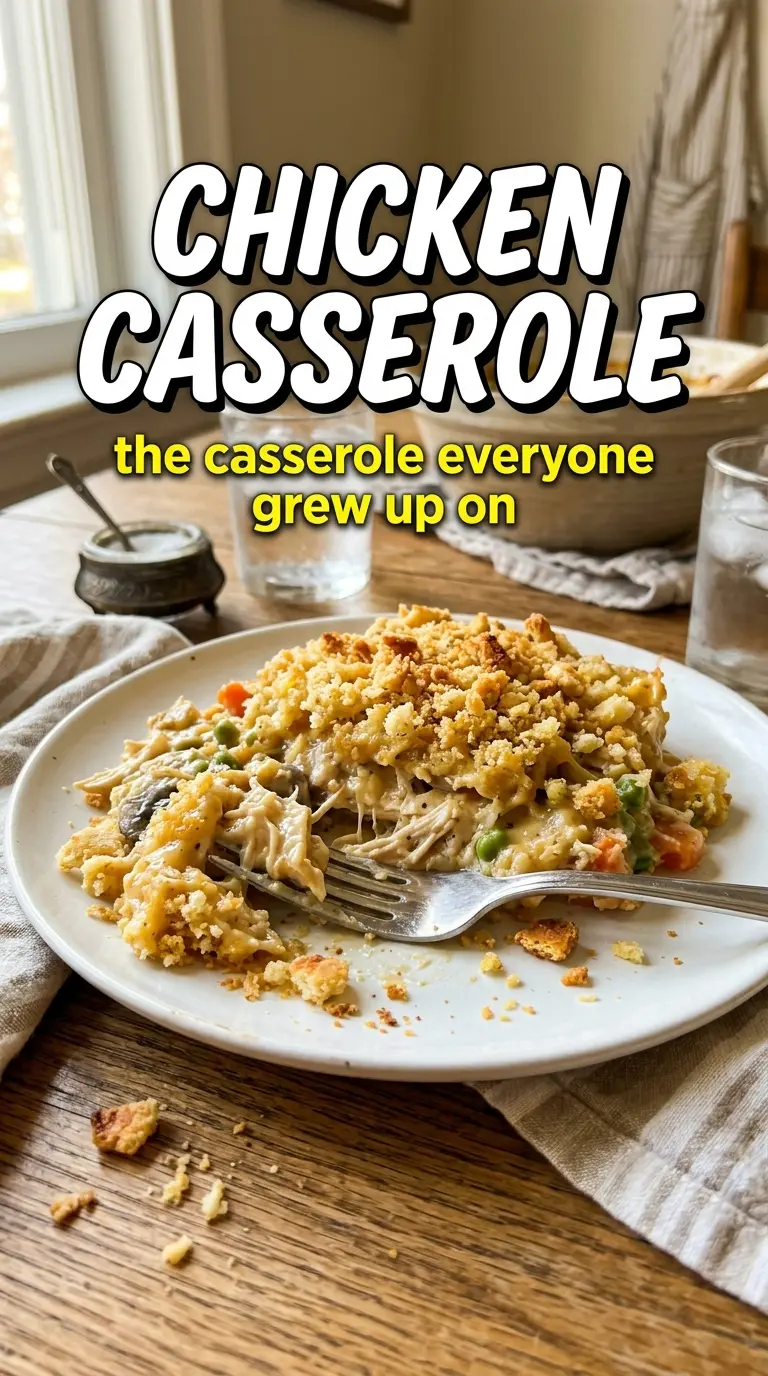
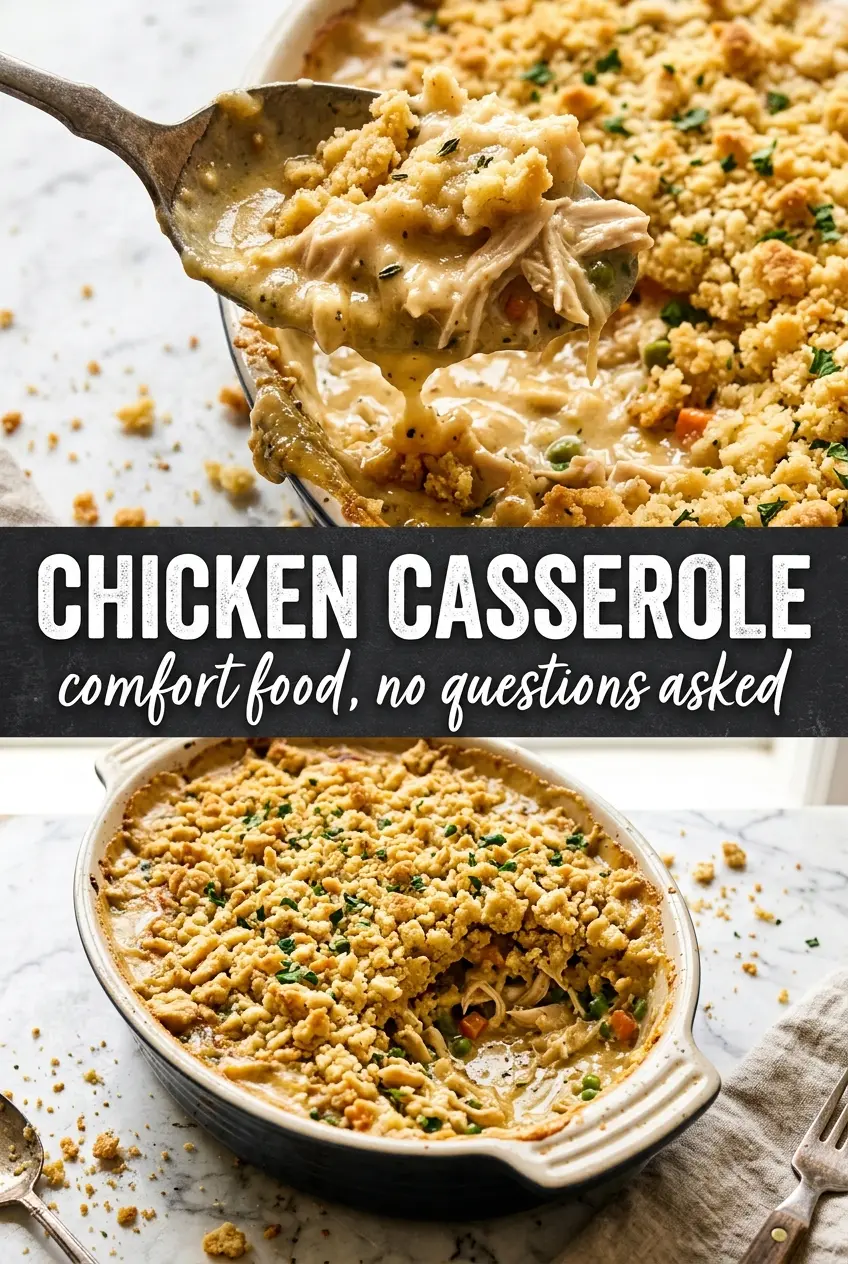
Golden, bubbly chicken casserole is the kind of dinner that disappears fast because it hits all the right notes at once: creamy filling, tender rice, vegetables tucked into every scoop, and a Ritz cracker topping that turns crisp and buttery in the oven. The best versions don’t just taste comforting; they hold together on the plate and still feel rich at the edges, where the cheese and crumbs caramelize into a salty crunch.
What makes this version work is the balance. The sour cream and two condensed soups build a thick base without needing a separate sauce, while the cooked rice keeps the casserole from turning soupy. The chicken broth loosens everything just enough so the rice can absorb flavor in the oven instead of drying out. And the cracker topping goes on last with melted butter, which gives you those browned, crackly bits instead of a soft lid.
Below, I’ll walk through the one detail that keeps this casserole creamy instead of heavy, plus the best way to adapt it if you need to use different vegetables, a different cheese, or leftovers from another chicken dinner.
The casserole came out creamy all the way through and the Ritz topping stayed crisp even after sitting on the table for a few minutes. I used leftover rotisserie chicken and it tasted like something I’d planned all day.
Like this chicken casserole? Save it to Pinterest for the nights when you want a creamy, crunchy-topped dinner with almost no cleanup.
The Creamy Casserole Mistake That Leaves the Middle Soupy
The biggest failure point in a chicken casserole like this is too much loose liquid going into the dish. The rice is already cooked, so it won’t absorb much extra once everything is assembled. If the mixture looks pourable instead of thick and scoopable before it goes in the oven, it usually finishes soft in the center and the topping browns before the filling sets.
The safer target is a mixture that mounds slightly in the bowl and spreads with a spoon instead of flowing. That lets the sour cream, condensed soups, and broth form a creamy sauce around the chicken and rice without separating. Frozen peas and carrots work well here because they add moisture in a controlled way, and they go straight in from frozen without watering down the casserole the way thawed vegetables sometimes do.
What Each Ingredient Is Actually Doing in This Recipe
- Primary ingredient (the star) — Quality matters most. Choose the best you can find.
- Cooking medium (oil, butter, or broth) — This carries flavors and prevents dryness.
- Seasonings (salt, pepper, spices, herbs) — Layer flavors so nothing overpowers. Build depth gradually.
- Aromatics (garlic, onion, herbs) — Cook with fat to bloom flavors. Become the foundation.
- Supporting ingredients — Complement the main ingredient without overpowering it.
- Sauce or liquid (if applicable) — Brings flavors together. Balance richness with acid.
- Acid (lemon, vinegar, wine, or other) — Brightens and prevents flat-tasting results.
- Final finish (garnish, glaze, or sauce) — Prevents one-dimensional taste and adds visual appeal.
What the Soup, Sour Cream, and Cracker Topping Are Each Doing
- Cream of chicken soup — This gives the casserole its savory backbone. It carries the chicken flavor and helps the filling stay cohesive. A store-brand can works fine here.
- Cream of mushroom soup — This adds depth and a little earthy richness that keeps the dish from tasting flat. If you don’t like mushroom flavor, cream of celery is the closest swap.
- Sour cream — This is what gives the filling that tangy, creamy finish. Plain Greek yogurt can work in a pinch, but it tastes sharper and can loosen a little more as it bakes.
- Ritz crackers — These are what make the topping special. They brown fast, so the butter-coated crumbs turn crisp instead of dry. If you use plain breadcrumbs, the topping will be less rich and a little less shattery.
- Cheddar cheese — The cheese helps bind the topping to the filling and adds a salty edge. Shred it yourself if you can; pre-shredded cheese doesn’t melt quite as smoothly.
How to Build the Layers So the Topping Stays Crisp
Mix the Filling Until It’s Thick, Not Loose
Stir the chicken, rice, soups, sour cream, broth, vegetables, and seasonings together until every grain of rice is coated. The mixture should look creamy and heavy. If it seems wet enough to spread on its own, it’s too loose; add a handful more rice or a bit more chicken before baking, because a watery base is the fastest way to lose the casserole texture.
Spread It Evenly in the Pan
Use a greased 9×13 baking dish and press the mixture into an even layer without packing it down hard. You want it level so the top browns at the same rate across the pan. If the center is piled higher than the edges, the middle steams while the corners overcook.
Cheese First, Crumbs Last
Sprinkle the cheddar directly over the filling before adding the cracker topping. That layer helps the crumbs cling and creates a little melted barrier between the creamy filling and the buttery crust. Toss the crushed Ritz crackers with melted butter until every piece looks coated, then scatter them over the cheese right before baking so they don’t soften while they sit.
Bake Until the Edges Bubble
The casserole is done when the edges are actively bubbling and the top is deep golden in spots. Don’t pull it too early just because the crumbs look browned; the center needs time to heat through and set. Let it rest for about 10 minutes before scooping so the sauce tightens slightly and the servings hold together.
How to Adapt This Chicken Casserole Without Losing the Texture
Make it with rotisserie chicken
Rotisserie chicken is one of the best shortcuts here because it’s already seasoned and tender. Pull the meat into small shreds so it mixes evenly and doesn’t leave big dry chunks in the casserole. If the chicken is especially salty, hold back a little on the added salt until after mixing.
Make it gluten-free
Use certified gluten-free condensed soups and swap the Ritz crackers for a gluten-free buttery cracker or crushed gluten-free crumbs. The filling itself adapts easily, but the topping is where gluten usually hides. Expect the crust to be a little less delicate, but it will still bake up crisp if you keep the butter coating light and even.
Swap the vegetables
Frozen peas and carrots are convenient because they stay small and don’t release much water. You can swap in frozen mixed vegetables, corn, or diced green beans, but keep them frozen when they go in so the casserole doesn’t get watery. If you use a softer vegetable like mushrooms, cook off the extra moisture first.
Stretch it for a bigger crowd
This casserole scales well, but keep the depth of the dish in mind. If you double it, bake it in two pans instead of one extra-deep casserole so the center heats through before the topping gets too dark. A deeper pan traps steam and makes the crust soggy.
Storage and Reheating
- Refrigerator: Store covered for up to 4 days. The topping softens, but the filling stays creamy.
- Freezer: It freezes well for up to 2 months. Bake it first, cool completely, then wrap tightly. For best texture, freeze without the cracker topping and add it fresh before reheating.
- Reheating: Reheat covered at 325°F until hot in the center. If you want the topping crisp again, uncover it for the last 10 minutes. Microwaving works for a single portion, but the crackers will soften.
Answers to the Questions Worth Asking
Chicken Casserole
Ingredients
Equipment
Method
- Preheat the oven to 350°F and grease a 9x13 baking dish for easy release.
- Combine shredded chicken, cooked rice, both soups, sour cream, chicken broth, frozen peas and carrots, garlic powder, onion powder, salt, and pepper in a mixing bowl and stir until evenly coated.
- Spread the chicken mixture into the prepared baking dish and level the top so it bakes uniformly.
- Sprinkle shredded cheddar cheese evenly over the chicken mixture to form a melty layer.
- Mix crushed Ritz crackers with melted butter, then sprinkle over the cheese for a thick, crunchy top.
- Bake for 35-40 minutes at 350°F until the casserole is bubbly around the edges and the cracker topping is golden brown, with a crisp crust cracking at the surface.