Flaky crescent dough, a smooth cream cheese layer, and a cinnamon sugar top come together in a casserole that lands somewhere between breakfast bake and dessert bars. The edges bake up crisp and caramelized while the center stays soft and creamy, so every square gives you contrast instead of just sweetness. It slices neatly once it cools, which is exactly why this one keeps showing up for brunches, potlucks, and lazy weekend mornings.
The trick is keeping the cream cheese filling completely smooth before it goes into the pan. If the filling is lumpy, it won’t spread cleanly and you’ll end up with uneven pockets instead of a uniform layer. Pressing the crescent seams together matters too, because those little gaps can let the filling leak through and steal some of that neat, bakery-style look.
Below you’ll find the small details that make this casserole bake up the way it should, plus a few swaps that still keep the texture intact. If you’ve ever had a breakfast casserole turn soggy or messy, this version is built to avoid both.
The cream cheese layer baked up smooth and the cinnamon sugar top got that crackly crust I was hoping for. I let it cool for 15 minutes like the directions said, and it cut into clean squares without oozing everywhere.
Cheesecake Crescent Rolls Casserole with that crackly cinnamon-sugar top is the kind of brunch bake worth pinning for easy mornings.
Why the Bottom Layer Needs a Tight Seal
The bottom layer does more than hold the filling. It keeps the cream cheese from sinking into the dish and turning the base greasy, which can happen if the seams are left open. Press the dough together firmly so it behaves like one sheet instead of a stack of strips.
The same rule applies to the top layer. If the dough is ragged or overlapped too loosely, the butter and sugar slide into gaps instead of forming that thin, crackly coating across the surface. A sealed top gives you cleaner squares and better browning at the edges.
What the Cream Cheese and Crescent Dough Are Each Doing Here
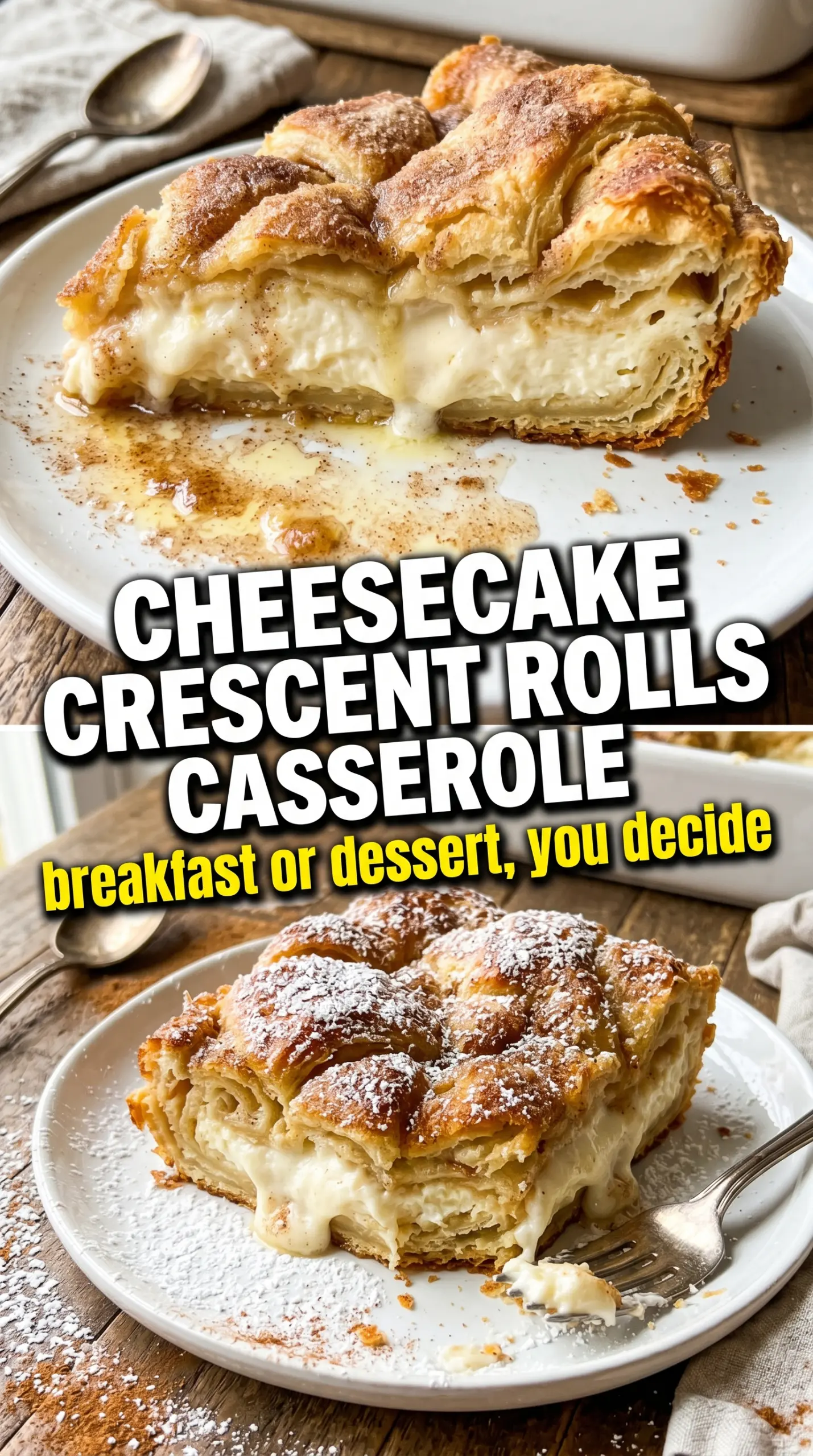
- Cream cheese — Full-fat cream cheese gives the filling its body and tang. Reduced-fat versions can work, but they tend to bake up thinner and a little less plush. Soften it fully before mixing or you’ll chase lumps forever.
- Crescent roll dough — This is the shortcut that makes the casserole work, and there isn’t a substitute that gives the same flaky, buttery layers. If you use puff pastry instead, the texture gets shatteringly crisp rather than soft and bready. Crescent dough is the right choice here because it bakes into something tender enough to cut but sturdy enough to hold the filling.
- Butter — Melted butter helps the cinnamon sugar melt into the top crust and encourages that caramelized finish. Don’t brush it on sparingly; the surface needs enough fat to moisten the sugar evenly. If you pour it in streaks, you’ll get dry patches.
- Cinnamon sugar — This is what turns the top from plain pastry into something that tastes finished. The sugar needs to sit on the butter, not the dough, so it can dissolve and bake into a crisp crust instead of clumping.
Building the Layers Without Letting the Filling Leak
Pressing the Base
Unroll the first can of crescent dough and press it into the greased dish, working the seams together with your fingertips. You want one even layer that reaches the corners. If the dough tears, patch it with the nearest piece and press again; small gaps are what let the cream cheese sneak underneath.
Mixing the Filling Until It Stays Smooth
Beat the softened cream cheese, sugar, and vanilla until the mixture looks glossy and no streaks remain. Stop to scrape the bowl, especially around the bottom edges where cold cream cheese likes to hide. If the filling feels grainy, it wasn’t softened enough, and that texture won’t disappear in the oven.
Sealing and Topping the Casserole
Lay the second sheet of dough over the filling and press the seams closed again. Pour the melted butter evenly across the top, then scatter the cinnamon sugar over every corner so no bare patches remain. Bake until the top is deep golden and the center no longer looks wet; if the middle still ripples when the pan is nudged, give it a few more minutes before pulling it out.
Add lemon zest for a brighter finish
A teaspoon or two of finely grated lemon zest in the cream cheese mixture sharpens the filling and keeps the casserole from reading too heavy. The result is still rich, but the flavor lands cleaner and a little lighter.
Use a sugar substitute for a lower-carb version
A granulated monk fruit or erythritol blend can replace the sugar in both the filling and topping, though the top won’t caramelize quite the same way. You still get a sweet, creamy casserole, but the crust is a little less crackly and more delicate.
Make it dairy-free with a few compromises
Use a dairy-free cream cheese and plant-based butter in place of the originals. The filling will still set, but it won’t have quite the same tang or richness, and some brands bake a little softer, so give it the full cooling time before slicing.
Storage and Reheating
- Refrigerator: Store covered for up to 4 days. The crust softens a little, but the squares still hold together well.
- Freezer: Freeze cut squares tightly wrapped for up to 2 months. Thaw overnight in the refrigerator for the best texture; freezing the whole casserole is messier and harder to portion.
- Reheating: Warm individual squares in a 300°F oven for about 8 to 10 minutes. The microwave works in a pinch, but it softens the pastry faster than you want and can make the filling weep.
Questions I Get Asked About This Recipe
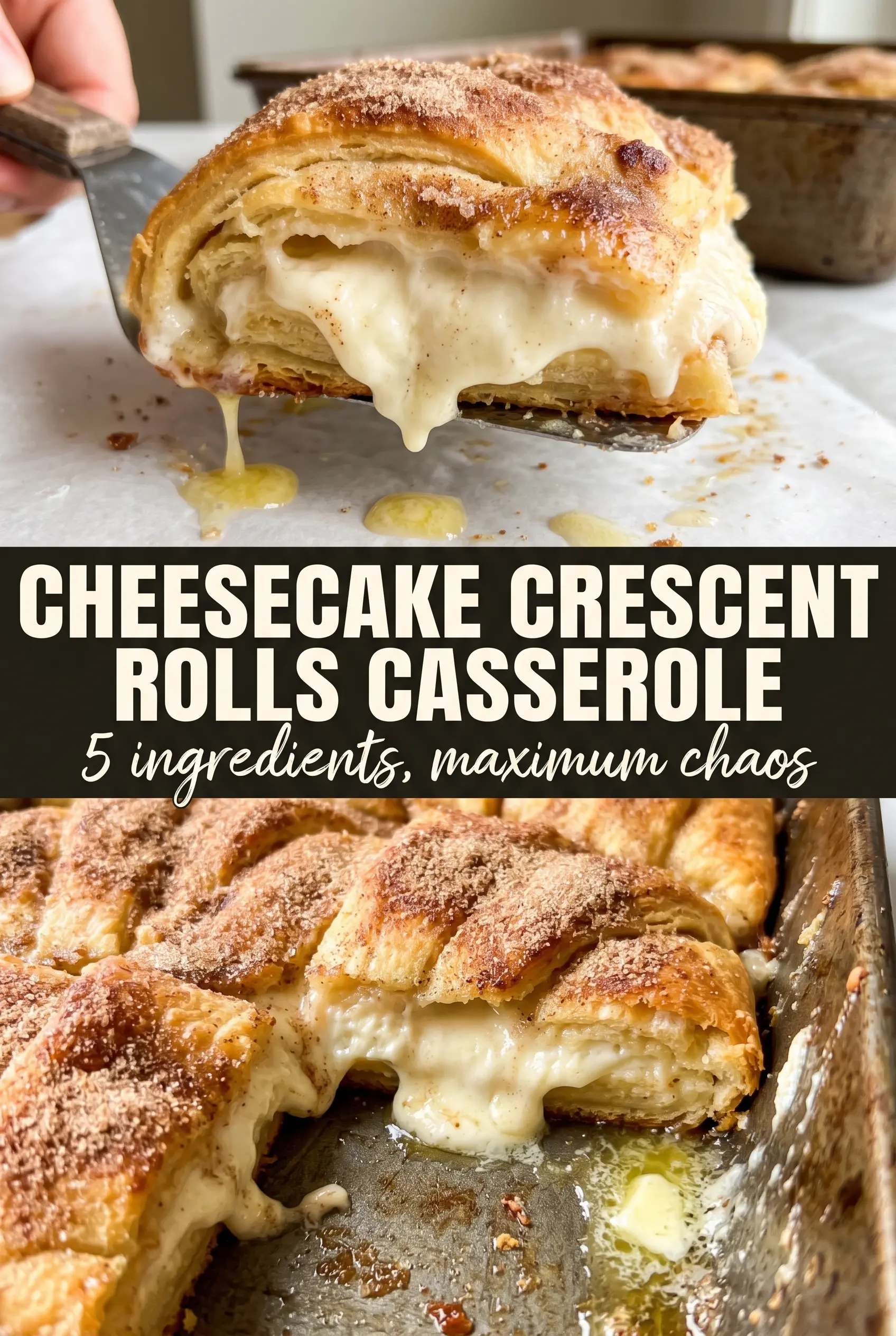
Cheesecake Crescent Rolls Casserole
Ingredients
Equipment
Method
- Preheat the oven to 350°F, then grease a 9x13 baking dish.
- Unroll one can of crescent roll dough and press it into the bottom of the prepared dish, pressing seams together to seal.
- Beat cream cheese, 1 cup sugar, and vanilla until completely smooth, then spread evenly over the dough layer.
- Unroll the second can of crescent roll dough and lay it over the cream cheese filling, pressing seams together.
- Pour the melted butter evenly over the top.
- Mix 1/2 cup sugar and cinnamon together, then sprinkle generously over the butter.
- Bake at 350°F for 28-32 minutes, until the top is deep golden and the filling is set; look for visible cream cheese at the edges.
- Cool for 15 minutes before cutting into squares.