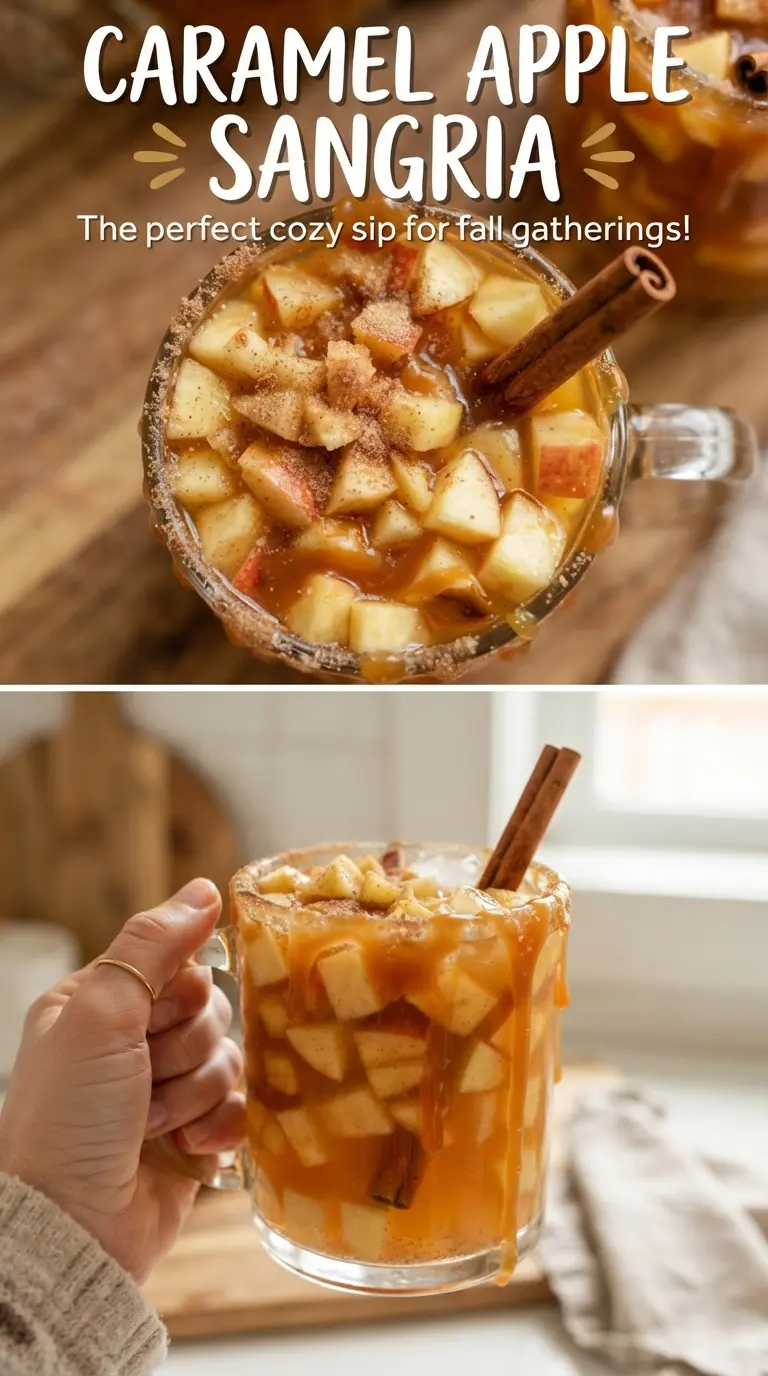
Caramel apple sangria lands in that sweet spot where it feels festive without being fussy. The wine stays bright, the cider brings apple depth, and the caramel gives each sip a round, dessert-like edge without turning the whole pitcher heavy. What makes this version work is the balance: enough fruit and spice to taste like fall in a glass, but enough acidity and bubbles to keep it crisp.
The trick is using chilled ingredients and giving the pitcher time to rest before the ginger ale goes in. That soak lets the apples and pears perfume the wine, and the cinnamon sticks slowly work their way through the whole batch. If you use caramel sauce instead of caramel vodka, whisk it in well so it doesn’t sink and clump at the bottom.
Below you’ll find the small details that matter here, from the best way to rim the glasses to when to add the bubbly so the sangria stays lively instead of flat.
The cider and caramel vodka mellowed together after a couple hours, and the rim stayed crunchy even after the sangria sat out for a while. The pear slices soaked up the flavor beautifully.
Save this caramel apple sangria for the next time you want a chilled pitcher drink with crisp fruit, warm cinnamon, and a caramel rim.
The Part That Keeps the Sangria Crisp Instead of Flat
The mistake with sangria is adding the fizzy part too early. Once ginger ale sits in the pitcher for hours, it loses its lift and the drink starts tasting heavy. The better move is to build the wine, cider, caramel, fruit, and spice first, then add the bubbles right before serving so the top of the glass still has that bright, lively finish.
Caramel sauce works, but it needs help. It brings a deeper caramel note than vodka, but it can cling to the bottom of the pitcher if you don’t whisk it into the cider and wine until it disappears. Caramel vodka is easier because it blends cleanly, though the flavor is a little lighter and cleaner.
- Pinot grigio — A dry, crisp white wine keeps this from turning syrupy. Anything sweet will push the drink into candy territory fast.
- Apple cider — Use real cider, not apple juice, if you want depth and a rounder apple flavor. Juice tastes thinner and more one-note here.
- Caramel vodka or caramel sauce — Vodka gives an even mix; sauce gives a richer caramel note. If you use sauce, whisk until the pitcher looks smooth before adding fruit.
- Apples and pear — Slice them thin so they infuse the drink quickly and are easy to sip with. A firm apple holds its shape best after chilling.
What Each Ingredient Is Actually Doing in This Recipe
- Primary ingredient (the star) — Quality matters most. Choose the best you can find.
- Cooking medium (oil, butter, or broth) — This carries flavors and prevents dryness.
- Seasonings (salt, pepper, spices, herbs) — Layer flavors so nothing overpowers. Build depth gradually.
- Aromatics (garlic, onion, herbs) — Cook with fat to bloom flavors. Become the foundation.
- Supporting ingredients — Complement the main ingredient without overpowering it.
- Sauce or liquid (if applicable) — Brings flavors together. Balance richness with acid.
- Acid (lemon, vinegar, wine, or other) — Brightens and prevents flat-tasting results.
- Final finish (garnish, glaze, or sauce) — Prevents one-dimensional taste and adds visual appeal.
Building the Pitcher in the Right Order
Mix the Wine, Cider, and Caramel First
Pour the chilled wine and cider into a large pitcher, then add the caramel vodka or caramel sauce. If you’re using sauce, whisk until you don’t see streaks or clumps at the bottom. The base should look smooth and lightly tinted, not thick or cloudy.
Let the Fruit and Cinnamon Steep
Add the sliced apples, pears, and cinnamon sticks, then cover and chill for at least 2 hours. That resting time matters because the fruit softens just enough to release flavor without collapsing. If you rush this step, the drink tastes like separate ingredients instead of a unified sangria.
Rim the Glasses and Finish With Bubbles
Dip the glass rims in caramel sauce, then in coarse sugar so the coating grabs and sets. Add the ginger ale only right before serving and pour the sangria over ice with a few pieces of fruit in each glass. If you add the ginger ale too soon, it goes flat and the whole drink loses its sparkle.
Three Ways to Adjust the Pitcher Without Losing the Balance
Dairy-Free and Naturally Vegan
This recipe is already dairy-free and vegan as written as long as you use a caramel vodka or a plant-based caramel sauce. Skip any caramel topping that contains butter or cream if you want to keep the whole pitcher fully dairy-free.
Less Sweet, More Crisp
Use club soda instead of ginger ale and lean on the caramel rim for sweetness instead of the pitcher. That keeps the drink drier and a little sharper, which works well if your cider is already sweet.
Make It Mocktail-Friendly
Swap the wine for extra chilled apple cider and use more ginger ale or club soda to taste. The result is lighter and fruitier, and the caramel flavor still comes through best if you use the sauce version and whisk it thoroughly.
Storage and Chilled Prep
- Refrigerator: The wine, cider, caramel, fruit, and cinnamon can sit together up to 24 hours ahead. After that, the apples and pears start softening too much.
- Freezer: Don’t freeze the finished sangria. The fruit texture breaks down and the wine loses its clean finish after thawing.
- Reheating: No reheating here. Keep the pitcher cold and add the ginger ale only right before serving so it stays bright and fizzy.
Answers to the Questions Worth Asking
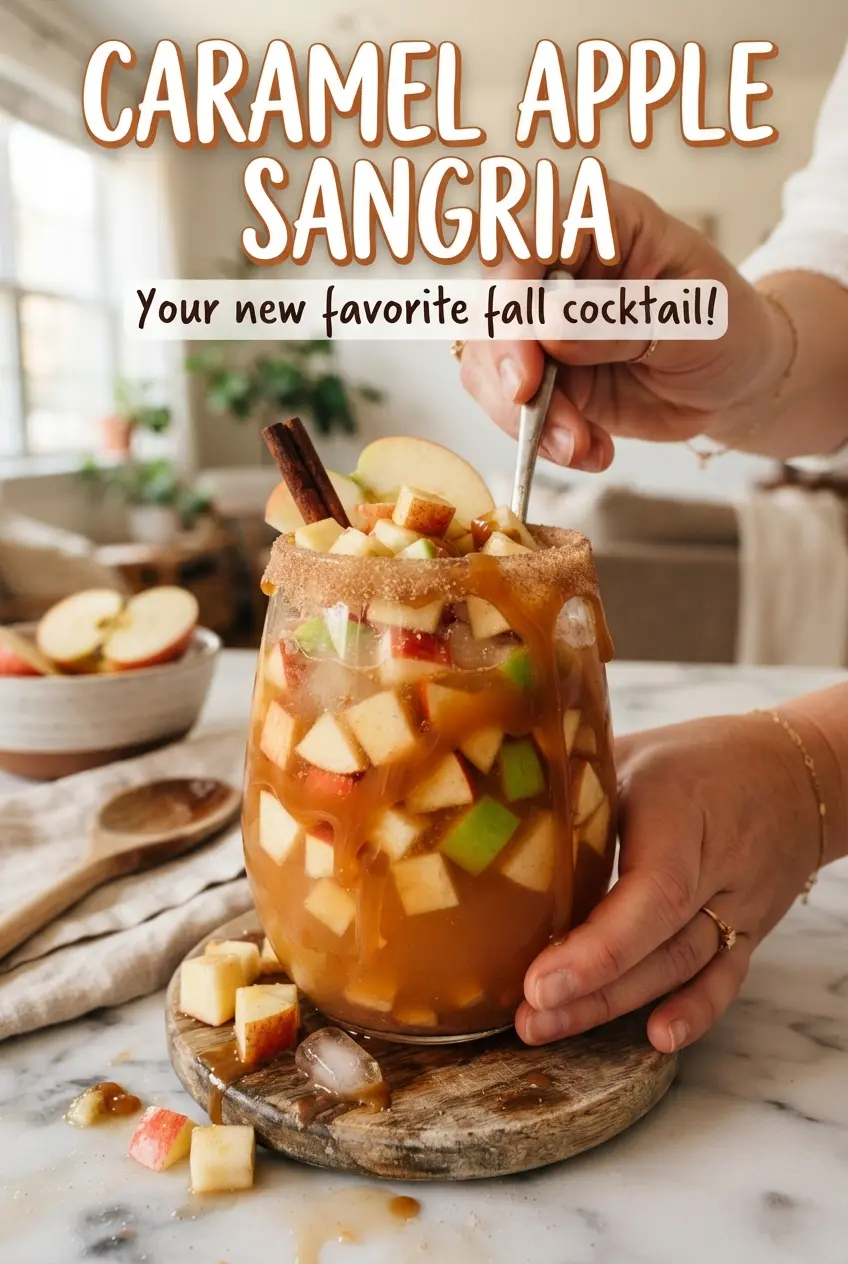
Caramel Apple Sangria
Ingredients
Equipment
Method
- Combine chilled pinot grigio, apple cider, and caramel vodka (or caramel sauce) in a large pitcher, whisking well if using caramel sauce.
- Add thinly sliced apples, thinly sliced pear, and cinnamon sticks to the pitcher.
- Chill the pitcher at refrigerator temperature for at least 2 hours so the fruit soaks up the flavor.
- Dip the glass rims in caramel, then in coarse sugar.
- Top the pitcher with chilled ginger ale (or club soda) just before serving, then pour over ice so each glass includes fruit.