Glossy cranberry sauce tucked into sealed jars is one of those pantry projects that pays you back long after the pot goes off the stove. The berries burst into a jewel-bright sauce that stays thick enough to spoon, with just enough orange to keep the flavor from leaning flat or one-note. When it’s canned properly, you end up with shelves of tart-sweet jars that open into something better than the canned jellied stuff most people know.
This version works because the sugar, water, and orange juice are brought together first, so the cranberries hit a fully dissolved syrup instead of a grainy mixture. Bottled lemon juice is there for consistent acidity, which matters in canning, and the orange zest goes in at the end so its perfume stays fresh. The sauce also cooks long enough to thicken before it goes into the jars, which helps you avoid a thin result after processing.
Below, I’ve laid out the small things that matter most here: how to keep your jars hot, what the sauce should look like before it goes in, and why the extra 5-minute rest in the canner helps the seals set cleanly.
The sauce thickened up beautifully and the jars sealed right away. I opened one for dinner and the orange zest made it taste fresh instead of overly sweet.
Canning cranberry sauce with orange zest? Save this one for when you want a bright, glossy batch that seals cleanly and tastes fresh from the jar.
The Part That Keeps Cranberry Sauce from Going Watery in the Jar
Cranberry sauce looks simple until you process it and realize the texture changed on you. The goal here is a sauce that finishes thick enough to coat a spoon before it ever reaches the jars, because water bath canning doesn’t just preserve food — it also softens your margin for a loose, undercooked sauce. If you pull it too early, the jars may seal, but what you open later will taste thin and broken down instead of glossy and spoonable.
The other thing people miss is that cranberries need a full simmer to burst and release their own natural pectin. That’s what gives this sauce body. Stirring only until the sugar dissolves is not enough. You want the berries popping, the liquid turning ruby red, and the bubbles looking a little heavier around the edges of the pot. That’s your cue that the sauce has moved from cranberry syrup into something that will hold its shape after processing.
- Fresh cranberries — These give you the whole-berry texture and the natural pectin that makes the sauce thicken. Frozen cranberries work too; use them straight from the freezer and don’t thaw first, or they’ll release too much juice too fast.
- Orange juice and zest — Juice adds sweetness and rounds out the tartness, while the zest carries the bright top note. If you skip the zest, the sauce still works, but it tastes flatter and less lively.
- Bottled lemon juice — This is the ingredient you don’t substitute with fresh lemon juice if canning safety matters. Bottled juice has a standardized acidity level, which is what keeps the recipe in safe range.
- Sugar — It’s doing more than sweetening. It helps the sauce set and balances the sharp cranberry bite, which is why cutting it too far changes both flavor and texture.
What Each Ingredient Is Actually Doing in This Recipe
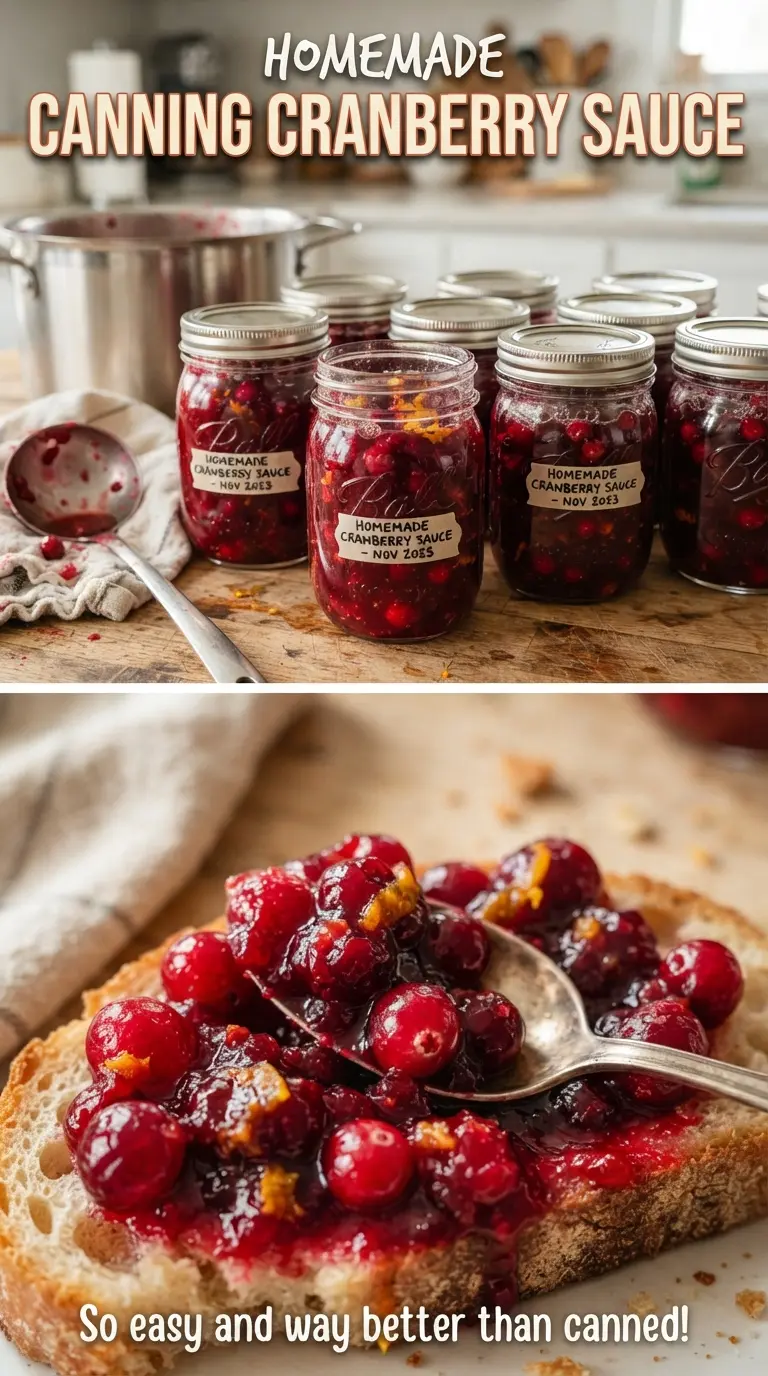
- Primary ingredient (the star) — Quality matters most. Choose the best you can find.
- Cooking medium (oil, butter, or broth) — This carries flavors and prevents dryness.
- Seasonings (salt, pepper, spices, herbs) — Layer flavors so nothing overpowers. Build depth gradually.
- Aromatics (garlic, onion, herbs) — Cook with fat to bloom flavors. Become the foundation.
- Supporting ingredients — Complement the main ingredient without overpowering it.
- Sauce or liquid (if applicable) — Brings flavors together. Balance richness with acid.
- Acid (lemon, vinegar, wine, or other) — Brightens and prevents flat-tasting results.
- Final finish (garnish, glaze, or sauce) — Prevents one-dimensional taste and adds visual appeal.
Building the Jar-Filling Sauce Without Boiling It to Death
Start with a Fully Dissolved Base
Combine the sugar, water, and orange juice in a large pot and bring it to a boil until the sugar disappears completely. If you add cranberries before the sugar is dissolved, you end up chasing grainy syrup around the pot while the fruit starts to break down unevenly. A clear, smooth base helps the berries cook evenly once they go in.
Let the Berries Burst on Their Own
Once the cranberries and lemon juice are in, keep the boil gentle and steady for 10 to 12 minutes. You’re looking for most of the berries to pop open and the mixture to thicken enough that it mounds briefly on a spoon. If it boils too hard, the sauce can splatter and reduce too aggressively, which leaves you with a sticky jam instead of a pourable sauce.
Add the Zest at the End
Stir in the orange zest after the cranberries have cooked. Zest added too early loses its bright aroma in the boil, and what’s left tastes dull and cooked. At the end, it perfumes the whole batch without disappearing into the background.
Pack While the Sauce Is Hot
Ladle the sauce into hot half-pint jars with 1/4-inch headspace, wipe the rims clean, and tighten the lids fingertip tight. A dirty rim is one of the fastest ways to lose a seal, and a lid cranked down too hard can keep air from venting properly during processing. The jars should be hot enough that the sauce doesn’t cool and thicken before they reach the canner.
How to Adapt a Batch of Cranberry Sauce for Different Kitchens and Pantry Needs
Frozen cranberries instead of fresh
Use them straight from frozen and keep the recipe timing the same. They’ll release a little more liquid at first, but the sauce still thickens properly as long as you boil until the berries have fully burst and the mixture looks glossy, not soupy.
Less sweet cranberry sauce
You can reduce the sugar a little for a tarter result, but don’t cut it aggressively if you want the same texture. Less sugar means a thinner, sharper sauce, and it may not set up with the same body after processing.
Lower-sugar serving option
If you want a less sweet cranberry condiment for the table, make the full canned batch as written and use the sealed jars as a base. Once opened, stir in a little unsweetened orange juice or grated zest to brighten it before serving. That keeps the canned product safe while giving you more control at the table.
Storage and Reheating
- Refrigerator: Once opened, keep a jar refrigerated and use it within 2 to 3 weeks. The sauce may tighten a little as it chills, which is normal.
- Freezer: Sealed canned jars aren’t meant for freezing. If you want to freeze extra sauce, use freezer-safe containers and leave space for expansion.
- Reheating: Warm gently over low heat or spoon straight from the jar. Don’t boil it hard after opening, or the berries can collapse into a looser, less glossy sauce.
Answers to the Questions Worth Asking
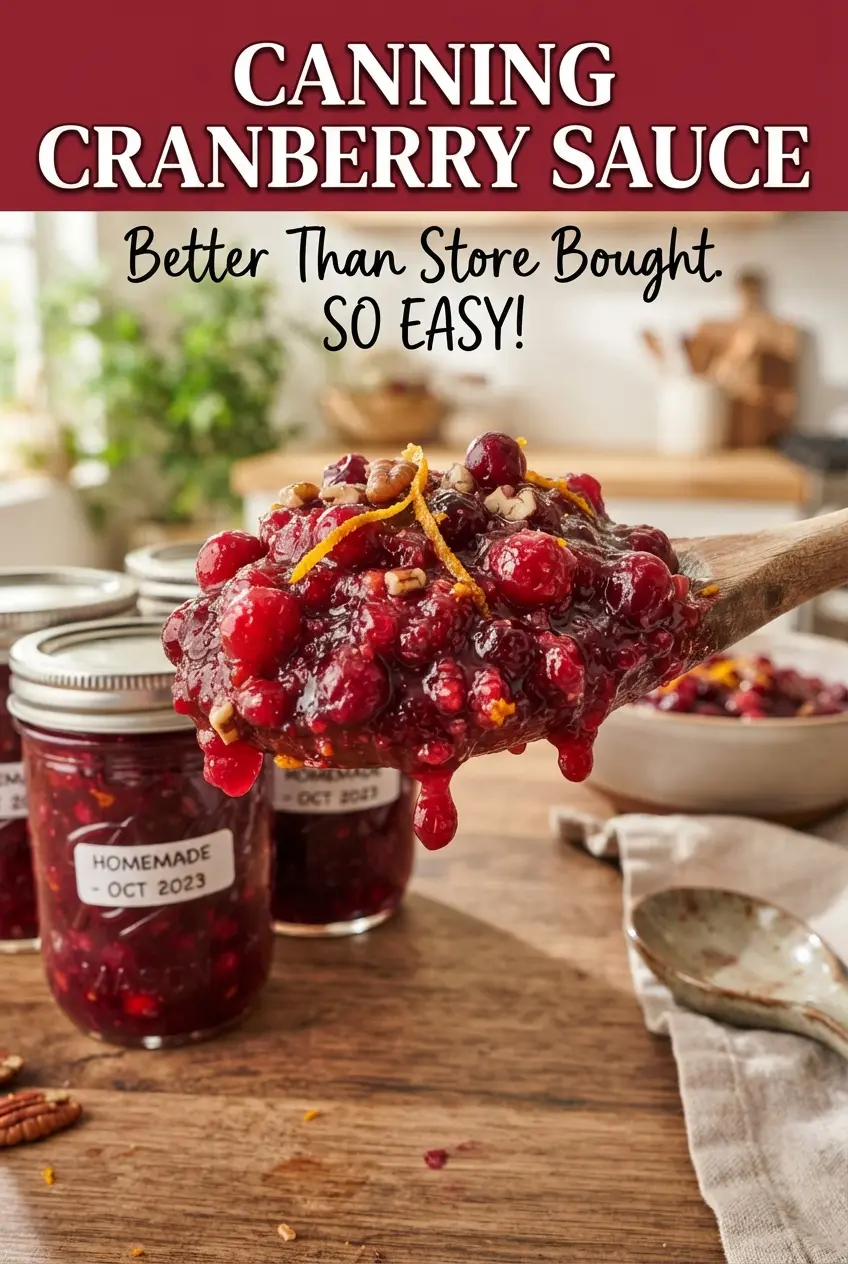
Canning Cranberry Sauce
Ingredients
Equipment
Method
- Wash 12 half-pint jars, lids, and bands, then keep the jars hot in simmering water so they won’t crack when filled.
- Bring sugar, water, and orange juice to a boil in a large pot, stirring until the sugar is fully dissolved.
- Add fresh cranberries and bottled lemon juice, then boil gently for 10-12 minutes until berries burst and the sauce thickens.
- Stir in orange zest after the sauce thickens and remove from heat so the zest stays bright.
- Ladle the hot sauce into the hot jars, leaving 1/4-inch headspace, then wipe the rims clean.
- Apply lids and bands fingertip tight to each jar.
- Process jars in a boiling water bath canner for 15 minutes, adjusting processing time for altitude as needed.
- Turn off the heat and rest jars in the canner for 5 minutes before lifting out.
- Cool jars undisturbed for 24 hours, then check that lids have sealed by confirming they’re firm and not flexing.
- Store sealed jars in a cool dark place for up to 1 year; refrigerate any jars that didn’t seal.