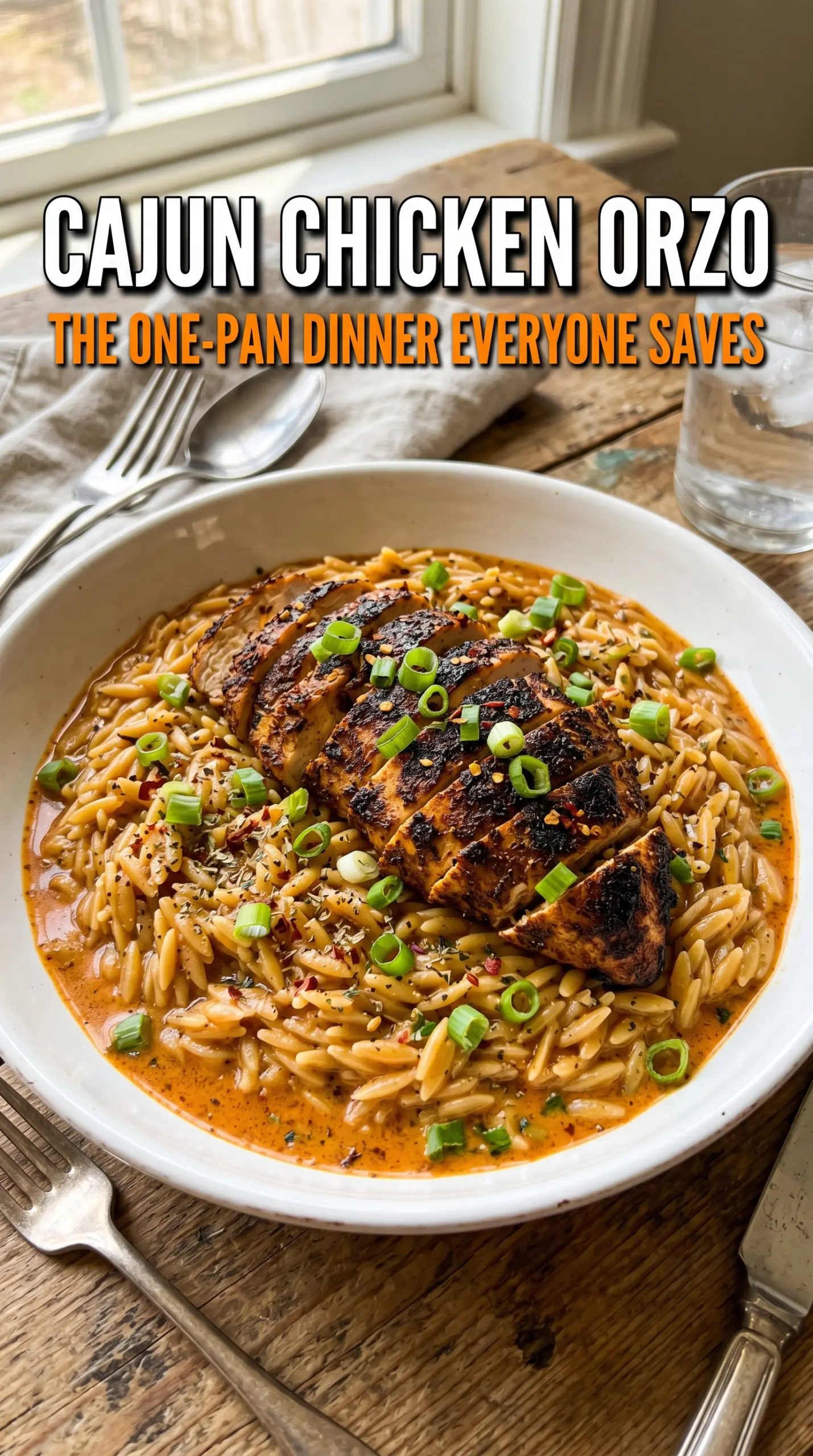
Blackened chicken thighs over creamy Cajun orzo hit all the right notes at the table: smoky, spicy, rich, and just bright enough at the end to keep you going back for another forkful. The orzo cooks right in the skillet, so it picks up every bit of seasoning, chicken drippings, and softened pepper flavor instead of tasting like a separate side dish. You get a meal that eats like comfort food but still has enough edge to feel interesting.
The trick here is building layers in the pan instead of rushing straight to the liquid. Searing the chicken first gives you that dark crust Cajun dishes need, and toasting the orzo for a minute before the broth goes in keeps the pasta from turning soft and bland. The cream and Parmesan go in at the end, after the orzo has already absorbed most of the broth, which keeps the sauce glossy instead of thin.
Below you’ll find the small details that matter most, including how to keep the orzo creamy without overcooking it and what to change if you want a lighter or dairy-free version.
The chicken got that deep blackened crust and the orzo turned out creamy without getting mushy. I added the lemon at the end like you suggested and it cut through the richness perfectly.
Save this Cajun Chicken Orzo for the nights when you want blackened chicken, creamy pasta, and one skillet to do the heavy lifting.
The Blackened Crust Is Doing More Than Adding Heat
If you’ve ever had Cajun chicken turn out pale instead of boldly seasoned, the problem is usually heat. The pan needs to be hot enough to brown the seasoning quickly before the chicken starts leaking moisture. That fast sear is what gives the thighs their dark crust and keeps the spices tasting smoky instead of steamed.
Chicken thighs work better than breasts here because they stay juicy long enough to take on that heavy seasoning. If you use breasts, pull them earlier and slice them across the grain right away so they don’t dry out while the orzo finishes. The skillet also matters: a wide, heavy pan gives you space to sear without crowding, and crowding is what traps steam and softens the crust.
What Each Ingredient Is Actually Doing In This Skillet
- Boneless skinless chicken thighs — These stay tender through the sear and hold up better than breast meat in a creamy one-pan dish. If you swap in breasts, reduce the cook time and watch the center closely so they don’t turn stringy.
- Cajun seasoning — This carries most of the dish’s personality, so use one you actually like. If yours is salty, taste the broth carefully before adding extra seasoning later.
- Orzo — It acts like pasta and risotto at the same time, soaking up broth while releasing starch that thickens the pan. Don’t rinse it; that starch is part of what makes the sauce cling.
- Heavy cream and Parmesan — These finish the sauce and make it glossy. Lower-fat dairy can split more easily, so if you need a lighter version, add it off the heat and expect a thinner result.
- Bell peppers and onion — They soften into the base and keep the dish from feeling one-note. Dice them small so they melt into the orzo instead of staying chunky and undercooked.
Building the Orzo So It Stays Creamy, Not Gluey
Searing the Chicken First
Rub the chicken with part of the Cajun seasoning, then lay it in the hot oil and leave it alone long enough for a crust to form. If you try to move it too soon, it sticks and tears, which means you lose the blackened bits you want in the pan. Cook until the thighs are browned on the outside and the center reaches 165°F, then move them out before you start the vegetables.
Softening the Vegetables
The peppers and onion need a few minutes over medium heat, not high heat. You want them softened and a little translucent, not browned hard at the edges, because their job is to melt into the sauce. Add the garlic and the rest of the seasoning only for the last minute so it blooms without burning.
Cooking the Orzo in the Pan
Toast the dry orzo briefly in the skillet before adding broth. That little step gives it a nuttier edge and helps the pasta hold its texture. Once the broth is in, stir often so the orzo doesn’t stick to the bottom, and watch for the moment when most of the liquid is absorbed but the pasta still has a little bite in the center.
Finishing With Cream and Cheese
Add the cream and Parmesan after the orzo is tender. If you add them too early, the sauce can get too thick before the pasta finishes cooking. Stir gently and keep the heat moderate; a hard boil here can make the dairy separate instead of turning silky.
Make It Lighter Without Losing the Cajun Edge
Use half-and-half instead of heavy cream if you want a lighter skillet, but expect a looser sauce and less richness. The flavor still works because the Cajun seasoning and chicken drippings carry the dish, though the finish won’t be as plush.
Dairy-Free Cajun Orzo
Swap the cream for full-fat coconut milk and leave out the Parmesan, or use a dairy-free hard-style cheese if you like. The sauce will taste a little different — less sharp, more round — but it still clings well and keeps the skillet creamy.
Add Andouille for a Bigger Cajun Flavor
Brown sliced andouille with the vegetables before the garlic goes in, then build the rest of the dish the same way. It adds smoky fat and a little extra heat, which makes the skillet taste closer to a jambalaya-style pasta.
Storage and Reheating
- Refrigerator: Store leftovers in an airtight container for up to 4 days. The orzo will absorb more sauce as it sits, so it gets thicker by day two.
- Freezer: It freezes, but the cream sauce can turn grainy after thawing. If you do freeze it, cool it completely and reheat slowly with a splash of broth or cream.
- Reheating: Warm it gently on the stove or in the microwave with a little broth stirred in. High heat is the fastest way to make the pasta dry out and the sauce tighten into a paste.
Questions I Get Asked About This Recipe
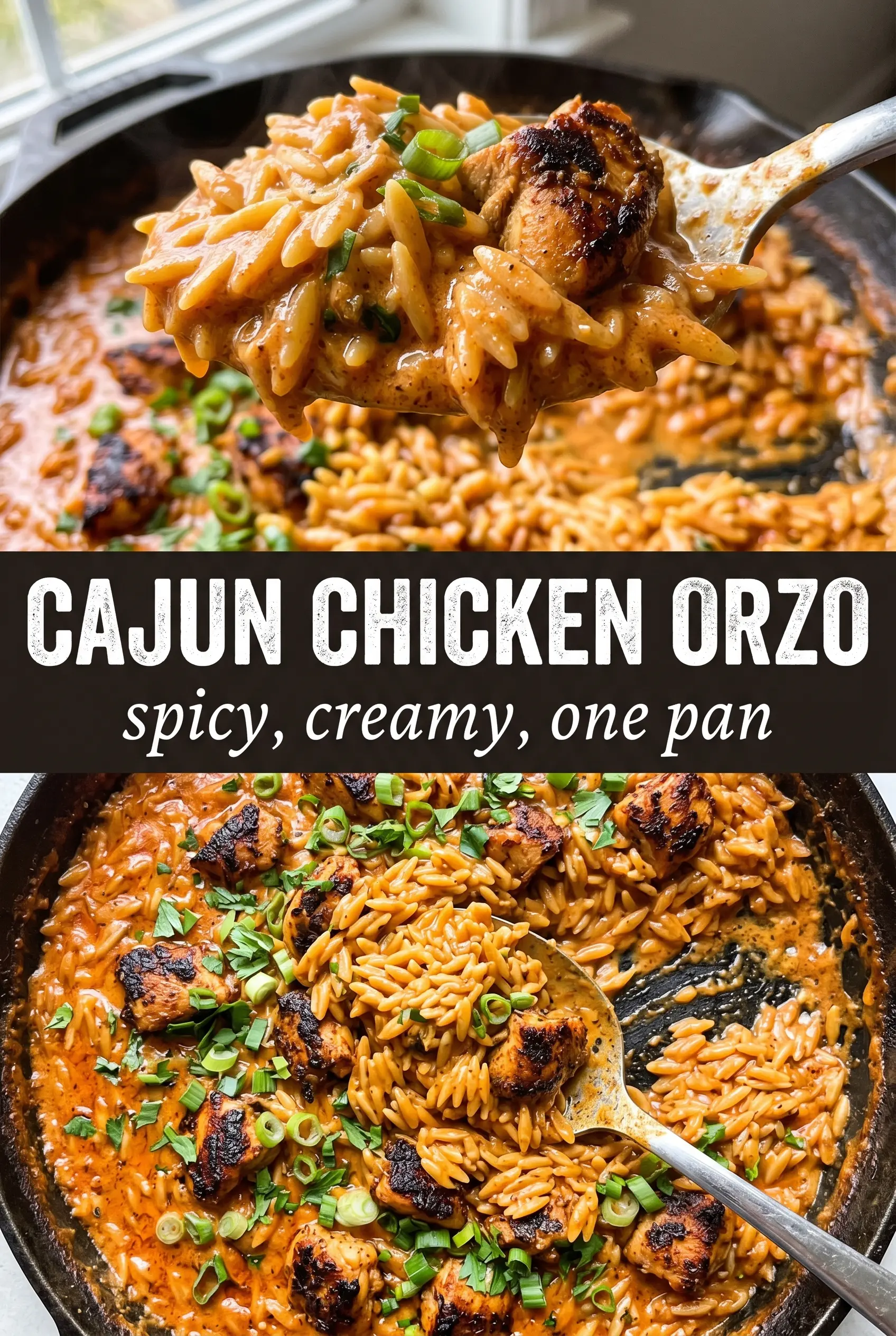
Cajun Chicken Orzo
Ingredients
Equipment
Method
- Rub chicken thighs with 1 tablespoon Cajun seasoning. Heat olive oil in a large deep skillet over medium-high heat and sear chicken for 4-5 minutes per side until blackened and cooked through to 165°F, then remove and slice with visible char.
- In the same skillet, cook red bell pepper and green bell pepper and onion over medium heat for 4 minutes. Add garlic and the remaining Cajun seasoning and cook 1 minute, stirring until fragrant.
- Add orzo pasta and toast for 1 minute, stirring to coat. Pour in chicken broth, bring to a simmer, and cook uncovered for 10-12 minutes, stirring often, until orzo is tender and creamy-orange in color.
- Stir in heavy cream and Parmesan, then simmer for 2 minutes until thick, smooth, and visibly creamy. Stir in smoked paprika during the simmer for a deeper orange-red Cajun hue.
- Top the creamy orzo with sliced Cajun chicken and andouille, distributing pieces so they’re visible throughout. Garnish with sliced green onions and serve with lemon wedges for a bright finish.